
Mellinger Minutes: NCAA eyes KU, Mahomes doesn’t make sense and is the Chiefs’ D good?
Jerry Tarkanian once famously said “the NCAA is so mad at Kentucky it will probably slap another two years probation on Cleveland State.”
The line is genius, even with blue-bloods like Kentucky and Kansas receiving heavy penalties in the past, but has lived for decades as shorthand of the belief by many that the NCAA is selective in its enforcement.
Here, we see that the NCAA is so mad at the recent FBI Adidas trial and Kansas’ part in it that it is directly attacking Kansas.
We also see that Kansas is digging in for a fight.
Now comes part where the lawyers determine the future of KU basketball.
The potential outcomes are seismic, with the NCAA alleging lack of institutional control, three Level 1 (most serious) violations in basketball and a head coach responsibility violation against Bill Self.
One of college basketball’s premier programs could be banned from the postseason. Self, one of six active Hall of Fame coaches, could be suspended for a season or more.
The process will take months and involve appeals and many billable hours. Already, the university said it “will fiercely dispute in detail much of what has been presented.”
Self, in a lawyered-up statement, painted this as a desperate attempt by the NCAA to respond to the court case and “regain control.” He called the NCAA “unnecessarily aggressive,” the NOA “unsubstantiated,” and the whole thing “a false narrative ... based on innuendo, half-truths, misimpressions and mischaracterizations.”
Self is correct that the NCAA was essentially forced into this. The bureaucracy’s credibility was dumped on as details from the trial leaked, exposing how a black market borne from outdated amateurism rules produced the sausage of a billion dollar industry.
But Self is wrong if he thinks a crowded ecosystem will provide cover against possible penalties.
If the allegations hold up, the NCAA’s enforcement staff will have an impressive pelt on the wall and a good story for parties.
But unless something major changes, a more important opportunity will have been missed.
Because from the moment regular college basketball business was turned into a literal federal case, the NCAA was presented with a once-in-a-generation chance.
This could have been the moment the rules governing college basketball — and football, if we’re honest — were dragged into reality. This could have been the time to recognize that market forces are well into their fifth decade of showing that the athletes driving ticket sales, corporate sponsorships and 11-figure television contracts are worth more than a scholarship, small stipend and unlimited snacks.
Instead, we have this absurd reality: The FBI called Kansas a “victim,” a label the university grabbed onto without shame or irony and re-upped with Adidas in hopes of being victimized with $191 million and more blue-chip recruits.
But wait, there’s more!
The NCAA’s case essentially centers on categorizing former Adidas rep T.J. Gassnola as a booster. Kansas was basically pushed into agreeing to that label during the process of Silvio De Sousa’s eligibility case, but any human over the age of 12 with a basic grasp of college basketball or business understands that if Gassnola is a booster then so is every rep for every shoe company that has a deal with any college basketball program — from UMKC to UNC, and from Delaware to Duke.
There are no winners here.
An actual federal case is being followed by one of the NCAA’s biggest swings in enforcement, all based on a system we know has existed for years, and one that in fact was created because of the NCAA’s dishonest rules.
The juiciest bit from the FBI trial involving Kansas was assistant coach Kurtis Townsend responding to a then-Adidas consultant telling him a top recruit’s father was asking for money and housing.
“I’ve got to just try to work and figure out a way,” Townsend said. “Because if that’s what it takes to get him for 10 months, we’re going to have to do it some way.”
That was part of a transcript read by the defense but not approved as admissible evidence during the trial. It created a storm anyway, enough that many wondered if Self would have to fire Townsend.
But here’s the takeaway: That recruit was Zion Williamson, who made Nike a lot of money playing at Duke before becoming the No. 1 selection in the NBA Draft.
Did Williamson choose Duke because he liked the business school?
Duke investigated claims by lawyer Michael Avenatti that Williamson was among the athletes paid by Nike, but “found no evidence” of Williamson’s eligibility being compromised, according to information provided to The (Raleigh) News & Observer.
Which surely clears everything up.
One more time: The existence of others breaking rules is not a viable excuse. That’s a lesson taught in kindergarten.
The lesson many around college basketball are taking away from this situation: Nike is much smarter about working around the NCAA’s antiquated rules than Adidas.
If KU’s appeal is denied, and the program and Self are heavily punished, it will be one of the biggest stories in recent college basketball history. Self’s 14 consecutive Big 12 championships and even the school’s 2008 national championship will be remembered differently.
Kansas will take a black eye on the program that made the Jayhawk famous and is the biggest revenue producer on campus.
The NCAA is swinging big, and Self and KU are fighting back with everything they have. The NCAA doesn’t often lose when it goes this far, and to some extent the damage on Self and KU is already done.
The NCAA believes it has a major and perhaps even historic case on its hands here. The NCAA is probably right.
It’s just not the case that would cure the most ills or do the most good for college sports.
This week’s reading recommendation is (no subtlety here) “Sole Influence” by Dan Wetzel and Don Yaeger (which is now nearly 20 years old!) and “Indentured” by Joe Nocera and Ben Strauss. The eating recommendation is the Pad Prik at Sweet Siam Thai.
Please give me a follow on Twitter and Facebook, and as always, thanks for your help and thanks for reading.
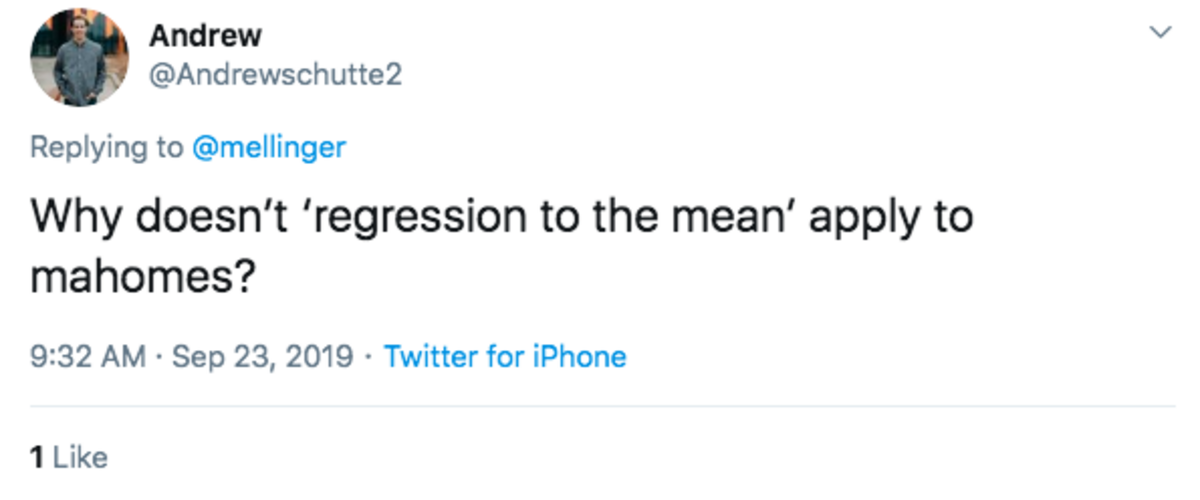
From what I can tell, very few of the rules that apply to other humans apply to Patrick Mahomes. We should’ve seen this coming before last season, actually, when he went jorts-and-sleeveless-T-Bones jersey at a NASCAR race and looked like the baddest man at Kansas Speedway.
I’ve said this from the beginning, ever since that throw to Demarcus Robinson in Denver two years ago that caused me to momentarily lose my mind and hug Terez Paylor like one of us just won the lottery, but it’s still true:
Watching Mahomes is a constant mind war between what you think is possible and what you’re actually seeing on the field.
I was a bit of an early believer in him, before his first start, but there’s no way this could’ve been expected.
He always had the talent and support to be an MVP, but 113 years of the forward pass have taught us that first-year quarterbacks struggle. That young quarterbacks with outsized arm talent must go through a bit of a transition, where they learn which throws that worked in college are now picked off by professionals.
Mahomes skipped so many steps.
Baltimore presented a unique challenge. Or, at least, Baltimore should have presented a unique challenge.
The Ravens are tough and physical and disguise their blitzes as well as anyone in the league. They were effective with this on Sunday, too, knocking down Mahomes repeatedly (and sometimes late). They also have a Hall of Fame safety patrolling the back, and some track speed at corner.
What’s more, Mahomes was playing without his best wide receiver, his starting running back and starting left tackle.
And it did. Not. Matter.
Mahomes — *yawns, stretches* — completed 73 percent of his passes for 374 yards, three touchdowns and no interceptions.
That’s an astounding performance. In 58 years of Chiefs football B.M.* they never had a quarterback meet each of those standards.
* Before Mahomes. Am I going too far?
Knock off the completion percentage requirement and they only had three of those games in nearly six decades. This was Mahomes’ 20th regular-season start and he’s cleared those standards three times.
He threw an interceptable pass against the Ravens — a second pass was intercepted, but called back on a pass interference penalty — which is a pretty good reminder about his incredible ability to be both prolific and safe.
Since becoming the Chiefs’ QB1, he has thrown fewer interceptions with more attempts than Philip Rivers, Andrew Luck, Jared Goff and Derek Carr. His interception rate is virtually identical to Tom Brady’s and Matt Ryan’s.
Mahomes just turned 24 last week, and this week he went to a Jonas Brothers concert without kids or irony.
He doesn’t make sense.
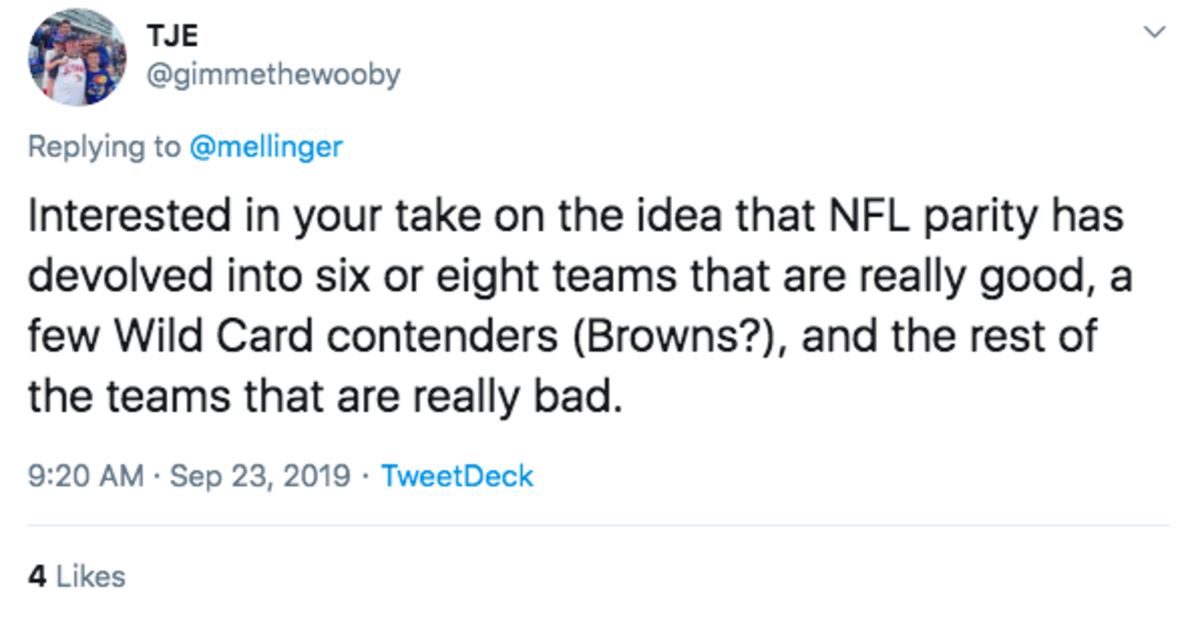
Yeah, it’s a fascinating trend and probably one that’s viewed differently in places that are on the good side of the fence. Like, imagine rooting for the Titans right now.
So much of the NFL’s power has been built out of parity. The Bears and Cowboys don’t have more money to spend than the Packers or Chiefs.
When everyone has a chance, that rising tide lifts all boats. It’s a critical part of what’s made the owners literally billions of dollars.
We’re seeing that parity cannot co-exist with the NFL’s continued shift toward quarterbacks.
There are a thousand other factors in this, with nuance that ranges from player safety to sponsorships, but that’s a reality that the NFL must confront.
Maybe the league is OK with this. Maybe it makes the most sense as the NFL attempts to meaningfully address safety, and can use a handful of quarterbacks to carry marketing, but it is also creating a sort of underclass that historically hasn’t existed.
* Or, at least, convince people they are meaningfully addressing it.
The league has always had bad teams, but those bad teams always had hope (except for the Jets, but you get the point).
Right now, I’m just not sure how an AFC team that’s not the Chiefs or Patriots can expect to play in the conference championship game.
After that top tier is a strong group that is a series of good breaks away: the Ravens, Texans, maybe the Chargers and maaaayyyyyybe the Browns if they’re ever as good as people have desperately wanted them to be.
And after that? The Colts were in that tier before Andrew Luck’s retirement. The Bills are a fun story, but let’s see what happens when they play the Patriots this Sunday.
The point is that one of the NFL’s great advantages over Major League Baseball and the NBA has traditionally been parity, and everyone having a chance.
In my lifetime I’m not sure that’s ever been less true than it is right now. The NBA’s block from parity is market size and super-teams. MLB’s is revenue. The NFL’s is quarterbacks, and not just the talent but the lack of movement.
Again, maybe the tradeoff is worth it and necessary.
But it has created a different league.
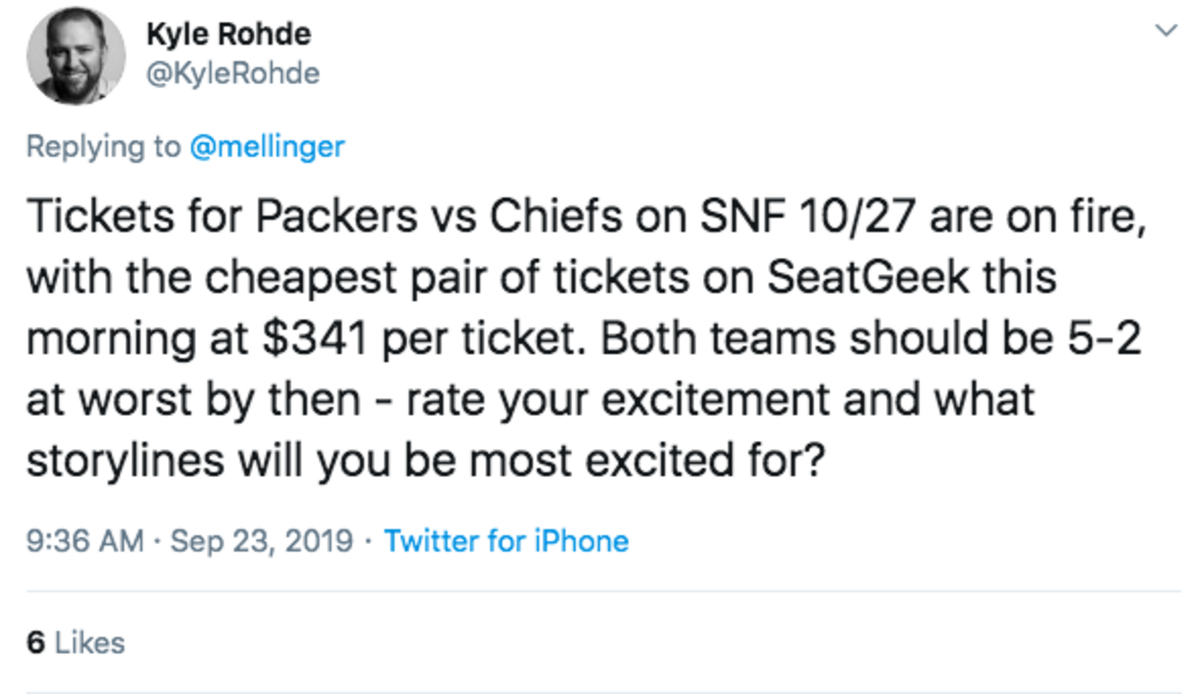
Good grief, I didn’t know it went that high.
That will be one of the marquee games of the NFL season, not just the Chiefs’ season. That’s a first-ballot Hall of Fame quarterback from the last generation against what sure looks like the same from the next generation.
Aaron Rodgers will never be considered the best quarterback of his time because Tom Brady, but he is probably the NFL’s all-time leader in holy $^@& throws. Mahomes is closing that gap every week.
And you know what’s wild? That isn’t the marquee game of the Chiefs’ schedule.
It’s not primetime, but the home game in Week 6 against the Texans is more important, and the Mahomes-Watson matchup is basically the 1a version of the Mahomes-Jackson matchup everyone talked about last week.
Who knows what the Chargers will be by then, but a Monday night game in Mexico City will be fun. The Bears have time to make the Week 16 game in Chicago that week’s most interesting matchup.
And until Brady retires in 2028, the game in Foxborough will always be among the most anticipated in any season.
I can’t say that I’d spend $682 to watch any of those games from the upper deck with a friend — the TV experience is pretty great — but I get the excitement.
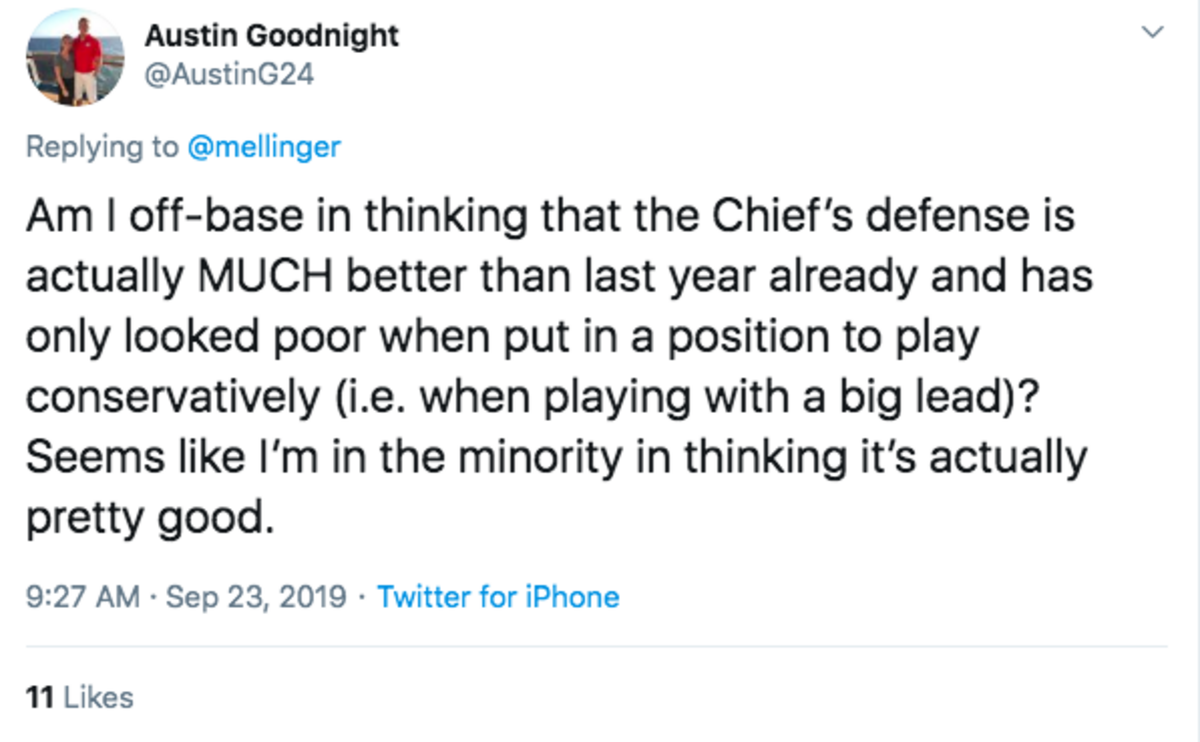
This will be the focus of a more extensive column later in the week, I think, so I’ll try to keep this answer brief-ish:
I don’t think you are off-base.
The biggest improvement — at least, what I think is the biggest improvement before doing more research — has been the coverage.
The cornerbacks take a lot of criticism, but they’ve held up pretty well. They’ll give up some plays, but they’ve only given up four passing touchdowns — Bashaud Breeland’s pick on that end zone fade in Oakland was tremendous — and stand at league average in 6.4 yards allowed per pass attempt.
Some of that is scheme, and some is much better support from the safeties. Obviously, there is some overlap in those explanations, so here’s another way of saying it: The Chiefs have much-improved safeties playing in a scheme that puts them in better positions.
That helps the cornerbacks.
As much as anything else, two plays put some worry into Chiefs fans. Lamar Jackson threw up two prayers. Kendall Fuller and Charvarius Ward were in solid position and should’ve at least knocked those passes down, but instead both were completed in key moments.
That can’t happen, and what’s concerning is that those plays are part of a pattern showing the Chiefs’ defensive backs to have poor ball skills.
I’d merely point out that the important part is having guys in position. You can (hopefully) coach and improve on making the play once you’re there, but if you’re not there in the first place it’s a bit of a lost cause.
The Chiefs will need to create more turnovers and give those defensive backs more help with pressure.
This is where Frank Clark’s name comes up. He had his first sack on Sunday, which came a few snaps after a nice pressure where he beat the right tackle with an inside move. The Chiefs need more of that.
Chris Jones is playing as well as he ever has. There are snaps where he simply embarrasses the man/men in front of him, and his play against the run has been impressive.
They have more speed at linebacker, which is part of why they haven’t been beaten as badly on passes to running backs.
The pieces are all there. They’re giving up fewer points, both per game and per drive.
What I don’t have a good enough feel for yet is what this defense will look like when the scheme and personnel are comfortable with each other.
In sports analysis, we often shorthand that to What is their identity?
My guess is they want to be aggressive up front with stunts and rotations along the line, and solid and opportunistic in the back.
I don’t think they’ll ever be stout against the run. That presents a problem against a capable team that wants to keep Mahomes on the sideline. The flip side of that is Mahomes is actually the team’s best defensive player because he’ll force the other side to play from behind.
But, again. That’s just what I see off the top of my head. I’m interested to see what I can learn with more research this week.
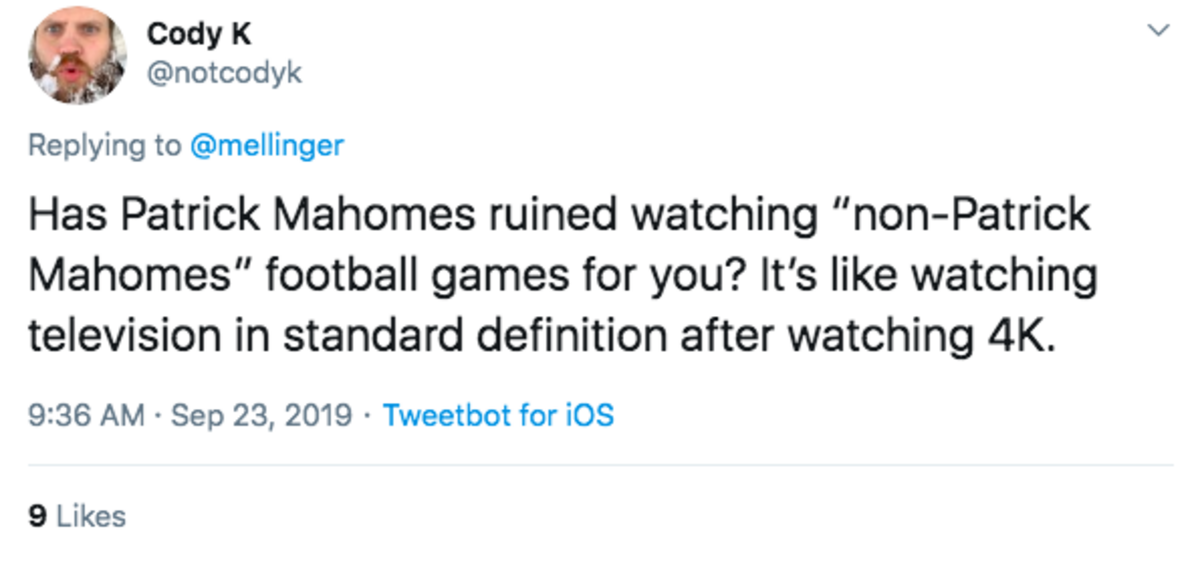
Again. None of this is normal. Kansas City sports history is full of athletes or teams that weren’t quite as good as we made them out to be.
Eric Hosmer is the first that comes to mind, and this probably isn’t fair, because Hosmer is a very good player who created some history-shifting moments. He is also a one-time All-Star whose best season was worth 4.1 bWAR and was treated like a dang rock star.
The starkest and most shameful example might be the time that some Chiefs fans — poor, poor Chiefs fans — once convinced themselves that Tyler Palko could be the answer at quarterback.
Mahomes is the opposite of that.
He is the Peanut wing by which all others are exposed as mediocre, and Andy Reid is the homemade blue cheese that brings out the best qualities, and what the hell — I really need to branch out my analogies here.
Apologies.
There are other dynamic quarterbacks, of course. Drew Brees is the league’s all-time leading passer and still operating at close to maximum precision. Tom Brady with the game on the line is cold blooded. Russell Wilson has some magician in him.
Deshaun Watson and Lamar Jackson will likely join Mahomes as the next generation’s version of Manning, Manning, and Brees*.
* I’m not putting Brady in there because I’m not convinced he won’t play until he’s 57.
But none of those guys can do what Mahomes can do. Jackson is close. He has a stunning ability to make tacklers miss, both in sprint speed and wiggle. What he did to Alex Okafor near the sideline for an extra two yards was disrespectful.
But Jackson doesn’t have Mahomes’ arm talent or the ability to both maximize a play’s potential and find new potential when that play busts. He’s not as accurate.
None of these things are insults! Jackson is great!
It’s just that the point made in the question is valid: Drive a Ferrari long enough and a Corvette is going to feel slow.
Like, have you seen these other quarterbacks? They have to look at their receivers and stuff.
That is so 2017.
Here we pause for the Royals’ portion of this time suck. Ned Yost’s announcement came after my call for questions — you might say I got #Yosted? — but I hope you read this column on one of the most influential men of the last 10 years of Kansas City sports.
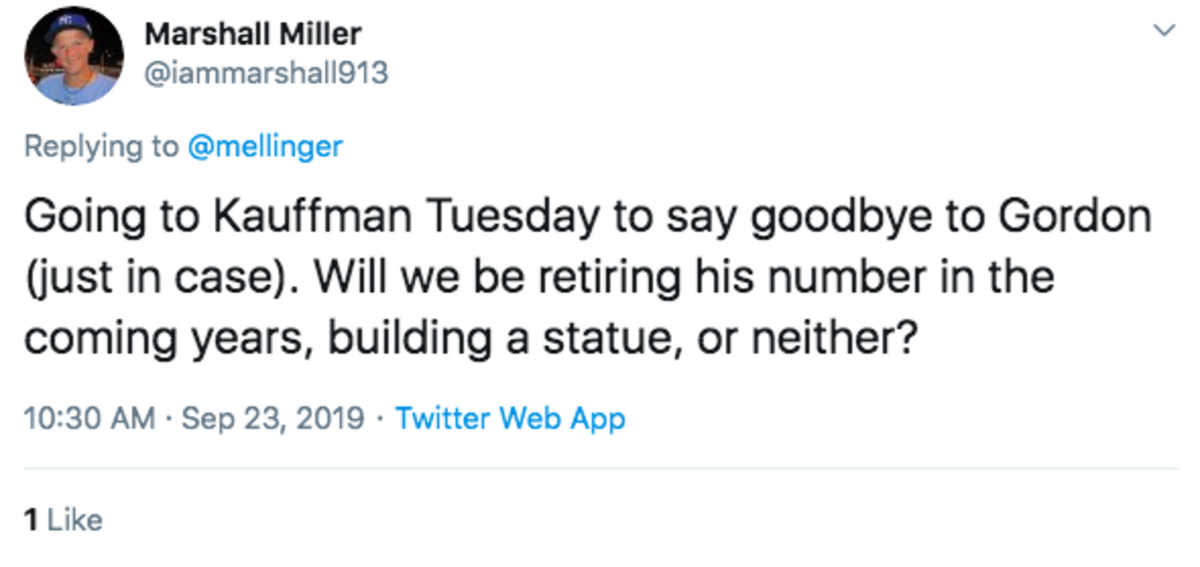
Anyway, Gordon.
I’m not high on retiring numbers. Maybe the Yankees ruined that for me. I’m not sure.
But I’m very high on moments, and I think those should be honored and promoted as much as possible. Moments are what we remembe and a lot of why so many of us are hooked on sports.
You probably know where I’m going with this. The Royals should make a statue out of Gordon pointing to the sky as he rounded first base after the homer off Jeurys Familia in the first game of the 2015 World Series.
These moments should be saved in statue form all over the stadium: Salvador Perez somehow pulling that slider in the other batter’s box down the third base line, Mike Moustakas falling in the dugout suites for the catch and Eric Hosmer diving toward home plate at Citi Field.
Also, Royals, please steal my idea of creating a competition at the American Royal for three or four *local* barbecue spots to set up shop around the stadium.
You will be praised and make money off this. Please do it.
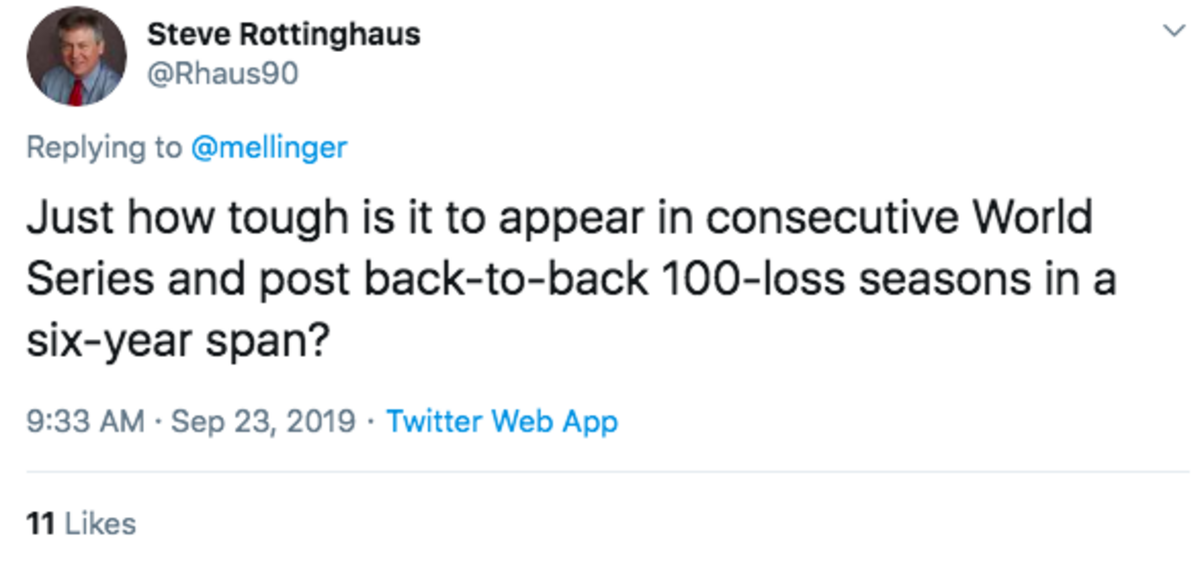
Well, for starters, you can’t take anything for granted. You need to make sure you draft poorly, sign bad contracts and that guys are never comfortable in the big leagues. And you need to do this fast, too, because if you’re not careful the World Series shine can provide too much confidence.
Ahem.
I got into this a little with the Ned column, but this is part of why a new voice could be productive.
These aren’t 100-loss teams. Or, more to the point: They shouldn’t have been.
I’ve written about this before, but a feeling existed the last two years that the Royals lost their edge. I heard that for the first time from a scout for a rival club. It was 2017, when the Royals still had Eric Hosmer and Lorenzo Cain, but they faded over the last two months.
It was their last year before the band broke up. Urgency should have existed. It did not.
The front office and ownership need to accept their share of that blame. The 2017 Royals were executing a plan that was doomed from the jump. They wanted to be a small-market club that could win now and limit payroll and continue to build for the future.
The problem wasn’t trading Wade Davis for Jorge Soler. The problem was making that trade and not embracing the rebuild by trading Cain and Hosmer and anyone else with value.
Or, viewed the other way, the problem wasn’t trying to win. The problem was trying to win while trading a top closer for a slugger you knew needed a few years of big-league plate appearances.
But, anyway. The losing.
That scout’s judgment in 2017 has stayed with me. The Royals built themselves into champions with a resiliency that burst with emotion. They sunk in the standings with passivity.
I want to be clear: I do not and would not blame Yost for the losing. The pitching has stunk, players should always get the credit and blame, and the importance of a manager in modern baseball is almost always overstated.
But Yost’s great gift was cultivating belief, and in recent years the Royals haven’t had enough of that.
It just seems logical to me that Yost and the Royals are each ready for something new.

That’s my guess.
Mike Matheny fits the profile. I think the Royals’ front office would prefer someone with previous experience, for starters, and the last time they hired a former manager as a special adviser they ended up making Ned Yost the manager six months later.
But any reports that Matheny will be the guy, or that the decision has already been made, are some combination of inaccurate and premature.
There are so many moving parts here. Dale Sveum and Pedro Grifol have earned interviews.
Grifol, in particular, has an interesting case. He is widely respected and has been essentially assigned to Adalberto Mondesi the last two years, if you need an indication of how much the organization trusts him.
He’s bilingual, smart and has served as a hitting coach and catchers coach and scout and farm director. He has the kind of diverse skill-set that can be productive in whatever role Grifol wants.
No matter how it goes, the Royals will likely take some time here. John Sherman can’t officially take over as owner until November, but wouldn’t you want his voice as part of the process?
It’s an interesting time around that club. New players, new owner and now a new manager.
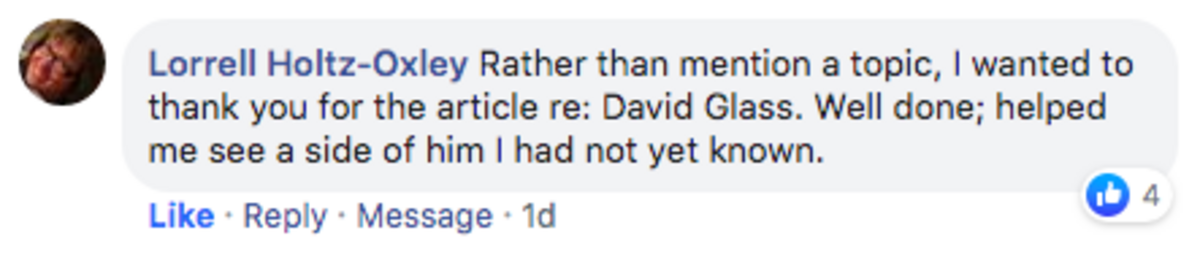
Thank you, and rather than an answer I want to mention at least one more time that it is impossible to put Glass’ ownership in a box.
I know I’ve put it this way before, but in some ways the persistent negative view of him is a testament to the power of first impressions*.
* With a dash of Glass never pushing back against the narrative because he simply does not care about public perception.
He was pretty terrible before 2006. He was everything a small-money owner should be expected to be in the 13 years since. Those truths co-exist.
You know, in some ways, Ned Yost has some of this going on. He was never the dunce he was made out to be — every fan base thinks their manager is horrible at bullpen management — and the fact that he is baseball’s all-time leader in playoff winning percentage is patently hilarious.
He’s a good baseball man with defined strengths and weaknesses, the right man for the right group and often wildly entertaining to cover.
Sporting KC’s Matt Besler would be great, if he wanted to coach.
He’s the first who comes to mind. He’s focused, blessed with some natural leadership skills, sharp enough to find edges and personable enough to lead grown men. A decade with Peter Vermes and some experience with the US Men’s National Team only adds to the resume.
Whit Merrifield is the first Royals player I’m thinking of. There are others. I wonder about Cam Gallagher, for instance. But Merrifield has a wonderful story to present to players, and a track record of caring and working for the right things. He’s smart, willing to challenge conventional wisdom and draws respect.
Kendall Fuller and Anthony Hitchens are where my mind goes in the Chiefs’ locker room. There are others there, too, and maybe you think it’s strange to choose two guys from the defense. But there’s something in the way both of those men think, and speak, that to me shows an advanced understanding of football, a thirsty curiosity to know more and the willingness to put in the work.
No.
That’s the answer to your first question. Just: no. Absolutely not. Nope.
The second answer is more complicated, obviously, and I’d love to get to that in a column, but Patrick Mahomes keeps throwing ridiculous touchdowns and the Royals keep being sold and their manager keeps retiring and Kansas basketball keeps getting Level 1 violation accusations.
Yohan Croizet was always leaving, and I’d expect some more departures, particularly from some of the guys whose contracts are up.
To me, Sporting showed itself to be broken. The roster has aged, the pieces didn’t always play well together and it’s hard to see a championship-level future without major turnover.
But I also know there aren’t a lot of easy decisions in terms of trade value and contracts and financial constraints. There was a time that Sporting looked really good this past season. It was early, and buried under so much underperformance, but still. It exists.
It’s not hard to imagine Vermes deciding to give it one more year, that the failures of this season were created by a string of flukes and injuries, and that the solution is to believe in the foundation and system rising up one more time.
My default is that if a team isn’t building its way up or already good enough to compete for a championship then it should embrace a hardcore teardown and rebuild.
But I also know that stance is easier to take when you have a keyboard and not the actual decisions in front of you. It’s easier for me to say a year or two or even three of losing will be worth the payoff later. My pride and ego and reputation and working life are not consumed in the consequences.
But, still. That’s what I’d do. Sell off pieces for value, if you can get it, and make sure you do everything possible to create the core of the next champion.
Can the answer be neither?
Because I think the answer is neither.
Some of this depends on what kind of sports writer you want to be. Do you want to be at a place like Yahoo or a magazine or newspaper? Do you want to be part of a fan site like Arrowhead Pride or Royals Review? Do you want to be a beat writer? Write features? Be a columnist?
I probably needed a journalism degree to be hired by The Star 19 years ago. And I certainly would never say that education hasn’t helped. But I don’t know that it would be required today, and also don’t think the most important stuff I’ve learned came from a classroom.
To add to the confusion: I don’t think you need to be a passionate sports fan.
You need to be curious and interested and respectful and creative. But you don’t need to be a face-painting, tailgating, jersey-wearing sports fan. Some of the best sports writers I know aren’t, and none of them could be honestly labeled as jaded, either.
You need to be able to write. You need to be able to think independently and develop an instinct about where the stories and conflicts are. You need to want to know more than is presented, and then know where to go for the answer.
You need to find a way to develop trust with people, and to connect with readers, and the trick is you need to do both of those things naturally because you’ll be seen through otherwise.
I don’t mean to describe this job as particularly difficult. I don’t believe it is.
But it is particular, if you understand what I’m saying. Most of this stuff can be learned on the job. But there are some characteristics and patterns that are absolute musts, and that take a long time to develop and just a mistake or two to ruin.
Here’s to one more day of not ruining them.
Also, and I cannot stress this enough: Keep your filthy hands off my job.
This week I’m particularly grateful for the Black Keys concert at Sprint Center Tuesday night. My wife and I don’t take as many nights like this as we’d both like: sitter coming early enough for dinner and drinks and then watching our favorite band. I wouldn’t trade the life we have with our kids for anything, but it’ll be nice to live a night like we had before, too.
This story was originally published September 24, 2019 at 12:44 PM.