
Arrowhead can still thrive as ‘Kansas City Stadium,’ but FIFA should heed this
Generations into a belief that morphed into a movement, nearly a decade since the start of the bid process and four years of methodically conforming to FIFA standards later, the epicenter of Kansas City’s monumental opportunity to play 2026 World Cup host was unveiled on Monday.
Meet … “Kansas City Stadium,” as GEHA Field at Arrowhead Stadium officially has been dubbed by FIFA for the tournament.
And as it generically will be projected around the globe.
With all the contours to reinforce that.
For all the alterations in and around the stadium, from the removal of approximately 3,500 seats and sculpting of the pitch for uniformity with other sites to extensive construction for activities outside the stadium, maybe nothing will be more stark than how some of the most basic aesthetics have been rendered common.
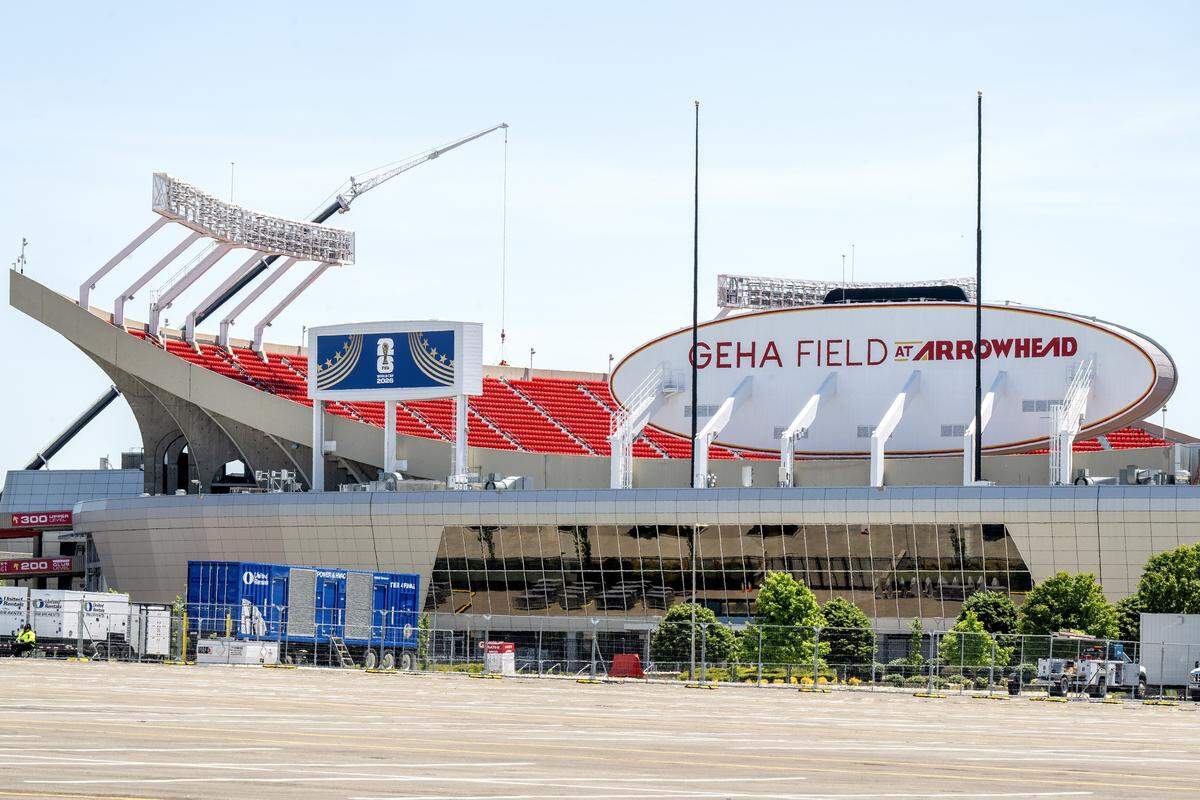
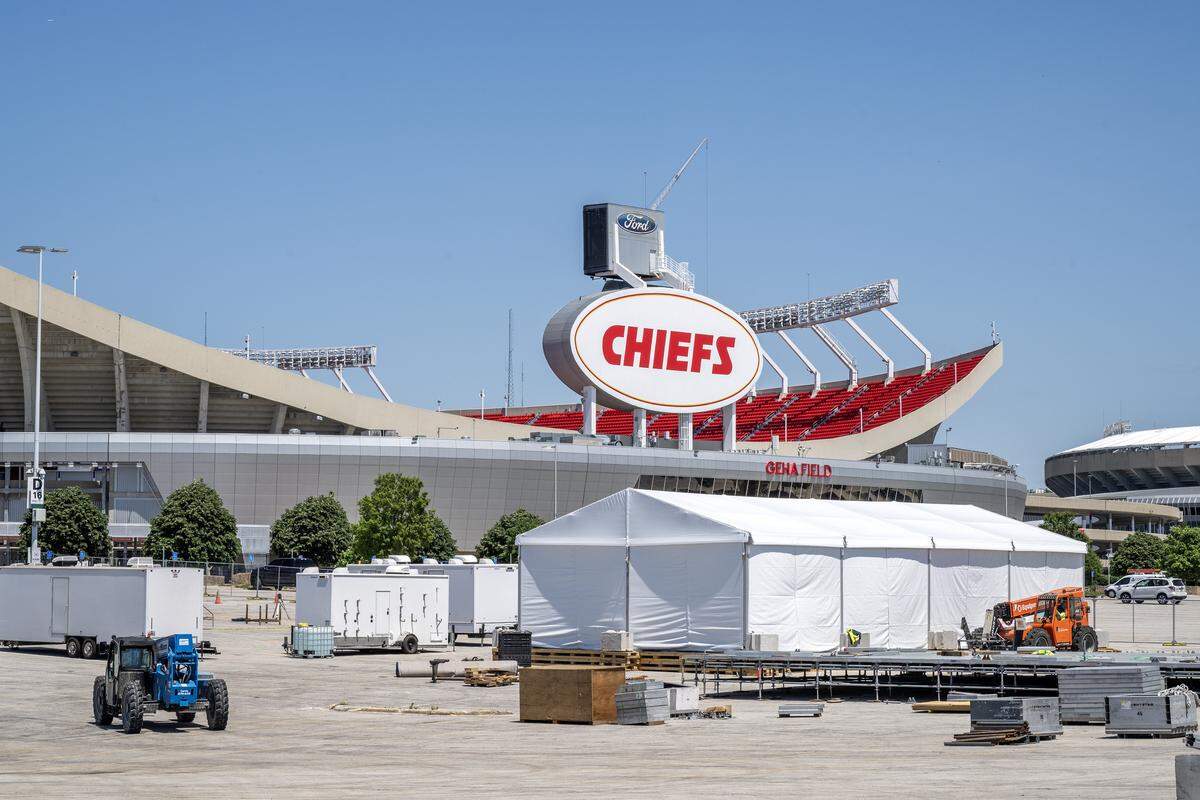
Simply put, hundreds of signs are being removed or covered, including the largest and most visible and the less conspicuous in the concourses.
“Would we love it to say ‘Arrowhead’ and have all the elements of a Chiefs game? Sure,” said Matt Kenny, the team’s executive vice president of operations and events. “But it’s a fine tradeoff” for the chance to host six matches.
Kenny’s right for a lot of reasons.
Just the same, the tradeoff won’t be limited to GEHA and other sponsorship signage being covered over by FIFA imagery.
It will be evident even in the likely camouflaging of a significant element of Arrowhead and Chiefs iconography.
While the Chiefs Hall of Fame will remain open and intact and visitors will know they are in an NFL stadium of the Chiefs, Kenny said, no doubt that will be overridden in certain ways by signage that amplifies the context of the event by muting what’s usually there.
To say nothing of FIFA’s sponsorship indulgences.
So most likely the tunnel entrance to the playing field painted with the words “HOME OF THE CHIEFS!” and those adjacent banners of their achievements temporarily will be homogenized.
Heck, even the names in the Ring of Honor encircling the stadium between its decks will be vulnerable to being cloaked by FIFA branding or advertising signage.
While much of that will remain to be done after Kenny figuratively hands over the keys to the stadium to FIFA on Sunday, as he spoke a crane in the background continued the work of creating a so-called “clean site” by the time the first game is played here June 16.
That’s all an ironic, maybe even bizarre, twist to the plot:
After all, Arrowhead itself is an essential reason Kansas City earned this opportunity as the smallest of the 11 U.S. host cities in the 16-site tournament including games in Canada and Mexico.
Moreover, Chiefs owner Clark Hunt was 9 years old when he attended his first World Cup in 1974 and has been 11 of the last 12 overall.
As he recently told The Star’s Blair Kerkhoff, he remembers being on the field for a FIFA site visit in 1990 when Kansas City was trying to be a host for the 1994 World Cup. Along with Sporting KC and the Kansas City Sports Commission and the bid committee, Hunt and the Chiefs were a key part of luring the World Cup here this time.
But the notion of Arrowhead being obscured is most jarring when you consider the pivotal role of late Chiefs owner Lamar Hunt in the building of the stadium, rise of soccer in this country and fabric of Kansas City’s emergence as a soccer mecca.
While he is best known as the force behind the American Football League and for forever changing Kansas City with his decision to move his Dallas franchise here in 1963, Hunt’s fascination with soccer — and the World Cup itself — is part of his legacy.
Starting 60 years ago this summer, when he tuned into ABC’s Wide World of Sports to watch the World Cup final between England and West Germany.
“Captivated with the excitement and pageantry,” as my friend Michael MacCambridge put it in his excellent biography of Hunt, he became determined to see it become part of the American sports landscape.
Doing so, MacCambridge wrote “would preoccupy him, to a great extent, for the rest of his life.”
And so it did in the advent and growth of U.S. soccer, a story in itself.
Right about that time, Hunt also was engaging the gears that would lead to something else that preoccupied him the rest of his life.
The building of twin stadiums at what would become known as the Truman Sports Complex.
Like what we now know as Kauffman Stadium, Arrowhead was state-of-the-art in its time and has retained its uniqueness in many ways more than 50 years later.
As architect Ron Labinski put it in 2000, “What we did here in Kansas City revolutionized the way people think about stadiums and stadium design.”
And here’s the thing about that.
Even as both stadiums are entering their final years, with the Chiefs heading to Kansas and Royals to downtown, each remains almost a living, breathing thing.
Meaning that even with the curious and disorienting turn of the signage, Arrowhead still figures to be resplendent in the worldwide spotlight.
It already has been: When the Royal Dutch Football Association visited, Kenny recalled, architects in the group were struck by the stadium’s shape and functionality and couldn’t believe it had opened in 1972.
To say nothing of the acoustics that helped enable the stadium to earn the Guinness World Record for loudest crowd roar at a sports stadium (142.2 decibels).
As he considered the words of those visitors, Kenny added, “It’s its own sort of architecture, and there’s really nothing like that.”
So between that and the sorts of fanbases who will be here, from those of Argentina and the Netherlands to homegrown ones, Kansas City Stadium should still reflect all that’s special about Arrowhead regardless of what gets covered up.
But at least one image has to remain in place lest FIFA commit heresy.
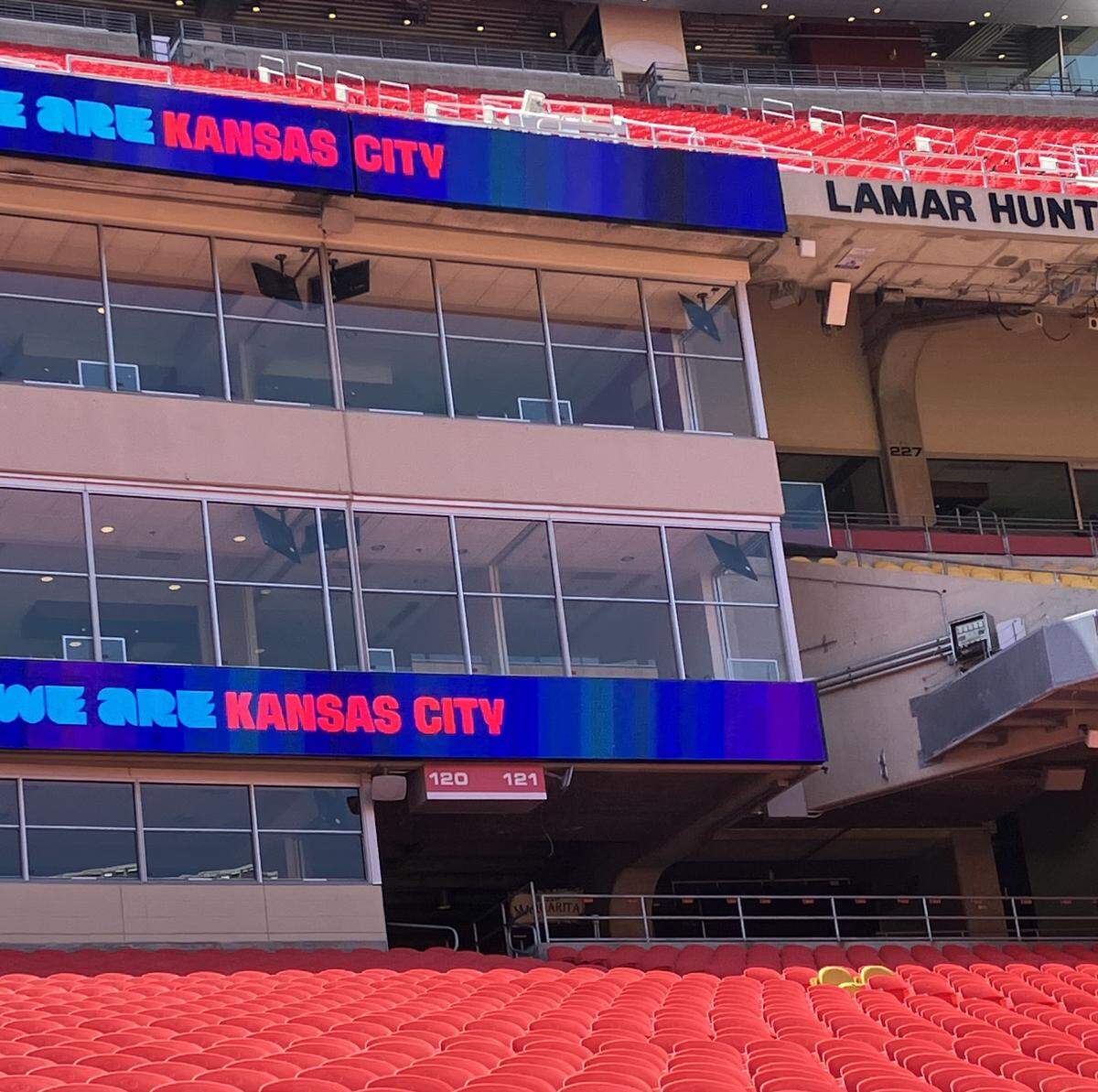
In The House That Lamar Built, Hunt’s name in the Ring of Honor can’t be shrouded.
Better yet, it should be highlighted either there or in some other prominent way.
Because this goes back generations … starting with him.