KC will ‘spend $250 million to correct mistake’ of closing municipal jail in 2009 | Opinion

No one will ever truly be held responsible for the preventable, predictable and predicted $250 million mistake of closing Kansas City’s leaky but compassionately-run Municipal Correctional Institution, better known as The Farm, which led us straight to the unforgivable fact that our inmates instead wound up in a place where you could die screaming for medical care.
But I’m going to walk you through how it happened anyway, based on new interviews with almost all of the major players, ahead of the April 8 ballot measure to build a new municipal jail. Because there’s always something to be learned from past errors. This is a story about how easy it is to agreeably go along with an answer built on sand and based on wishful thinking. And it’s about the baby-with-the-bathwater idiocy of destroying what should be repaired instead.
Mayor Quinton Lucas has come to see it that way, to an extent that surprised me: “The biggest shame I have on behalf of Kansas City voters,” he told me, “is that in the end,” because The Farm was closed in 2009, “we’ll spend $250 million to correct a mistake we never even had to make. It’s been a tragic choice for our inmates, our public and our taxpayers. … And meantime, there are still people sitting in Vernon County this morning,” in a jail 90 miles away where, as I’ve been reporting for months, conditions have at least until recently been shocking.
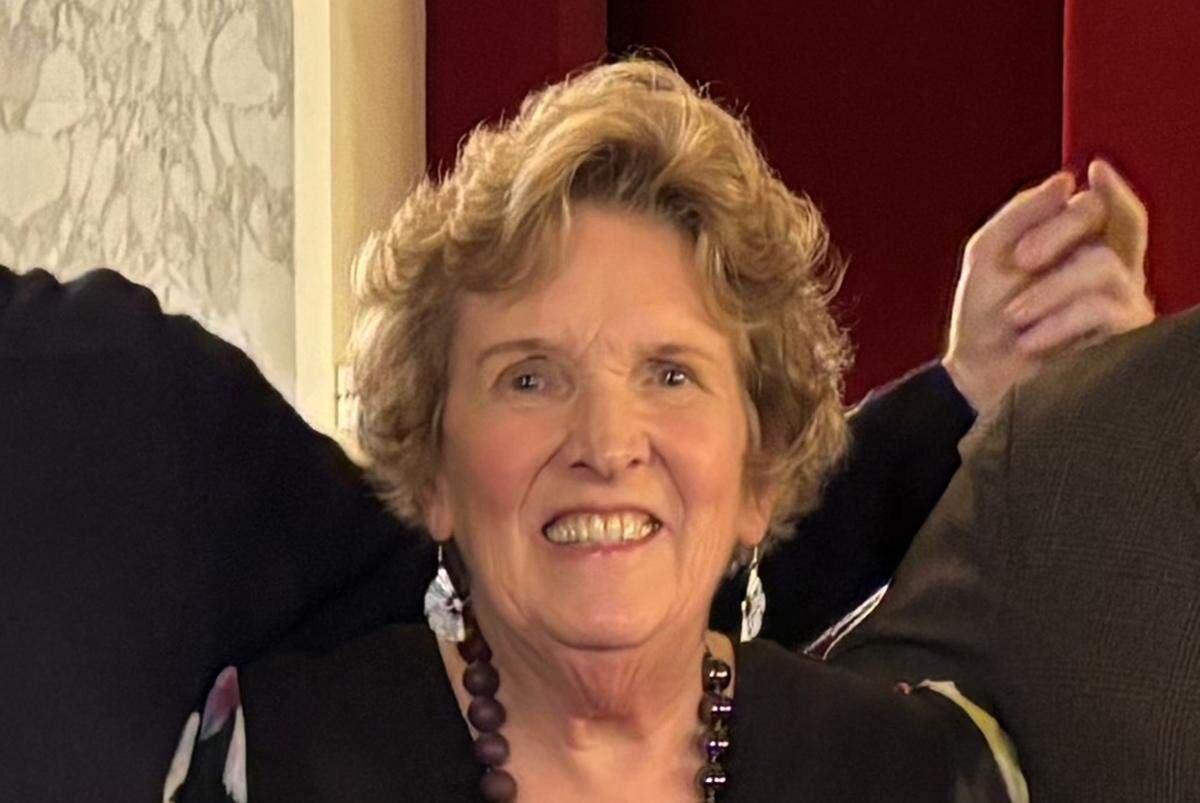
It still bothers Nancy Leazer, who ran The Farm, when she looks back on the way the city shuttered it, that most of those who made that decision did so without ever accepting any of her many invitations to come and see the place for themselves. Why was that?
“At the time, we were looking at a regional facility, and I saw no particular reason why Kansas City should have a prison,” then-Mayor Mark Funkhouser told me. He disputes that he never visited, and so didn’t really understand what the city was scrapping. “As city auditor, I very much did take a look — I know we did reports and analysis.” The dreamed-of regional facility, of course, never materialized.
The move was supposed to save the city money. Council member Cathy Jolly, who led the charge to close The Farm, “said it will save at least $1 million,” The Star reported in February of 2009. Instead, the move turned out to be an incredibly costly blunder.
The mental health and other services inmates received at The Farm were not only supposed to follow them wherever they were sent, but would be significantly expanded, city officials said in 2009. Advocates and academics warned that that wouldn’t happen, either, and of course, it didn’t.
“Mental health and other social service advocates lined up to testify in support of the city’s current Municipal Correctional Institution (MCI), which the city wants to close to save at least $1 million a year,” another Star story from February of 2009 reported. “They praised superintendent Nancy Leazer and called MCI a model facility that has helped troubled inmates by providing a variety of community services uncommon in most area jails.” Did somebody say $1 million? Those who testified got nowhere.
“What happens at MCI is very unique,” Joanne Katz, then a professor at Missouri Western University and a founding member of the National Association of Community and Restorative Justice, warned in The Star at that same time. “The idea that it will get replicated so easily (in the new jail) is a little unrealistic.” Under the circumstances, having been right is not that satisfying.

Study found The Farm should be saved
There is no doubt that The Farm was in bad physical shape: The problems included a roof that leaked and boilers that didn’t work. Without a generator, the facility was once without electricity for three days. But a city study commissioned to show why it should be closed instead showed that it could and absolutely should be saved, so then that study was ignored, just like all those advocates who stood in line to testify at City Hall.
“It was worn out,” then-city manager Troy Schulte told me. He said another major factor in the decision to close it were all the neighborhood complaints about inmates just walking away, because this wasn’t exactly supermax, and plucking some laundry off their clotheslines to change into on their way out of Eastwood Hills, near Arrowhead Stadium. “I had a member of the editorial board complaining about that!”
“We didn’t have a clothesline; let’s start there” said Yael Abouhalkah, the former editorial writer Schulte mentioned. Nor does Abouhalkah remember ever complaining about or feeling any particular irritation over The Farm, though he lived just down the street. “We lived there and we loved it.” Another neighbor, Rob Wimmer, who has been there since 1985, says those who did walk away “weren’t hardened criminals. It was just part of the character of the neighborhood. For us, it really wasn’t that big a deal.”
The only real discussion inside City Hall came from council members who thought there was even more money to be saved by shipping city inmates not to Jackson County, as they initially were, but to the rural county jails where they eventually ended up.
In its coverage, The Star argued against sending detainees far away. But though it praised The Farm, it also lauded its closure, under the dual assumption that this paved the way for a regional facility and that services would surely follow inmates.
In the jail in Vernon County where male inmates from Kansas City are sent now, the only services I’ve heard anything about are the allegations of racially-motivated “tune-ups” for Black men from Kansas City.

Such a great deal, they all said
The deal the city’s Cathy Jolly negotiated with Jackson County Executive Mike Sanders in 2009 — to pay the county to take city inmates — was a big win, everybody said back then.
But it was unrealistic from the start, with the city paying the county just $57 a day. This was ballyhooed as such a savings over the $84 a day that the city paid to run The Farm — but it was less than half of what it cost the county to actually house a prisoner, so how was that ever supposed to work? Neither Jolly, who lives in New York, nor Sanders, who later went to prison for a campaign kickback scheme, responded to messages.
(Jolly did visit The Farm, Leazer notes, before successfully condemning it, which is more than she can say for any of the others who were involved.)
Bill Skaggs, then a council member, said, “I never thought it was a good deal” that Jolly and Sanders had put together. But he was among those who favored sending inmates to other county jails, “and we certainly didn’t think that was going to be as bad as it was.” Now the situation is “a mess, and an expensive mess.”
Another factor in creating that mess is that in 2015, under then-Police Chief Darryl Forté, the city closed its detention center on the top floor of the KCPD headquarters, too. So when the city’s deal with the county fell apart in 2019, that left Kansas City with nowhere at all to put any city detainee. Victims of domestic violence in particular have suffered as a result.
“My problem now,” Lucas said, “is that somebody doing something bad isn’t even separated from victims” for 24 hours, because with the KCPD not using new cells in its new substations across the city, there is literally nowhere for them to go. That’s not just the mayor’s problem, but Kansas City’s.
“And I don’t let them off the hook” for closing the eighth floor in 2015, Lucas said. “The fact that you took detention spaces out and mothballed it is odd, to say the least. We’ll spend $18 million to get the eighth floor back to what the eighth floor was,” as a stopgap measure before a new jail can be built.
A spokeswoman for Jackson County Sheriff Forté said problems with the 8th floor included non-compliance with ADA standards, no showers, substandard food prep, inadequate ventilation, and potential litigation about those issues. “In response, the city manager at the time,” Troy Schulte, “made the decision to close the detention center – a decision to which Sheriff Forté, then Chief, had no objections.”
‘None of us had any experience in this space’
After the county deal finally fell apart in early 2019, all inmates were then shipped off to either Vernon County, Johnson County, Missouri or, very briefly, to the Heartland Center for Behavioral Change. How closely were those deals scrutinized? Not very, because time was short.
Alissia Canady, the City Council member who chaired the public safety committee at the time, under Mayor Sly James, told me that these were the only options offered by then-city manager Schulte and his staff.
“A bunch of us were making decisions based on staff, and none of us had any experience in this space. This was a stopgap — we didn’t go visit. People didn’t anticipate the county falling out” of the picture, and “no one anticipated we’d still be in this situation” all these years later.
One person on that council who did have experience in that space, Katheryn Shields, who as county executive had overseen the construction of 200 jail beds, said that after Lucas became mayor in August of 2019, a month after the city’s contract with Jackson County lapsed, he refused to put her on the committee — and after she attended a meeting anyway, stopped publishing when the committee was meeting. “For whatever reason, Quinton didn’t want anyone involved in the jail issue who knew anything about it, to the point of hiding when the committee was meeting.”
Lucas called the idea he’d reject expertise or block Shields, who was his finance committee chair, “preposterous.” As he recalls, “I put Heather Hall on” because of the conservative former council member’s interest in public safety. “I thought, ‘You work with Rick Smith,’’’ the combative then-chief of police.
When Kansas City inmates were initially sent to rural county jails, under Mayor James, “we were told a lot of glowing things” about the Vernon County jail, as Shields remembers it. But the decision was “staff-driven.”
‘Vernon County was a cheaper way’
“The intent was always to replace” The Farm, Schulte said. “I had hoped the county would work. It didn’t, so that put us back to square one.” At that point, “Vernon County was a cheaper way to do it.”
Cheaper, yes. Humane, no.
There was no major pushback to that plan, just as there hadn’t been to closing The Farm, though I do see in looking back at our coverage that before he was mayor, Lucas voted against sending inmates to rural counties, arguing that these other places were too far away.
“People were very comfortable farming it out,” Schulte said. Yet though he never heard any concerns about conditions in Vernon County, “we always knew we needed something else.” And we still do.
Within six months, the Heartland Center had lost its insurance after a death, two escapes and a bunch of security concerns, so that option crashed in a hurry.
But Kansas City has continued sending men 90 miles away, to Nevada, Missouri, and women to Warrensburg, 60 miles away, with the disastrous results that I’ve been writing about.
When those contracts came up for renewal after he became mayor, Lucas said, “our staff represented to us this continued to work. A fair critique is that I don’t think anybody knew enough about it.”
Just this week, I heard from another former inmate who said he was raped in the Vernon County jail several years ago.
Everyone in a position to know says that Leazer ran The Farm with the kind of care that is the antithesis of everything I’ve reported about the facility in Vernon County.
What she did worked, for at least some, and the chasm between her restorative justice mindset and that of guards in Nevada, Missouri who allegedly “rewatched” tape of inmate beatings for entertainment is sickening.
‘We knew they weren’t treated well’
Since we can’t go back, why revisit how we got here before the April vote on a new jail? Because a lot of it, unfortunately, we are visiting for the first time. Because assumptions are dangerous, and experience matters. And because there is so much to learn from Leazer herself, who is someone I hope current city officials will consult as they move ahead.
“There’s a small percentage of people in the criminal justice system who are scary and should be there and stay there,” she said in a long recent interview at her home. But most, she said, “are there because of the backgrounds they come from. Inmates are not stupid, and they have good moral sense, but they never had anybody to get them up in the morning.”
“We did surveys of the women, and 97% were abused, and the men grew up in these same households. It was ‘Here, drink this, so you’ll feel better for what I’m doing to you,’ so they’re on the street at 11 or 12. We as a society didn’t protect them, then we think they’ll have a normal life.”
Instead, what they have is “a survival orientation. Especially for the women, we offered a place of safety. They’d come in in terrible shape, would be with us for a couple of months, and we’d bring in services and plant a garden. You can’t call it rehabilitation because there’s nothing ‘re’ about it; it’s going where they’ve never been. … We saw some miracles.”
Leazer says that she and everyone who worked with her knew that the county wasn’t the right place for city inmates. But, no one listened.
And she says current city officials had to have heard about the hellish conditions in Vernon County, as she says she did, from the city corrections officers who ferry inmates to and from there every day. “Our officers are down there. We knew they weren’t treated well, but nobody gives a s*** about this population.”
If that’s inaccurate, or has changed, then our current electeds will ask Nancy Leazer some of the questions that an earlier generation of city officials should have asked her 16 years ago.
Lucas said he’s going to do that.
Recently, he said “there have been visits” from Kansas City Council members to the jail in Vernon County, “and presentations on the rights of detainees, to make sure we’re following the Eighth Amendment” protections against cruel and unusual punishment. Then, too, there are “separate discussions on mobile units here” that might be used until a jail is built.
“I wish we listened to more Nancys,” he added, instead of only “people in the business of building jails. I’ll reach out to her.”
She is standing by, Mr. Mayor. “I’ve been waiting for all these years,” she says.
This story was originally published February 19, 2025 at 5:06 AM.