Prosecutor on Parson not calling DeValkenaere victim’s family: ‘It’s cruel, really’ | Opinion
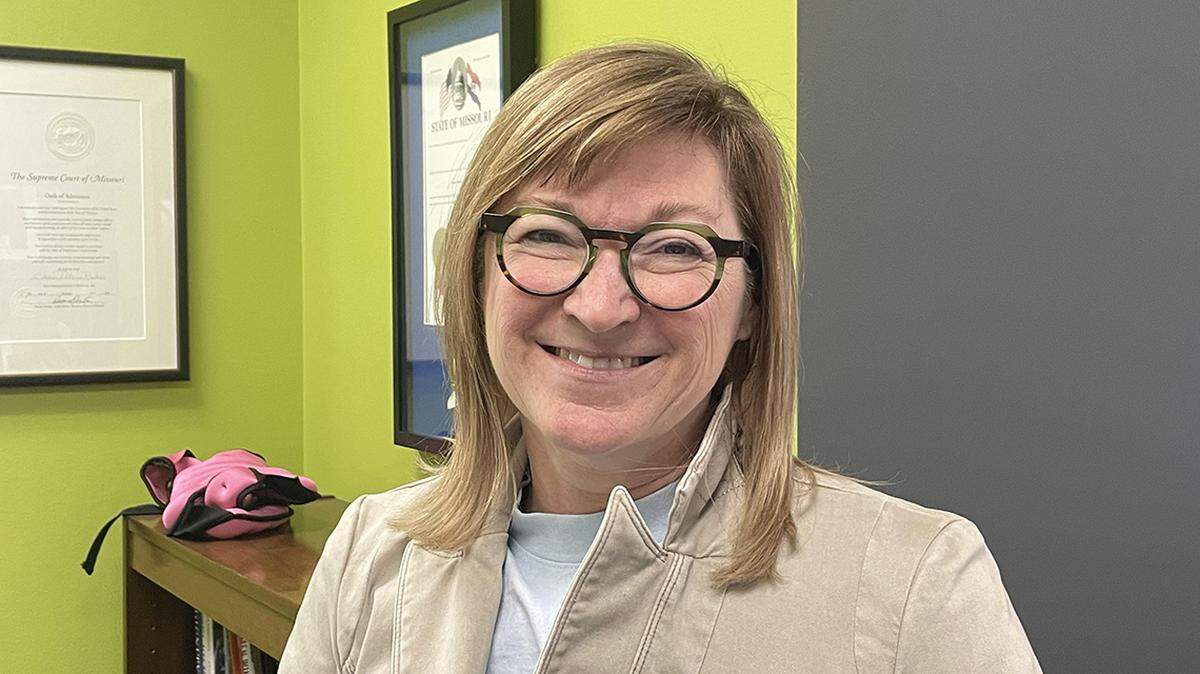
Jackson County Prosecutor Jean Peters Baker is wrapping up her many years of principled public service to this community in a few days, and Missouri Gov. Mike Parson is leaving office, too.
At the end of a 90-minute exit interview with Baker about her cases, controversies and 87% prosecution rate of all property crimes that police refer to her office — you didn’t know, right? — I asked what she knew about the pardon or commutation that Parson is rumored to be granting former KCPD officer Eric DeValkenaere any minute now.
In 2021, her office prosecuted DeValkenaere, the first Kansas City police officer ever found guilty of killing a Black man, 26-year-old Cameron Lamb.
Ever since, Parson has been saying DeValkenaere was wrongfully convicted by a political prosecutor who was “playing games.” You might have noticed that there is never a second sentence explaining what exactly about the law Baker and every judge who has looked at the case got wrong. Instead, it’s just that the convict is one of the good guys, and the woman who convicted him is not.
Baker hasn’t heard anything about what Parson’s doing, she said, but does know that he hasn’t called Lamb’s family, ever. “The victims weren’t contacted in the Reid case, either,” she said. Last March, Parson commuted the sentence of former Kansas City Chiefs assistant coach Britt Reid, who permanently injured a 5-year-old while driving drunk. “It’s cruel, really.”
She also asked why, if Parson really thought DeValkenaere was wrongly convicted, he let him serve 426 days behind bars as of Wednesday, when he could have pardoned him at any time.
So yes, Baker’s tenure as county prosecutor ends newsily, just as it began in 2011.
‘I was told I would be ostracized’
That first year, she fired three assistant district attorneys, one for performance issues and two “for lying to court. You bet your ass I fired them,” and then was unsuccessfully sued by their union, Local 42.
That same year, “everyone” told her her career would be over if she dared prosecute Kansas City Bishop Robert Finn for failing to report suspected child abuse by a priest later sentenced to 50 years in federal prison for producing child porn. That now former priest, Shawn Ratigan, continued to attend church events with children, and he took lewd photographs of another girl after Finn knew of the photos but did not report him to police.
This was the first time an American bishop had been held accountable for failing to report abuse, and “prosecutors were lining up at my door saying, ‘I don’t want to be part of that.’ I was told I would be ostracized and I believed it.” She did it anyway, she said, because “I had just decided I’m going to be a fighter in this job.” A fighter for victims, though plenty of other fights came to her.
Ultimately, Finn was found guilty and given probation. When he later resigned, the pastor of Christ the King parish put an insert in the Sunday bulletin criticizing a “politically motivated charge filed by an ambitious prosecutor with strong ties to the abortion industry.” The priest’s letter passionately defended Finn’s efforts to “save his local church the pain and cost of a public trial.”
As she has always done, Baker responded with a rocket of her own: “No one is above the law, no matter our position or title. Children especially need this to be true, and abused children’s lives may depend upon it.”
That was far from her toughest case, she said, but when I asked which one was, she put her hands on the top of her head, closed her eyes for a minute and said all of the most “godawful” ones did involve children. These were “kids who died at the hands of someone who was supposed to care for them. Those are physically torturous” but do have to be vigorously prosecuted, even if doing so takes a toll over time.
Video disappeared in Maryville rape case
Sometimes, it’s not filing a case that’s hard. In 2013, Baker was appointed special prosecutor in the Maryville case of a football player who had initially been charged with raping 14-year–old Daisy Coleman. Coleman was bullied, her family was hounded out of town, and when the charges were dropped, many suspected that political pressure from the player’s well-connected Republican family was the reason.
“Bluntly, I thought I would try that case,” Baker said. “I wasn’t scared of taking it to court and losing.” But the video everyone had talked about, from a party where the accused said he and Coleman had consensual sex, had disappeared, even though “we did some crazy stuff to track that phone down.”
Police “never had the actual recording,” she said, and other testimony from the original charging documents didn’t pan out, either. “I should try to maintain a deference” to officials in Nodaway County, Missouri, “but Jesus.”
Then, right before they were to go to court, “Daisy made another attempt” on her life, “so I decided not to go another risky route” and instead filed only a misdemeanor charge of child endangerment against the former player - for dumping a shoeless, coatless and blacked out Coleman on her mother’s front porch in freezing weather.
She and Coleman “maintained a relationship,” long after that disappointment, Baker said. “My goal for her was that she would view herself as so much more than how she was described in that case — Daisy, rape victim.” In 2020, Coleman ended her life.
I also always wondered about the invasion of privacy case that then-St. Louis Circuit Attorney Kim Gardner initially filed against former Gov. Eric Greitens. In 2018, Baker was named special prosecutor in that case, too. Several weeks later, she announced that she would not be filing charges, even though she also said there was “probable cause” for a sexual assault charge against Greitens, involving a woman who convinced a Missouri House impeachment committee that she had been sexually coerced by him.
But there were really only misdemeanor charges that would hold up in court, Baker came to believe. And the victim in that case, who “reluctantly” wanted to press ahead, had been so roughed up already by “the questions they got away with asking her” that “she needed an advocate to understand that Greitens never really lost his power imbalance over her.” Lawmakers had “treated her as if she were lesser,” Baker told me. And to my great regret, so did many reporters.
Baker’s questions led to important KCPD reform
In 2016, The Star broke a big story: “For years, Kansas City police detectives failed to properly investigate some rapes, serious abuse and other crimes against the city’s children. And in many instances, detectives did no work at all, internal police department memos recently obtained by The Star reveal. A special squad assigned a year ago to help clear backlogged cases uncovered those problems and many others so serious that in January Police Chief Darryl Forté suspended nearly the entire Crimes Against Children unit of detectives and sergeants..”
“At the time,” The Star’s story said, “Forté said cases were being worked too slowly. But police never disclosed the depth and scope of the detectives’ inaction on reported crimes — sexual assaults, broken bones, near starvation among them. The department’s own memos describe 148 ‘severely mishandled’ cases, ‘gross negligence,’ ‘incompetence’ and evidence of attempts to ‘cover up.’ ‘Never in my career with the KCPD have I seen such a systemic failure,’ Maj. David Lindaman wrote.”
This major reform for Kansas City children all happened because Baker had asked why police were sitting on child abuse cases so long that they could not be effectively prosecuted.
She and Forté worked as a team, and that team worked well for Kansas City. Which made the lose-lose, us-versus-them mentality of the Rick Smith years all the more obviously unfortunate.
Thanks also to gun laws so relaxed that anyone, anywhere can carry, gun violence has been out of control in Kansas City in recent years.
Which makes the fact that homicides in Kansas City are down 20% this year, though nonfatal shootings are up, pretty remarkable.
Baker attributes the drop in deadly gun crimes in part to the fact that the relationship between police and prosecutors has improved so much since KCPD Chief Rick Smith was replaced by Stacey Graves. “We had five years of a chief who was openly hostile to me and encouraged his staff to be, too.” Bringing the community in has also helped enormously in her view.
If Peters had to pick just one, the case she’d look back on with the most satisfaction is one you’ve almost certainly never heard of, which she tried as an assistant district attorney. It involved someone named Stanley Jones, who after his partner broke up with him, came back and raped her, beat her and dragged her down the street at 9th and Paseo.
“She was so beat down, and I’m proud of fighting for her.” The victim in that case has dropped into Baker’s office to say hey a number of times in the years since she took her current job. And Stanley Jones, whose original 54-year sentence was reduced to 35, is still behind bars.
Advice for successor, Melesa Johnson
If you think that the throughline in Baker’s career is political, then we disagree. Because the one I see is that she has been there for victims but has also tried to do it the right way, and to correct past wrongs, as when she pushed for the release of Kevin Strickland, who served 43 years for a triple murder he did not commit. If more prosecutors did both of those things, we’d have a fairer and more just system.
The advice she’s given her successor, Melesa Johnson, is to make sure you have a solid support team, both professionally and personally: “You are the one who will take the punches, so surround yourself not with new friends, like Sarah DeValkenaere is to the governor-elect,” but with “people you know you can count on.”
On her way out of the courthouse, Baker says, “I don’t feel regretful” about anything. I do, though, because prosecutors like Baker don’t come along every couple of minutes.
This story was originally published December 19, 2024 at 5:03 AM.