Like it or not, both the DeValkenaere and Rittenhouse verdicts were based on the law
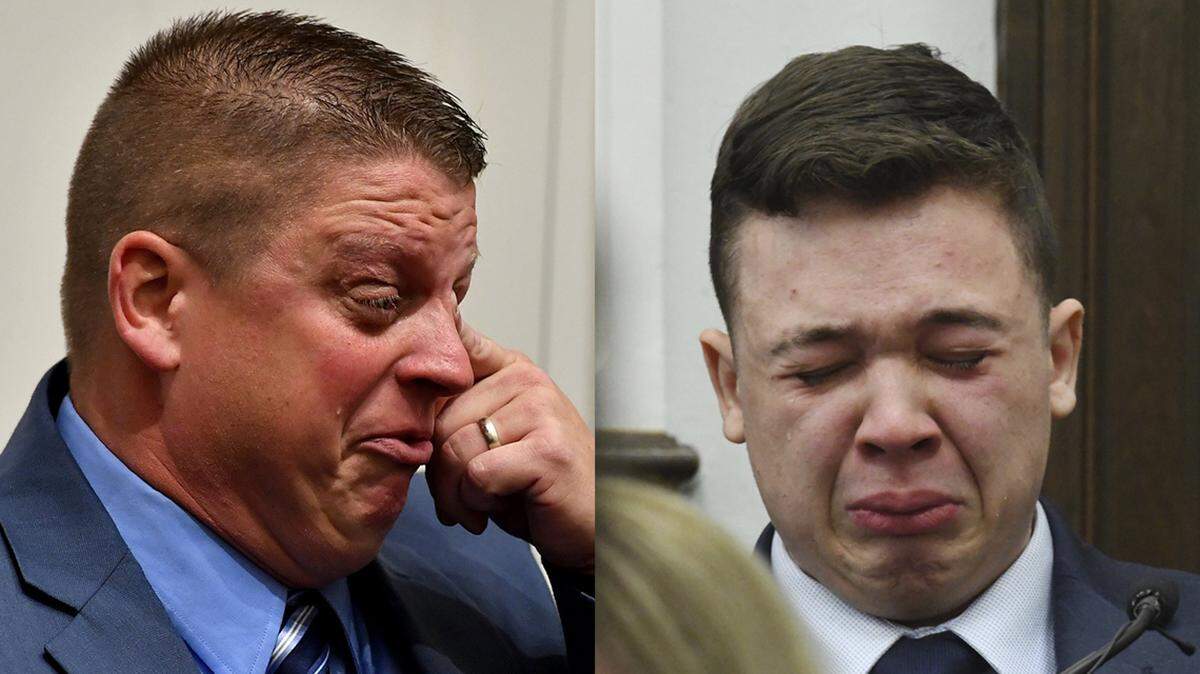
As we were waiting for the verdict in the manslaughter case against Kansas City police detective Eric DeValkenaere, I kept thinking about two things: First, that the prosecution had proven its case. But also that I’d seen the law and the facts disregarded before, including in a police shooting just as clearly flawed as this one.
Almost 30 years ago now, in 1992, I covered the almost six-week manslaughter trial of Teaneck, New Jersey police officer Gary Spath, who’d shot a Black 16-year-old, Phillip Pannell, in the back as he bolted from the schoolyard where a neighbor had reported seeing a boy with a gun. Witnesses testified that Pannell had his hands up in surrender, and forensics experts said that because of the location of the bullet and how it lined up with the hole it shot in his parka, he had to have had his hands in the air when Spath fired.
On the stand, Spath cried, just like DeValkenaere. He said the dead boy had been reaching for a gun with his left hand, just like DeValkenaere said his victim, 26-year-old Cameron Lamb, had been. Spath said he fired because he was in fear of his life, just as DeValkenaere said he fired to protect his partner’s life.
How can you be in fear of your life from a kid who is running away from you?
Still, when Spath was found not guilty, no one was surprised: First, because not one but two members of the all-white jury came from police families. One of them even said during jury selection that yes, she’d heard her two brothers-in-law on the force discussing the case.
The sheriff’s deputies in the Hackensack courthouse where the trial was held did everything they could to influence the jury in Spath’s favor: They allowed Spath supporters to wheel a paralyzed New York City police officer who’d been shot in the line of duty into the courtroom, in front of God and the jury, as Spath was being cross-examined.
They also harassed a grieving family with their favoritism, whisking Spath’s loved ones right to their seats, but making Pannell’s mother and other relatives be wanded with metal detectors first. They put the Pannells behind a pillar that obscured their view of the courtroom, and said that if they didn’t like that spot, they could always sit behind the Spath family. The Pannells’ minister couldn’t sit with them, the deputies decided, though the Spaths’ family priest did sit with them. And on and on.
The racism in that courthouse was in no way subtle: The only reporter they asked for a second ID, beyond a press pass, was also the only Black journalist covering the trial, and even then, he had to wait for approval from a supervisor while the rest of us took our seats. The only spectator they asked for any identification was a Black clergyman in a minister’s collar. In the overflow media room, I heard a sheriff’s deputy in the next office performing for his friends, repeating bits of the testimony and mimicking Black dialect.
Derek Chauvin, Amber Guyger cases come to mind
How much had really changed since then? Sure, Derek Chauvin was found guilty — after all of America watched him murder George Floyd like you’d squash a bug, while he begged for air and his mother. Yes, Dallas police officer Amber Guyger was convicted, too — after she walked into a Black man’s home and killed him as he sat eating a bowl of ice cream.
Still, watching our officials work so tirelessly to keep the “factually innocent” Kevin Strickland in prison while an accused serial rapist like KCK police detective Roger Golubski walks around collecting a taxpayer-funded pension makes it hard to have serene confidence that justice is en route.
Last week, though, it arrived twice in one day.
On Friday, Jackson County Circuit Court Judge J. Dale Youngs found DeValkenaere guilty of second-degree involuntary manslaughter and armed criminal action. That’s because all police knew was that Lamb had been seen speeding, yet DeValkenaere ran into his backyard with his gun drawn. He was not armed with any permission or warrant or probable cause, however, in violation of Lamb’s Fourth Amendment right to be protected from unreasonable searches. DeValkenaere shot him nine seconds after arriving on the scene.
If he had stopped to get a warrant, what crime would it even have been for, prosecutor Tim Dollar asked DeValkenaere, in one of the most important exchanges of the trial. The officer said he didn’t know: “That’s why we didn’t” get a warrant.
After the verdict came back, Mayor Quinton Lucas said that while he respects the court’s decision, he does not view the outcome as a broader indictment of Kansas City police. That’s upside down: It’s even more an indictment of the way officers are trained and assigned than it is of this one man.
Was DeValkenaere taking some rogue action in running into that man’s yard with his gun out? No, he was doing what his training told him he’s supposed to. And what the violent offender squad he was a part of does do, which is try to “proactively” stop crimes before they happen. That’s why this case is not about this one officer alone, but shows that policing doesn’t have to be like this. There were 100 safer ways to handle the situation, and that they weren’t even considered is not just a tragedy for the Lambs and the DeValkenaeres, but for too many other families.
Prosecutors in Kenosha did a terrible job
The Kyle Rittenhouse jury also followed the law, hard as that is to accept. Like DeValkenaere, he should never have been where he was when he fired in Kenosha, killing two people and wounding a third during protests over the shooting of a Black man, Jacob Blake, by a white officer. But unfortunately, because our gun laws make the Wild West look like Australia, it’s perfectly legal for a troubled 17-year-old to run around with an AR-style rifle looking for more trouble.
The prosecution did a terrible job, repeatedly putting witnesses on the stand who undercut its own case, in a state where claims of self-defense are almost impossible to disprove. Worse, perhaps to compensate, the state tried to cheat by dropping facts into the jurors’ ears that they were not supposed to hear.
So while I share the concern that vigilantism rewarded can only lead to more of the same, I also know for sure that when prosecutorial misconduct is rewarded, the result there too is more of the same: More of the same kind of vigilante prosecutions that put Kevin Strickland, Julius Jones, Lamonte McIntyre, two men who did not kill Malcolm X, and who knows how many others in prison who should never have been there.
When Gary Spath was acquitted all those years ago, it was because emotion — his tears on the stand, and the dramatic appearance of a police hero in a wheelchair — crowded out the facts of the case. In two cases decided on Friday, a jury in Kenosha and a judge in Kansas City followed the law instead. And that is a win, even if it doesn’t feel like it.
This story was originally published November 21, 2021 at 5:00 AM.