
Can you say ‘double standard?’ KC cop found guilty of manslaughter will remain free
This is what our friends on the right would normally call a “pro-criminal” court ruling: Though convicted of killing a man, the guilty will remain free as long as his appeal might drag on. Naturally, his defense attorney has said that could take quite some time.
Even the judge who ruled on the matter said back in January that allowing someone already found guilty to enjoy his freedom while appealing his conviction would be “unprecedented for me.” He’d never done such a thing, he said, in his 13 years on the bench.
So what’s changed since then? Not a thing. Yet defense attorneys somehow convinced Jackson County Judge J. Dale Youngs that their client might find prison quite a dangerous place.
If you’re wondering how that sets this particular convict apart from any other, here’s that answer: He’s a Kansas City police officer. Or was, before he was found guilty of manslaughter and armed criminal action last November.
On Dec. 3 of 2019, KCPD detective Eric DeValkenaere fatally shot a 26-year-old Black man, Cameron Lamb, just nine seconds after arriving at Lamb’s home.
A police helicopter had seen Lamb speeding — chasing someone, it looked like — before Lamb gave up and headed for home.
Right after Lamb got there, DeValkenaere rolled up with no warrant, no information about a crime and no legal right to be there. He went in without probable cause, but with gun drawn.
He had a duty to go in, he testified, because “we had a reasonable suspicion that crime was afoot.” He had to go in, too, he said, because his fellow officer already had done so, and “I’m not going to leave him in there by himself.”
If he had stopped to get a warrant, what crime would it even have been for, a prosecutor asked DeValkenaere. He didn’t know, he answered. “That’s why we didn’t” get a warrant.
He said he’d almost immediately fired on Lamb because he saw him pull out and point a gun at his fellow officer with his left hand. Turns out, Lamb was right-handed, had only limited use of his left hand, and was making a call with his right hand at the time of the shooting. At that point, “I discharge a round to his central mass,” DeValkenaere testified. Then he stepped back several yards and fired three more times.
Prosecutors argued that the gun found near Lamb’s lifeless body had been planted there during the 14 minutes before police allowed paramedics in to treat Lamb, who had bled out by the time help got to him. But all the state had to prove was that Lamb had died as a result of DeValkenaere’s recklessness, and they did that.
DeValkenaere waived his right to a jury trial, so it was Youngs who found DeValkenaere guilty after his November bench trial.
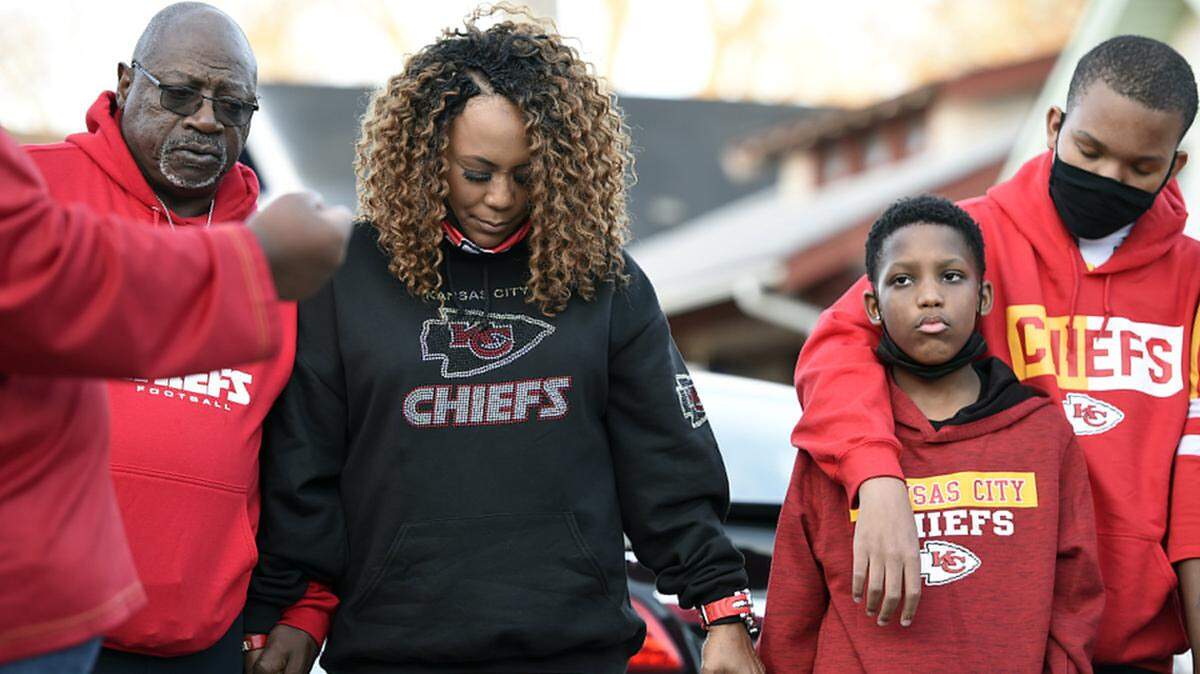
This was the first time a KCPD officer had ever been convicted in the killing of a Black Kansas Citian, and Lamb’s family was so grateful.
This new ruling, of course, is terribly painful for them, and a reminder that there’s almost always a way out for those with a badge. Lamb’s mother, Laurie Bey, said on Tuesday that “to continue to keep getting slapped in the face with things like this, it’s just not right.”
Since Youngs previously called his own ruling “unprecedented,” should one assume, then, that this sets a precedent?
“So the next Black person convicted of manslaughter can remain free on bond pending appeal?” asked Urban League president Gwen Grant. “I seriously doubt it.”
Yeah, no. Because that would be the end of the rule of law, right? And an encouragement to others with more bullets than sense.
Appeal bonds are usually granted for minor offenses, which this was not, and in cases where the sentences are shorter than the time it would take to appeal.
That’s not true for DeValkenaere, either: At his March 4 sentencing, the former officer could get four years in prison on the manslaughter conviction and at least three years for armed criminal action. An appeal would normally take between 18 months and three years, defense attorneys said. And if his appeal succeeds, of course, then he will never have spent a night in prison.
“This is uncharted territory,” said Kansas City defense attorney Tom Porto. In part because “it’s rare that you see a defendant with the means to post the bond” during an appeal after the expense of the trial.
Because DeValkenaere has important financial backers, though, Porto said his appeal is probably “going to go on forever.”
A police officer in Montgomery, Alabama, who was similarly found guilty of manslaughter, and was sentenced to 14 years in prison, is free on an appeal bond more than two years after his conviction, though the verdict has already been upheld twice.
Lawrence criminal defense attorney Sarah Swain said she’s never had a judge grant an appeal bond like the one DeValkenaere got: “Do you know how many times I’ve asked for that, and they’ve practically laughed me out of court, even in cases that have later been overturned?”
This ruling, she said, is evidence of “the complete and total double standard that exists.”
Judge Youngs, whatever or whoever made you see the “unprecedented” as obligatory made that double standard obscenely obvious.