Why do most prosecutors defend ‘botched’ cases rather than correct them?
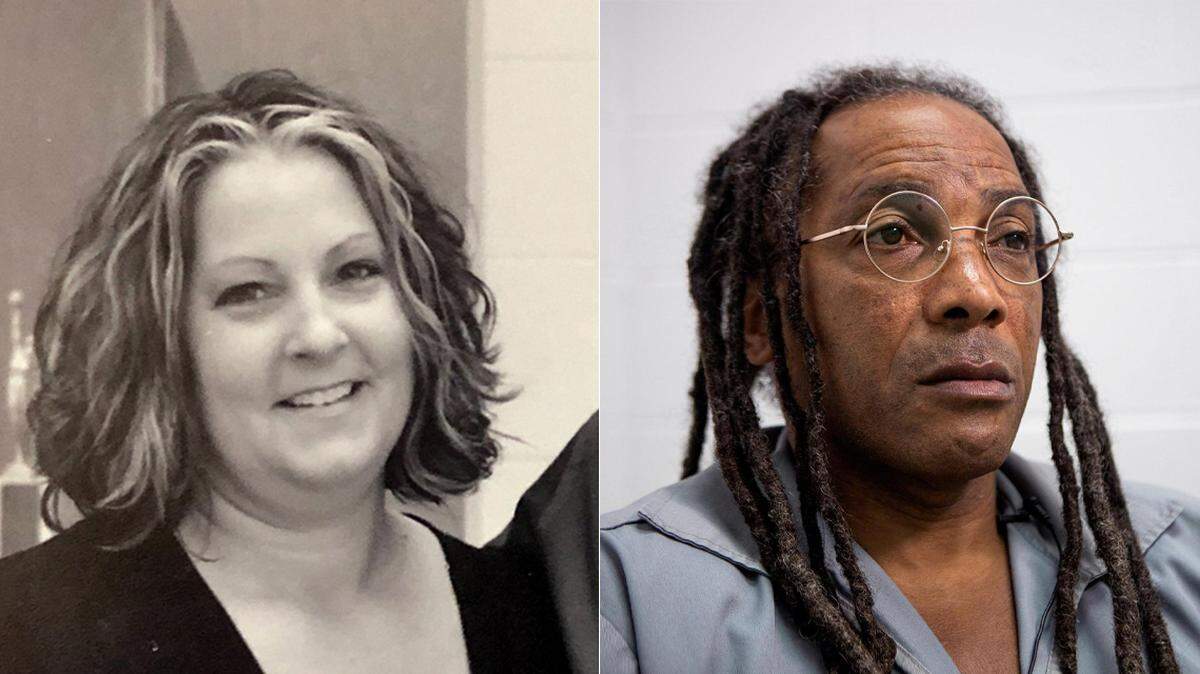
When Suzanne Valdez ran for Douglas County District Attorney last year, her campaign slogan was “raising the standard.” Unlike Charles Branson, the incumbent seeking a fifth term, she was going to bring fairness and feminism to an office that had been charging rape victims instead of their attackers.
After Valdez won, Lawrence defense attorney Bill Skepnek wrote to her to say he was thrilled by her promise to do things differently. Even before she took office, he told her, he wanted to flag the case of one woman in particular who’d been wronged by Douglas County prosecutors — his client, Carrody Buchhorn, who’d been found guilty of murdering a baby in the day care where she worked. The conviction was based on the unsupported testimony of a coroner with a long history of selling juries on nonsense.
Valdez promised to look into it, and in her email back to Skepnek wrote, “When Charles leaves office on Jan. 8, I will inherit many cases that he botched.” Now that Valdez is in office, though, she’s defending her predecessor’s mistakes instead of correcting them.
The Kansas Court of Appeals recently reversed Buchhorn’s conviction, ruling that she was denied a fair trial because her defense counsel failed to adequately challenge Mitchell’s made-up theory that 9-month-old Oliver Ortiz must have been killed instantly — almost exactly five years ago, on Sept. 29, 2016 — when Buchhorn supposedly stomped on his head. Even though there had been no external bruising and no internal swelling or brain injury, Mitchell threw a doll on the floor and jumped on it in front of the jury for dramatic effect.
Yet now, instead of setting the new trial to which Buchhorn is entitled, or maybe even admitting that there’s no evidence against her, and that there was no murder, Valdez is flailing around claiming that Buchhorn is a flight risk because of her “available financial resources as well as plain disdain for this court.”
Buchhorn’s husband Tim is an active duty master sergeant in the U.S. Army and her father cashed in his retirement to pay for her ineffective counsel; there is no private jet waiting on the runway.
As for “disdain,” Valdez cites a monitored phone call while Buchhorn was still in the Topeka Correctional Facility, in which she apparently called District Judge Sally Pokorny a “stupid fucking bitch” for not letting her out of prison immediately after her conviction was overturned.
Objection: Relevance? That Buchhorn would curse the judge who’d sentenced her surely did not shock Pokorny. Or sway her, though that seems to have been the aim.
Soon, hopefully, after multiple indefensible delays, Jackson County Prosecutor Jean Peters Baker is going to do what few of her fellow prosecutors ever do: She’s going to stand up in court, as she has been trying to do since May, and make the case that her predecessors got it wrong 43 years ago when they sent Kevin Strickland to prison for a triple murder that the evidence says he did not commit.
But why is what she’s doing practically unheard of, when wrongful convictions are not?
I asked several current and former prosecutors that question, and learned some things. Reasons 1, 2 and 3: Politics. Correctly or not, Republicans are still under the impression that constituents want to see the system defended. Even when the system got it wrong? Not exactly, though that’s the result.
In this view, Democrats like Baker and St. Louis Circuit Attorney Kim Gardner would be emptying the prisons if given half a chance, so it’s safer to reflexively defend all convictions. “I am not convinced that I’m willing to put other people at risk if you’re not right” about Strickland, Missouri Gov. Mike Parson has said.
In red Missouri, Kevin Strickland faces a hostile system
Missouri Attorney General Eric Schmitt, who is running for Roy Blunt’s U.S. Senate seat instead of running his office, is mainly campaigning against two things: He’s running against mask mandates, even though masks do slow the spread of COVID-19, and he’s running against freeing Kevin Strickland, even though the man is innocent.
Strickland is a 62-year-old Black man in a wheelchair, and in a state as red as Missouri, it would be naive to think that race doesn’t play a role.
Letting the convicted go free is never a popular move in the law enforcement community.
The law itself makes it difficult to right a wrongful conviction. Because the law believes in finality, if the convicted person misses the deadline for an appeal, even through not knowing or not having the resources to keep fighting, well, too bad.
Another reason is practical: Since prosecutors haven’t until recently had the tools to address wrongful convictions, which were at least theoretically being addressed by attorneys general instead, they haven’t been trained to do it, or even to think about doing it. A new law in Missouri and other states changed that.
But in the past, bad convictions were usually corrected quietly, if at all — by prosecutors who allowed the wronged person to re-plead to a lesser charge and then be released on time served, without ever correcting the record. Which did nothing to either improve the system or educate the public.
And then, even prosecutors who habitually lie and cheat their way to convictions only rarely pay any penalty. It’s against both Kansas and federal law for an attorney to put an expert witness he knows to be unreliable on the stand. And it’s the attorney’s responsibility to make sure the testimony is reliable, too. In reality, though, witnesses like Eric K. Mitchell remain quite popular with prosecutors.
When I was a baby cop reporter in Dallas, Texas, decades ago, the joke in the DA’s office was that any fool could convict a guilty man, whereas it took talent to put away the other kind. That wasn’t really true, though, and it still isn’t.
All it really takes is a public that doesn’t care enough to hold those who run the system to account.