Extra, extra: Mayor Quinton Lucas wants nicer coverage from The Star | Opinion
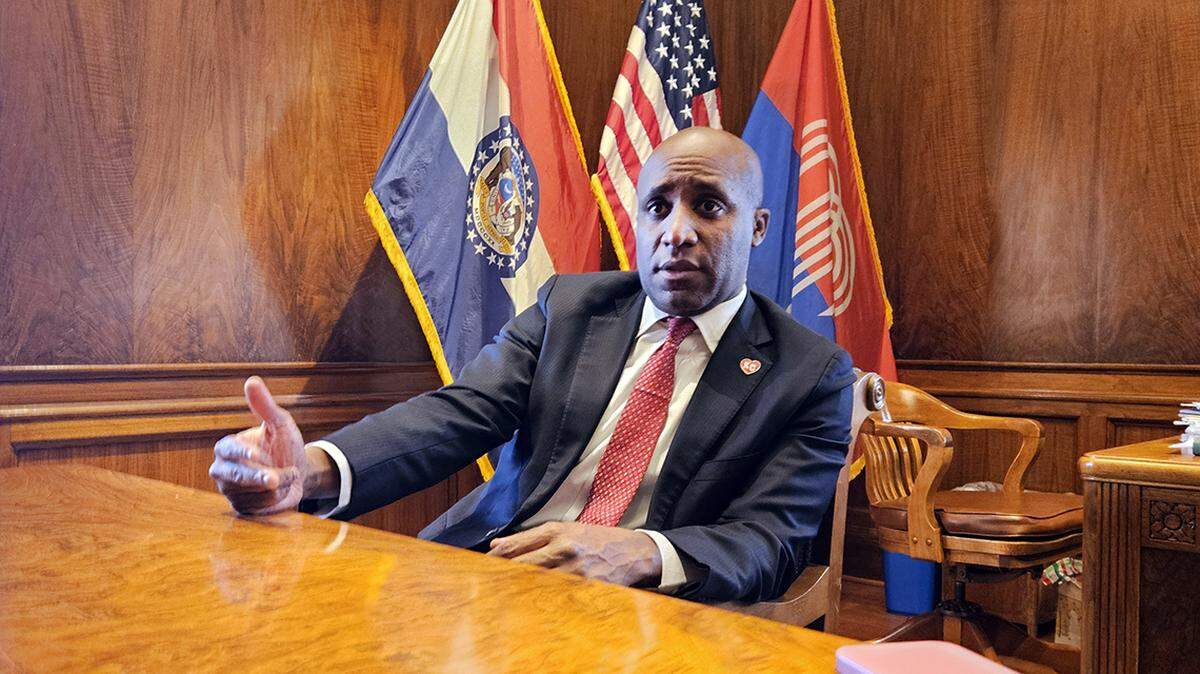
The mayor is a lawyer.
We are reminded of that almost every time Quinton Lucas opens his mouth. Ideas that could be communicated in simple declarative sentences are instead transmitted through a looping kind of legalese. Sometimes it makes him sound smart. Sometimes it is deployed to obfuscate.
Lucas also has a lawyer’s instinct for pressure points — the tiny ambiguities and technicalities where a definition can be narrowed or responsibility can be blurred. That instinct serves lawyers well. It’s less flattering in a mayor.
Along these lines, we’ve got a hot one in today’s paper. A story published this morning by The Star’s Kacen Bayless reveals that the city in 2024 audited this newspaper’s coverage for perceived bias.
More specifically, a senior city staffer paid with your taxes compiled a spreadsheet reviewing 65 Star stories, grading them for tone, framing and perceived bias, and circulated it to Lucas and top officials as something meant to inform his dealings with the paper. It was referred to internally as the “Kansas City Star Bias Report.”
None of that is in dispute.
What is in dispute — or at least what the mayor is trying very hard to dispute — is who ordered this thing up.
Lucas denies that he is responsible for it. Instead, he describes the report as something that was “voluntarily suggested and provided” — whatever that means — and shifts the blame to a former assistant city manager.
There is only one problem. Bayless has the emails. We can read them with our own eyes.
How it started
Start with the basics.
On Nov. 13, 2024, Melissa Kozakiewicz — then an assistant city manager overseeing communications — sends the document to Lucas, his chief of staff, then-City Manager Brian Platt and others. She describes it plainly: a review completed “per the request of City Leadership.”
Lucas does not respond like someone who just received an unsolicited, rogue analysis of the local newspaper.
He thanks her, reviews the work, and moves it forward.
He tells Kozakiewicz to draft a letter to The Star to “address our fair concerns of bias.”
He weighs in on the substance, too — noting that the timeframe didn’t include a period where the paper “relied on few sources to impugn the character of many.” (Again: God knows what he’s talking about.)
The paper trail goes further.
Kozakiewicz didn’t just imply the request came from Lucas. She stated it outright: “Here is the data analysis the mayor asked for,” she wrote in another email at the time.
Nor did she deny it in a recent interview with The Star.
“The mayor had expressed some concern on whether The Kansas City Star was fairly representing the city based on his instinct,” Kozakiewicz said in the interview. “And he wanted to see if his instinct was correct, so he asked me to look into it.”
Lucas’ response
In a long and winding response, Lucas does not so much rebut any of this as retreat into semantics. Take a deep breath:
“It is our office’s recollection that this (audit) was voluntarily suggested and provided to us rather than requested by the mayor’s office. We cannot speak to requests from other ‘City leadership,’ including those copied on the email. Neither our communications staff, nor our current or former Chief of Staff, played any role in compiling any study, nor did we do anything with the study or a subsequent email drafted by the then-assistant City Manager overseeing communications thereafter.”
To roughly translate the mayor there, he’s saying: I didn’t order it, someone else might have, she didn’t work for me, and we didn’t technically produce it — so it’s not mine.
Platt and Kozakiewicz didn’t leave their jobs on good terms. They got run out of City Hall last year. Their exits followed a lawsuit that aired testimony that Platt told staff to lie to news organizations. In some quarters, they’re seen as having taken the fall for a broader deceptive posture toward the press at City Hall — one the mayor did not exactly discourage.
So it’s fair to wonder whether Kozakiewicz might be motivated to speak out by something other than civic honor. And when the mayor starts throwing around his carefully hedged, lawyerly phrasing — all qualifiers and narrow denials — it’s easy to get a little dizzy. Maybe he’s the victim here?
But those emails. They are clear as day. They were written at the time, when everyone involved was still working together — before the lawsuits and the fallout. You can question motives now. The contemporaneous record, as a lawyer might say, is harder to dispute.
Bias or reporting?
There is another piece of this story worth noting: the sheer pettiness — the almost comical oversensitivity — required to direct staff to audit a newspaper’s coverage for negativity. Especially at a time when City Hall was systematically stonewalling reporters seeking basic information, as the Brian Platt lawsuit showed us.
And then there’s what the audit actually flags as “bias.”
A story headlined “Kansas City ranked worst for handling chronic homelessness out of all major U.S. cities” is cited for headline bias. But the underlying fact — that 95.7% of people experiencing chronic homelessness here are unsheltered, the highest rate among major U.S. cities — comes from federal data. If there’s any bias there, it’s City Hall’s bias against the public knowing that.
Another example: a deeply reported piece on an abandoned riverfront park is labeled biased. The story bends over backward to include the city’s perspective, even when officials won’t fully engage. The reporter sends over a detailed list of questions and gets back this illuminating response from a city spokesperson:
“The status of the park is that it remains a passive greenspace along the Missouri River. Currently, Parks & Recreation does not have information on future developments.”
Thanks, guys.
More broadly, the impulse behind the audit misunderstands the basic relationship between people in power and the press. The mayor is not supposed to like his coverage. Neither is the city manager. The job of a newspaper is, in part, to challenge those in charge — to press, to question, to surface uncomfortable facts. It has been this way in this country for 250 years.
Do reporters get things wrong sometimes? Do they overreach? Do they let their biases seep in, consciously or unconsciously? Yes, yes, yes. We are not above criticism.
But turning that frustration into a bureaucratic exercise by tallying up perceived slights and searching for bias in every headline doesn’t make a politician look wronged. It makes him look small. And the mayor has hardly lacked a platform in The Star — 14 guest commentaries since 2017, a lengthy defense of City Hall just three months ago, and editorial board endorsements in both 2019 and 2023.
It is true that, since Platt got the boot, City Hall has been more responsive to reporters and the public. But that actually raises a harder question about the period when it wasn’t. Was the mayor leading his administration back then, or was Platt calling the shots?
It can’t be both.