
Yes, Kansas City needs more, smaller council districts. But this fix is too rushed
Kansas City is set to begin a serious conversation about how its government is chosen and organized, a conversation that is long overdue.
Just before Christmas, City Council members Andrea Bough and Eric Bunch introduced a plan that would change the way council districts are drawn. Their proposal would move the city from the current six-in-district/six-at-large configuration to nine in-district seats, and three at-large council members.
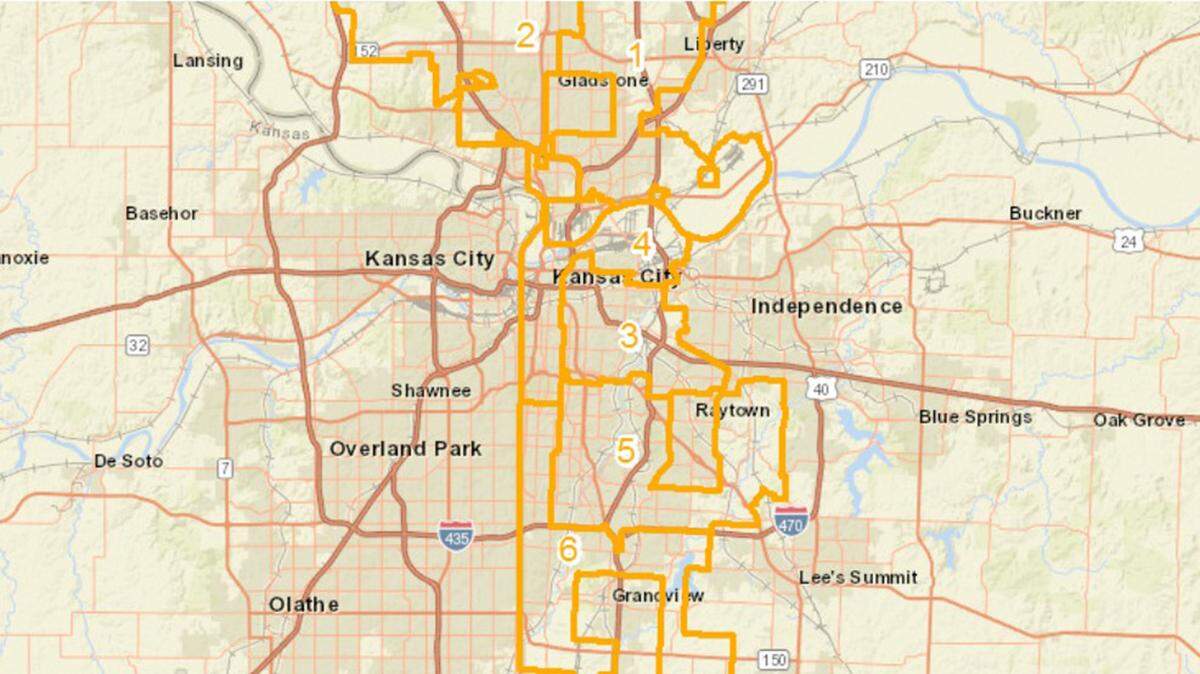
Their plan is flawed, but welcome. Kansas Citians just went through a wrenching redistricting process that enraged some residents north of the river. Some of that anger was misplaced, but it also reflected a brutal mathematical reality: It’s hard to fairly represent a city as big as ours with just six districts.
Under the map that just passed, each in-district council member will represent roughly 84,500 residents. That’s too many. With nine in-district seats, each member would represent around 56,000 people, a much better ratio.
There is even talk of a 12-member in-district configuration, which would mean about 42,000 residents per district. That’s even more manageable.
A 12-district setup would make it easier for the city’s long-neglected Latino population to earn a council seat. It would eliminate at-large seats, which have outlived their usefulness.
It might also provide additional influence for the Northland. A 12-district configuration might provide five seats north of the river, while enabling full representation for neighborhoods north and south of Barry Road. That would make Kansas City better.
Either framework would be preferable to the current 6-6 arrangement.
Unfortunately, the timetable for the Bough-Bunch proposal is too rushed. It calls for a public vote on the change for April 5; if voters said yes, new districts would be drawn by August in time for the city’s 2023 elections.
In order to make the April ballot, though, the City Council would have to make a final decision by Jan. 20. That’s too soon. A question of this magnitude needs thoughtful consideration, not a three-week rush job and a truncated campaign.
A low-turnout April election, hurried and unexplained, might doom new districts for a decade.
Bough appears to realize this. “This is really to start the discussion,” she said. “It would be a Christmas miracle (if) we all agree on what the number should be and put it on the April ballot. I’m not going to hold my breath.”
Here’s a better timetable.
Mayor Quinton Lucas, or the City Council, should immediately appoint a commission to draw a 9-3 map and a 12-member in-district map, setting a May 1 deadline. Much of the legwork for those maps has already been done.
The City Council, and the public, could then use those hypothetical maps as guidance for an August vote on putting a new district arrangement in the city charter. Voters must have a broad understanding of what a new map would look like before they go to the polls, not after.
If they said yes, a new map would already be on the table, ready for quick approval. Drawing the maps now would enable new districts to be in place in 2023.
In 2013, a special commission (Bough was a member) recommended a 9-3 configuration, but the City Council refused to put it on the ballot. That failure directly led to the difficult redistricting debate at the end of 2021.
Kansas City cannot afford a similar mistake now. The people must decide, in 2022, if they want a City Council more responsive to their needs.