What is Cure Violence and how effective has it been at reducing gun violence?
READ MORE
A Cure For Violence
A public health program might be Kansas City’s best chance at preventing gun violence. Will City Hall ever bet big on it?
Expand All
CeaseFire Chicago — now called Cure Violence — was founded by epidemiologist Gary Slutkin in the mid-1990s.
Implemented as a violence reduction program in Chicago in 1999, the model saw early success in reducing gun violence and homicides.
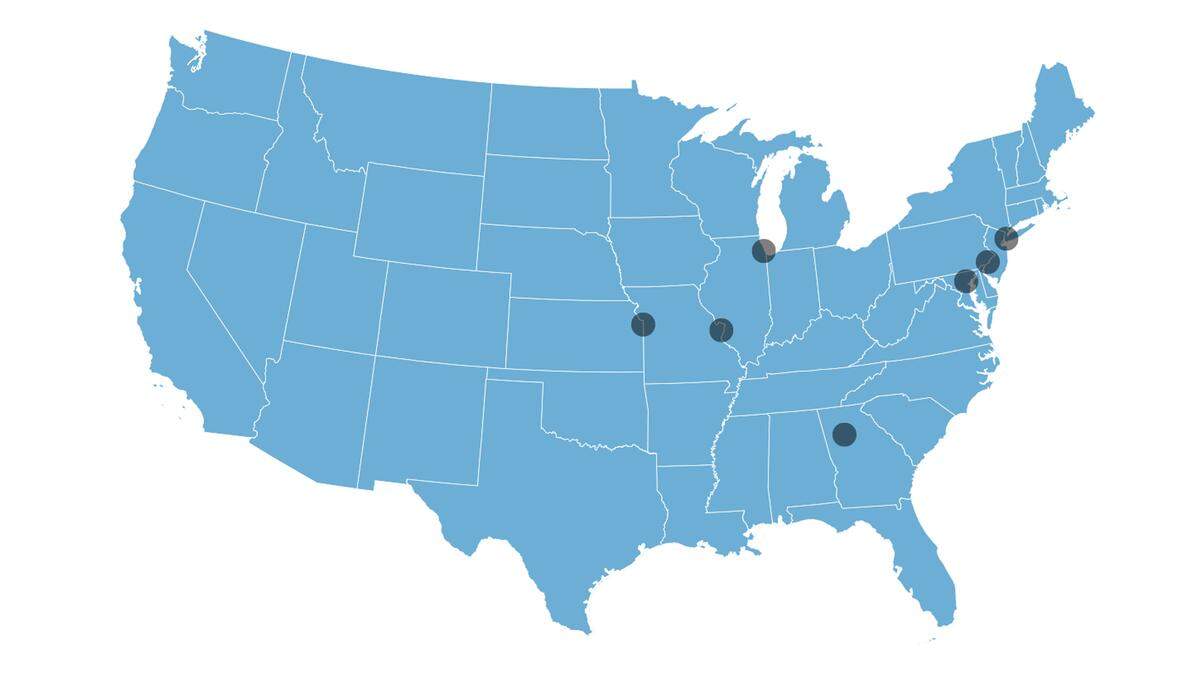
The group received a grant from the Robert Wood Johnson Foundation in 2007 to expand into other U.S. cities. Since then, the program has now expanded to about 20 cities in the United States and multiple countries around the world.
How does it work?
The model utilizes a targeted approach for reduced violence and changed behavior toward gun violence in the neighborhoods in which it is implemented.
The sites hire individuals who have credibility in the communities they are assigned to work in so they can build trust. Community outreach staff are often returning residents who themselves have prior involvement in the criminal justice system.
The model trains community outreach workers to interrupt conflicts, particularly before retaliation, as a means to curb future violence.
Meanwhile, the sites also develop relationships with the community by hosting events. Their overall goal is to change the normalization of violence as a response to a situation.
Is it effective elsewhere?
As cities choose to adopt Cure Violence, they’ve cited numerous studies and empirical reviews that have supported the model’s effectiveness.
A U.S. Department of Justice report of the original Chicago program in 2009 stated that “an examination of the impact of CeaseFire on shootings and killings found that violence was down by one measure or another in most of the areas that were examined in detail.”
A 2012 evaluation of Baltimore’s program by researchers at Johns Hopkins Bloomberg School of Public Health found that three of the four sites where the model was implemented saw reductions in homicides and in nonfatal shootings, among other shifts. Other regions saw mixed reductions, but the researchers concluded that the areas where the program was implemented did for the most part see an overall reduction in homicides.
Likewise, a 2017 review of two sites in New York City by John Jay College of Criminal Justice at The City University of New York found that gun violence rates decreased in the two catchment areas reviewed — gun injuries dropping about 50% in one neighborhood after the Cure Violence program was implemented.