Here are the 10 biggest Kansas City-area state and local races to watch on Election Day
On Tuesday, Kansas and Missouri voters who have not already cast a ballot in early voting will have the chance to hit the polls in the presidential election.
Beyond choosing a new commander in chief, the results will determine major state and local races on both sides of the state line. Ballot questions will shape the future of abortion access, minimum wage and public schools in parts of the metro.
Missourians are choosing a governor and a U.S. senator, among other top officials. And Jackson County will select its next prosecutor.
Kansans will be voting for state representatives to serve in Topeka, and key seats around Kansas City could affect the Republican super majority in the Legislature. Johnson County will choose a new sheriff, and Kansas City, Kansas, will decide on a school bond.
Polls will be open Tuesday from 6 a.m. to 7 p.m. in Missouri, and 7 a.m. to 7 p.m. in Kansas.
You can check your voter registration, your voting districts and your polling place through the Missouri secretary of state and the Kansas secretary of state. Links to those offices and more are available in the comprehensive online voter guide created by The Star and the KC Media Collective, a group of nonprofit newsrooms in the Kansas City area.
At The Star we believe our democracy is stronger when more people have the information they need to participate in it.
We want to make it as easy as possible for you to make the choices you think will best serve you and your community.
This is our guide to 10 of the biggest races in Tuesday’s elections.
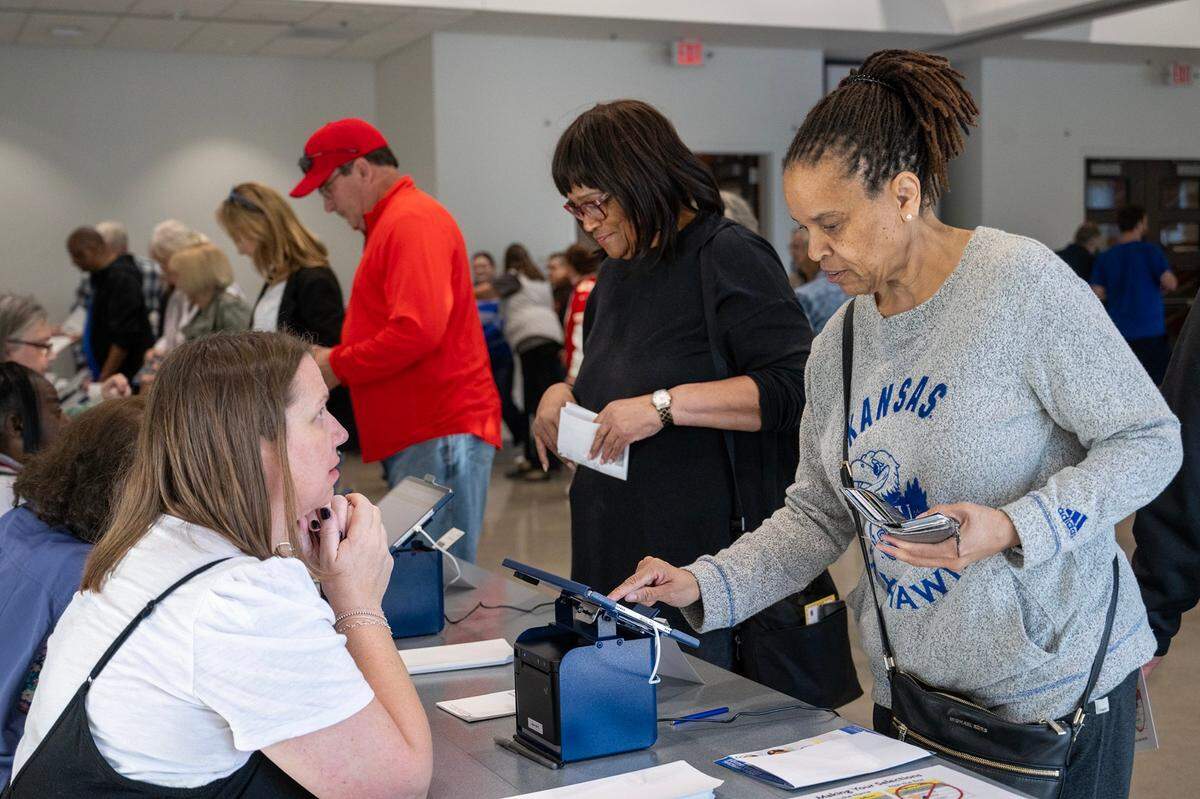
Missouri Amendment 3
Missouri has effectively banned abortion at all stages of pregnancy, “except in cases of medical emergency,” since the U.S. Supreme Court overturned Roe v. Wade in 2022.
But that could change with Amendment 3, Missouri’s ballot initiative that would enshrine abortion rights in the state constitution.
Voter approval of the amendment would almost certainly kick off a series of legal battles that would decide how soon its protections could actually allow abortion access. Courts would need to strike down a series of laws that had restricted abortion in the state for decades.
A “yes” vote on Amendment 3 would support overturning Missouri’s near-total abortion ban.
If the amendment passes, the state would be prohibited from restricting abortion access or limiting state funding to organizations because they provide abortion or contraceptives — mostly impacting family planning and women’s health clinics like Planned Parenthood.
State legislators could still restrict abortion past the point of fetal viability, which is when a fetus could potentially survive outside of the womb. These rights and changes would be written into the state constitution and would be difficult to overturn through legislation.
A “no” vote on Amendment 3 would support Missouri’s abortion laws remaining the same, keeping the current ban on abortion in place. People needing abortions could still legally go to another state, like Illinois or Kansas, to access the procedure.
Missouri Governor
Republican Mike Kehoe and Democrat Crystal Quade are competing to become the state’s next governor. Kehoe, the current lieutenant governor, and Quade, the current state House minority leader, have similar stances on tax credits, economic development and the child care crisis facing the state.
But that’s about it.
The two differ greatly on other key issues bringing voters to the polls like abortion, minimum wage and gun laws.
Quade has made her support for abortion rights and Amendment 3 a central theme of her candidacy. Kehoe cast Amendment 3 as dangerous and has said he would be willing to consider exceptions to the state’s ban for victims of rape and incest, which the law does not include now.
Kehoe said he doesn’t support government-set minimum wages, indicating that the economy – not government – should dictate wages. Quade said she supports the state proposal to raise the minimum wage. She highlighted a portion of the measure that requires many employers with 15 or more workers to provide one hour of paid sick leave for every 30 hours worked.
On guns, Quade said she supports local governments having more authority to set regulations on firearms. Missouri law, in place for decades, largely prevents cities and counties from setting their own rules – instead giving the General Assembly near-total power over gun laws. Quade drew a contrast between the need for guns in rural areas of the state and the situation in large metro areas. Kehoe has asserted that Second Amendment rights are one of the “most fundamental” rights that American citizens enjoy.
Kehoe has notably changed his tone regarding whether President Joe Biden was the legitimate winner of the 2020 election. In a statement this summer, his campaign said Biden “is illegitimate in the eyes of the voters, of his party, and of the world. He should have never stepped foot in the Oval Office, and in November, we are going to right that wrong by overwhelmingly reelecting Donald Trump.”
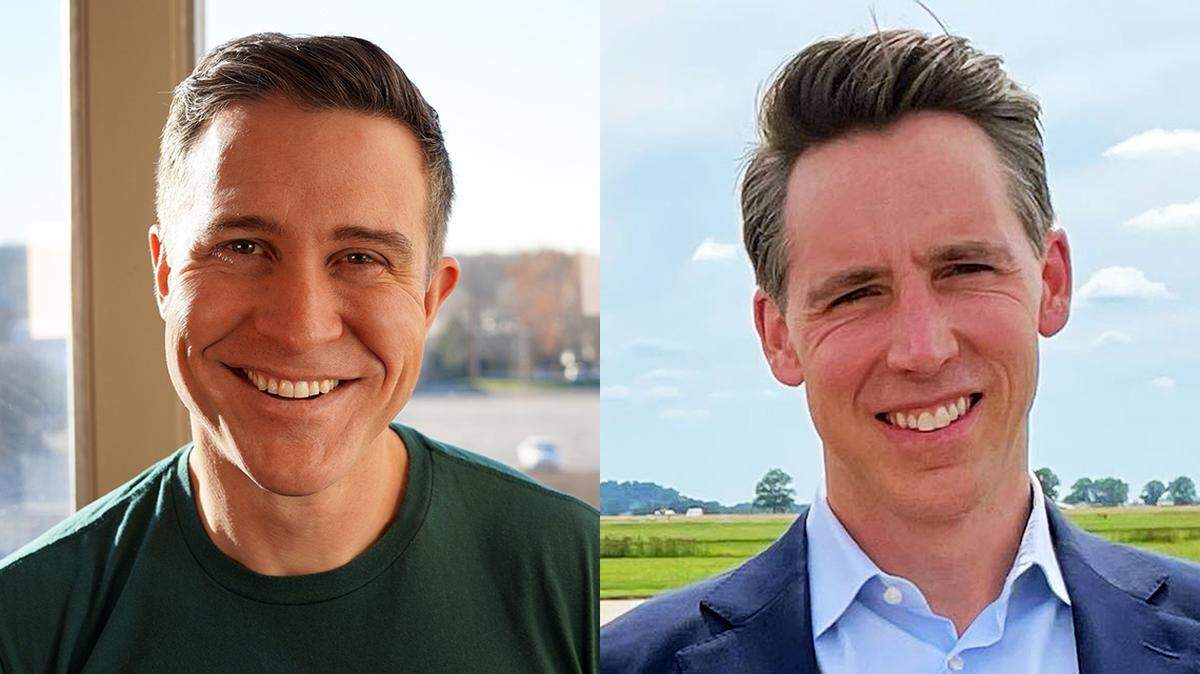
Missouri U.S. Senate
Republican Sen. Josh Hawley is seeking his second term in the U.S. Senate, facing Democratic opponent Lucas Kunce in a race where both candidates consider themselves populists.
Hawley was first elected to the Senate in 2018, after serving as the Missouri attorney general. He is part of a new generation of Republicans focused on issues important to socially conservative, working-class voters. He supports private labor unions but opposes public sector unions. Hawley opposes abortion rights and supports a federal 15-week ban on the procedure. He does not support the U.S. sending military aid to Ukraine, and he has sought increased regulation on large technology companies.
Lucas Kunce served three tours overseas as a Marine before being stationed at the Pentagon. He worked on national security policy at a think tank before running unsuccessfully for Senate in 2022. Kunce supports abortion rights and backs Amendment 3. He also supports military funding for the war in Ukraine. He opposes multinational corporations and has spoken out against foreign ownership of companies, like Anheuser-Busch, and of farmland. He wants to expand health care and legalize marijuana.
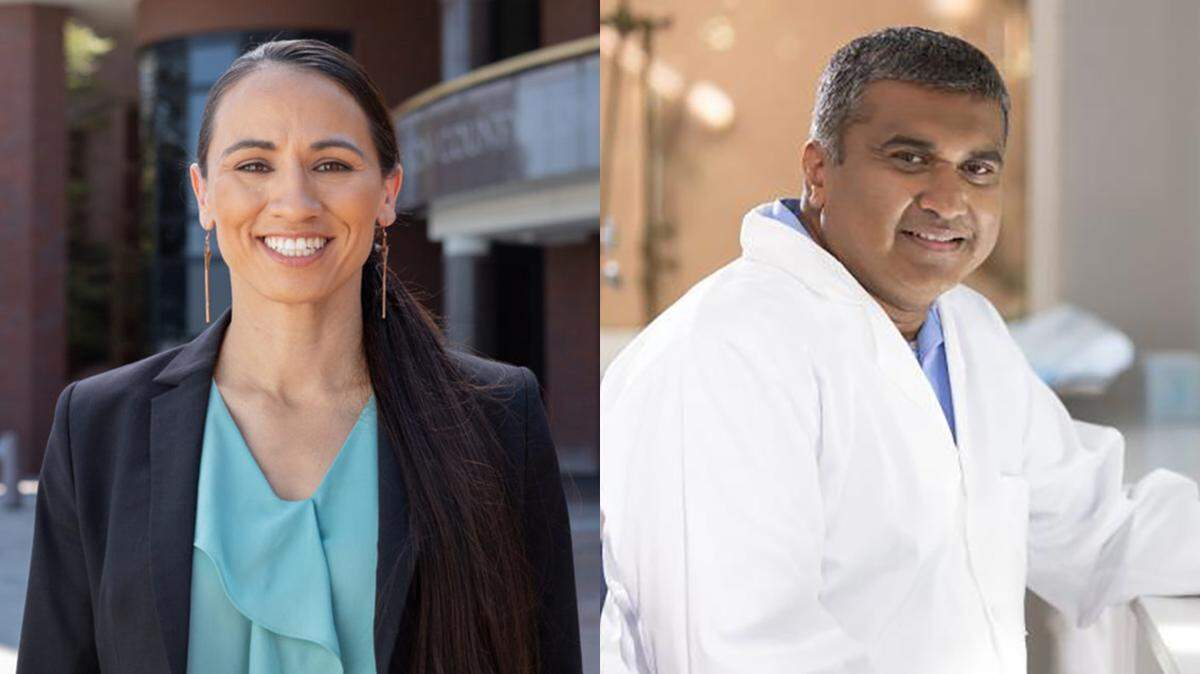
Kansas U.S. House
Sharice Davids, a Democrat, became one of the first Native American women to serve in Congress, and the first out LGBTQ person to represent Kansas, when she was first elected in 2018. She’s running for reelection against Republican Prasanth Reddy.
Before entering politics, Davids was an attorney and worked at the Pine Ridge Indian Reservation. She portrays herself as a moderate seeking bipartisan compromise on Capitol Hill. She supported most of the major legislation passed during President Joe Biden’s first term, including the American Rescue Plan, which passed with only Democratic support, the bipartisan infrastructure deal, a bill to help make more semiconductors in the U.S., and a bipartisan deal aimed to reduce gun violence. She is in favor of abortion rights.
Prasanth Reddy is a cancer physician. He serves in the Air Force Reserve as a lieutenant colonel and — while he has stepped aside from Labcorp, where he was senior vice president for oncology — he still sees cancer and military patients. Reddy supports tougher security measures at the southwestern border. He opposes the Biden administration’s effort to make it easier for some people who have entered the country illegally to get a pathway to citizenship. He opposes student debt forgiveness and believes abortion rights should be left to the states.
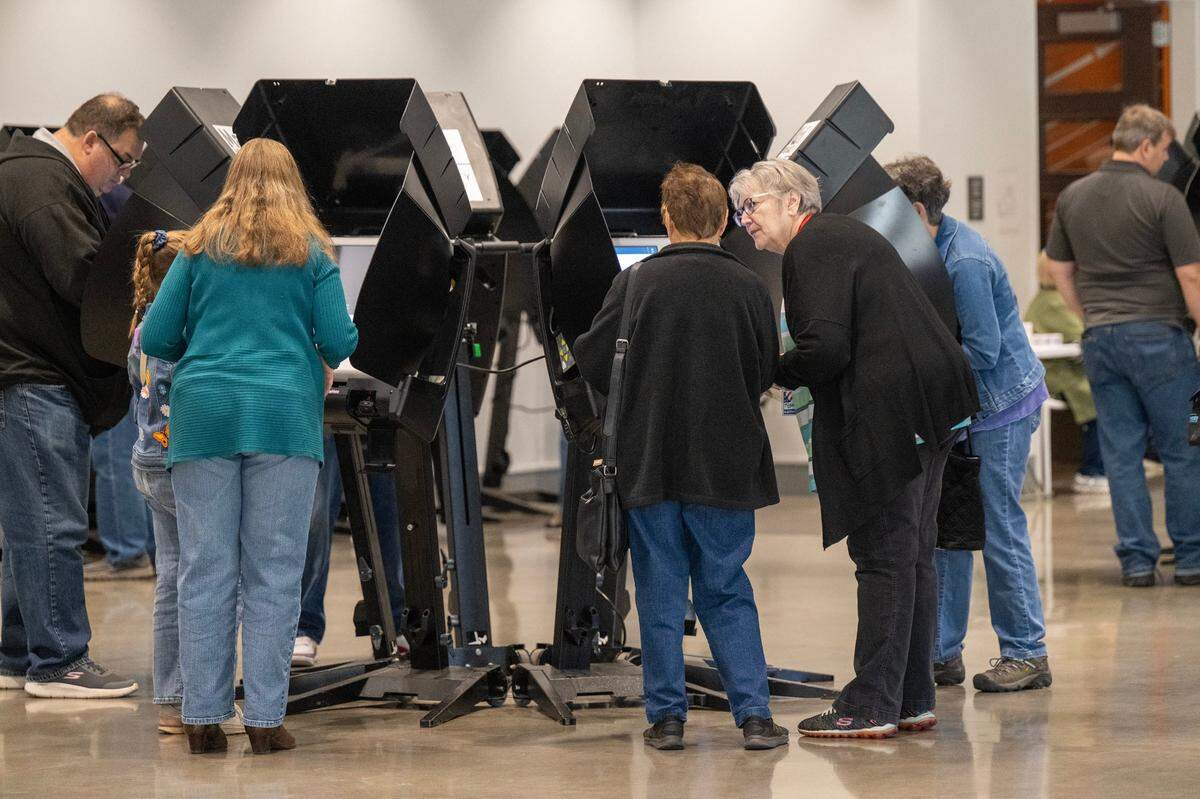
Kansas Legislature seats in JoCo
Each of Kansas’ 125 House seats and 40 Senate seats are on the ballot. Republicans are comfortably in power, but they have razor-thin margins for preserving veto-proof supermajorities in both chambers. Kansas requires two-thirds support in both chambers to override vetoes.
Democrats are hoping to flip as many as three Johnson County senate seats currently held by Republicans. They’re also focused on two House districts there — one they hope to pick up and House District 15, which Democratic state representative Allison Hougland is defending in Olathe.
Hougland, a realtor, was first elected to the House in 2022. She’s up against Lauren Bohi, an administrative assistant at pediatric behavioral health clinic KidsTLC.
House District 39 includes Shawnee, Lake Quivira and parts of Bonner Springs. Democratic challenger Vanessa Vaughn West is running against Angela Stiens, the Republican appointed to serve the remainder of Owen Donohoe’s term after he abruptly resigned earlier this year. Stiens is an occupational therapist who kept her seat on the Shawnee City Council after being appointed to the statehouse. West, who also lives in Shawnee, works as director of diversity and inclusion at a Kansas City law firm.
In Senate District 10, Democrat Andrew Mall is attempting to unseat Mike Thompson, who was a longtime TV meteorologist in Kansas City before his election in 2020 to represent Shawnee, Lake Quivira and part of Lenexa. Mall is a former president of the Kansas Association of Realtors.
Republican incumbent Kellie Warren, an attorney, is seeking re-election to Senate District 11 against fellow attorney Karen Thurlow. District 11 includes eastern parts of Leawood and Overland Park.
Republican Robert Olsen isn’t running for a fourth term in Senate District 23, which covers much of Olathe in south-central Johnson County. That means Democratic challenger Stacey Knoell is up against state representative Adam Thomas, who works in restaurants when the Legislature is out of session. Knoell, a former public school teacher, currently serves as executive director of Gov. Kelly’s Kansas African American Affairs Commission.
Other Missouri ballot questions
Besides Amendment 3, three other questions on Missouri ballots are particularly contentious. They involve sports gambling, voting regulations and minimum wage for workers.
Amendment 2 would legalize sports betting in Missouri.
Voting “yes” would allow people in Missouri over the age of 21 to place bets on professional and collegiate sports games in casinos and online starting in December 2025 at the latest. The state of Missouri would impose a 10% tax on sports betting, with the first $5 million allocated to a fund intended to help prevent compulsive gambling. The remaining money would go to K-12 schools and higher education.
Voting “no” would keep Missouri sports betting laws the same as they have been since the 1990s, prohibiting state-sanctioned sports gambling.
Amendment 7 would ban future use of ranked-choice voting and amend the state constitution to specify that only U.S. citizens can vote, which is already illegal.
The amendment would have three main impacts: It would clarify that only U.S. citizens are allowed to vote in Missouri elections — which is already the case under state and federal law. It would ban ranked-choice voting in the state, with an exception for St. Louis’ nonpartisan citywide primary races, which already use this method. It would allow only one candidate per party to win a primary and proceed to the general election, again with an exception for St. Louis’ nonpartisan primaries.
A “yes” vote supports changing Missouri’s constitution in several ways that wouldn’t have a significant impact on the way voting currently works in the state — but would prevent certain changes to the electoral system from being made in the future.
A “no” vote opposes these changes to Missouri’s constitution. If the amendment fails, nothing would immediately change about the way elections are run in Missouri. But it could allow for state or local officials to introduce ranked-choice voting or mixed-party primary elections in the future.
Proposition A would raise Missouri’s minimum wage and require most employers to provide paid sick leave. If the proposition passes, the base pay for workers would increase from $12.30 an hour to $13.75 an hour on Jan. 1, 2025, and to $15 an hour in January 2026. Proposition A would also require employers with 15 or more workers to provide one hour of paid sick time for every 30 hours worked.
A “yes” vote supports raising the minimum wage beginning in January 2025 and requiring many employers to provide paid sick time.
A “no” vote opposes the proposition, meaning Missouri’s minimum wage will increase slightly in 2025 and beyond, in line with the Consumer Price Index. The minimum wage is currently $12.30, a 30-cent increase from 2023.
Kansas State Board of Education
Kansas State Board of Education districts 2 and 4 – which collectively encompass significant portions of Johnson and Wyandotte counties – both feature battles between Democrats with experience in public education and Republicans critical of what they say are failings in the system.
Conservatives currently control four of the board’s 10 seats, but could have a majority if they pick up just two seats. The prospect worries Democrats and more moderate Republicans, who fear a right-wing board would support efforts by the GOP-controlled Legislature to incentivize private education.
Melanie Haas, a current board member running for reelection as a Democrat in District 2, which includes much of eastern Wyandotte County and northeast Johnson County, faces Republican Fred Postlewait, a retired Leavenworth Public Library computer systems manager who helped lead efforts to oppose a Kansas City, Kansas, bond issue to rebuild public schools.
If re-elected, Haas said she’d like the board to continue its focus on improving early literacy. Postlewait on his website says over the past decade “social engineering has replaced education.” In an interview, he faulted “DEI” and the presence of cellphones and laptops in elementary schools.
In District 4, which includes areas of northern Johnson County and southwest Wyandotte County, Democrat Kris Meyer opposes any move toward vouchers or a voucher-like system. Meyer, who has previously worked as an elementary school principal in De Soto, said that while Kansas public schools can always improve, they are “doing a great job.” She said her focus would be on fully funding public schools — especially special education. She’d also prioritize seeking parental input and figuring out ways to retain and attract quality educators.
Meyer has been critical of her opponent, Republican Connie O’Brien, over her stance on education funding. O’Brien, a former state legislator from Tonganoxie, answered a voter guide questionnaire that she strongly supports eliminating the U.S. Department of Education and responded “strongly agree” to the statement that “dollars should follow the child” in education.
Johnson County sheriff
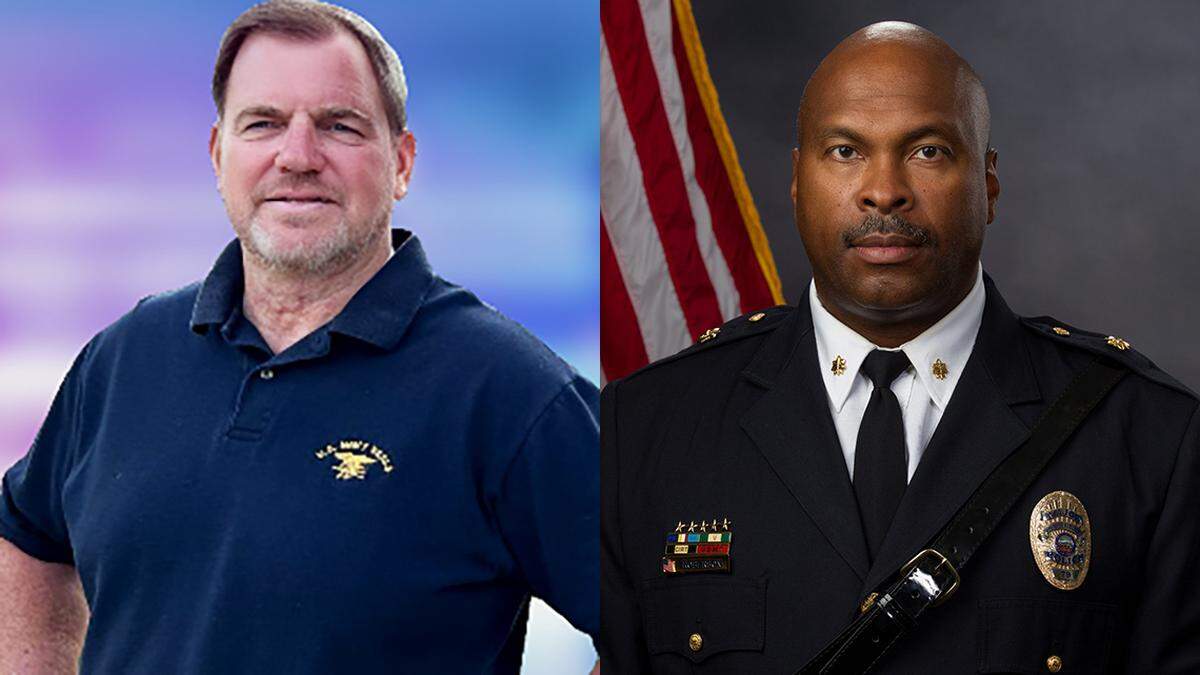
After defeating incumbent Johnson County Sheriff Calvin Hayden in the primary, Republican Doug Bedford will face Democrat Byron Roberson.
Bedford is the former undersheriff for Johnson County, and a former Navy SEAL. He said he is running for sheriff to “return it to its primary mission of public safety and restore public trust in the office.” Bedford said he wants to restore “multi-agency task forces” to target the distribution of illegal fentanyl in the metro. He also supports increasing school safety with school resource officers. And he said he prioritizes providing resources and assistance to address mental health concerns in the community.
Roberson serves as the Prairie Village police chief, a role he was appointed to in 2021. He said he would focus on prioritizing safety over politics and improving communication between the sheriff’s office and other law enforcement departments if he were to be elected. He said he is also focused on mental health, including providing training for crisis intervention and de-escalation techniques. He believes in “fostering a culture of professional development in the sheriff’s office” by supporting employees.
Jackson County prosecutor
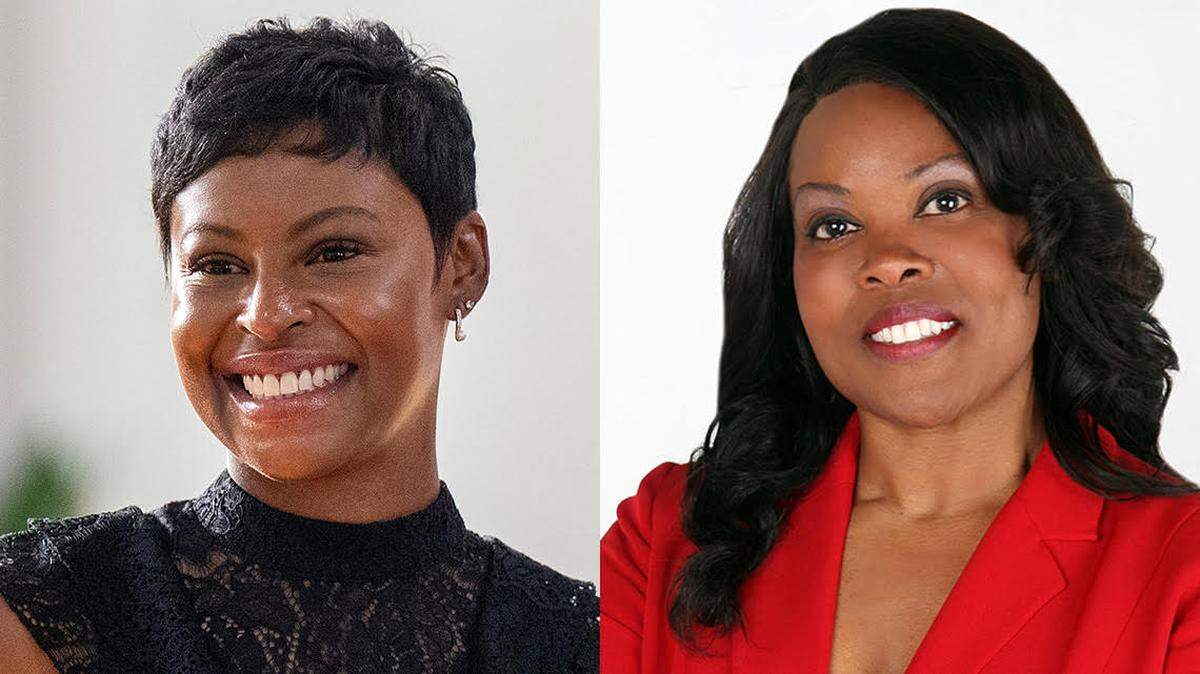
Jackson County Prosecutor Jean Peters Baker is not seeking re-election, so it’s an open race for her countywide seat between Democrat Melesa Johnson and Republican Tracey Chappell.
Johnson is Kansas City Mayor Quinton Lucas’ director of public safety and oversees Partners for Peace, a citywide anti-violence strategy. As prosecutor, she said she would seek to establish new violence prevention and intervention programs, and to increase support for existing ones. She would create a new property crimes division to focus on theft and burglary. Johnson wants to improve access to cellphone data analysis, to charge fentanyl distributors and to improve witness protection and advocacy for victims of crimes. She said she’s committed to making her office inclusive, reflecting the diversity of the community.
Chappell was a senior assistant county counselor for Jackson County. She served as a special representative for the Missouri Office of Chief Disciplinary Counsel and was the first African American woman to serve as the prosecutor in Blue Springs. Chappell has six “common-sense priorities” that she says will reshape the criminal justice system in Jackson County. Those areas of focus include prosecuting violent offenders, prosecuting property crimes, protecting the rights of victims, engaging the community and law enforcement to reduce crime, reestablishing trust and transparency in the prosecutor’s office and expanding mental health courts.

Kansas City, Kansas Public Schools bond
Voters living within the boundaries of the Kansas City, Kansas, Public Schools district will decide whether to improve a capital plan that would rebuild two middle schools, consolidate two elementary schools as one and put an addition on the Sumner Academy of Arts and Science.
It is a step district leaders say will enhance student opportunity in the district, one of the largest in the state, where some students learn in new buildings while others get by in crumbling facilities.
The ask comes six months after voters widely rejected a more expansive effort that came with a $420 million price tag — more than twice the amount of the current proposal. During a single-issue special election in May, that initiative failed by a margin of 58% to 42%, with fewer than 9% of voters casting a ballot.
The vote is also happening at a time when local government leaders face heightened scrutiny and pressure over property tax bills. In Wyandotte County, both the Unified Government Board of Commission and the Kansas City, Kansas Community College, placed caps on property tax collections this year, bucking the advice of top staffers and triggering budget cuts.
The failure to get voter approval in May sent school administrators back to the drawing board. And the newest plan is designed to keep property tax rates flat next year.
KCKPS is home to some of the state’s oldest school buildings. As populations outgrew the spaces within them, many students today attend class in mobile trailers, including at Sumner and Central Middle School.
During an interview with The Star, Superintendent Anna Stubblefield said the challenges the district faces remain — and the need is greater than the resources available. Officials learned in May that voters understood those needs but wanted an option that would not increase taxes, she said.
The $180 million plan would rebuild Central and Argentine middle schools. Silver City and Noble Prentis elementary schools would be razed, and its students would attend a single, new building. And an addition would be built on the historic and prestigious Sumner Academy to phase out the need to hold classes in trailers.
The Star’s Jonathan Shorman, Kacen Bayless, Matt Kelly, Daniel Desrochers, Sarah Ritter, Katie Moore, Bill Lukitsch and Natalie Wallington contributed.