Missouri votes on minimum wage and paid sick leave. What to know about Proposition A
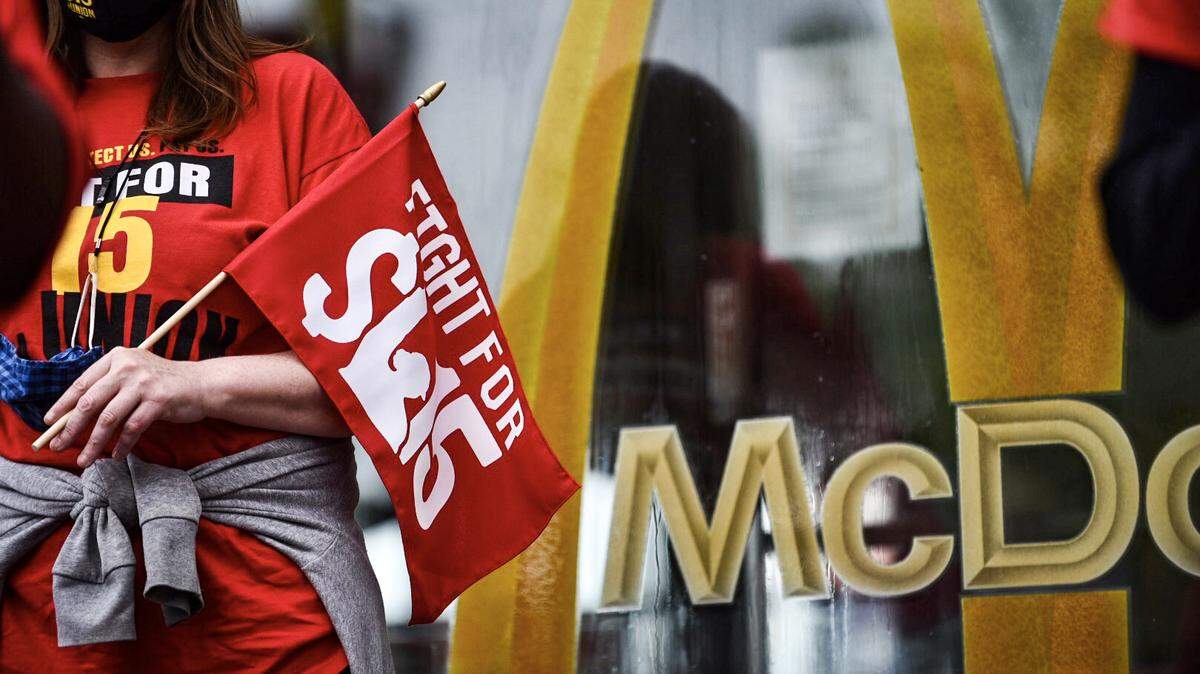
Missouri voters will decide this fall if they want to increase the minimum wage and let workers earn paid sick days.
Proposition A is one of six Missouri ballot measures appearing in the November 5, 2024 general election, including measures on abortion, sports gambling and riverboat casinos.
In May, a campaign called Missourians for Healthy Families and Fair Wages, submitted 210,000 signatures to get the proposed law on the ballot.
With excused absentee voting already in full swing, and in-person early voting starting on Tuesday, Oct. 22, now is the time to decide whether to vote yes or no.
Here is an overview of Missouri’s Proposition A. The full text of the proposition is available on the Missouri Secretary of State’s website.
What is Proposition A?
The question has two parts, affecting Missouri’s minimum wage and paid sick leave policy.
The ballot measure would raise the minimum wage gradually. It would grow to $13.75 an hour on Jan. 1, 2025 and to $15 an hour in January 2026. The wage would then be adjusted annually based on inflation. Governments, school districts and educational institutions would be exempt from the increases.
Proposition A would also require employers with 15 or more workers to provide one hour of paid sick time for every 30 hours worked. According to the proposal, the earned sick leave provision would not apply to government workers, retail or service employees who work for a business that makes less than $500,000 a year, people people who are incarcerated, golf caddies, and babysitters, among others.
What are the arguments for Proposition A?
Richard von Glahn, campaign manager for Missourians for Healthy Families and Fair Wages, said the current minimum wage is not enough. Currently, a full-time worker makes as little as $492 a week.
“Full time workers deserve better than poverty. But right now, unfortunately, with the minimum wage that we have, that’s what we get,” he said.
By including paid sick time in the proposition, von Glahn said the goal was to extend this benefit to more Missourians.
“Paid sick days are very common among executive and upper-level higher-paid positions, but everybody gets sick through no fault of their own,” he said.
Over 500 small business owners from across the state signed a letter of support for Proposition A. The campaign’s website lists over 130 Missouri organizations that support the measure, including unions, religious groups and health organizations.
What are the arguments against Proposition A?
The Missouri Chamber of Commerce opposes the proposed law. Kara Corches, interim president & CEO, said that higher minimum wage would cause the cost of goods to increase.
“We are in a very tight labor market. If an employee does not believe their wages are competitive, then they likely can go somewhere else and find a wage that does meet their needs,” Corches said.
She said the sick leave policy opens employers up to frivolous lawsuits, because she believes the definition of “retaliatory action” is too broad.
Corches said the Missouri Chamber of Commerce generally encourages its members to offer competitive wages and benefits, “but the approach to mandate an amount, and paid sick leave, just isn’t the right approach in our free enterprise system,” she said.
Some 1,300 employers are directly represented by the Missouri Chamber of Commerce. Corches said that multiple retail and restaurant associations also oppose the law.
A representative for the Kansas City Chamber of Commerce stated they are not taking a stance on Proposition A.
What would be the impact of Proposition A?
Economists have long debated the effects of raising the minimum wage on inflation, unemployment and businesses closing. Many scholars believe that those negative effects are relatively small.
In a 2021 study, Alan Manning with the London School of Economics looked at the effects of raising the minimum wage in the United States and around the world.
He found that higher wages meant companies have higher labor costs and less need to hire workers, but they spend less on hiring because workers tend to stay longer at their positions. For employees, they are more productive, but could also lose benefits like meal breaks or training. With higher wages, teenagers are more likely to get jobs.
A 2021 study by Jeffrey Clemens of the University of California at San Diego found that even though raising the minimum wage causes little to no job losses, workers can end up with stricter schedules, fewer health benefits or training, and higher costs for goods.
Missouri’s cashiers, restaurant hosts, dishwashers and fast food workers are some of the most likely to receive raises under Proposition A. At least ¾ of these workers were paid less than $15 an hour in 2023, according to the U.S. Bureau of Labor Statistics.
Proposition A would mean “stable living” for Kaamilya Hobbes and Allen Strickland, Kansas City parents of three. The pair have advocated for higher wages a decade between the two.
Hobbes makes $13.44 an hour at Arby’s. During her recent high-risk pregnancy, Hobbes had to miss doctor’s appointments because she was low on gas or had to work. If Prop A passes, she could get a raise and start earning sick leave in as little as two months.
Strickland, a stay-at-home dad and DoorDash driver, said, “I would like to be able to provide stable living for my family to where I won’t have to worry about certain housing or certain food costs.”
How do Missouri’s current wages and leave policies compare to the rest of the nation?
Missouri’s minimum wage is currently $12.30 an hour. Voters approved the last two minimum wage increases in 2018 and 2006.
Nearby, Iowa and Kansas employers follow the federal minimum wage of $7.25 an hour, while Arkansas’s minimum wage is $11 and Illinois is $14.
Missouri does not have a state-wide paid sick leave policy, though 15 states, including Colorado and Minnesota, have paid leave laws. As of March 2024, 19% of American workers did not have paid sick days, according to a Bureau of Labor Statistics report. For those in the lowest quarter of wages, 40% went without paid sick time.
How will Proposition A appear on the ballot?
Do you want to amend Missouri law to:
increase minimum wage January 1, 2025 to $13.75 per hour, increasing $1.25 per hour each year until 2026, when the minimum wage would be $15.00 per hour;
adjust minimum wage based on changes in the Consumer Price Index each January beginning in 2027;
require all employers to provide one hour of paid sick leave for every thirty hours worked;
allow the Department of Labor and Industrial Relations to provide oversight and enforcement; and
exempt governmental entities, political subdivisions, school districts and education institutions?
State governmental entities estimate one-time costs ranging from $0 to $53,000, and ongoing costs ranging from $0 to at least $256,000 per year by 2027. State and local government tax revenue could change by an unknown annual amount depending on business decisions.
Fair Ballot Language:
A “yes” vote will amend Missouri statutes to increase the state minimum wage beginning January 1, 2025 to $13.75 per hour and increase the hourly rate $1.25, to $15.00 per hour beginning January 2026. Annually the minimum wage will be adjusted based on the Consumer Price Index. The law will require employers with fifteen or more employees to provide one hour of paid sick leave for every thirty hours worked. The amendment will exempt governmental entities, political subdivisions, school districts and education institutions from the minimum wage increase.
A “no” vote will not amend Missouri law to make changes to the state minimum wage law.
If passed, this measure will have no impact on taxes.
The Star’s Kacen Bayless contributed to this report.
Have more questions about the November election in Missouri or Kansas? Ask the Service Journalism team at kcq@kcstar.com.
This story was originally published October 17, 2024 at 4:49 PM.