Extended GOP control of Missouri would affect KC. What it could mean on crime, guns, taxes
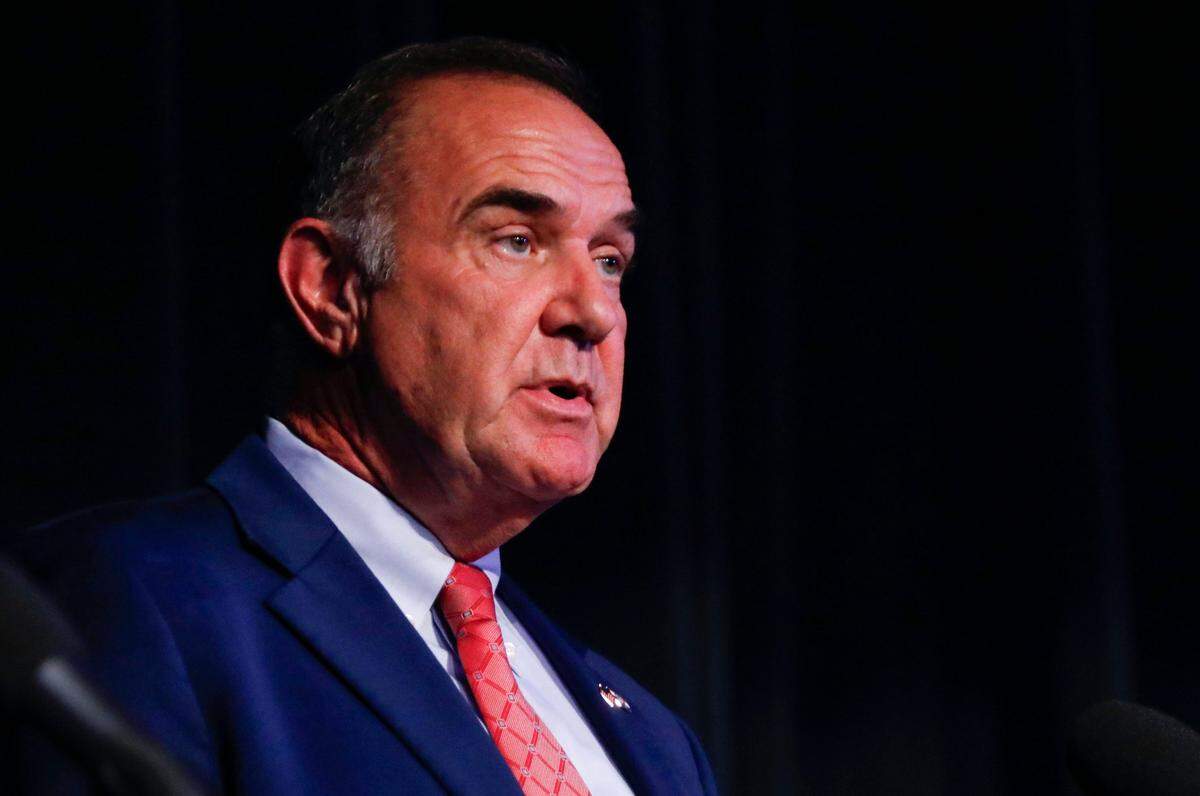
When Missouri Lt. Gov. Mike Kehoe campaigned in the Kansas City area in the final days before the August primary, the Republican nominee for governor predicted his party would go on to dominate the general election.
“The reality is, the way Missouri is leaning … the winners in most of your primaries in August are likely going to be your winners in November,” Kehoe said in late July.
As Election Day approaches, Missouri Republicans are poised to extend their total control of state government for at least two more years. Even as Democrats campaign in the hope of a major upset, polling and recent history suggest Republicans will continue to hold every statewide office along with significant majorities in the General Assembly.
A GOP sweep would carry consequences for Kansas City, a Democratic-leaning city where local leaders sometimes chafe at state officials and policies.
A Republican governor and a Republican-controlled legislature would almost certainly put a halt to any renewed discussion of Kansas City assuming control of its police force, one of the few state-controlled departments in the country. Kehoe and GOP lawmakers have signaled they plan to focus on crime but have offered few specifics.
A Republican attorney general would potentially fight local efforts to restrict firearms. GOP lawmakers have shown little interest in giving cities and counties more power to regulate guns, even as Kansas City tries to combat shootings and homicides.
Republican lawmakers have been monitoring the debacle surrounding Jackson County’s property tax assessments and could seek to reform the process, possibly with bipartisan support. Some have also questioned the earnings tax in Kansas City and St. Louis, a crucial source of revenue for city government.
And while both Kehoe and House Minority Leader Crystal Quade, the Democratic candidate for governor, agree on the importance of working to retain the Kansas City Chiefs and Royals, the shape of any incentive package may depend on who is governor.
All told, the sometimes tense – sometimes productive – relationship between Jefferson City and Kansas City appears set to continue.
“Well, I think it only bubbles up when they do something that we perceive as being silly, which they do from time to time,” Sen. Mike Cierpiot, a Lee’s Summit Republican, said of tensions between Kansas City and the Capitol.
“Fortunately, from my point of view, St. Louis has been more likely to do that than we have,” Cierpiot said. “And so as long as they do just things that are good for the community and get away from this, all this woke stuff, I think things will be fine.”
Public polling suggests Republicans are on track to perform well in the Nov. 5 election, when voters will cast ballots for lieutenant governor, attorney general, secretary of state and treasurer, in addition to governor.
Kehoe had nearly 52% support to 36% for Quade in a September survey by Emerson College Polling and The Hill. An August poll from Saint Louis University and YouGov surveyed likely voter support in all statewide races. Kehoe had a similar level of support in that poll and every Republican candidate for statewide office had over 50% support.
Democrats last won the governor’s office in 2012 and last won a statewide election in 2018, when Democrat Nicole Galloway won a full term as state auditor (Missouri elects state auditor during midterm elections, all other statewide offices are elected during the presidential election).
But even as Missouri has moved rightward over the past decade, Kansas City has remained a Democratic stronghold, sending U.S. Rep. Emanuel Cleaver to Congress and numerous Democratic state lawmakers to Jefferson City. The city has also helped power progressive ballot measure victories, including Medicaid expansion and increases in the minimum wage.
Democrats expect Amendment 3 won’t be any different. Kansas City is expected to strongly support the measure, which would overturn the state’s abortion ban. The General Assembly approved the ban in 2019 but it took effect in 2022 after the U.S. Supreme Court overturned the federal right to an abortion.
“We continue with this fascinating state that I think, in a week, will support reproductive rights for women in Missouri, but will also elect people who do not,” Kansas City Mayor Quinton Lucas said.
“I think that is interesting,” Lucas added. “I think it speaks to a pathway for the future of the Democratic Party, but it also shows a lot more work ahead.”
Rep. Ashley Aune, a Democrat who represents portions of Kansas City in Platte County, said the political distance between Jefferson City and Kansas City means “a continued push and pull between the state and the city.”
The presence of former state lawmakers in local government helps bridge the divide between local and state officials, Aune said. She named Wes Rogers, a Kansas City council member who was previously a Democratic state representative, as an example.
Still, the gap will exist until there’s “more of a balance” in Jefferson City, she said.
“Unfortunately, the lack of balance means that there’s no real incentive to work across the aisle from the majority party,” Aune said. “And until we balance that out, we’re not going to see – we’re not going to see that work happening.”
Police control
Police control marks a major area where the Republican viewpoint will likely continue to prevail over the next few years.
The Kansas City Police Department is governed by a six-member Board of Police Commissioners, with five appointed by the governor. The mayor fills the sixth seat.
State control is an unusual system – the vast majority of departments across the country are controlled by local governments. Kansas City officials and civic leaders have long argued that police should be brought under the control of the city council, arguing the current arrangement allows Jefferson City to exercise too much power over policing.
They also say it’s a matter of basic fairness. Kansas City is required to fund the department but can’t govern it.
“I think local control would help us, and that’s something that comes out of Jefferson City,” said Sen. Barbara Washington, a Kansas City Democrat.
While Quade supports local control, Kehoe wants to retain the current system.
Kehoe, who is endorsed by numerous law enforcement groups, “supports the current governance model for the KCPD as it provides a system of checks and balances between the local leaders, the legislature, and the governor,” a campaign spokeswoman said earlier this year.
Kehoe has promised to implement a crime plan if elected but has been vague on details. He has indicated it includes measures aimed at recruiting and retaining more law enforcement officers, both in Kansas City and elsewhere. The Kansas City Police Department currently has more than 100 funded but unfilled officer positions, Mayor Quinton Lucas’ office said earlier this month.
“Well, I think No. 1, we’re really going to prioritize public safety, getting more cops on the street in Kansas City,” House Majority Leader Jonathan Patterson, a Lee’s Summit Republican, said. If reelected, Patterson is expected to become the next House speaker.
“That’ll be important for the World Cup and attracting businesses to Kansas City.”
Gun restrictions
The GOP hopeful for governor also opposes any significant move to restrict firearms, an issue that’s bedeviled Kansas City leaders.
“Every time we put more restrictions on a citizen’s Second Amendment rights, we actually hurt the citizens who are trying to do this law-abiding and legally,” Kehoe said during a September debate.
Kansas City recorded record and near-record numbers of homicides in recent years, even as homicides fell in many major cities across the country. Last year was the deadliest on record, with 185 killings, according to a count kept by The Star. So far in 2024, 130 people have been killed in Kansas City.
High-profile episodes of gun violence have also rattled the area. A shootout at the Kansas City Chiefs Super Bowl rally in February left one bystander dead as thousands fled in a chaotic scene. In August, a popular chef was shot and killed outside his Brookside restaurant; two teenage boys have been charged in the shooting.
Kansas City and Jackson County officials – and area Democratic lawmakers – have called for the General Assembly to offer local governments more flexibility in setting gun regulations. State law for decades has mostly prohibited localities from imposing their own restrictions.
“We have a very violent community with respect to guns, and there could be some leeway on allowing us to make some of those decisions that are best for our community, because what’s best for Kansas City may not be best for the state, and vice versa,” Washington said.
Property tax fight
Even as Republicans dismiss requests for firearms restrictions, they are listening intently to calls to intervene in the fight over Jackson County property taxes.
The Missouri State Tax Commission in August issued an order mandating that the county roll back the assessment values on 75% of its more than 300,000 property parcels due to alleged errors by the county’s assessment department. The order came after Missouri Attorney General Andrew Bailey, a Republican on the November ballot, filed a lawsuit last year challenging the assessments.
Jackson County has since sued over the order, alleging the tax commission’s actions were politically motivated.
Proposed legislation could take many forms, including limiting increases in assessed valuations and bolstering the assessment appeals process. Lawmakers have also discussed a state constitutional amendment that would require Jackson County to elect its assessor; the position is currently appointed.
“There have been so many issues, like fraught issues around property tax assessments, especially in Jackson, that I could see that being a big focus,” Aune said.
World Cup ahead
But few issues loom larger than the push to keep the Chiefs and Royals in Kansas City – and the city’s role in hosting World Cup matches in 2026.
The team’s leases at Truman Sports Complex expire in 2031. While several years away, any move for one or both teams would be a massive undertaking that must get underway. Jackson County voters in April rejected a stadiums sales tax that would have ensured both teams stayed in the county and helped fund a move by the Royals into the Crossroads.
Kansas has mounted an aggressive effort to court the teams. The Legislature this spring passed a bill authorizing a super-charged bonding plan to finance stadiums for one or both teams – a powerful incentive potentially worth billions of dollars.
Missouri leaders have promised to respond but the response has yet to publicly come into focus.
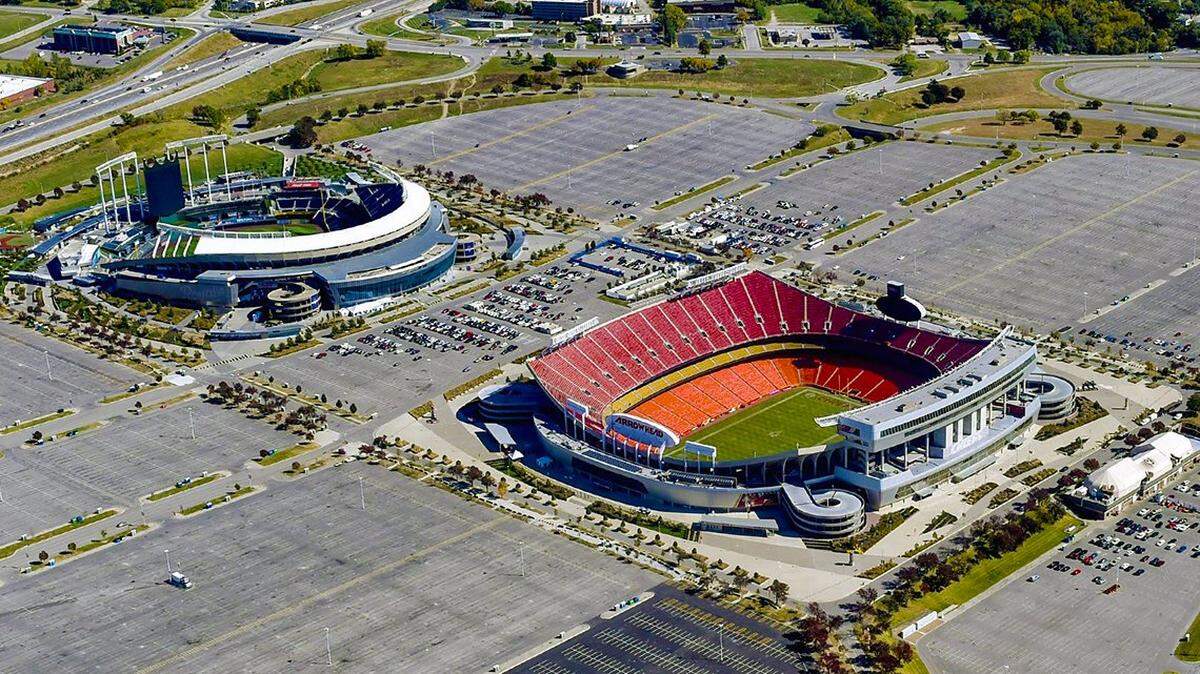
Both Kehoe and Quade voiced support for working to retain the teams but have shared few details. Quade told The Star’s editorial board said that “priority one” is ensuring local leaders are helping develop any incentive package.
She added that it’s important that “we’re not bailing out billionaires on the back of regular working-class people.”
If Kehoe is elected, he may have little time to help shape any incentives package. Republican Gov. Mike Parson in August said that if the Royals don’t have a site in place by January, “it’s going to be too late.”
“You can’t make a plan in November, December and expect the state to come in and help you,” Parson said in a radio interview.
Even as the teams’ future remains uncertain, Patterson said lawmakers must focus on infrastructure in Kansas City ahead of the World Cup. The city is set to host six matches – a sprawling event that will draw tens of thousands of spectators from around the world.
“We still need to invest in infrastructure to support what’s coming for the World Cup,” Patterson said. “So I think you’ll see that emphasized a bit more than it has in previous years.”
Overall, Patterson predicted he will have a good relationship with Kansas City.
“The mayor and I don’t agree on much, but I think we can get along and try to find common ground on things that are important to Kansas City,” Patterson said. “So I expect it will be good going forward.”