How will Missouri’s next governor confront crime in KC? What they say about officers, guns
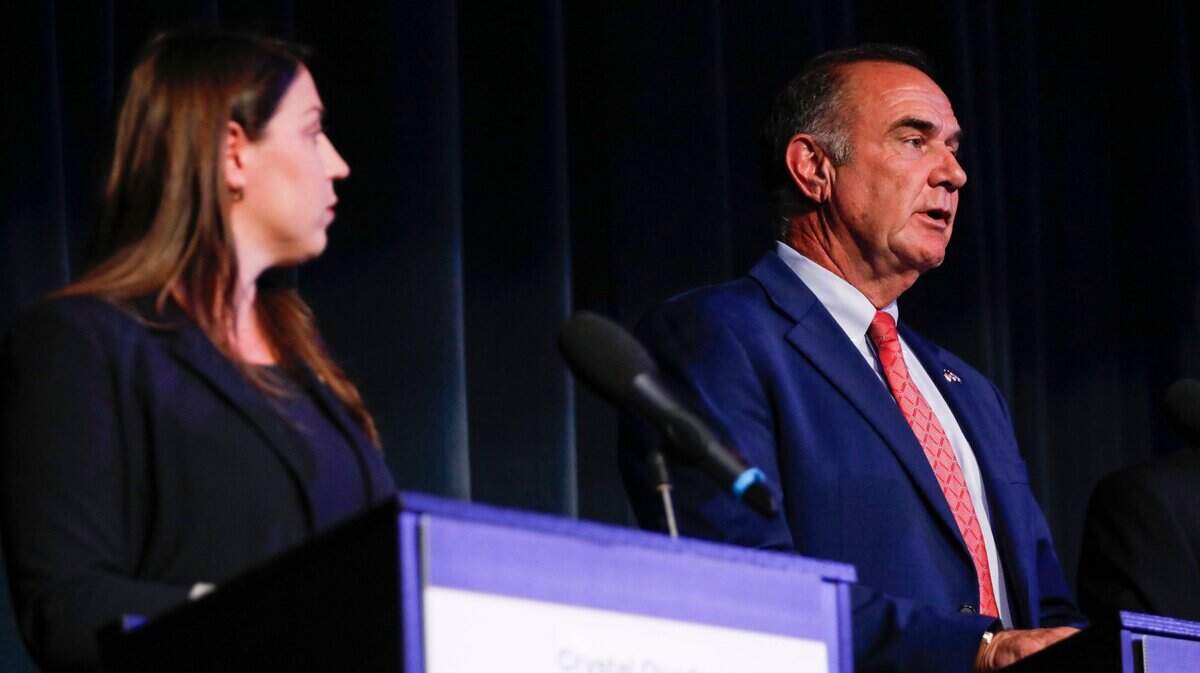
Missouri Lt. Gov. Mike Kehoe, the Republican candidate for governor, often speaks about a “Day One” plan to tackle crime as Kansas City, St. Louis and other areas of the state grapple with gun violence.
What’s in the plan isn’t totally clear.
Kehoe, who holds a comfortable lead in the polls ahead of the Nov. 5 election, emphasizes the importance of recruiting and retaining law enforcement officers, harsher criminal penalties for drug dealers and ensuring law enforcement agencies have the “necessary tools” to keep residents safe — a category that could include almost anything. When pressed, he has voiced interest in providing enhanced educational and other benefits to lure people into law enforcement.
Missouri House Minority Leader Crystal Quade, the Democratic candidate, also stresses in somewhat vague terms the need to hire officers and properly fund agencies. But she has called specifically for allowing local governments to set their own gun laws or at the very least greater authority to combat juvenile possession of firearms.
Five weeks from Election Day, crime is a key issue in the race for governor. What actions the winner does or doesn’t take will potentially resonate for years in Kansas City, where officials have often been at odds with Republican Gov. Mike Parson over his fierce resistance to any tightening of gun laws and continued support for state control of the police by a Board of Police Commissioners largely appointed by the governor.
Kehoe and, to a lesser extent, Quade have kept their policy prescriptions at a high level, offering broad themes without putting forward point-by-point plans. That may partly reflect the practical realities of governing: Any legislation requires passage by the General Assembly and would be subject to negotiation and compromise.
But the missing details come at a critical period in Kansas City’s struggle with crime.
Kansas City recorded record and near-record numbers of homicides in recent years, even as homicides fell in many major cities across the country. Last year was the deadliest on record, with 185 killings, according to a count kept by The Star. So far in 2024, 118 people have been killed in Kansas City.
High-profile episodes of gun violence have also rattled the area. A shootout at the Kansas City Chiefs Super Bowl rally in February left one bystander dead as thousands fled in a chaotic scene. Police leaders this spring noted an alarming spike in the number of non-fatal shootings. In August, a popular chef was shot and killed outside his Brookside restaurant; two teenage boys have been charged in the shooting.
Some Kansas City civic leaders, looking at the lack of precise proposals, are concerned the next governor will enter office overly focused on law enforcement as a solution to crime.
Gwen Grant, president and CEO of the Urban League of Greater Kansas City, summarized her concern succinctly, saying police don’t stop crime, they respond to it. At the Chiefs rally, she said, the area “was flooded with law enforcement, yet we had a mass shooting.”
“The most (consequential) action the next governor should take to address crime in urban communities is to roll back or to rescind the horrible gun laws in the state of Missouri,” Grant said.
A coalition of the state’s law enforcement groups, such as the Missouri Fraternal Order of Police, have backed Kehoe’s campaign. Representatives from the FOP did not respond to requests for comment for this story.
Sen. Tony Luetkemeyer, a Parkville Republican who has cast himself as an ally of law enforcement, said he wants the next governor to focus on violent crime.
“The majority of violent crime is committed by a small group of repeat offenders who are never dealt with by the justice system,” Luetkemeyer said. “I would like to see us focus on those dangerous individuals and getting them off the streets.”
Money and recruitment
Missourians view crime as a problem in their local areas. In an August poll by Saint Louis University and YouGov, 53% of respondents rated crime in their community as fair or poor.
Still, they hold mixed views on different strategies to combat gun violence.
The poll found that just 34% of respondents favor allowing counties along with Kansas City and St. Louis to pass their own local gun regulations, while 49% oppose. At the same time, 79% favor requiring criminal background checks for all gun purchases and 85% favor banning minors from carrying guns on public property without adult supervision.
Kehoe, 62, told a Columbia TV station in July that his crime plan, “when my hand comes off the Bible,” is to provide resources necessary to allow for an expansion of police forces.
“We’ve got to up our game and get more people into that profession, make sure they know we appreciate them and then take our communities back. It’s got to be the number one thing we do when I walk in office,” Kehoe said.
Law enforcement agencies in the United States and Canada appear to have turned a corner on staffing challenges, according to a 2024 survey by the Police Executive Research Forum, a research group. The survey found that agencies reported a year-over-year increase in officers for the first time since the start of the pandemic.
But while the survey found that small to medium-sized agencies now have more officers than in January 2020, the largest police departments remain more than 5% below January 2020 staffing levels.
The Kansas City Police Department currently has more than 100 funded but unfilled officer positions, Mayor Quinton Lucas said in a statement. As the agency struggles with staffing, the department’s budget has increased. The budget this year totaled more than $318 million, an increase of last year’s budget of roughly $248 million.
Missouri voters in August approved a state constitutional amendment allowing lawmakers to require Kansas City to spend at least 25% of its general revenue on police, up from 20%. Lawmakers have mandated that percentage of spending, but the city had already approved spending a larger percentage even before the vote.
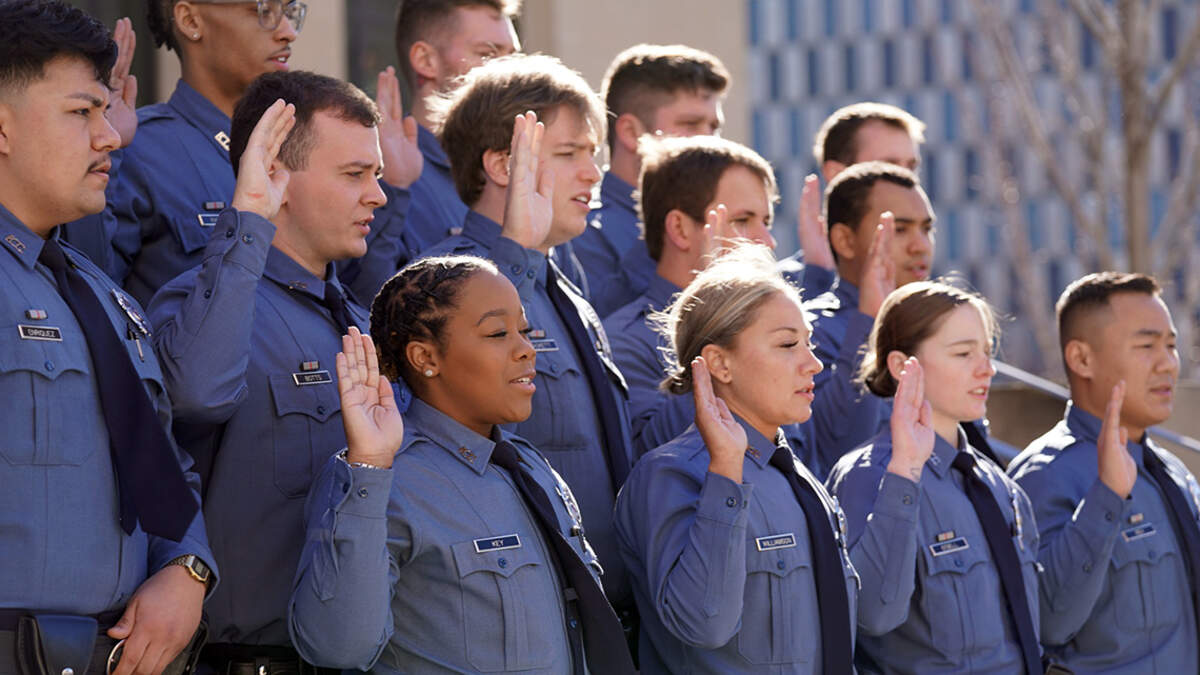
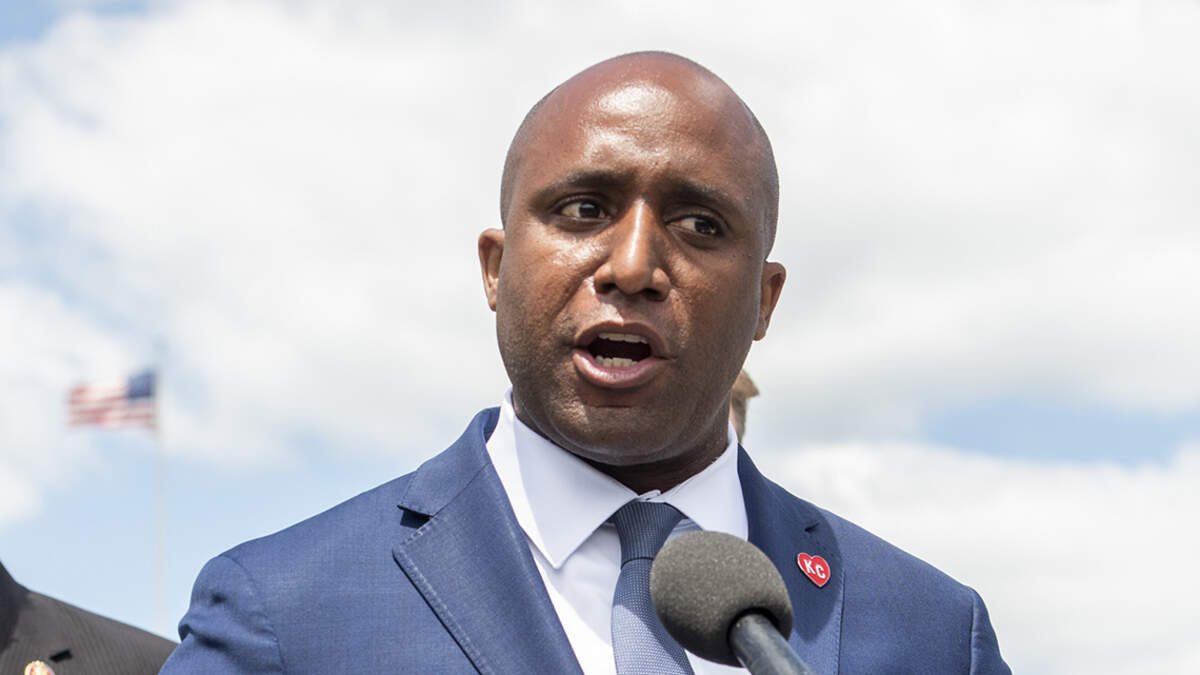
Lucas said that Kansas City residents seeking more police patrols, enhanced property crime enforcement, along with help from the Missouri Highway Patrol and county sheriffs “hope our next governor will place emphasis on public safety solutions and prevention efforts rather than simple rhetoric about the police.”
Asked by The Star about his “Day One” plan, Kehoe spokeswoman Gabby Picard said it would include “legislative and policy proposals for increased statewide efforts to recruit and retain law enforcement, harsher penalties for drug dealers, and ensuring that departments across the state have the necessary tools to keep Missourians safe.”
What those recruitment and retention efforts look like is uncertain. When asked about programs he would potentially want to invest in, Kehoe told the Columbia TV station that some states have “GI bill” type plans that help pay for education. He floated the idea of additional benefits for individuals in law enforcement, potentially for the children of officers.
Quade’s campaign has said law enforcement officers are underpaid and departments are understaffed. As governor, Quade will “ensure they have the resources to keep us safe,” her campaign spokesman, Andrew Storey, said.
“Governor Quade will stop vilifying our cities and work with local communities to find the best way the state can work together to help recruit, train, and retain officers,” Storey said.
“She believes that in addition to funding our law enforcement officers, we need to do more to ensure Missourians who struggle with mental health struggles and addiction can access the resources and help they need to help address crime,” Storey said.
Quade has said she supports returning Kansas City to local control of its police force. Kansas City is the only city in the state – and one of the few in the nation – with a police force under state control. The Board of Police Commissioners, which governs the department, is composed of five members, four of which are appointed by the governor.
Kehoe has said he supports the current system of state control – a common view among Missouri Republicans. But state control also means the governor assumes more responsibility for policing, local leaders say.
Lucas said that under the state control system, the governor is a “key stakeholder” in Kansas City policing. The governor can help the Board of Police Commissioners improve 911 hold times and create more state incentives for hiring, he said.
The mayor – the only elected official on the Board of Police Commissioners – also nodded to the influence the governor has over policing through appointments to the police board, saying the next governor will have the opportunity to name board members “with a commitment to innovation in law enforcement.”
Local gun laws
Missouri lawmakers for decades have given themselves nearly exclusive power to set rules on firearms. Quade, 39, supports giving cities and counties more power to set gun regulations locally.
After the Chiefs rally shooting on Feb. 14, House Democrats introduced a state constitutional amendment that would have allowed local governments to set their own rules. The amendment didn’t advance.
Quade told The Star’s editorial board during an interview on Tuesday that when she speaks with law enforcement officers, after salaries and benefits, the biggest issue they raise is juvenile access to guns.
“I understand the reality of where we are in the state of Missouri but I do think personally we need to be moving the ball forward,” Quade said.
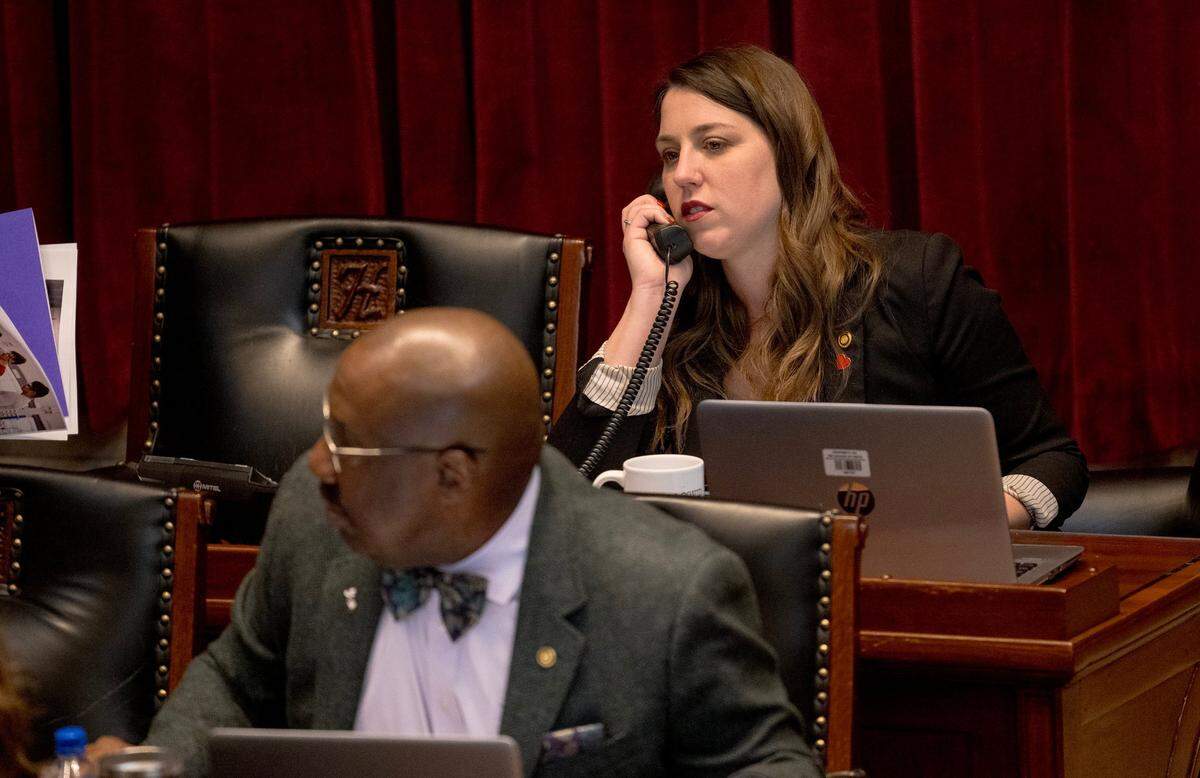
If elected, Quade would have to contend with a Republican-controlled General Assembly – a divided government that would curtail her ability to advance controversial measures.
Any effort to hand power over guns back to localities would face resistance.
“I think the Republicans will just have a sense that no bills that have the word gun in it will get anywhere in the legislature,” said Rep. Jerome Barnes, a term-limited Raytown Democrat who will leave the House this year.
Barnes said “local control is the key” when it comes to firearms. Restrictions on guns help police, he said, suggesting officers wouldn’t be as “jittery” on calls with fewer guns circulating in communities.
Republican lawmakers are staunchly opposed to additional restrictions on firearms in Missouri, which has among the loosest gun laws in the nation, with permitless concealed weapons and an aggressive stand-your-ground law. Kehoe has effectively ruled out additional gun restrictions if elected.
“Every time we put more restrictions on a citizen’s Second Amendment rights, we actually hurt the citizens who are trying to do this law-abiding and legally,” Kehoe said during a September debate.
What will Missouri lawmakers do?
At the same time, Republican lawmakers appear willing to follow Kehoe’s lead on officer recruitment and retention. House Majority Leader Jonathan Patterson, a Lee’s Summit Republican slated to become the House speaker if he wins reelection, echoed concerns about attracting officers.
“So I think one of the things we can do is do something that helps us recruit and retain cops, whether that’s tax incentives or education incentives – do something that helps us get more cops on the street,” Patterson said.
The General Assembly has already taken some steps to attract officers. The Kansas City Board of Police Commissioners in 2022 voted to allow officers to live within a 30 mile radius of the city limits – including in Kansas – after the General Assembly loosened residency requirements.
Lawmakers last year also removed a salary cap for the Kansas City police chief and the department’s officers – a change that had bipartisan support.
In addition to boosting recruitment and retention efforts, Luetkemeyer, the Parkville senator, called for allowing arrested individuals to be held for up to 48 hours without a warrant. Under current law, individuals must be released within 24 hours unless charged with a crime.
Sometimes officers need an extra day to gather evidence, he said.
“We’ve seen examples where violent offenders are released while evidence is still being gathered to support a warrant,” Luetkemeyer said. “This almost happened with one of the KC parade shooters.”
Sen. Barbara Washington, a Kansas City Democrat, said Missouri cannot “prosecute our way to safety.”
She wants lawmakers to either tighten gun laws or allow cities to enact their own rules. Resources devoted to mental health, homelessness, jobs and affordable housing must increase, she said.
“Those are the things that I think we need to be focused on,” Washington said. “And once you do that and clean up that part of society, then crime will go down.”