Missouri is about to vote on its income tax. What to know about Amendment 5
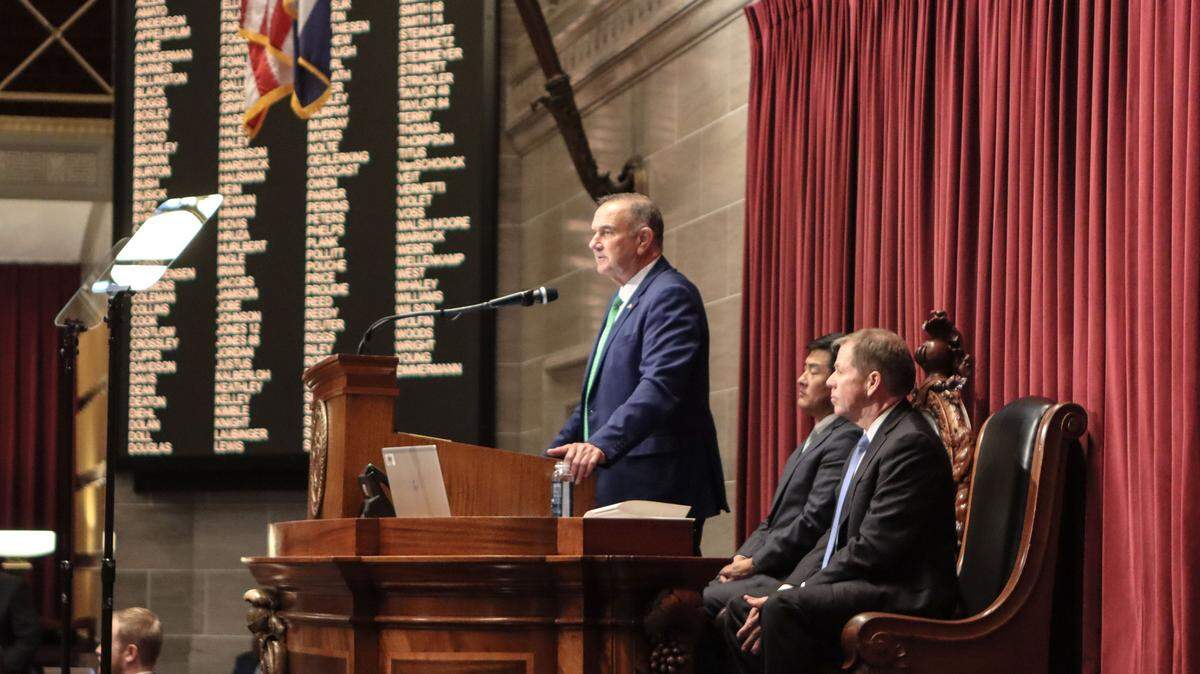
When Missouri voters head to the ballot box on Aug. 4, they will be tasked with a major choice over whether to overhaul the state’s tax structure.
The proposed constitutional amendment, called Amendment 5, would replace the state’s income tax with expanded sales and use taxes. The plan marks a top priority for Republican Gov. Mike Kehoe and some state lawmakers, but it’s also divided some Republicans.
Over the last several weeks, ads promoting and opposing the measure have flooded the airwaves. Supporters argue it would modernize an outdated tax code, while critics worry about its impact on both the state’s finances and increased sales taxes.
As Missourians gear up for the primary on Aug. 4, here’s what to know about your vote, the amendment and its impact on the state:
What does Amendment 5 say?
Shall the Missouri Constitution be amended to:
- Require legislative phase-out of the individual state income tax based on revenue growth, and authorize the expansion of sales and use taxes;
- Curtail constitutional limits on taxing goods and services; and
- Require local tax rate cuts without reducing school funding if local sales tax revenue increases?
The proposal has no direct impact on state or local tax revenue. If passed, implementing legislation will have an unknown impact to state and local tax revenue. If implemented, state government entities expect a reduction of $57,000 annually in income tax check-off donations and implementation costs of at least $100,000.
How much revenue does the income tax generate?
Missouri collects roughly $9 billion in individual income taxes each year, making the tax a key source of the state’s revenue. The tax makes up about two-thirds of the state’s general revenue.
What would a ‘yes’ vote mean?
A “yes” vote on Amendment 5 would grant state lawmakers broad authority to increase sales taxes and tax certain services for the first time with the goal of eventually eliminating the income tax.
Kehoe has said that he would not support expanded sales taxes on the agriculture, health care and real estate industries. But the language of Amendment 5 does not say which industries would — and would not — be taxed under the plan.
What would a ‘no’ vote mean?
A “no” vote would preserve the state’s current tax structure.
What do supporters say?
Kehoe and a slew of Republican lawmakers support the proposal. Kehoe has framed the proposal as vital for the state’s economy and population growth.
“The issue at hand here is competitiveness. And competitiveness starts with our tax code,” Kehoe said during his annual State of the State address in January. “Missouri’s tax structure must evolve.”
Over the last two months, Missouri Promise PAC, the main campaign supporting the measure, has raised $9.6 million. Those contributions came from six organizations that do not have to disclose their donors.
What do opponents say?
The amendment has alarmed some local and statewide officials who fear it will hurt low-income residents and force drastic cuts to services. Others argue that the proposal would hand lawmakers too much authority to raise sales taxes.
The main campaign opposing the measure, called Missourians for Fair Taxation, is largely backed by a $1.9 million and $1 contribution from the PAC for the Missouri Association of Realtors, which supports the state’s real estate industry and discloses its donors.
Would Amendment 5 fix a ‘big tech’ loophole?
No. A new advertisement claims that Amendment 5 would fix a “big tech loophole” responsible for porn and data centers. That’s not what the amendment says.
The GOP-controlled General Assembly voted in 2015 to exempt from sales taxes the equipment used in data centers. Amendment 5 would not repeal those exemptions.
The amendment also would not unilaterally tax data centers. If passed, lawmakers would have the power to decide which industries would — and would not — be subject to sales taxes.
How are Missouri’s finances?
Kehoe and other top statewide officials have long warned that Missouri was headed for a bleak financial situation.
While federal pandemic aid has boosted the state budget for years, that funding is running dry. And a wave of recent tax cuts has exacerbated the state’s more sober financial reality.
Kehoe recently slashed from the state budget $493.3 million for projects lawmakers had previously approved, citing a need to rein in spending ahead of a looming revenue shortfall. Last year, he cut $511 million. And a year before that, his predecessor lopped off $1 billion.
Some fear Amendment 5 could make the situation worse.
Peverill Squire, a retired University of Missouri political science professor, said it’s difficult to determine how Amendment 5 might impact the state’s financial situation, pointing to what he called vague language in the amendment. But, he said, it’s likely to intensify the push for more cuts.
“We’re in a period now where we’re headed into much tighter budgetary times,” said Squire. “If (Amendment 5) were to pass, that would probably only accelerate the difficulties that future legislators face.”