Missouri’s finances are in jeopardy, GOP warns. Would Amendment 5 make it worse?
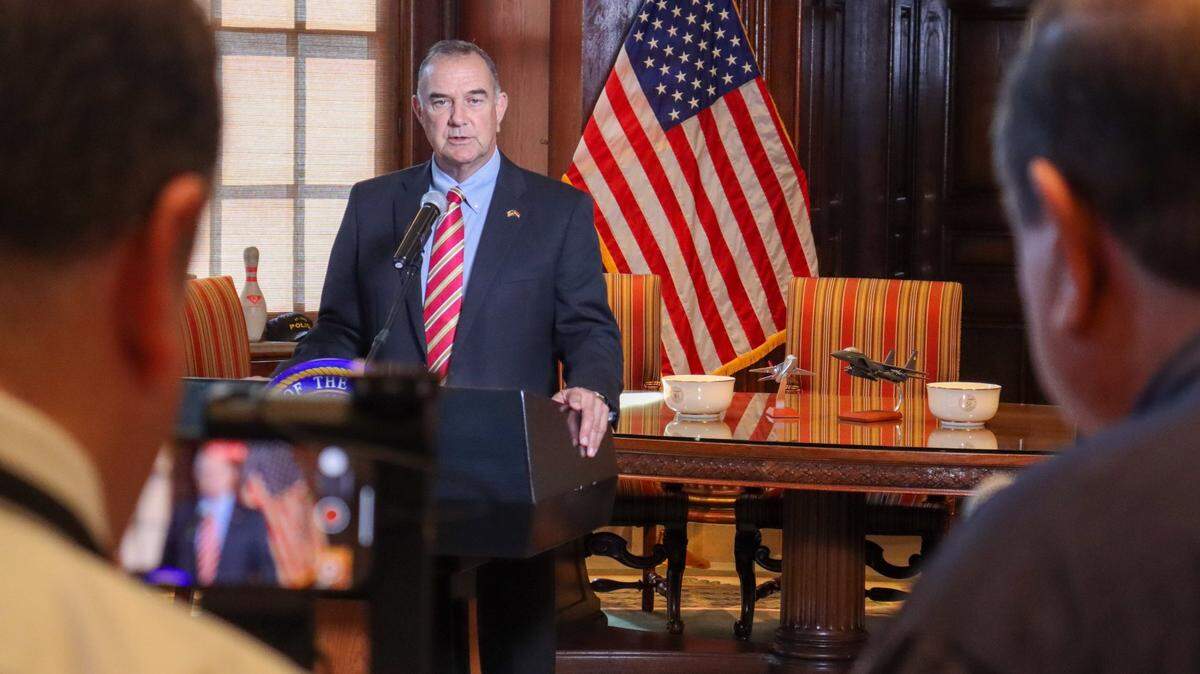
Missouri is in a bleak financial situation.
Some fear it could get worse.
Gov. Mike Kehoe this week slashed from the state budget $493.3 million for projects lawmakers had previously approved, citing a need to rein in spending ahead of a looming revenue shortfall. Last year, he cut $511 million. And a year before that, his predecessor lopped off $1 billion.
Kehoe, a Republican, and other top statewide officials have long warned that Missouri’s financial outlook was grim. While federal pandemic aid has boosted the state budget for years, that funding is running dry. And a wave of recent tax cuts has exacerbated the state’s more sober financial reality.
Republican State Auditor Scott Fitzpatrick, for example, recently cautioned that recent spending habits continue to “jeopardize our state’s financial health.”
As the state grapples with cuts to nonprofits, roads and other projects, Kehoe has pushed Amendment 5, a remarkable plan to replace the state income tax with expanded sales taxes. That looming statewide vote has left residents, political experts and some local and statewide officials worried about what comes next if voters pass Amendment 5 on Aug. 4.
Peverill Squire, a retired University of Missouri political science professor, said it’s difficult to determine how Amendment 5 might impact the state’s financial situation, pointing to what he called vague language in the amendment. But, he said, it’s likely to intensify the push for more cuts.
“We’re in a period now where we’re headed into much tighter budgetary times,” said Squire. “If (Amendment 5) were to pass, that would probably only accelerate the difficulties that future legislators face.”
Missouri collects roughly $9 billion in individual income taxes each year, making up nearly two-thirds of the state’s general revenue. If passed, Amendment 5 would grant lawmakers broad authority to increase sales taxes and implement taxes for services with the goal of eventually eliminating that key source of revenue.
The upcoming Aug. 4 primary sets the stage for a high-stakes election in which voters will decide the fate of the state’s tax structure in Amendment 5 and whether to make it virtually impossible for citizens to amend the state constitution in Amendment 4.
Kehoe, for his part, has instead framed Amendment 5 as a potential solution to the state’s financial predicament. The Republican governor used a video unveiling the state budget to promote the income tax plan, casting it as an “opportunity” and a way to build a “foundation for the next generation of Missourians.”
“Now, there’s been a lot of conversation about budgets and how Amendment 5 might impact future funding,” Kehoe said. “But let me be clear, this plan is responsible and revenue neutral. Growth first, then tax cuts.”
Future cuts?
However, Kehoe’s No. 1 priority has alarmed some local and statewide officials who fear the constitutional amendment will hurt low-income residents and force state and local governments to make drastic cuts to services.
Others, including Kansas City Mayor Quinton Lucas, point to a budget disaster roughly a decade ago in Kansas, in which legislators enacted a series of tax cuts that were eventually rolled back.
Rep. Betsy Fogle is the top-ranking Democrat on the Missouri House Budget Committee. She said she was worried about Amendment 5 for two reasons. The first is the elimination of the income tax itself, which she said could “leave a significant hole in our budget.”
Cuts to funding for people with disabilities, rising tuition costs and slashed teacher salaries would all be on the table, said Fogle, a Springfield Democrat.
Equal to those concerns, she said, is the fear that the proposal “gives unchecked power” for state lawmakers to raise taxes on goods and services across the state. Some Republicans skeptical of the plan have also sounded the alarm about the potential for increased taxes.
“It will be a significant cost of living increase to most people,” said Fogle. “And those people are already struggling to pay their bills.”
Republicans respond
Amendment 5 would not eliminate the income tax all at once, a key element touted by supporters who argue it would allow the state to responsibly phase out the tax without major financial pains. Supporters also point to other states that have eliminated their income tax and cast the proposal as a way to attract businesses and new residents.
Fitzpatrick, the state auditor who warned about the state’s financial situation, threw his support behind Amendment 5 this week.
Rep. Mike Steinmeyer, a Sugar Creek Republican and Amendment 5 supporter, pushed back on the idea that lawmakers would raise taxes “willy-nilly” if the amendment passes. He said it was up to voters to decide whether to eliminate the income tax, but he added that the state is going to be in a tough situation regardless of whether Amendment 5 passes.
“There’s going to be some pain,” Steinmeyer said. “I think people realize that — that we’re going to have to do some things differently in this state and we have to do it in a reasonable, responsible way that doesn’t affect people who are lower income, seniors, people on disabilities, people that have needs that the state is supposed to take care of.”
As voters gear up for the high-stakes vote, some Kansas City residents and organizations are already feeling that pain. When Kehoe signed the state’s most recent budget, he also slashed funding for at least 12 local groups or projects, totalling nearly $13 million in cuts.
This year, the cuts ranged from the city’s annual Juneteenth celebration and the National WWI Museum and Memorial to a local dental program and a police training facility in Lee’s Summit.
“When you keep cutting taxes, government revenues go down,” said Squire, the political science professor. “And that makes the ability to fund things that the state is supposed to fund more challenging.”