Abortion on the ballot? How Kansas, Missouri votes stand as proxies for ongoing fight

The word abortion will not appear on the Aug. 4 ballots in Kansas and Missouri.
But high-profile votes in both states are widely viewed as proxy fights over access to the procedure.
In Kansas, voters will decide whether the state’s Supreme Court justices should be elected, a major decision as state lawmakers seek to bring to heel a court that protected abortion rights in a landmark 2019 decision.
In Missouri, voters will see Amendment 4, a measure that would overhaul the state’s main form of direct democracy and make it virtually impossible for citizens to amend the state constitution. That vote comes less than two years after voters used the state’s initiative petition process to enshrine abortion rights in 2024.
On either side of the state line, the two constitutional amendments could pave the way for Republicans to clamp down on abortion access for years to come. The votes illustrate a new playbook for abortion opponents after voters in both states recently protected the right to the procedure.
Supporters and opponents emphasize that both measures would have major implications beyond abortion rights. But access to the procedure is poised to play a key role in the messaging and direct impact on residents in each state.
“The common thread is that we have anti-abortion legislatures that don’t want to implement the will of the people,” said Emily Wales, the president and CEO of Planned Parenthood Great Plains Votes.
Lawmakers in both states have already heard where voters stand on the issue of abortion. Now, they’ve shifted to new tactics, she said.
Republican supporters have broadly attempted to distance the issue of abortion from either measure, as access to the procedure remains popular in both states. However, in heated floor debates, public comments and recent interviews with The Star, some have acknowledged that the roots of both efforts trace back to abortion.
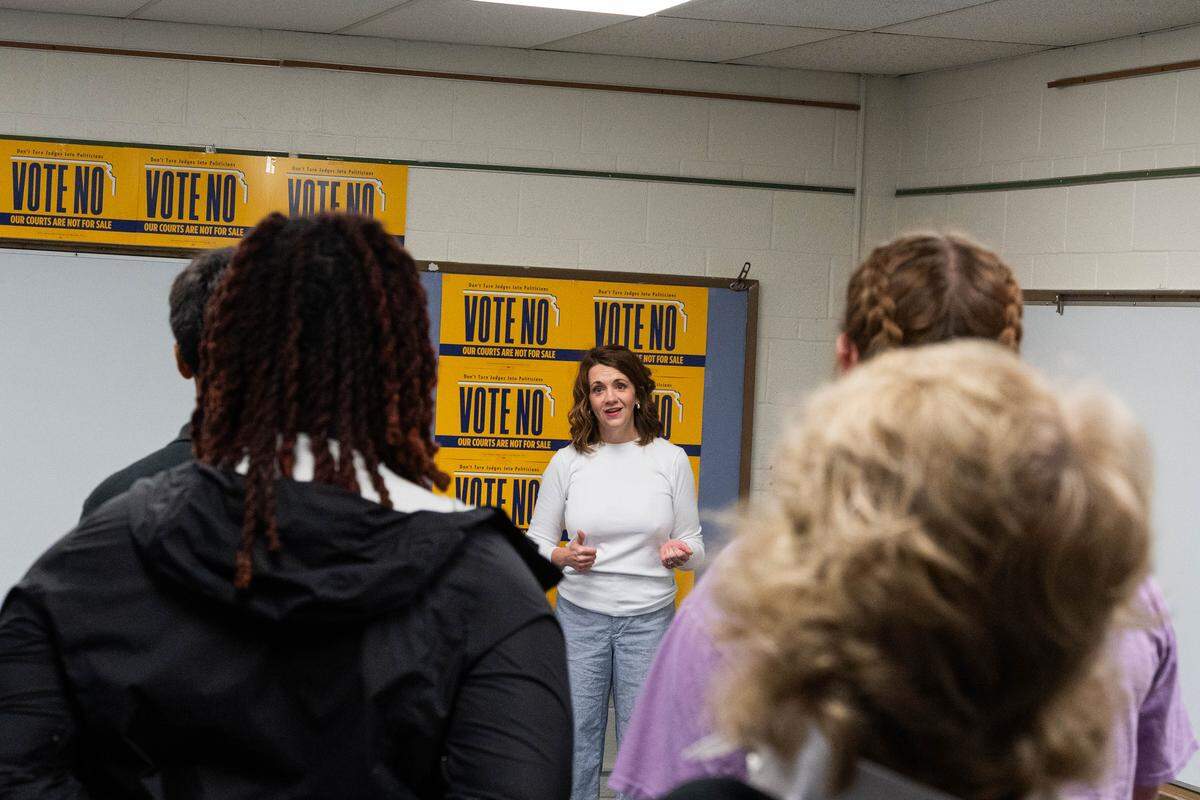
Electing justices in Kansas
The high-stakes choice in Kansas comes more than a year after the Republican-controlled Legislature placed a constitutional amendment on the ballot asking voters if they want to directly elect the state Supreme Court’s seven justices.
Much of the messaging surrounding the issue has centered on whether voters should insert partisan politics into the judiciary. Supporters say voters should have a direct say in how justices are chosen, while opponents warn it would politicize the court and result in bitter, money-fueled judicial races.
Abortion, however, is also at the core of the debate.
The proposed amendment would open a door for Republicans to assemble a new, anti-abortion majority on the court after the 2019 decision that protected reproductive rights. It marks another tool for Republicans to ban abortion after voters in 2022 struck down a measure that would have overturned the 2019 decision by giving lawmakers the power to further restrict or ban the procedure

As he mounted a Republican campaign for attorney general in 2022, Kris Kobach made the connection between elected justices and banning abortion explicitly clear. Kobach, in an appearance at the Wichita Pachyderm Club, called on lawmakers to put forward a ballot measure that would directly elect Supreme Court justices.
That change, Kobach said at the time, would allow the state to “slowly and quietly” place anti-abortion judges on the court with the ultimate goal of overturning the 2019 Hodes decision that found the state constitution includes the right to an abortion.
“The fight for life is going to continue,” Kobach said during the appearance.
Other Republicans have referenced the push to curtail abortions, including Ty Masterson, the Kansas Senate president and presumptive GOP frontrunner for Kansas governor. Masterson, during a speech late last year, cautioned other Republicans from connecting the two issues together, according to the Marion County Record.
“The solution in Kansas is that Supreme Court election,” Masterson said, according to the outlet. “But you can’t go out there and say it because they’ll say that if you elect your Supreme Court, you won’t have any right to abortion anymore.”
Kansas abortion rights groups have lined up against the measure, framing it as a shadow fight over the right to an abortion. Wales said abortion opponents have “already said the quiet part out loud” about their quest to end abortion rights in Kansas through the judicial amendment.
“The anti-abortion legislature put on the ballot the provision that would have ended the constitutional protection for abortion in Kansas and they didn’t like the outcome,” Wales said. “So this is just a runaround to try to get to the same thing.”
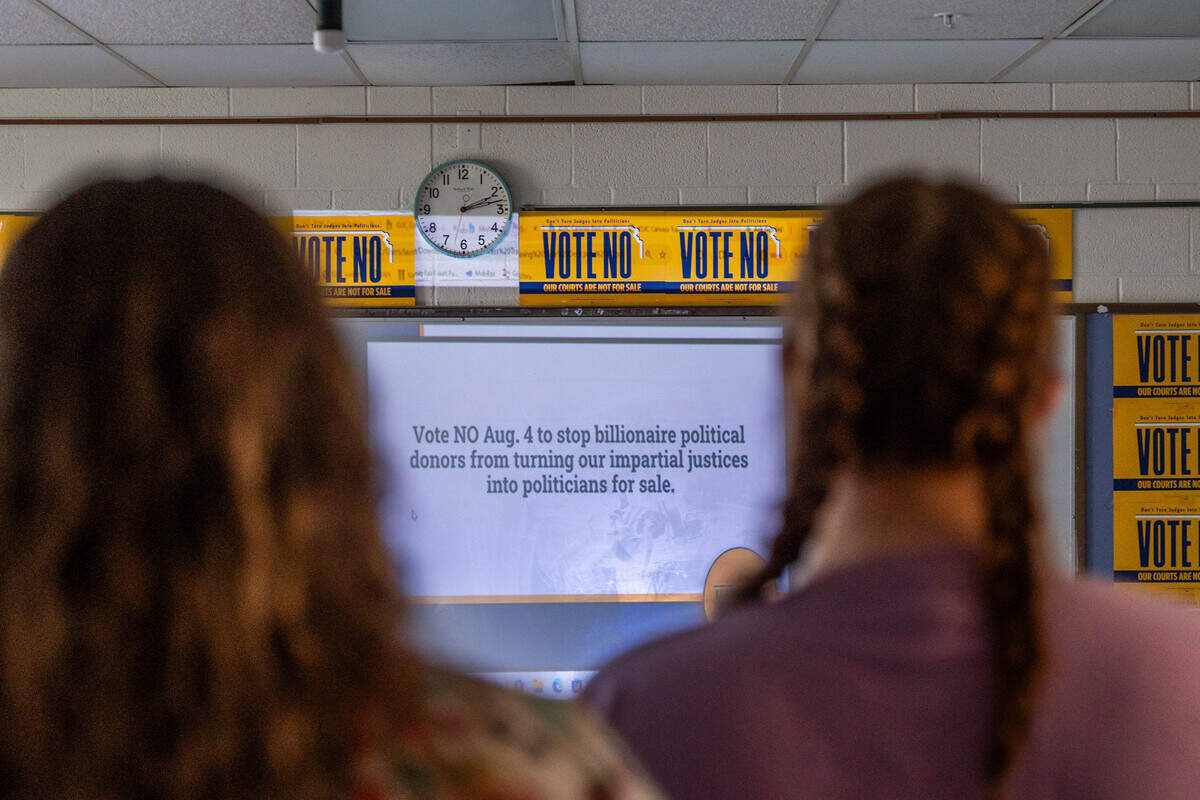
Some amendment supporters, however, have pushed back on the idea that the proposal is centered around abortion. Elizabeth Patton, the regional director for Americans for Prosperity-Kansas, a conservative group, said the measure was “not about any single public policy issue.”
“There is no way for anyone to know who will sit on the court in the future or know what decisions they will make, but the left says they can,” Patton said. “This is a scare tactic to preserve keeping power with one special interest group.”
Looming vote in Missouri
Over in Missouri, voters are gearing up for an equally seismic decision over direct democracy.
The Republican-controlled General Assembly last year voted to place on the ballot Amendment 4, which would make it virtually impossible for voters to enact policies through the state’s century-old initiative petition process.
That process has allowed citizens of both parties to collect signatures and place measures on the ballot. In recent years, voters have used petitions to limit tax increases, expand Medicaid, legalize marijuana and — perhaps most notably — overturn a near-total abortion ban in 2024.
Republican lawmakers have for years sought to halt petitions as voters passed policies they viewed as too progressive. But Amendment 4 represents the most aggressive attempt to overhaul the initiative petition process in modern history.
“I have zero doubt that the reason why we have Amendment 4 on the ballot is because Missourians approved the constitutional right to reproductive freedom in November of 2024,” said Sen. Maggie Nurrenbern, a Kansas City Democrat. “This is the most extreme attempt to limit direct democracy that we’ve ever seen before in our state.”

Currently, initiative petitions require a statewide majority (50% of the vote plus one) in order to pass. Under Amendment 4, citizen-led constitutional amendments would need to win majority support statewide and also win a majority in every one of the state’s eight congressional districts.
The threshold would not apply to state lawmakers. Amendments placed on the ballot by the General Assembly would still only have to receive a simple majority statewide in order to pass, a key provision as lawmakers seek to ban abortions again at the ballot box in November.
Similar to Kansas, Republican supporters of overhauling the process have attempted to separate the issue from abortion. But, over the past several years, some lawmakers have directly connected the two efforts.
In 2024, just hours after a campaign launched to overturn Missouri’s abortion ban, two Republican state senators furiously called on their colleagues to weaken the initiative petition process to stop the vote.
“Many of us are pro-life in here,” said then-Sen. Denny Hoskins, who is now the Missouri Secretary of State. “We want to make sure that it is harder to get something passed in the Missouri Constitution.”
The proposed amendment comes as Missouri voters are also gearing up for another fight over abortion in November. Republican lawmakers placed a measure called Amendment 3 on the Nov. 3 ballot that would strike down the state’s 2024 vote and once again ban nearly all abortions in the state.
If voters approve both Amendment 4 in August and Amendment 3 in November, it would be exceptionally difficult for residents to collect signatures and legalize the right to an abortion again under the higher threshold.
For abortion opponents, Amendment 4 is just as important as Amendment 3, said Sam Lee, a longtime anti-abortion lobbyist in Missouri. Voter approval of abortion rights in 2024 was a “wake-up call” for abortion opponents to rally around Amendment 4, he said.
“Amendment 3 in November would repeal and overturn what was passed in 2024, but Amendment 4 in August would make it very difficult for our opponents to pass something else like that again in the future,” said Lee. “We have to look ahead to not just this election cycle, but down the road.”

Sen. Brad Hudson, a Cape Fair Republican, called Amendment 4 “vitally important” to abortion opponents and claimed in an interview that Missouri voters were deceived into approving the 2024 amendment that legalized abortion rights.
“We need to protect our constitution so we don’t have a situation where a fundamental human right, the right to life, can be taken away in the manner that it was taken away in 2024,” Hudson said.
Wales said she believes the goal of Missouri lawmakers and Amendment 4 is to make it “impossible for Missourians to once again demand reproductive freedom at the ballot.”
“It’s hard to imagine a path forward, where the process is so politicized and so stacked against individual Missourians, where it would be feasible for them to demand their own rights (if Amendment 4 and 3 passed),” Wales said.
Still, Amendment 4 opponents also emphasize that the state’s initiative petition process, adopted in 1908, affects more than just one policy issue. The director of a campaign opposing the measure, called Protect Majority Rule, said the upcoming fight was “about power.”
“Amendment 4 takes away our power to pass ballot measures, giving it only to politicians and special interests groups,” said M’Evie Mead, the campaign director. “Whatever issue you care about today, the real question is whether you want politicians deciding it for you — because that’s what this amendment is really about.”
Spotlight swings to August
As voters in Kansas and Missouri gear up for two high-stakes votes this summer, access to abortion is likely to play a role in both states.
Messaging around either issue, in the ads flooding the airwaves and fliers packed into mailboxes, will determine whether Kansas overhauls its judicial system and Missouri dramatically curbs its main tool for direct democracy.
And looming over those two votes will be the protracted fight over abortion rights in both states. For Nurrenbern, the Kansas City Democrat, that fight is far from over.
“We’re going to be talking about abortion in ‘26, ‘27, ‘28,” Nurrenbern said. “We’re going to be talking about abortion in perpetuity as long as Republicans hold power.”
Wales, with Planned Parenthood, said she was realistic that fights over abortion will “come up again and again.” But she pointed to broad support for access in both states.
“I’m optimistic about the long term prospects for people being able to access abortion and being able to make their own decisions without political interference,” she said.