Inside Missouri Republicans’ effort to curb direct democracy to stop vote on abortion
Just hours after a coalition of abortion rights groups launched a campaign to overturn Missouri’s near-total abortion ban at the ballot box, Republican senators called for action on the state Senate floor.
They were furious.
“This is life or death,” said Sen. Rick Brattin, a Harrisonville Republican. “Are we going to advance an initiative petition to solidify and protect that process to ensure that this evil, vile practice does not make its way into a constitution?”
“Many of us are pro-life in here,” said Sen. Denny Hoskins, a Warrensburg Republican. “We want to make sure that it is harder to get something passed in the Missouri Constitution.”
Brattin and Hoskins, in their speeches on the Senate floor in January, demanded their colleagues take up and pass legislation that would make it harder for Missourians to amend the state constitution through the state’s century-old initiative petition process — a stark acknowledgment that Republicans must weaken direct democracy in order to stymie the abortion rights campaign.
The GOP-controlled Missouri Senate later approved a version of the measure, which supporters call “initiative petition reform,” sending the legislation to the House. If passed by both chambers, voters would have the final say — either in November or at an earlier election, potentially in August, called by Republican Gov. Mike Parson.
The renewed effort to overhaul the state’s initiative petition process, which some Republicans have touted as a way to block the abortion rights campaign, has drawn intense scorn from Democrats, voting rights advocates and attorneys who have framed the legislation as a broader attack on democracy.
The Republican-led push has created a world in which Missourians across the state are gearing up for what could be two of the state’s most consequential statewide votes related to abortion access either directly, or by perception: a vote to overturn the state’s abortion ban and a vote on whether to overhaul the initiative petition process.
Some politicians and political observers on both sides of the abortion debate have raised questions about whether changes to the voter threshold, if approved by voters in August, would even impact the abortion rights vote if it were to reach the ballot in November.
But what’s clear from conversations inside the Missouri Capitol is that access to abortion will be a key message for both supporters and opponents of the state’s initiative petition process in the coming months.
House Minority Leader Crystal Quade, a Springfield Democrat, is embarking on a campaign for governor focused in large part on overturning the near-total ban in Missouri, which had for years whittled away at access to the procedure even before the ban went into effect in 2022.
The potential campaign against Republican efforts to make it harder for voters to amend the constitution will include the idea that Missourians should be able to have their voices heard on abortion, she said.
“They know Missourians want access to abortion and they know that when it makes it to the ballot box in the fall, that it’s going to pass,” Quade said of Republican lawmakers. “They have really pivoted their language towards, if we don’t get this done, then abortion is going to become the law of the land.”
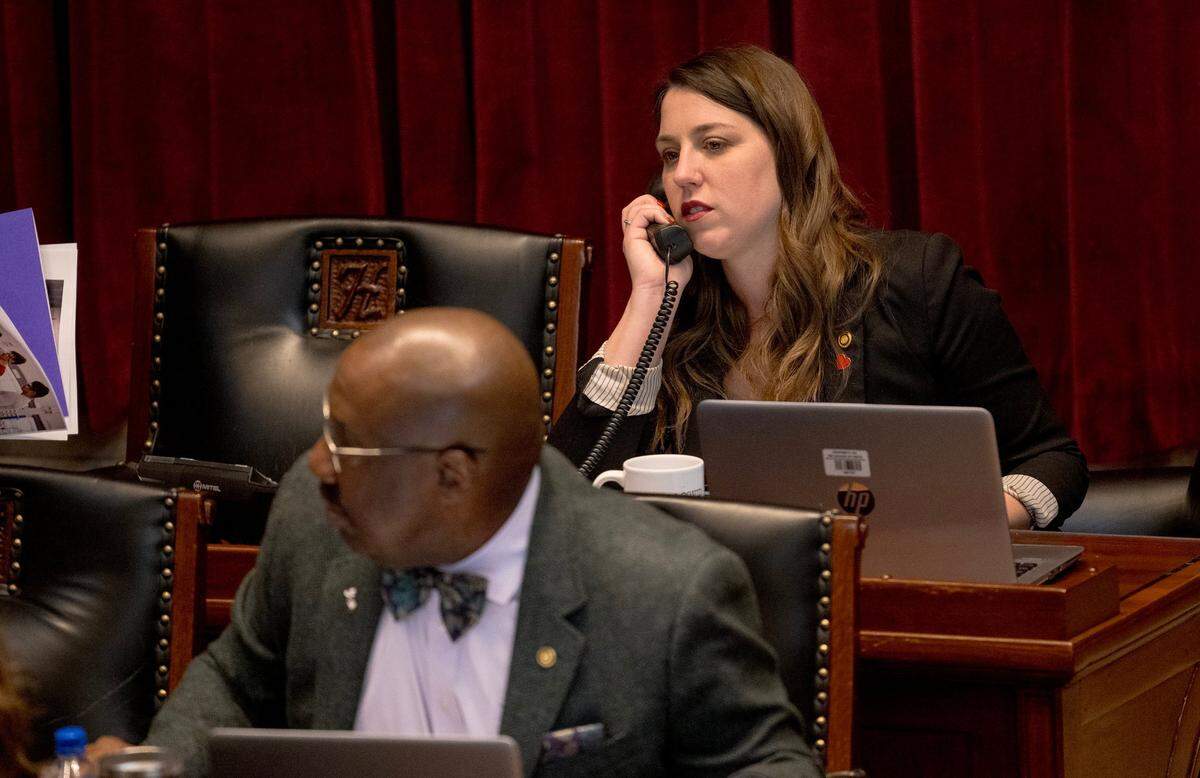
But the debate over the state’s initiative petition process involves more than just abortion, Quade emphasized. Citizen-led campaigns have been utilized by voters of both parties to bypass the General Assembly and put measures to a statewide vote.
Republican criticism against the current process comes as voters have in recent years passed several progressive policies through initiative petitions, including marijuana legalization and Medicaid expansion.
While Rep. Brian Seitz, a Branson Republican, agreed that the initiative petition process and abortion are separate issues, he made the connection between the two efforts clear.
“We’re being extremely proactive to do everything that we can to make sure that abortion is not ensconced within our Missouri state Constitution,” he said. “We have to protect life in this state.”
The dueling efforts could mirror what happened in Ohio last year, in which Republican lawmakers put a measure on the ballot that would have increased the approval threshold for constitutional amendments from 50% to 60% in an attempt to thwart a campaign to enshrine abortion rights in the Ohio Constitution.
An overwhelming majority of voters in Ohio rejected the measure during an August special election. And then roughly the same percentage of voters, 57%, voted in favor of abortion rights in November.
Sam Lee, a longtime anti-abortion lobbyist in Jefferson City, said that, in practice, the two potential campaigns in Missouri will be linked together. But Lee, who supports making it harder to amend the constitution, signaled that’s not how he would like to see the two efforts framed, pointing to the votes in Ohio.
“Even though abortion wasn’t mentioned in that (Ohio) initiative petition, it was all about abortion. I mean, on both sides, they advertised on that,” he said. “Is that the way it should be? No, I think initiative petition reform is much broader than one particular issue.”
‘Last ditch effort’
Missouri Republicans have for years attacked the state’s initiative petition process, a more-than-100-year-old mechanism that requires an expensive and time-consuming signature-gathering campaign to get measures on a statewide ballot.
Republicans, for the most part, argue that it’s too easy for voters to change the constitution and the current process has allowed outside interest groups to influence elections.
But Republican messaging around the issue began to shift last year after abortion rights groups filed a series of petitions that would enshrine the right to an abortion in the state constitution.
House Speaker Dean Plocher, a St. Louis-area Republican, last year was one of the first prominent Missouri Republicans to directly connect abortion to the efforts to make it harder to change the constitution. He told reporters that he felt a majority of Missourians would vote to overturn the ban if the voter threshold was not increased.
“I think we all believe that an initiative petition will be brought forth to allow choice,” Plocher said at the end of last year’s legislative session in May. “I believe it will pass. Absolutely.”
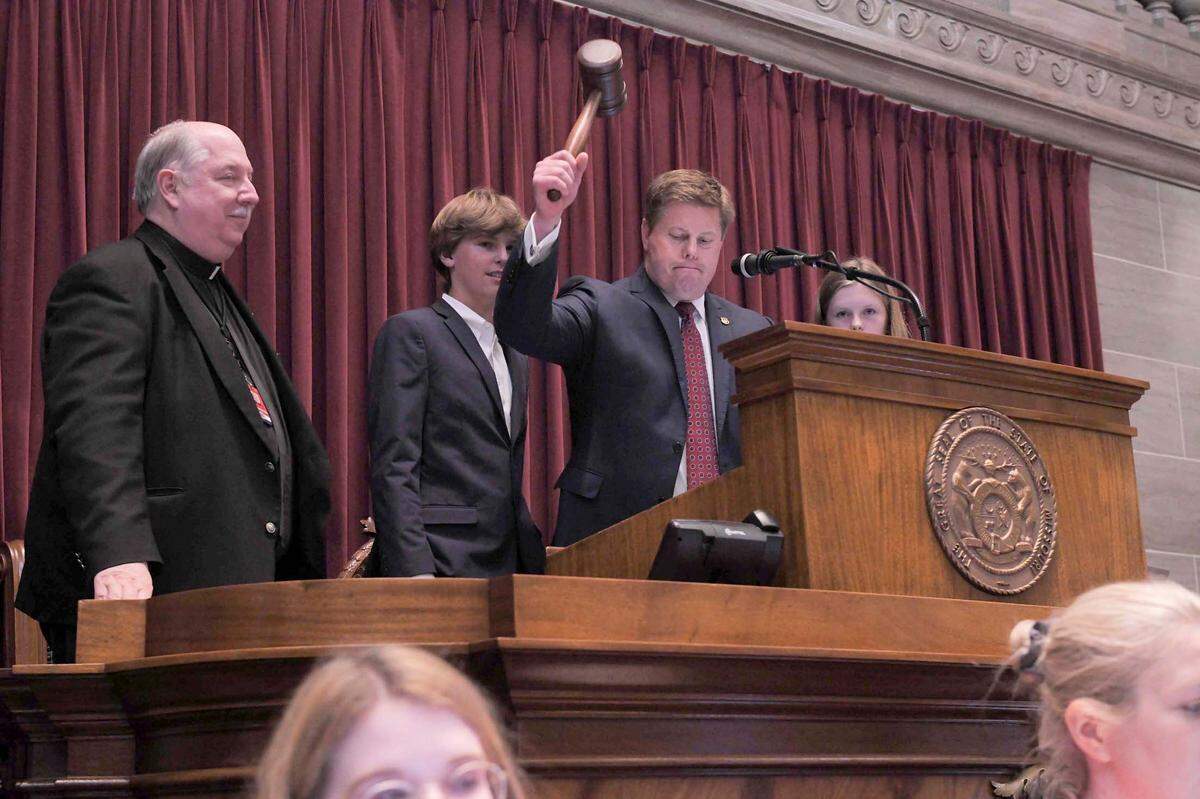
Plocher’s office, in a recent written statement to The Star, however, downplayed the link between abortion and making it harder to amend the constitution, pointing to the fact that the abortion rights campaign has not yet qualified for the ballot. He instead touted the legislation as a way to prevent foreign countries from sponsoring ballot measures, a practice that is already illegal under federal law.
“I believe that Missouri voters will get to have a say on IP reform in November,” he said.
The measure passed by the Senate last month would require amendments to the state constitution be approved essentially twice, a majority vote in at least five of the state’s eight congressional districts and a majority vote statewide. Currently, constitutional amendments only need a majority vote statewide.
The change would effectively weaken the power of urban residents’ votes and empower the votes of rural residents in statewide elections on constitutional amendments. A coalition of rural congressional districts would be able to reject amendments even if they’re supported overwhelmingly in the state’s two biggest cities of Kansas City and St. Louis.
Maggie Olivia is the senior policy manager for Abortion Action Missouri, which is part of the coalition called Missourians for Constitutional Freedom that is seeking to overturn the state’s abortion ban.
Anti-abortion politicians are the same “anti-democracy” lawmakers who have been attacking the initiative petition process for years, Olivia said in an interview.
“This tie to the current abortion campaign in Missouri — it’s really just a last ditch effort by these anti-democracy politicians who know that they’re in a losing game,” she said. “They know that they’re not going to win unless they can get away with their dirty tricks.”
Supporters of the state’s initiative petition process and of overturning the abortion ban signaled in interviews that voters will be prepared for both issues if they reach the ballot. Many pointed to the votes in Ohio.
Voters want to have a say in their democracy and want to maintain and restore their rights, said Sen. Lauren Arthur, a Kansas City Democrat.
“I’m not concerned about either of those,” Arthur said of the two efforts. “There have been so many examples of times when voters have felt like they’re not being heard, their priorities are not being addressed by elected officials. And they’ve used the IP process as an important tool to make things happen in the state.”
In late January, Ashley Jaworski, a volunteer for the campaign to overturn the abortion ban, traveled to the Missouri Capitol from St. Louis to talk with Missourians about the importance of the state’s initiative petition process.
“They’re trying to change the rules out from under us because they know that this petition process works,” Jaworski said. “They’re scared of what real, everyday Missourians want. Missourians want to have their voices heard.”
But if either measure reaches the ballot this year, supporters of abortion rights will have to campaign in a state that has grown staunchly Republican over the last decade. Even before the abortion ban, anti-abortion officials had whittled down access to a single clinic in St. Louis.
The abortion rights campaign may also drive to the ballot box people such as Matthew Sheffer, who traveled to the Missouri Capitol last month from Fenton to push for criminal penalties against women who get abortions. Sheffer said in an interview that he wasn’t aware of the effort to change the initiative petition process.
But he had thoughts about the abortion rights campaign.
“It’s just more agreeing to shed innocent blood,” he said. “It’s just more consent to murder.”
Which election? It will be strategic
One of the biggest outstanding questions for both campaigns will be the timing of the elections.
If abortion rights supporters are able to garner roughly 171,000 signatures by May 5, the measure would go on the November ballot unless Parson, an anti-abortion Republican, calls a special election. The same goes for the initiative petition legislation if Missouri lawmakers successfully place it on the ballot.
Some abortion opponents may want to see the legislation raising the voter threshold placed on the August ballot so the changes, if approved, would be in place to block a potential vote on abortion in November.
But anti-abortion Republicans will also have to weigh another situation that could effectively cause their effort to backfire. If Missourians vote to raise the threshold for constitutional amendments and then vote to enshrine abortion rights, it would be much harder for abortion opponents to later strip legalized abortion from the state constitution.
Parson has given no indication of whether he might call a special election for changes to the initiative petition process, but he acknowledged during a news conference last month that it would be strategic.
“We’ll talk about that and we’ll see what the best strategy is for the state of Missouri,” the Republican governor told reporters.
There are some Missouri Republicans who don’t want to see either measure placed on the November ballot, fearing that the two measures would bring out Democratic voters in droves in a general election.
“They don’t want that to be the ‘get out the vote’ type of measure that’s on the ballot,” said Lee, the anti-abortion lobbyist.

Quade, the Springfield Democrat, said that Democrats will likely come out in force if either abortion rights or the initiative petition measure are on the ballot. But putting an abortion rights proposal on the August ballot could also affect the GOP primary for governor — a factor that Quade said Republicans will have to consider.
“If I’m the governor and I’m thinking about all of those things, I definitely think that that is also a factor in this decision,” she said.
Senate President Pro Tem Caleb Rowden, a Columbia Republican, said that the placement of either the initiative petition legislation, the abortion measure, or both, on the November ballot could have a significant effect on voter turnout.
“I don’t think it has a tremendous impact on statewide elections, because Missouri is a pretty bright red state,” Rowden told reporters. “But I certainly think it has a tremendous impact on the pivotal kind of swing elections in St. Louis County, Boone County, Greene County and some of the places that we know those swing districts are.”
Rowden also noted that there are differing legal opinions on whether changes to the voter threshold would affect the abortion rights vote. He told reporters he’s seen memos from at least two attorneys arguing that courts would probably allow the abortion rights campaign “to live under the old rules in November.”
Chuck Hatfield, a Jefferson City-based attorney who has worked on a slew of initiative petitions, said there is some indication of that from the courts. He pointed to a 2008 Missouri Supreme Court ruling that stated Missouri lawmakers could not “negate in advance an initiative petition that has been approved for circulation but prior to the time it is adopted by the people at an election.”
If voters approve changes to the voter threshold in August, Hatfield said he thinks there will be a lawsuit over when the changes take effect.
Since launching the effort in January, the abortion rights campaign has reported raising more than $4 million and thousands of people have signed up to collect signatures across the state.
At the same time, some Republican lawmakers have recently started to distance the effort to change the initiative petition process from the abortion rights campaign, including Sen. Mary Elizabeth Coleman, an Arnold Republican who sponsored the legislation.
“I don’t think that protecting the state’s constitution is about the abortion issue only,” said Coleman, who is running for Congress. “Certainly, I hope that people will decline to sign and that we won’t see that proposal put on the ballot. But this is about a number of different issues.”
‘No. 1 priority.’
With Missouri Republican lawmakers intent on passing some version of a plan to overhaul direct democracy in the state, access to abortion will almost certainly play a key role in the upcoming elections this year.
Messaging, whether it’s a need to stop the abortion rights push or that outside groups are influencing elections, will be crucial to persuading voters to weaken a tool utilized by both parties for more than a century.
Over the last several weeks, several Republicans have touted changes to the initiative petition process as the top issue they want to accomplish this year.
“Our entire Republican majority, 24 state senators, decided that this was our No 1. priority,” Hoskins, the Warrensburg Republican said on the Senate floor the morning the abortion rights campaign launched.
That acknowledgment was extremely telling, Senate Minority Leader John Rizzo, an Independence Democrat, told reporters.
“With all of the issues that are out there, the No. 1 priority of the Republican Party is to take people’s voice away at the ballot box,” Rizzo said. “That should tell you all you need to know about the Republican Party in the state of Missouri.”
This story was originally published March 3, 2024 at 5:00 AM.