Missouri voters legalized weed, expanded Medicaid. GOP wants to block more ballot measures
Eric Turner has lived his entire life in staunchly conservative Hermitage, a rural city of about 500 people less than five miles from Missouri Gov. Mike Parson’s hometown of Wheatland.
In that time, he has only voted for a Democrat once — a good friend who was running for a local judge position. Turner, 44, who owns a car wash and a laundromat, said for the most part he thinks Democrats are looking for handouts or a free ride.
“If you made me tell you what I was, I’m a die-hard Republican and always will be,” Turner told The Star.
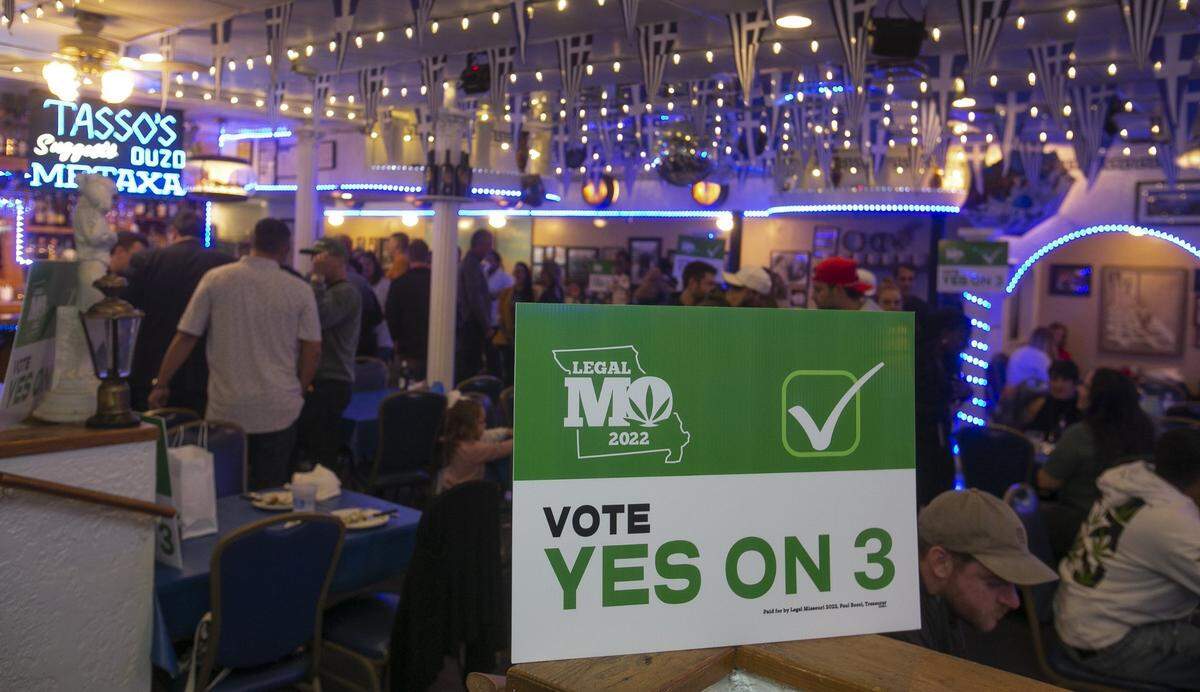
But when a citizen-driven constitutional amendment to legalize recreational marijuana statewide was put in front of voters last November, Turner voted in favor of it. Turner said he thinks he also voted for another progressive-leaning measure that expanded Medicaid coverage statewide in 2020.
“That turns around and makes me look like a hypocrite because I’m not for all that other stuff, but I’m for that,” he said.
Missouri voters like Turner, whose political beliefs are deeply entrenched in a particular party but cross party lines on specific issues at the ballot box, illustrate a trend that has confounded political strategists and state legislators of both parties.
“People vote what’s popular and vote their personal interest and yet will go right ahead and vote a person into office who is not someone who would necessarily support those issues,” said Joan Gentry, voter services chair of the League of Women Voters of Southwest Missouri.
In the wake of Missouri voters approving several liberal-leaning ballot measures, Republicans in the GOP-controlled Missouri General Assembly are now proposing a raft of legislation that would make it more difficult for voters to amend the state constitution.
Some of the proposals would increase the number of votes required for a measure to pass, such as requiring a majority of all of Missouri’s registered voters, not just those who voted, to approve a constitutional amendment. Other petition-related proposals aim to make it harder to put a constitutional amendment on a statewide ballot in the first place by raising the signature requirement.
At least one proposal would make it harder for all citizen-led petitions to pass, not just amendments to the constitution.
With lawmakers back in Jefferson City for the start of the legislative session, The Star spent four days in southwest Missouri talking with voters, party officials, political scientists, petition organizers and politicians about the conservative area’s willingness to support progressive policies at the ballot box. What emerged from those interviews is a portrait of a region grappling with its own political identity and divided on Republican efforts to make it harder to amend the state constitution.
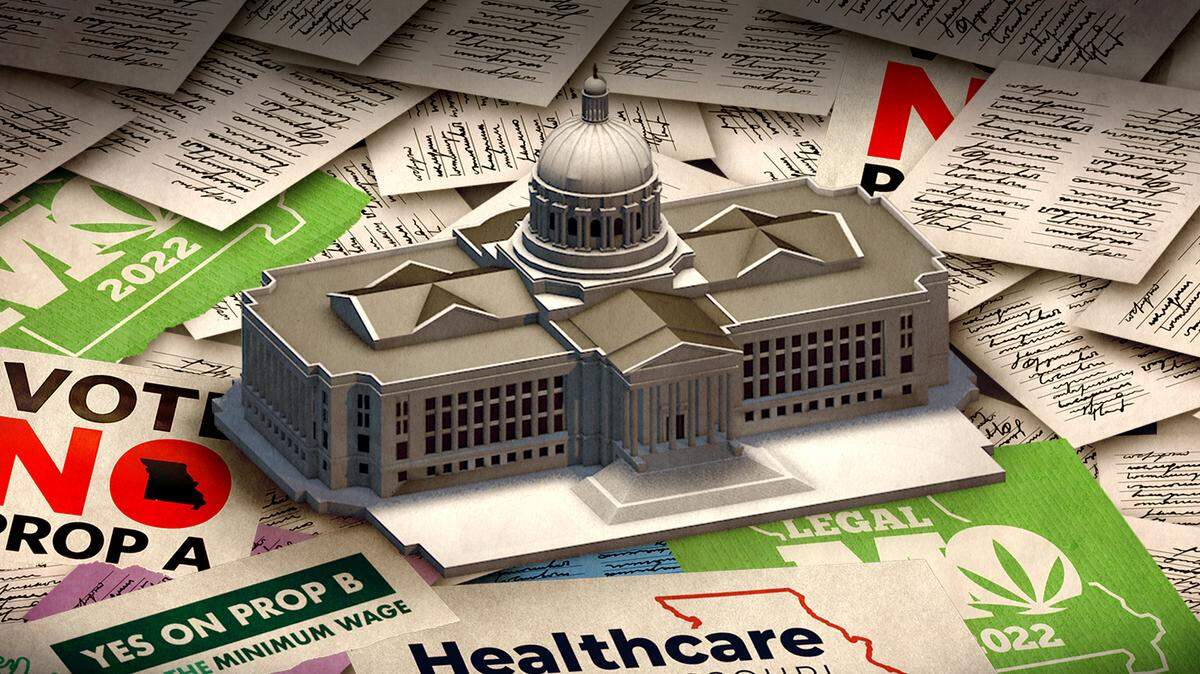
Both Medicaid expansion and marijuana legalization were placed on statewide ballots through initiative petitions — a process that requires an expensive signature-gathering campaign. The more than 100-year-old process has allowed voters across the state to bypass the Missouri General Assembly and approve certain policy measures. Missouri is one of 26 states where voters have this ability.
Historically, voters have used the process to advance policies and ideas that the majority party doesn’t support. In Missouri, Republicans control both chambers of the General Assembly and hold every statewide office.
“If Democrats were in the supermajority in both the House and the Senate and all the statewide offices, I think we would see a little bit more of a trend of conservative measures going on the ballot, but that just happens to not be the reality of Missouri right now,” said state Rep. Betsy Fogle, a Springfield Democrat.
Since 2018, ballot initiatives in Missouri have led voters to legalize both medical and recreational marijuana, overturn a right-to-work law — which would have prevented unions from requiring employees to pay union dues — and expand eligibility for Medicaid. Voters also approved a citizen-led petition that gradually increased the minimum wage through state statute in 2018, bringing it to $12 an hour this year.
Democrats and abortion rights groups are also weighing a potential ballot measure that would restore some form of abortion rights in Missouri. The procedure is almost entirely banned in the state under a law that was triggered after the U.S. Supreme Court overturned Roe v. Wade in June.
The prospect of an abortion-related initiative petition is likely to bolster Republican attempts to make it harder to get measures on the ballot.
Republicans argue that it’s been too easy to amend the constitution. They point to the 39 pages added to the state’s governing document in November when voters legalized recreational marijuana. They say the current process gives outside interest groups and money too much of a role in crafting measures that influence Missourians.
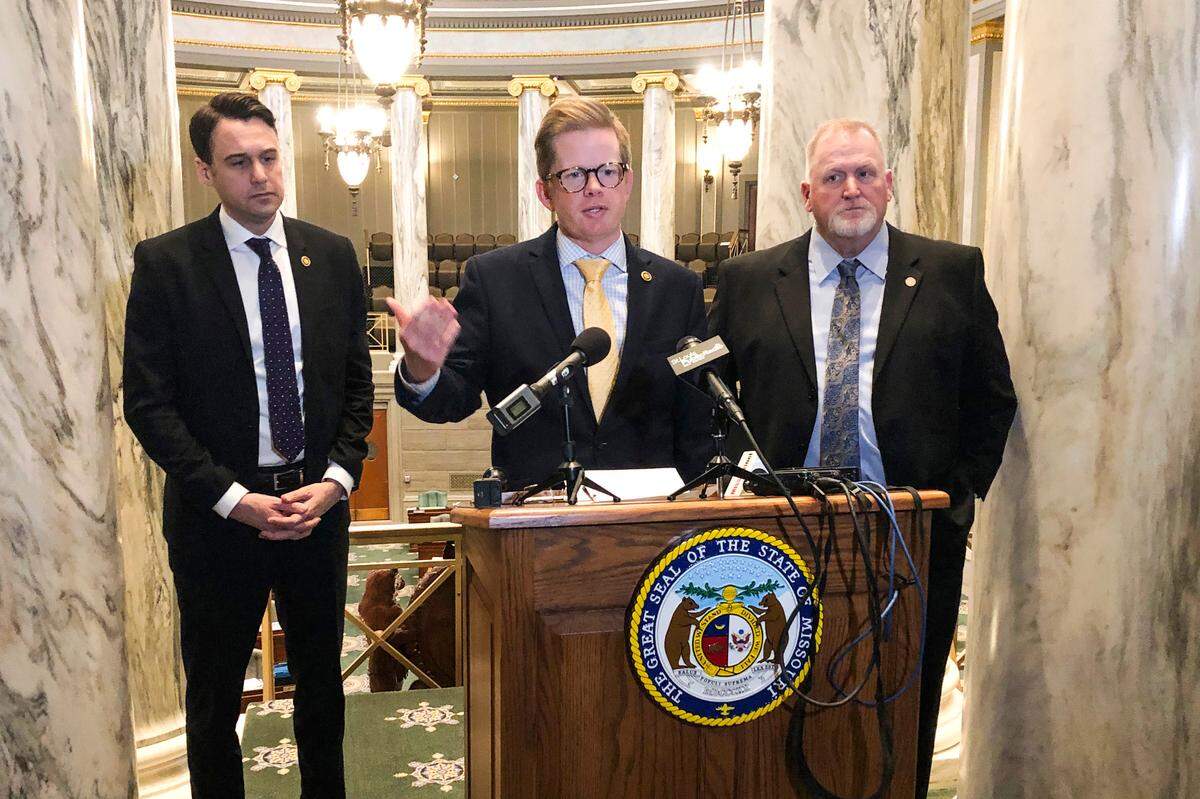
Senate President Pro Tem Caleb Rowden, a Columbia Republican, said on the floor earlier this month that the Missouri constitution had been inundated with policies, such as marijuana, that belong in state statute — not the constitution.
“Missourians have sent veto-proof majorities of Republicans to the House and the Senate for more than a decade now, but they have also implemented a number of policies through the initiative process championed and cheered for by those on the political left,” Rowden said.
Initiative petition defenders say it allows citizens to directly participate in the democratic process. They see it as a tool to get measures passed when the legislature fails to come to an agreement. The legislative effort to make it harder, they say, is reflective of the fact that the priorities of the GOP-controlled General Assembly are not in line with the views of average voters.
“They don’t want to pay attention to what their constituents really want,” said Jahnavi Delmonico, a Springfield resident who has gathered signatures on several initiative petitions. “When you see an increase in initiative petitions, that indicates to me that what the people care about, what the people really want, is not being addressed by the legislature.”
Ballot measures remove party labels
For decades, cities and towns across southwest Missouri have been GOP strongholds and some of the largest concentrations of reliable conservative voters in the state. For many voters in this area, the Republican Party is oftentimes ingrained in their personal identity.
Religion plays a large part of that identity. Southwestern Missouri, particularly in the Ozark region, has long been considered a “Bible Belt” of sorts. The sustained rise of fundamentalism and evangelicalism has moved people even further to the right and more staunchly Republican.
But political scientists and observers who spoke with The Star said that party identification is largely stripped away when voters head to the polls to vote on specific ballot measures.
This November, in southwestern Greene County, for example, 53% of voters approved legalizing recreational marijuana. On the same ballot, 57% of voters sent Missouri Attorney General Eric Schmitt, the Republican nominee, to the U.S. Senate.
“You’re getting a lot of people who are voting for Republicans and voting for a Republican usually overwhelmingly, but then they’re also fairly overwhelmingly voting for this progressive legislation,” said Daniel Ponder, a political science professor at Drury University in Springfield.
Party identification, particularly in Missouri, has become much more polarized and concrete in recent years, meaning that a person’s vote for a particular politician is virtually indistinguishable from their party ID, said Ponder. If you’re a Democrat, you’re most likely to vote for a Democrat. If you’re a Republican, you’re going to vote Republican.
“But then issues can be different — a lot of times issues are not necessarily couched in liberal or conservative,” he said. “They’re not necessarily Republican versus Democrat. So that distinction is sort of smoothed over.”
Ponder said Republicans in the Missouri General Assembly recognize this discrepancy. By making it harder for voters to amend the state constitution, the legislature is trying to put more power in lawmakers’ hands instead of the public, he said.
“This dual ‘let’s raise the threshold both for getting on the ballot and for actually having them become law,’ it puts much more strength into the state legislature,” he said. “It’s already like that, but if you increase it even more, then it becomes less likely that the public will have a direct impact on policy. And then that just basically strengthens the hand of the legislature.”
Josh Molz, a voter from the small city of Galena, spoke with The Star outside of a marijuana dispensary in Springfield. His children and their education are among the priorities he cares most about in politics. Molz said he generally views himself as someone who leans more Republican. But he thinks most politicians are out of step with the views of the public.
In November, Molz voted in favor of the constitutional amendment that legalized recreational marijuana. He said he would oppose any effort to amend the initiative petition process: “I don’t see the reason to change it.”
“I’d like to see politicians pull their head out…or take a look around for a second instead of what’s on the news, what’s going to get them elected,” he said. “Stop and just ask somebody what’s important to them.”
Danette Proctor, chair of the Greene County Republican Central Committee, rejected the notion that there’s a discrepancy between what southwestern Missouri voters approve at the ballot box and the politicians they elect to the General Assembly.
Proctor said voters have been influenced by outside interest groups that have poured money into TV ads and campaigns in favor of measures such as recreational marijuana. That outside influence, she said, makes it hard for voters and groups like hers to identify who is pushing a specific ballot measure.
“It goes back to money — follow the money trails,” she said. “Big bucks come in here and that influences the people.”
Gentry, with the League of Women Voters, said the organization has concerns about outside influence at all levels of politics. She said arguments criticizing outside money have been used by members of both parties.
“Each party will say that the other side is using outside money,” she said. “But when you really look at who is supporting these efforts, both political parties or organizations will have some source of outside money because it’s expensive to get involved in an initiative petition.”
While Proctor said the initiative petition process has a place in Missouri, she thinks that a supermajority of voters should have to approve a change to the constitution. Currently, a simple majority of those who voted is required for an initiative petition to pass.
Proctor’s arguments appeared to be the general consensus among Republicans who support amending the petition process. They, for the most part, say Missourians should still be able to propose ballot measures, but they think the state constitution has been too easy to change.
Some have compared the governing document, most recently ratified in 1945, to a thick book that can be constantly updated with little hurdles. But initiative petition defenders say that’s not the case.
“Anyone’s assertion to that point is just not based in historical reality,” said Richard Von Glahn, the policy director for Missouri Jobs with Justice.
There have been 69 citizen-driven initiative petitions placed in front of voters between 1910 and 2022, according to data Von Glahn provided to The Star. Of those petitions, voters have approved only 28 — 40.6%. Voters shot down the remaining 41 or 59.4%.
“All of this goes to show the fundamental truth about this — voters are smart and should be trusted,” he said. “They are discerning about policies.”
Those figures only examine the initiative petitions that actually made it to the ballot. Most petitions fail to qualify before they’re even put to voters, Von Glahn said.
Delmonico, a Springfield resident who is originally from Kirksville, has worked on numerous initiative petitions in Springfield and across the state, including increasing minimum wage and expanding Medicaid. It requires hours of hanging out on street corners, talking to voters and gathering signatures, she said.
“It already is incredibly difficult — it requires a huge amount of effort, full coordination,” she said. “Sometimes people are a bit rude. When you do get the chance to really settle in and talk to folks, especially people that you wouldn’t necessarily encounter otherwise, I think it’s really nice just to be able to talk to people about these issues.”
‘God, family and country’
In blood-red Branson, a tourism and entertainment hot spot near the state’s southern border with Arkansas, faith and the Republican Party are a way of life.
Both are deeply rooted in the fabric of the community. They’re displayed at comedy shows, where comedians tell jokes at the expense of liberals. Gospel singers perform regularly at the area’s many music venues. And the shops that line its main drag stock up on merchandise supporting former President Donald Trump or shirts emblazoned with the words “Let’s Go Brandon.”
“Branson is kind of a unique area — the people that perform here, the large majority of them are I guess what you would call red. They’re more of a conservative nature, so that comes out in the music, the businesses and just the lifestyle of Branson,” said Stanley Merriman, president pro tem of the Taney County Republicans, where Branson is located.
“We still revere God, family and country, and oftentimes that can’t be found in some parts of America.”

Generally, about 75% of voters in Taney County vote Republican, with 25% supporting Democrats, Merriman said. Those margins are a testament to the county’s conservative spirit, which has been fostered by the Ozark region’s lack of racial and ethnic diversity and Bible Belt reputation.
“Democrats are not liked in Taney County,” said Roxanne Darby, a Branson resident who was previously involved in a group that supported Democrats. That group is now all but defunct due to dwindling membership.
“It’s very isolating.”
But even in this firmly conservative region the people of Taney County appear more closely divided on specific issues at the ballot box. While a majority of voters in November shot down the constitutional amendment that legalized marijuana, more than 40% voted in favor of it.
For the small number of Democrats in Branson, like Darby, the initiative petition process is one of the only ways to get more progressive-leaning issues in front of voters. They fear that the GOP-controlled General Assembly wants to do away with one of the only tools that removes party identifiers from specific issues.
“I think that’s the only way that you might get a message to the legislature that people don’t really want what you’re pushing down their throats,” she said. Voters will “vote on the issues for how they believe, but they’ll vote on the people based strictly on party and they might not even know anything about them.”
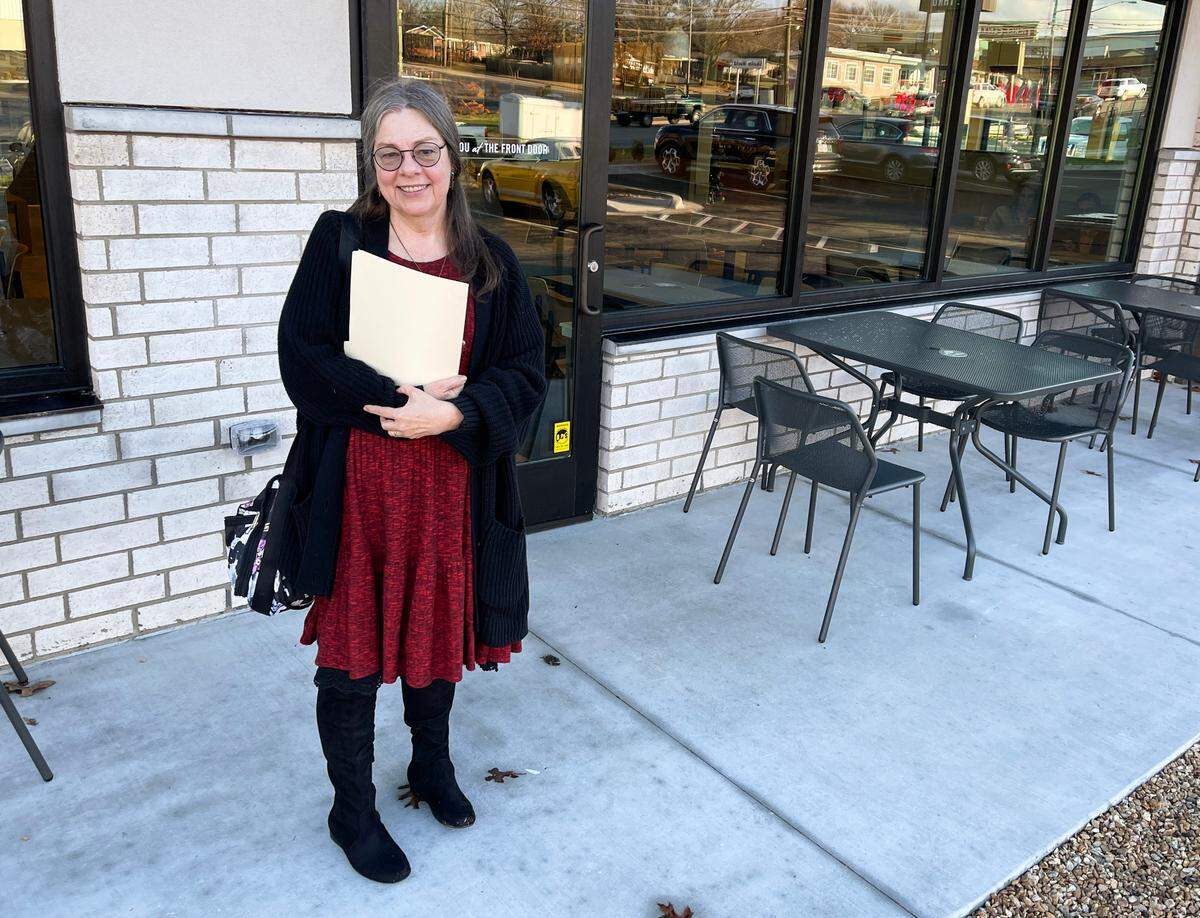
Merriman said the initiative petition process is wonderful in theory, painting it as a way for Missourians to effect change on issues that state legislators fail to accomplish. But, he said, that process has changed from the views of citizens to those of outside influences and corporations.
“I truly feel like a lot of it is education,” he said. “I don’t think the voters are truly educated. I think they’re going on a whim or they’re going on feelings. I don’t know how to explain it.”
Some Republicans in the General Assembly appear to be less keen on making it harder to amend the constitution. Instead, they think the process should be altered to allow legislators to make changes to issues once they’re voter-approved.
“I love the initiative petition process because it gives people a say and a feel in government,” said state Rep. Travis Smith, a Dora Republican who represents Taney County.
“If there’s any one change that would be needed, I’d like to see the General Assembly have the ability to make changes when there are unintended consequences. … If you’re not able to make changes, then a lot of these petition processes get on there and we can’t do anything to change it,” Smith said.
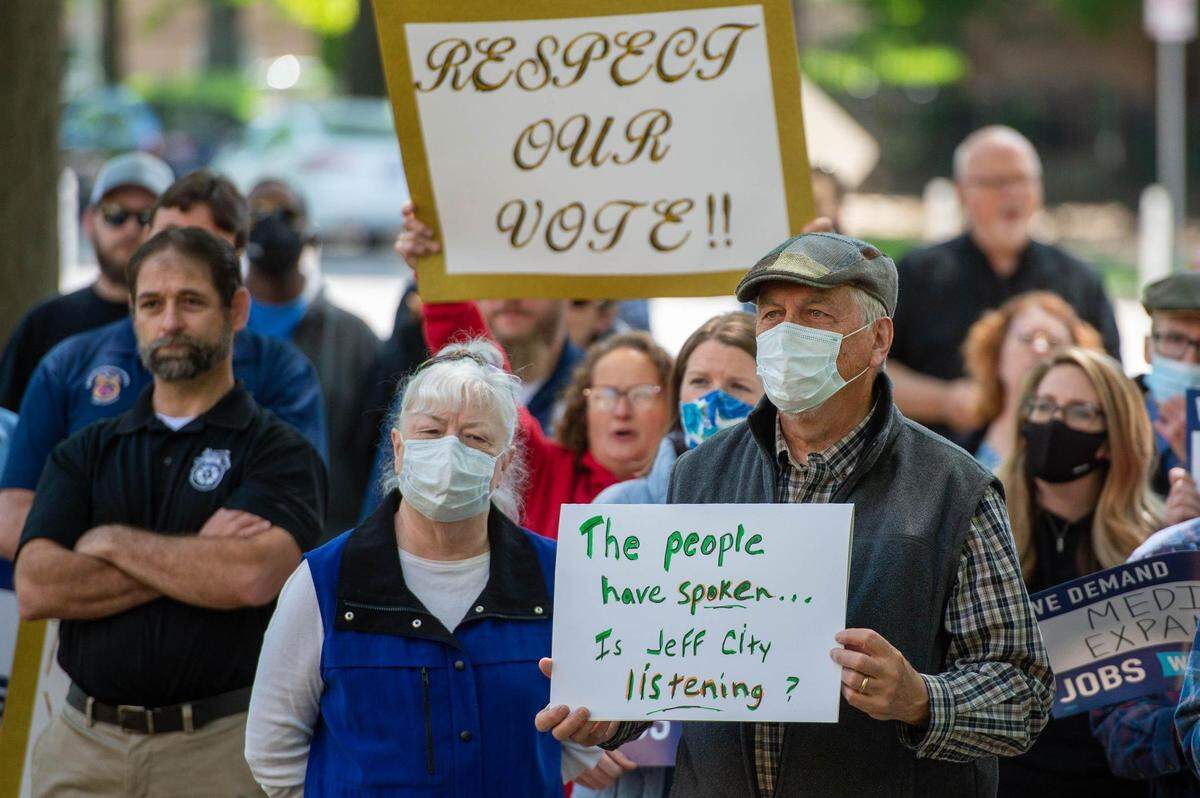
But initiative petition defenders say that preventing lawmakers from making changes to voter-approved measures is exactly the point.
‘That’s not democracy.’
With state lawmakers back in Jefferson City for the start of the legislative session, Republicans say that amending the initiative petition process will be one of their top priorities.
Their messaging surrounding the issue — that the constitution is too easy to amend, that outside groups have taken over the process — will be key in trying to convince voters to whittle away at a voting tool that’s been in place for more than a century.
“I think the Missouri voter needs to have more transparency about what is being brought to them when they vote for it in the constitution,” House Speaker Dean Plocher, a St. Louis Republican, told reporters earlier this month
Democrats and initiative petition defenders, in response, will frame the issue as an attack on democracy. They say making the constitution harder to amend will silence the views of voters — even in the staunchly conservative areas scattered across southwest Missouri.
“They want to make sure that the people of the state of Missouri aren’t able to put something on the ballot because they don’t want the outcome. That’s not democracy,” Senate Minority Leader John Rizzo, an Independence Democrat, told reporters. “Because you don’t like that Missourians want recreational cannabis, because you don’t like that they voted for Medicaid expansion, because you don’t like that they voted against right to work.
“I mean, the bottom line is they just really dislike when Missourians get to vote.”
This story was originally published January 15, 2023 at 5:30 AM.