Kansas will decide on electing Supreme Court. Who’s behind, against the vote?
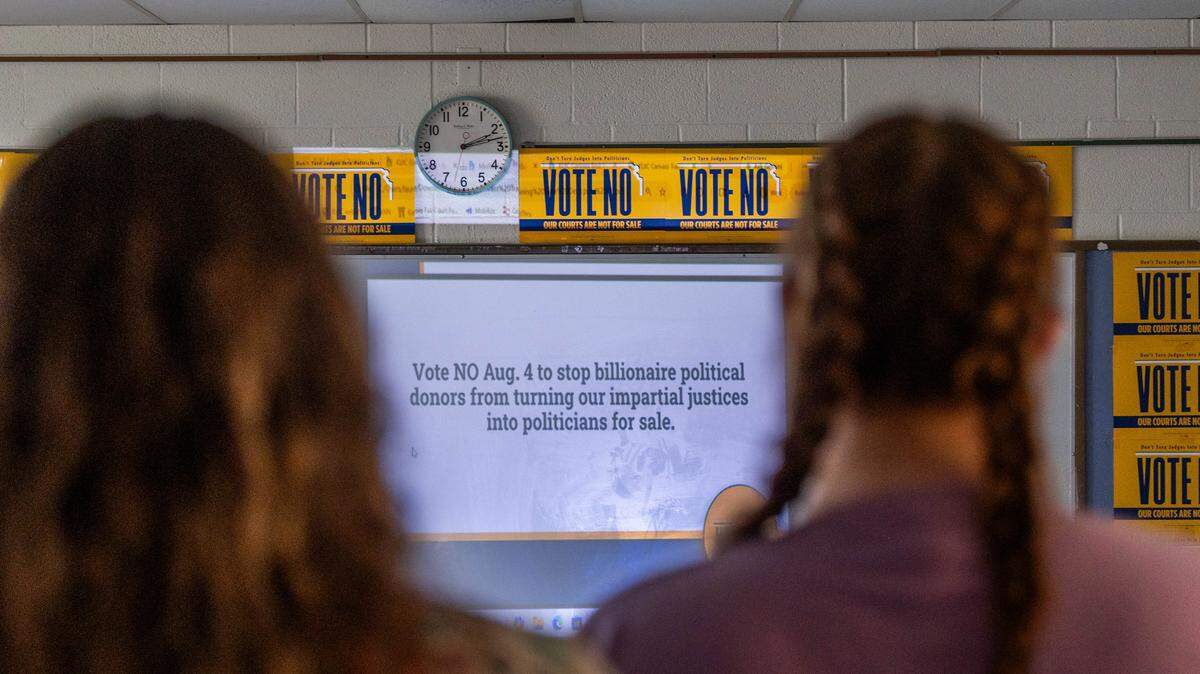
When Kansas voters head to the ballot box on Aug. 4, they will be tasked with a monumental decision over whether the state’s Supreme Court justices should be elected.
The high-stakes choice comes more than a year after the Kansas Legislature, with firm GOP majorities, placed a constitutional amendment on the ballot asking voters if they want to directly elect the court’s seven justices.
The vote sets the stage for a grueling summer of campaigns and advertisements over whether voters should insert partisan politics into the judiciary. At the core of the election is the state’s protracted fight over abortion as Republican lawmakers seek to clamp down on a court that protected access.
A chorus of Republicans, such as Attorney General Kris Kobach, and conservative organizations, like Americans for Prosperity–Kansas, have backed the proposal, arguing that it would allow voters to have a direct say in how justices are chosen. Republicans have long attempted to cast the Kansas Supreme Court as too liberal.
“Voters will now get to decide whether to reclaim the right to vote for justices, which they enjoyed from statehood until 1958,” Kobach said in a statement after the measure’s passage last year.
Over the weekend, a coalition of opponents launched a campaign opposing the measure. The campaign, called Kansas United for Impartial Courts, warns that electing justices would politicize the court and result in bitter, money-fueled judicial races.
The proposal would allow justices to make political contributions, take part in political campaigns and hold office in — or lead — political parties.
“The proposed amendment, pushed by billionaire political donors, threatens a complete overhaul of our Court, allowing tens of millions of dollars of outside money to determine who sits on the bench,” retired Supreme Court Justice Carol Beier said in a statement supporting the opposition campaign.
The proposed amendment would clear a path for Republicans to assemble a new, anti-abortion majority on the court after a landmark 2019 decision that protected reproductive rights. The proposal marks another tool for Republicans to ban abortion after voters in 2022 struck down a measure that would have overturned the 2019 decision.
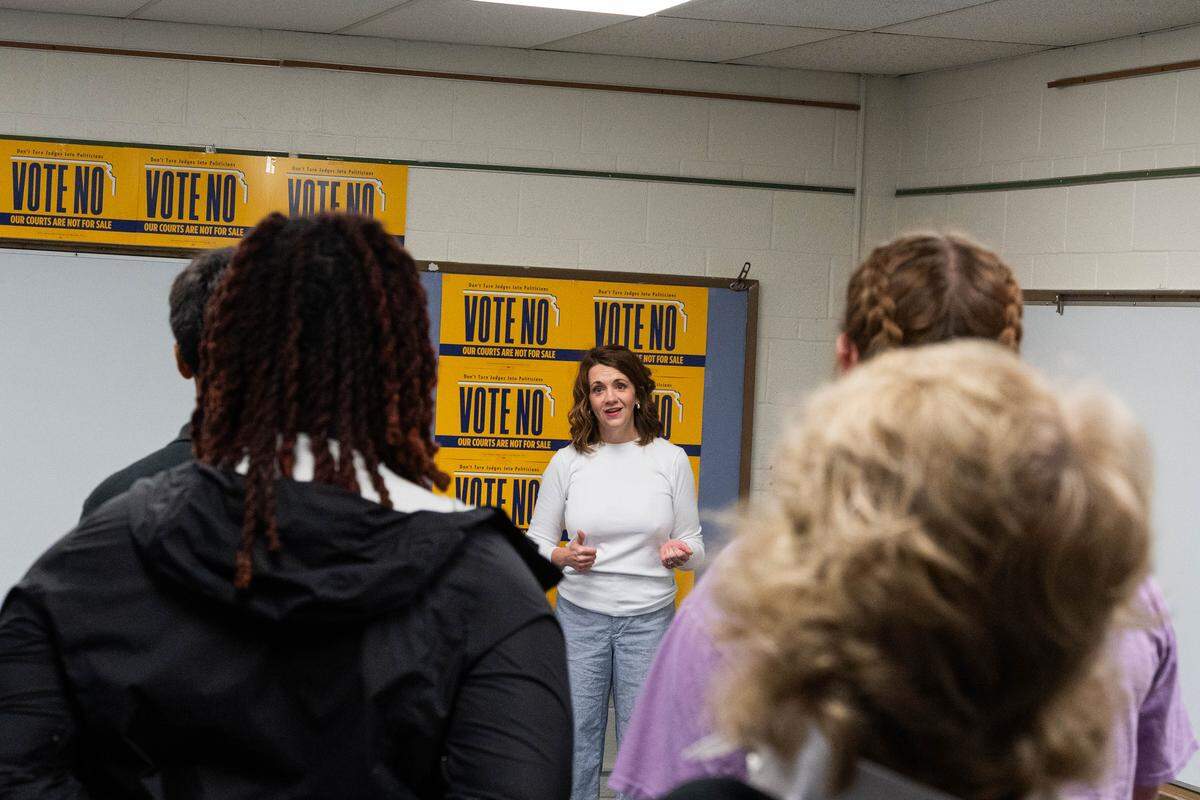
Kansas abortion rights groups have lined up against the measure and framed it as a shadow fight over the right to an abortion. Emily Wales, the president and CEO of Planned Parenthood Great Plains Votes, said the proposal would “rubber-stamp an extreme political agenda.”
“Kansans voted to protect the right to sexual and reproductive health care four years ago and since then, politicians in Topeka have looked for new ways to override the will of voters and restrict abortion access,” Wales said.
The upcoming vote also mirrors a separate fight across the state line in Missouri. Republican lawmakers are backing an Aug. 4 statewide vote that would overhaul that state’s key process for direct democracy after voters in 2024 enshrined abortion rights in the state Constitution.
Reshaping the judiciary
The state’s current system of selecting justices has long shielded the court from partisan politics. Since the 1950s, the governor has chosen justices from a list of finalists submitted by a nine-member commission.
The proposed amendment would abolish the commission, paving the way for voters to decide who gets a seat on the state’s highest court. The measure does not explicitly require partisan elections, but it would allow lawmakers to create rules for the elections.
Nonpartisan elections would still open the door for Democratic vs. Republican races in all but name — similar to local elections such as for Kansas City mayor and city council.
Twenty-one states currently elect their Supreme Court justices. Kansas is one of the 14 states with a merit selection system, which was first adopted by Missouri in 1940.
The system is praised by supporters as a way to keep politics out of the judiciary. But critics say the current system places too much power in the hands of little-known panels of lawyers and makes judges and justices too distant from the public they’re serving.
Kansas, Missouri anger
The new measure comes as lawmakers in both Kansas and Missouri have been angered by the role their Supreme Courts have played in protecting abortion access and other decisions. Republicans in both states have pushed for wholesale changes to the court, but the Kansas proposal marks the most aggressive step in either state in decades.
While Missouri’s efforts have not gone to the same lengths as Kansas, the push reached a fever pitch earlier this year. Furious after the Missouri Supreme Court struck down a law designed to fight abortion access, Senate Republicans forced the cancellation of the annual State of the Judiciary address.
The fight boiled over on the Senate floor when a pair of Republican senators excoriated the court over its unanimous decision. In a 15-minute tirade, Sen. Rick Brattin, a Harrisonville Republican running for Congress, attacked the ruling as “egregious” and “ridiculous, trumped-up garbage.” He tore into the court’s seven judges as “little kings and queens in their black robes.”
The chaotic episode in the Missouri Senate illustrated long-simmering tensions between Republican lawmakers in both states and a judicial branch they consider to be too liberal.
In Kansas, supporters of reshaping the court have cast the new measure as a way to make justices “fair and accountable to the people,” according to a campaign flier posted on social media. The flier urges voters to “TAKE BACK THE BENCH.”
Meanwhile, opponents have vowed to canvas across the state to encourage voters to defeat the amendment. The opposition campaign is poised to have field offices in Lenexa, Lawrence and Wichita.
“Kansas has a proud tradition of fair and impartial courts,” said Wales. “And on August 4, voters will protect that trusted system by defeating this amendment.”