Kansas City residents face new political reality after redistricting ruling
AI-generated summary reviewed by our newsroom.
- Rep. Emanuel Cleaver said he still intends to run for a 12th term under the new map.
- Gerling’s South Kansas City home is now in a district represented by Rep. Mark Alford.
- Court upheld a map that sets up splitting Kansas City into three districts ahead of 2026.
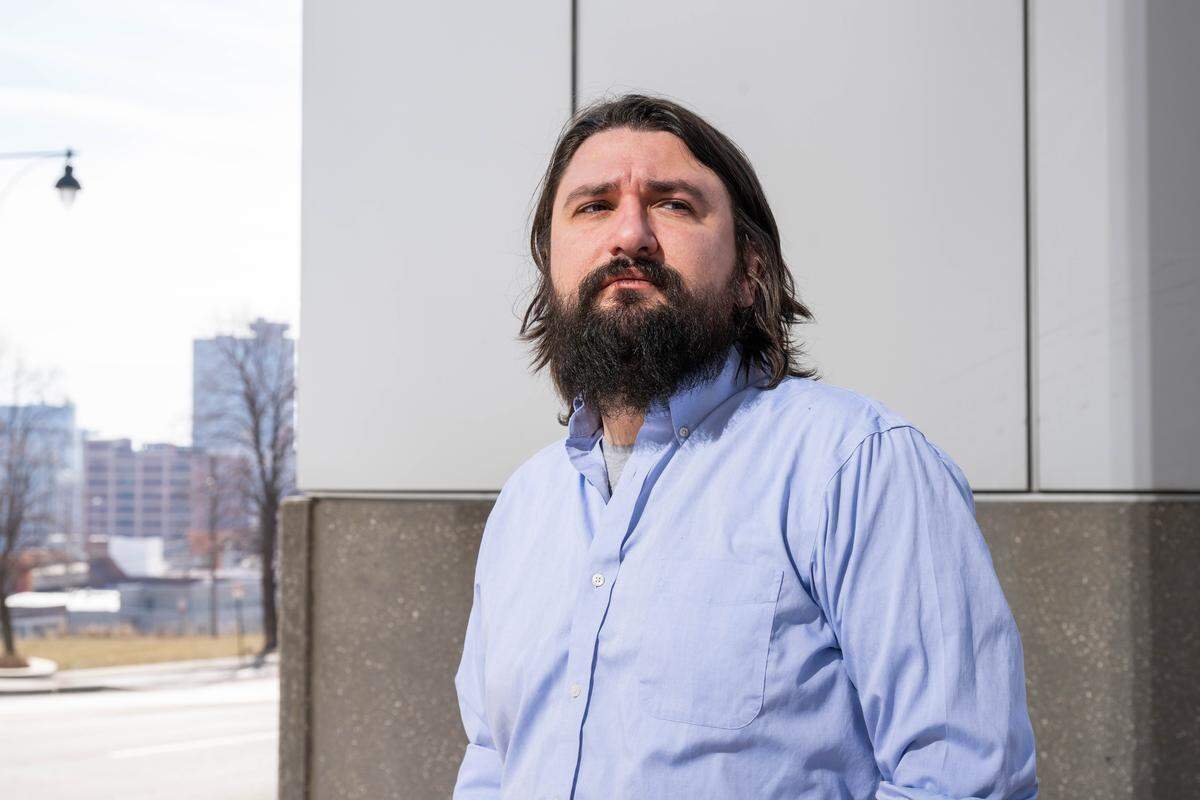
With the stroke of a pen, Geoff Gerling’s home in south Kansas City shifted from Missouri’s 5th congressional district to the 4th.
The Missouri Supreme Court upheld the state’s new congressional map on Tuesday, setting up a path to split Kansas City’s longtime Democratic-heavy district into three separate districts ahead of the 2026 elections.
Following the decision, the lifelong Kansas Citian is now represented by Rep. Mark Alford, a Republican from Lake Winnebago, in a district that stretches well into central Missouri.
“Mark Alford, I guess sort of, is my congressman right now?” Gerling said. “And to think that my neighborhood in south Kansas City, as well as someone who lives in like Crossroads, will have the same representation as somebody who lives basically on the other side of Lake of the Ozarks, doesn’t seem correct.”
Gerling, who formerly served as the executive director for the Jackson County Democratic Committee, is concerned with what the decision means for the city’s future.
He argued that Kansas City drives much of Missouri’s economic growth and will lose influence by being divided into multiple congressional districts.
The decision’s impact
Gerling said the argument that the new districts make Kansas City more powerful with additional representation is not realistic.
“To have all of Kansas City suddenly represented by far more rural interests seems very, very backward and unfair and unfortunate for those of us that have lived here and put in a lot of work over generations,” Gerling said.
Gov. Mike Kehoe said in a social media post Tuesday that the decision marked a huge victory for voters. The Republican governor called the map the “Missouri First Map,” a nickname coined by Republican supporters.
Rep. Emanuel Cleaver, in a statement Tuesday evening, said that the decision did not change his intentions to run for a 12th term in Congress. He would represent a district that stretches east of Troost Avenue to places as far as Osage County, more than two hours away.
Gerling said the new map is designed to weaken Democratic representation and elect more Republicans aligned with the White House.
“I’m not even sure what the point is, to try to say that this is the Missouri First map that is a better representation of the state of Missouri, just go ahead and tell the truth,” Gerling said. “We want more Republicans. This gives more Republicans.”
‘It is doom and gloom’
Gerling said he expects Missouri’s 1st District, which includes all of St. Louis, to be next, eventually leaving the state with zero Democrat-controlled districts.
He said that he would presume there will be even fewer Democrats elected at the state level, due to the ruling.
“If you are a reasonable person that believes in fair representation, you cannot be happy about this. You just can’t,” Gerling said. “In two years, we will have zero Democratic representatives in Congress, zero statewide officeholders, and I would presume even fewer Democratic state legislators, because the Supreme Court in Missouri has just said it’s OK to make up the maps whenever you want now.”
Traditionally, something like this could be resolved through a public referendum on a ballot letting people decide.
A referendum campaign submitted more than 300,000 signatures in November in an attempt to force a statewide vote on the map.
In a separate ruling Tuesday, the state’s Supreme Court said the map could later be suspended if a referendum campaign seeking a statewide vote is certified. Republican Secretary of State Denny Hoskins has yet to certify the referendum campaign for the ballot.
Ultimately, Gerling said the decisions are disheartening, going as far as to say “it is doom and gloom.”
“I’m trying to stay optimistic about the future, but sometimes you have to have catastrophic events to create an opportunity to come out stronger on the other side, and I think we’re pretty darn close to that in this country,” Gerling said.