Missouri anti-gerrymander campaign says it should ‘easily qualify’ for ballot
AI-generated summary reviewed by our newsroom.
- Local verifications show enough in five districts; need six to qualify.
- They exceed thresholds in 5 districts; ~400 short in the 7th (7,000 uncounted).
- Certification and a separate court case will determine ballot status and map's effect.
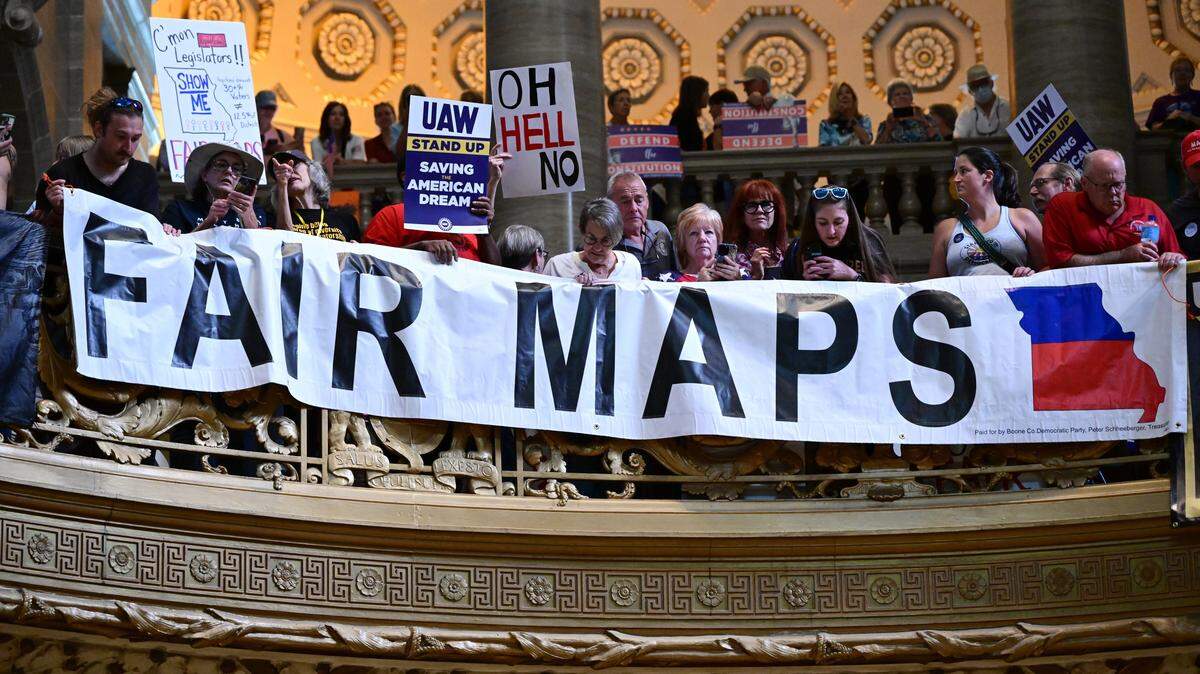
Campaigners behind an effort to strike down Missouri’s gerrymandered congressional map on Wednesday said they should “easily qualify” for the November ballot, referencing preliminary data from local election officials.
The striking announcement threatens to upend Missouri’s election season as a roster of Republicans have already launched campaigns based on the map’s boundaries. The preliminary data, reviewed by The Star, marks the first public disclosure of the referendum campaign’s likelihood of reaching the Nov. 3, 2026, ballot.
“This data shows what we have said all along,” said Richard Von Glahn, the executive director of the campaign, called People Not Politicians. “People, not politicians, are going to be the final deciders on this.”
The campaign came to that conclusion after obtaining copies of local election officials’ verifications of the more than 300,000 signatures the campaign turned in last December. Those records show that the campaign turned in well above the required number of signatures in five of the state’s eight congressional districts.
The campaign blew past the signature threshold in the 1st, 2nd, 3rd, 4th and 5th Congressional Districts, according to the records, which the campaign obtained from the Missouri Secretary of State’s Office.
In order to reach the ballot, the campaign needs to qualify in six congressional districts. The records reviewed by The Star show that the campaign is roughly 400 signatures shy of qualifying in the 7th District, with more than 7,000 signatures not yet counted.
Those signatures also exclude more than 100,000 signatures that state officials refused to count, which is the focus of separate legal battle.
Local election officials and the Missouri Secretary of State’s Office have until this summer to verify that the campaign can reach the ballot. That certification would mark a critical moment for the fate of Missouri’s congressional map, which Republican lawmakers passed last fall under pressure from President Donald Trump.
The campaign reaching the ballot would add to a series of looming questions about the future of the map, which slices through Kansas City. Map opponents are also awaiting a ruling in a case that will decide whether the gerrymandered map, called HB 1, will be in effect for the 2026 election.
That legal fight centers on a lawsuit from the ACLU of Missouri that alleges top state officials illegally enacted the map in violation of decades of court rulings and precedent. The lawsuit seeks to block it, arguing that it should not be in effect until voters have a chance to vote on it in November.
Attorney General Catherine Hanaway, a Republican, in a legal brief last month, defended the state’s decision to keep the map in effect despite the referendum campaign. Hanaway pointed to Republican Secretary of State Denny Hoskins’ authority to determine whether the referendum is lawful.
“(Missouri) does not know whether the proposed referendum is legally sufficient; therefore, the State stands by its position that HB1 remains in effect for the time being,” Hanaway wrote.
A spokesperson for Hoskins did not respond to a request for comment about the status of signature verification. But Von Glahn said the records from Hoskins’ office undercut the state’s argument that they do not know whether the map should qualify.
“The argument that he used to justify his illegal implementation of the gerrymandered map was that he wasn’t certain if we had enough signatures,” Von Glahn said. “Well, the work by the local election authorities makes it clear that we do.”