Kansas rolls back public health officials’ authority amid TB, measles outbreaks
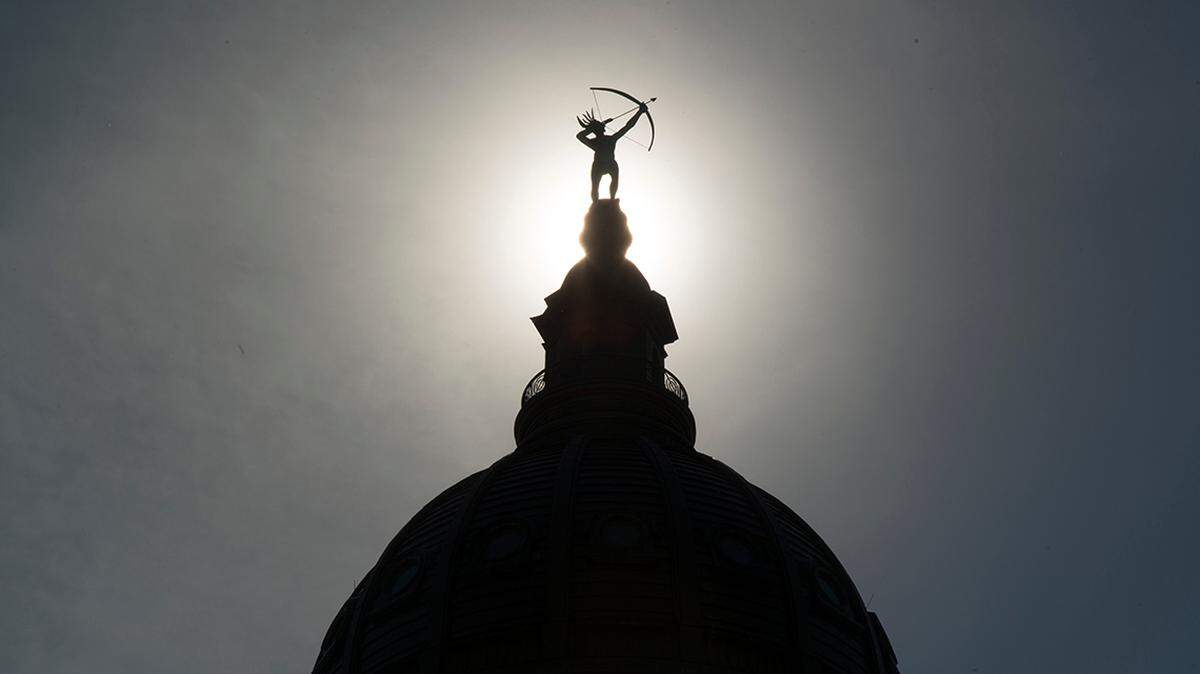
During the COVID-19 pandemic, the Kansas Legislature stripped health officers of their authority to issue orders mandating masks and closing schools and businesses without elected officials’ approval.
Now, as Kansas grapples with a major tuberculosis outbreak and rising measles cases, a new law is further restricting health authorities’ ability to impose orders that can slow the spread of contagious diseases.
The House and Senate on Thursday overrode Gov. Laura Kelly’s veto of a bill that will require the Kansas health secretary and local authorities to prove “probable cause” before issuing health directives.
Local health authorities currently empowered to limit public gatherings by order will only be making recommendations in the future. And in cases where contagious people refuse to comply with entreaties to quarantine, health officials will no longer be able to enlist help from law enforcement.
“Honestly, I cannot believe we are discussing this in the midst of the worst measles outbreak the U.S. has seen in decades,” said Dr. Amy Voelker, an Olathe pediatrician who testified against the bill.
Thirty-two measles cases have been confirmed in southwestern Kansas so far. The Centers for Disease Control and Prevention reports 712 cases across the country.
“Measles is one of the most contagious viruses known and the only way to control an outbreak is to quarantine affected individuals and vaccinate all who are able to be vaccinated,” Voelker said. “Removing the possibility of enforcing quarantines affects us all. It makes no scientific sense to remove this important tool and to allow those infected with contagious diseases to interact fully with society while infectious.”
Sen. Beverly Gossage, a Eudora Republican who chairs the Senate Committee on Public Health and Welfare, said the bill doesn’t prohibit officials from telling people to stay home if they’re known to be contagious.
“They may issue quarantines or institute isolation. It’s just that before taking that action, they must have probable cause,” Gossage said before the override vote. “It also allows the aggrieved party to file a civil action and that that be acted upon within 72 hours if someone is wrongfully put into isolation or quarantine.”
Tools for stopping the spread
Charlie Hunt, Johnson County’s health director and the Kansas Department of Health and Environment’s former state epidemiologist, said it’s very rare for local health departments to issue written quarantine or isolation orders.
“We do most of our work through collaboration and recommendations with people that have either been exposed to or are suffering from infectious or contagious diseases,” Hunt said.
Usually, people are cooperative. But resentment towards health officials that has spilled over from the pandemic and the heightened threat of TB and measles outbreaks make now a bad time to limit health departments’ options, Hunt said.
“If we have someone that is infectious and is not being compliant, staying home when they’re supposed to, the ability of us to enlist the support or assistance from law enforcement, that’s a tool that might be important to us at some point,” Hunt said.
And the new probable cause standard will add an unnecessary administrative burden, he said, noting that existing state law already allows people to seek relief from the court if they disagree with a health order.
In a statement to The Star, Wyandotte County Administrator David Johnston criticized the law’s adoption, which comes as local, state and federal health officials continue their efforts to prevent the spread of tuberculosis. KDHE currently reports 77 TB cases in Wyandotte County.
“We value the vital role our local health officials and board play as subject matter experts in protecting our community against the spread of communicable diseases,” Johnston said. “Kansas SB29 strips away key tools and the authority that public health officials may need in the event of a major health emergency.”
Public health and individual freedom
Sen. Bill Clifford, a Garden City Republican and physician, said Kansans should acknowledge that measles is “a disease coming to a county near you.”
He’s concerned about the spread, going as far as to attempt to remove language from a bill that will soon make it easier for parents to claim religious exemptions to immunizing their children before placing them in childcare.
But he fully supported the veto override on the health order bill.
“I think constitutionally, the right to assembly is fundamental. And, you know, if there’s probable cause, there still could be health orders,” Clifford said.
“Even as a physician, I see it as reasonable.”
The Senate voted 31-9 to override Kelly’s veto and the House followed suit 86-38.
Before the vote, Rep. Jo Ella Hoye, a Lenexa Democrat, said efforts to further erode health authorities’ power come from a cynical place.
“I refuse to give up hope that neighbors care about each other enough to make small sacrifices to protect the health and safety of our communities,” Hoye said.
Hunt said he and other health officials carefully weigh the consequences of their health orders and recommendations.
“It’s that balance between individual rights and liberties versus what is in the best interest of the public or the public good,” Hunt said. “I do think it’s a careful balancing act. We have to look at the potential harms from any of those actions.”
Hunt said he didn’t get into the field of public health to control people’s lives.
“We got into the field because we enjoy and have a calling for helping the community and helping people. It’s personally satisfying to me to serve the community and to help people.”
This story was originally published April 11, 2025 at 4:06 PM.