Kansas has a new law on background checks after state missed ex-official’s fraud
A new Kansas law is designed to ensure state employees hired to handle sensitive financial information don’t have criminal histories.
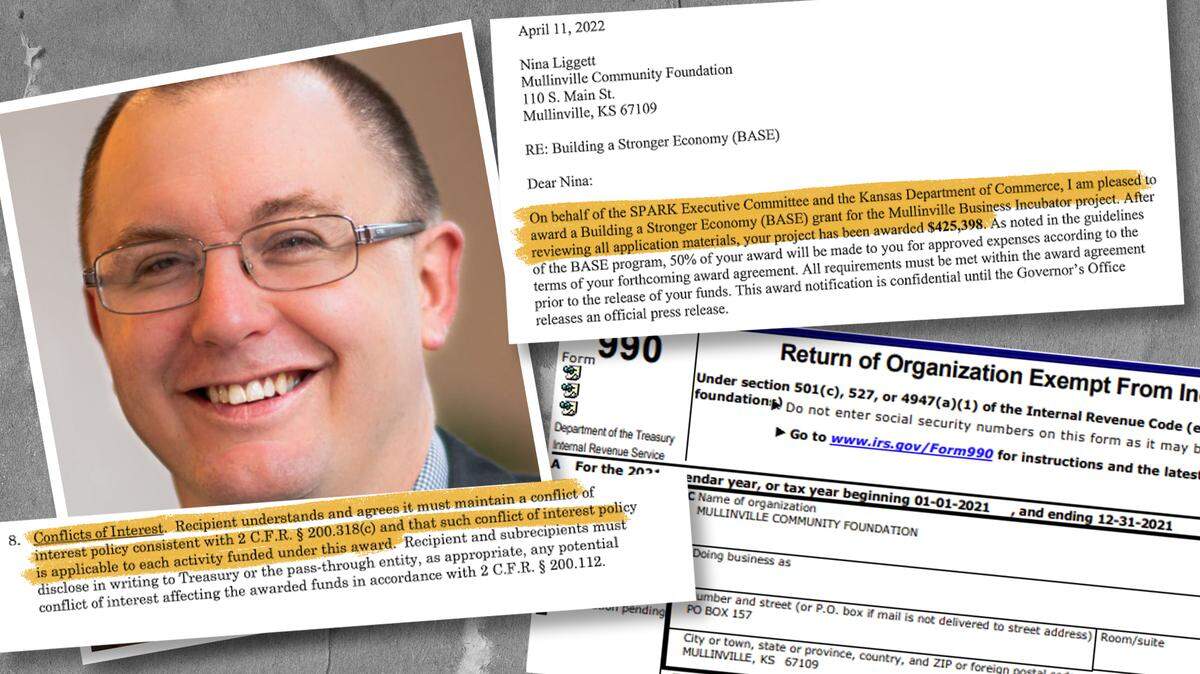
The change comes after The Star and Wichita Eagle reported that the Kansas Department of Commerce hired a man, Jonathan L. Clayton, who oversaw over $100 million in programs funded by pandemic relief money despite previously pleading guilty to financial felony crimes.
A December state audit found that the Department of Commerce does not perform background checks on job applicants.
“Had they done a background check on (Clayton), they would have identified the fraud in his background and not put him in the position that they did, and so I would hope that this would remedy that from happening again,” said Rep. Sean Tarwater, a Stilwell Republican who chairs the House Committee on Commerce, Labor and Economic Development.
Gov. Laura Kelly signed the bill into law this week after it passed the House and Senate unanimously. A representative for Kelly declined to comment on the efforts to enhance pre-employment screening.
A spokesperson for the Department of Commerce responded to a request for comment from Lt. Gov. David Toland, who also serves as commerce secretary.
“The Department of Commerce fully supported this legislation and appreciates the Legislature passing it into law,” spokesperson Patrick Lowry said in an email statement.
Officials told auditors they had not been performing background checks because they were not authorized to do so under state law.
Tarwater said there should be no confusion moving forward.
“It cleared up the question of whether or not we can do background checks on employees,” he said. “We thought we could. The governor’s office wasn’t sure they could so they didn’t. This reassures them that they can.”
Fatal crash raises questions
Clayton, who was found dead in a crashed vehicle in Harvey County last year, joined Commerce in 2020 as a project manager before being promoted to director of economic recovery.
His death came amid heightened scrutiny over whether he had mishandled grant funds belonging to various local associations in Mullinville and Peabody, where he lived, before leaving the job in 2023.
At least a portion of the $425,000 grant allocation awarded to the Mullinville Community Foundation in 2022 went missing while Clayton was both overseeing the grant program for the state and serving as secretary-treasurer of the foundation.
In 2018, Clayton was sentenced to months of house arrest, followed by five years of probation and ordered to pay more than $200,000 in restitution after being accused of defrauding the Philadelphia ridesharing platform that he was working for as an administrative assistant.
Last year, Commerce enlisted risk management and emergency response firm Witt O’Brien’s to conduct a review of the grant awards Clayton oversaw.
In December, Lowry said the review “has not uncovered any improper or ineligible grants.” He did not respond to a question on Thursday about whether the review is ongoing.
This story was originally published April 11, 2025 at 9:54 AM.