Behind the toll scam texts that are confusing thousands across Kansas City
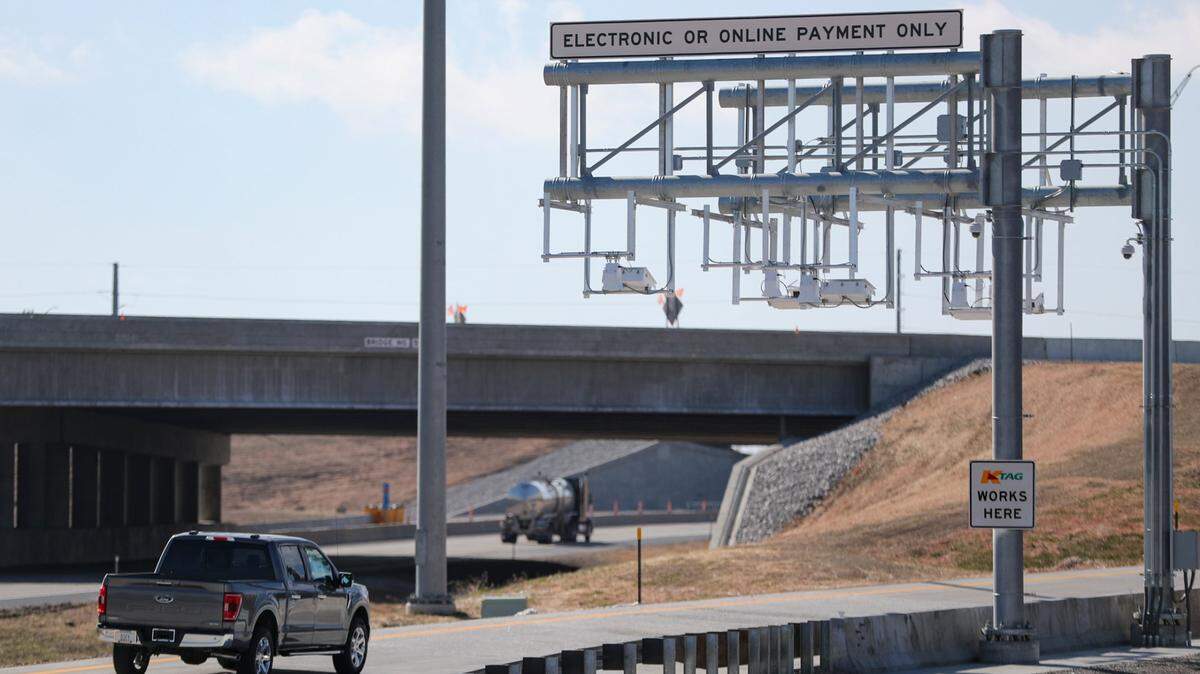
When Larry Otto drove from his home in Kansas City to visit family in Wamego last summer, he noticed the toll booths dotting the Kansas Turnpike stood empty.
When he received a text message last week claiming he owed Kansas money for unpaid highway tolls, he assumed it was legitimate and entered his personal banking information.
“I just thought I was doing the right thing by responding to it,” said Otto, 81. “I looked at it. It wasn’t very expensive. It was like $6.50, something like that, and I tried to comply by paying it.”
The Kansas Turnpike Authority told The Star it doesn’t send out unsolicited text messages. But the switch to cashless tolling last July coincided with the emergence of a nationwide scam text campaign seeking to harvest personal information from unsuspecting victims.
“While (the scam’s) timing with cashless tolling is unfortunate, the uncertainty it creates isn’t unique to Kansas,” said KTA spokesperson Jeri Biehler. “We’ve heard of customer confusion elsewhere as it relates to changes in other states.”
Otto said he was confused by Kansas’s new system. But he’s checked his bank account daily, and so far, no unauthorized withdrawals have been made.
State and federal officials investigating the scheme say to ignore the texts and avoid clicking links in messages.
Amber Smith, Kansas’s deputy attorney general for public protection, said the AG’s office has received five complaints about the text message scam so far in 2025. More than 360 people who responded to The Star’s reader questionnaire in just over a day said they had been sent at least one message.
Some, including Otto, reported being tricked into sharing personal information. Most reported either immediately recognizing the text as a scam or stopping short of turning over their data.
“I haven’t had a traffic ticket in 40 years,” said Mark Overbaugh, 65, of Olathe. He also hasn’t driven on a toll road since taking his daughter to visit the Capitol in Topeka several years ago.
“It’s not the first time I’ve received kind of scam things like this before, so my alarm bells went off and I didn’t click it at all. I didn’t take the bait,” Overbaugh said.
Text messages appear official
Missouri doesn’t have toll roads, but that hasn’t stopped con artists from trying to take advantage of motorists who venture across state lines.
Teryn Draper of Kansas City and her husband both made trips to Salina in February. Within days of returning, they each received texts about unpaid Kansas highway tolls.
“We were completely thinking it’s for real because we had just traveled down I-70. We thought, ‘Well, maybe this is the way they’re doing things now,’” said Draper, 46. “We were duped.”
The Drapers don’t have a KTAG account, but they’ve made online payments through the DriveKS website before. Only after clicking on the link and calling the turnpike authority did her husband realize it was a scam.
“We’re usually pretty cautious about that. That’d be really rare for us to fall for something,” Draper said. “But it was just knowing that system was different and we don’t travel very often and we just assumed this must be part of that new process.”
Biehler, the turnpike authority spokesperson, said KTA has been working diligently since last spring to warn motorists about the nationwide scam, which is being investigated by the Federal Bureau of Investigation.
“Information has been included in billing, newsletters, and other communication. Alerts are set up on our websites. A new security web page makes information readily available and is frequently shared via social media,” Biehler said.
Motorists who drive on the turnpike and don’t already have a DriveKS account will be contacted by mail about how to pay tolls online. The only people who will ever receive official texts from KTA are DriveKS account holders who opted into text notifications, Biehler said.
Rep. Jo Ella Hoye, a Lenexa Democrat on the House transportation committee, said she’s been getting the scam messages, too. But she’s still glad Kansas switched to cashless tolling.
“Personally, I do think it’s a nice change,” Hoye said. “I’m a KTAG user... and I think it definitely makes it safer to have seamless traffic going through there instead of having to slow down, so from a safety standpoint, I think it’s an improvement.”
In fall 2023, KTA’s customer satisfaction survey found that 84% of respondents supported the switch to cashless tolling. In the fall 2024 edition, 90% of the more than 35,000 respondents said the change was a good one.
Identifying scams
The FBI did not respond to a request for comment about the scope of the phishing campaign or where scammers are based.
The Kansas AG’s office asks people who have been affected by the scam to contact their consumer protection division at 785-296-2215.
Spokespeople for Johnson County and the Unified Government of Wyandotte County and Kansas City, Kansas, said neither government agency currently offers programs geared towards helping people identify scams and protect their personal information.
“We do offer programming for technology literacy, device usage, that sort of thing,” said Kellen Jenkins, a spokesperson for the Johnson County Parks and Recreation Department, which provides some classes specifically for residents 50 and older.
He said programming is shaped by participant demand, so the parks may reconsider a scam prevention class soon.
“That could very well be something that we do offer in the future because we have seen such an increase in text messages and email campaigns that are targeting seniors,” said Jenkins, adding that anyone could be a victim if they don’t know how to protect themselves.
“It’s not just seniors. I’ve also been getting flooded with text messages related to toll roads.”
This story was originally published April 9, 2025 at 6:00 AM.