What is the Ogallala Aquifer and why is it running out of water?
By David Newcomb ,
Neil Nakahodo ,
Katie Bernard and
Daniel Desrochers
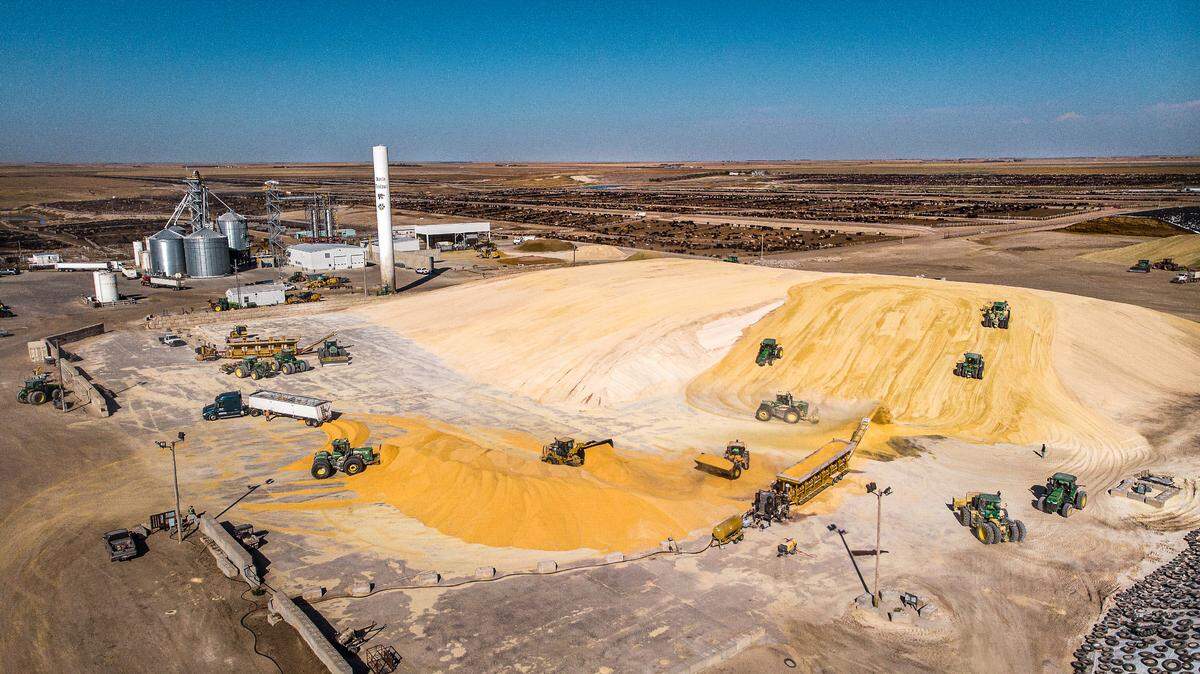
A stony outcropping of the sponge-like rock that makes up the Ogallala Aquifer is exposed in the hills high above Scott State Fishing Lake in Scott County, Kansas. The lake is spring-fed from water gurgling out of the deeper portions of the aquifer.
Chris Ochsner
cochsner@kcstar.com
READ MORE
Broken Government
“Broken Government” is a special project from The Kansas City Star that exposes the ways government at all levels across Missouri and Kansas fails to work for residents and taxpayers.
Expand All
Editor's note: Viewing this story in our app? Click here for a better experience on our website.
Millions of years ago, sediment from the Rocky Mountains was deposited in the High Plains. Over thousands of years, water dripped below the surface creating an underground water deposit called the Ogallala Aquifer.
The water — which spans from South Dakota to Texas and was once the size of Lake Huron — at one point accounted for 30% of the crop and animal production in the U.S.
Kansas accounts for about 10% of the water in the Aquifer, the third most of the eight states that can access the water.
The Ogallala aquifer is the principal source of water for agriculture in western Kansas.
It’s not an underground lake as some believe but saturated sediments that have been deposited over the past 35 million years.
When we pull water from the aquifer, it’s a bit like sucking water out of a sponge made of rock, gravel, sand and other geologic materials.
High capacity irrigation, such as center pivot sprinklers, have used groundwater faster than it can be replenished.
Center pivot sprinklers can disperse hundreds of gallons per minute from a well, 24 hours a day, for weeks or months on end.
Some wells in western Kansas have been abandoned as underground water levels have dropped significantly.
Can’t keep pace with farming
The Ogallala Aquifer was formed more than 25,000 years ago, but it recharges at a very low rate. For years, irrigators in Kansas have drained more from the aquifer than rainfall can replace.
Although the water source stretches across several states it moves very very slowly. As a result, no interstate compact exists to manage the water in the Ogallala. Instead, neighbors have to band together if they want to restrict pumping.
This story was originally published November 17, 2023 at 7:17 AM.
Follow More of Our Reporting on Broken Government: Investigating failures of Kansas & Missouri officials
Daniel Desrochers was the Star’s Washington correspondent. He covered Congress and the White House with a focus on policy and politics important to Kansas and Missouri. He previously covered politics and government for the Lexington Herald-Leader and the Charleston Gazette-Mail.
“Broken Government” is a special project from The Kansas City Star that exposes the ways government at all levels across Missouri and Kansas fails to work for residents and taxpayers.