Did Shawnee really ban roommates? Here’s what the new ‘co-living’ restrictions mean
READ MORE
Shawnee co-living ban
In April, the Shawnee City Council voted 8-0 to ban co-living, becoming among the first Kansas City area municipalities to prevent the practice, which has gained popularity in recent years as rent and home prices have soared. The new ordinance has been under heavy scrutiny.
Expand All
Co-living rentals banned in this Johnson County city after unanimous council vote
Shawnee City Council members take heat for co-living ban. Here’s what they say
Did Shawnee really ban roommates? Here’s what the new ‘co-living’ restrictions mean
Nearly half of Shawnee tenants are ‘rent-burdened’ with limited housing options, study shows

Shawnee’s ban on co-living rental homes is exactly what ‘criminalizing poverty’ means
Last week, the Shawnee City Council voted unanimously to ban co-living in all of its residential districts. The decision came as a surprise to some, but the city council had been discussing the role of co-living in the city for some time.
Some renters concerned about affordable housing have expressed frustration at the council’s move to eliminate an option that allows people to share rent costs.
But Shawnee 4th Ward City Councilmember Jill Chalfie said the ordinance is primarily in response to arrangements that treat co-living more as a business and less of a communal space.
“They go into a house, they gut the house, they form six or seven bedrooms with separate keys to each door,” Shawnee 2nd Ward City Councilmember Eric Jenkins said. “This is not housing, this is a commercial enterprise.”
So what does the new law actually say? Does it really ban roommates?
Here’s what you need to know.
What is considered co-living?
The ordinance defines co-living as a group of four or more unrelated people ages 18 or older, who live in the same housing unit. This does not apply to group homes, which are specialty home settings.
So does that mean I can have one or two roommates?
Yes. You are still allowed to have roommates, but the number of roommates cannot exceed three people.
“We’re by no means trying to eliminate roommates. It’s just a situation of trying to limit it to no more than four people who are sharing a home,” Chalfie said.
What does it mean to be related?
Well, according to the Shawnee City Council, “related’ is defined as being related by blood, marriage, adoption or guardianship. This includes people who have legal custody of a child or have been designated as a guardian by a parent.
So how is Shawnee defining family?
The ordinance defines family as a group of one or more related people living together, or no more than three unrelated people living together.
The second part of this description is meant to include people who may be raising a child or living together and are a family, but are unmarried or unrelated in a traditional sense, according to Jenkins.
How will this ordinance be enforced?
All ordinances are enforced by the code enforcement department. Jenkins said that currently the city’s code enforcement is reactionary, so it depends on complaints from neighbors who witness a violation.
“If they receive word of a violation and come out and check out the violation, and it proves to be true, that individual would be given an opportunity to correct the issue,” said Jenkins, who also serves as the City Council president. “If it doesn’t get taken care of, it winds up at municipal court.”
When does the ordinance go into effect?
The ordinance will go into effect on Tuesday, May 3, according to Shawnee Communications Manager Julie Breithaupt.
To read the entire ordinance, visit here.
How big of a problem is rent and housing affordability in Shawnee anyway?
A recent housing study on Johnson County found that rent prices in Shawnee are rising by some of the highest rates in the county.
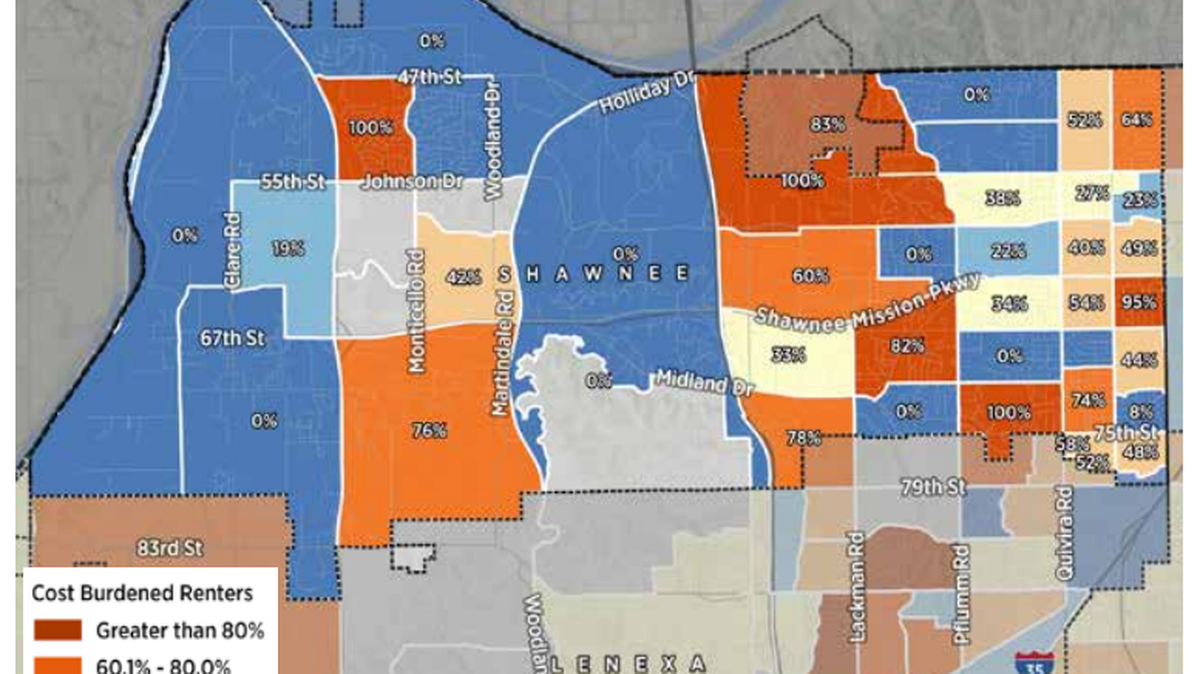
The study also found that 48% of renters in Shawnee spend over 30% of their income towards their housing. Only 14% of homeowners spend that much towards their housing.
Shawnee is also steadily seeing more people call the city home, with an annual population growth rate of 1.08%. Between 2020 and 2030, the city is expected to grow by more than 7,500 residents.
Do you have more questions about this or other issues related to housing in Kansas City? Let us know at kcq@kcstar.com.
This story was originally published May 3, 2022 at 5:00 AM.