Shawnee City Council members take heat for co-living ban. Here’s what they say
READ MORE
Shawnee co-living ban
In April, the Shawnee City Council voted 8-0 to ban co-living, becoming among the first Kansas City area municipalities to prevent the practice, which has gained popularity in recent years as rent and home prices have soared. The new ordinance has been under heavy scrutiny.
Expand All
Co-living rentals banned in this Johnson County city after unanimous council vote
Shawnee City Council members take heat for co-living ban. Here’s what they say
Did Shawnee really ban roommates? Here’s what the new ‘co-living’ restrictions mean
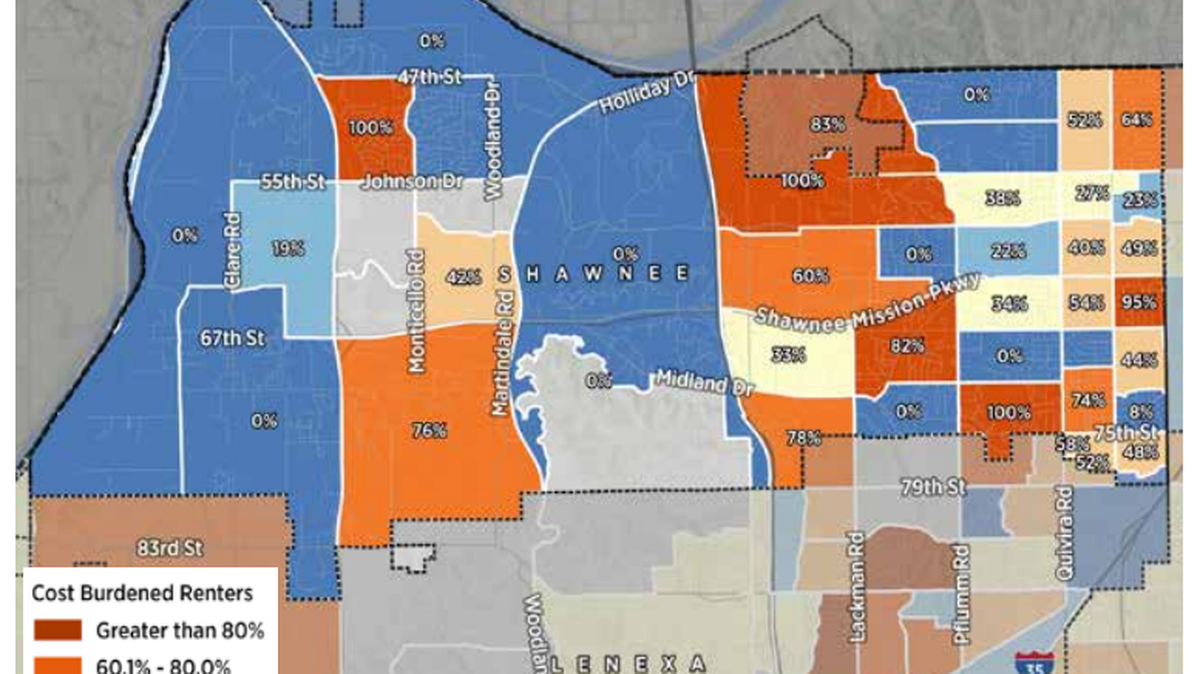
Nearly half of Shawnee tenants are ‘rent-burdened’ with limited housing options, study shows

Shawnee’s ban on co-living rental homes is exactly what ‘criminalizing poverty’ means
Shawnee council members said they don’t plan to revisit a recent decision banning homeowners from renting houses to four or more people who are unrelated to one another.
The April 25 decision to limit co-living to three unrelated tenants in the Johnson County city has faced extensive scrutiny on social media, with some calling it a ban on roommates that targets poor and working class citizens.
The ordinance, which passed with a 8-0 vote, is not a ban on roommates, said Councilwoman Jill Chalfie, Ward 4. Rather, she said, it’s a ban on property owners creating “boarding houses.”
Nor is it meant to target lower income individuals, Chalfie said. She added that while the council historically is “not wholly supportive of varying economic situations,” she did not see this as one of those times.
But some local housing advocates feel differently.
Tara Raghuveer, founding director of local tenant union group KC Tenants, wrote on Twitter that the ordinance contributes to hostility toward non-homeowners, especially in Johnson County, the wealthiest county in Kansas, adding that roommates are often one of the only ways for some people to afford living in a home.
“I’m struggling to understand this policy as anything but intentionally cruel and violent towards the most vulnerable tenants in a place like Shawnee, KS,” Raghuveer said.
The practice of co-living has become an increasingly popular option nationwide, especially for young professionals, as rental and housing prices continue to climb.
In Johnson County, one housing study showed that the average home price in the county rose 37% from 2017 to 2021, climbing from $324,393 to $443,700. The study also showed that wages did not rise at the same rate.
Creating ‘mini apartments’
In December, a number of community members from Councilwoman Jacklynn Walters’ 4th Ward approached her with concerns about a house in their neighborhood.
The home had been sold and recently renovated. Neighbors noticed nearly a dozen cars parked in front of the single family home.
Upon further investigation, the city found that two such converted homes existed in Shawnee, both owned by a Prairie Village-based company HomeRoom, which advertises “seriously affordable rent.”
HomeRoom rents out several bedrooms across the metro, ranging from $275 to $550 a month in rent, costs that are significantly lower than what is offered at most apartments in the area.
Representatives for HomeRoom could not immediately be reached for comment.
Council members saw the creation of a “mini apartment” — the results of converting a three and four bedroom home into seven bedrooms with individual locks and leases — as a way for property owners to by-pass re-zoning laws.
A number of public meetings were held around the ordinance. At the time, council members said, they only received public support.
“We want to protect and preserve neighborhoods for families that are potential buyers and those that are currently in those neighborhoods,” Walters said.
Co-living ban isn’t new
Prior to last week’s vote, a co-living ban was already on the books in Shawnee.
What the council did was reduce the number of non-related leasers from four to three in single-family residents. A similar law already exists in Lawrence, Kansas.
“What you’ve got here is people trying to make a fast buck by going in, renovating a house and getting a whole bunch of rent for much more than they could if they just rented it out,” Councilman Eric Jenkins, Ward 2, said of the practice of converting homes.
Jenkins acknowledged a shortage in low-income housing in Shawnee, but said he doesn’t believe set-ups similar to HomeRoom placed in the middle of a single-family subdivision, zoned as R1, is the answer.
“I’ve had a lot of insulting comments like, ‘you’re in the pocket of the developer and all this kind of stuff,’” he said. “Are you kidding me? We’re actually in the face of the developer.”
He said the council essentially responded to what he saw as serious concerns from homeowners who felt co-living was destroying their property values, the ambiance of their neighborhood and the family-friendly feel of the neighborhood.
He encouraged other municipalities to consider similar ordinances.
Raghuveer, with KC Tenants, noted the history of J.C. Nichols, a Kansas City area developer whose reign in the early 1900s laid the foundation for red-lining and the creation of a discriminatory system that denied Black families equal access to the housing market.
“With the ‘co-living’ ban, Shawnee’s City Council has taken a bizarre step in the direction of re-enforcing this dark legacy in Johnson County,” she said.
This story was originally published May 3, 2022 at 11:01 AM.