She had an abortion before Roe v. Wade. Here’s how a Kansas woman’s fight continues now
READ MORE
Kansas woman had abortion before Roe, defends women’s rights
Before Roe v. Wade, Pam Mattox, of Kansas City, Kansas, had an abortion in Washington, D.C. She’s spent her life trying to protect the rights of other women.
Expand All
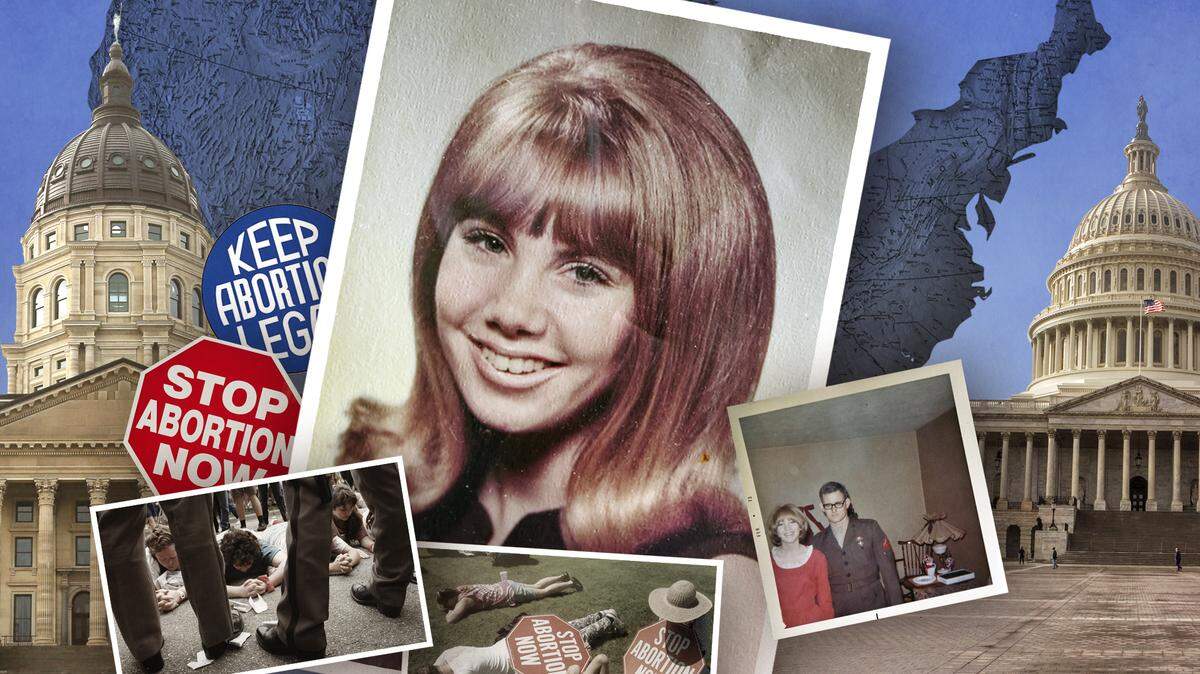
She had an abortion before Roe v. Wade. Here’s how a Kansas woman’s fight continues now
Five clinics in Kansas provide abortions. Here’s how to access them
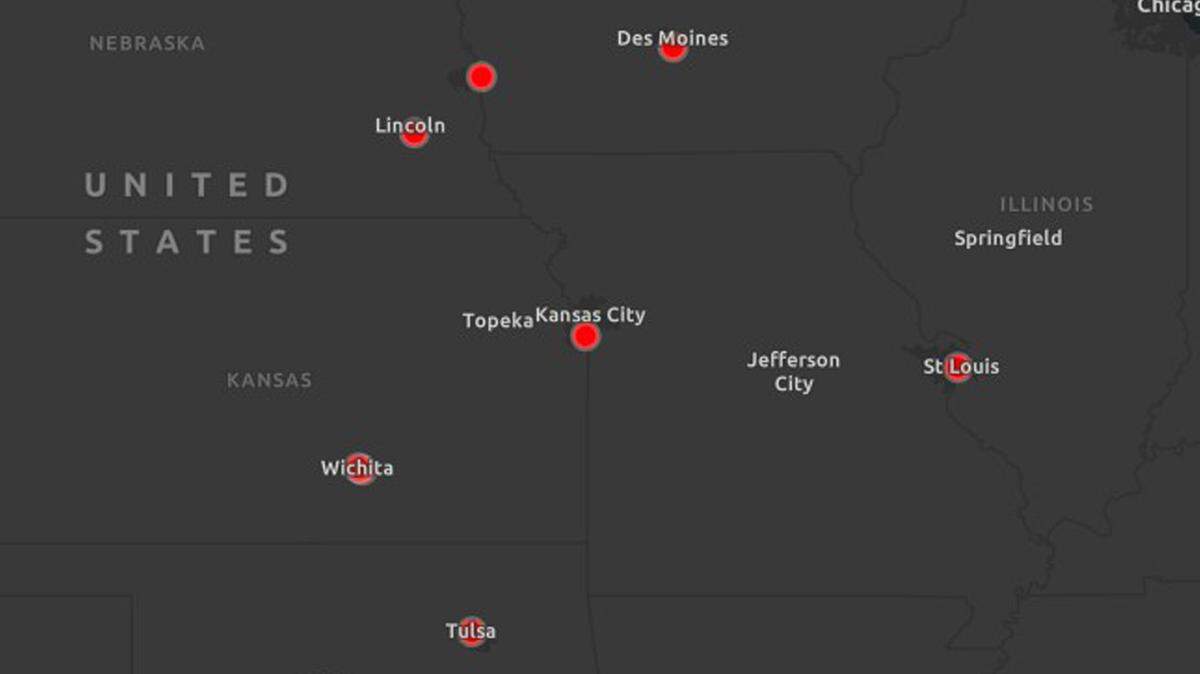
Interactive map: Where to find abortion providers within a 5-hour drive of Kansas City
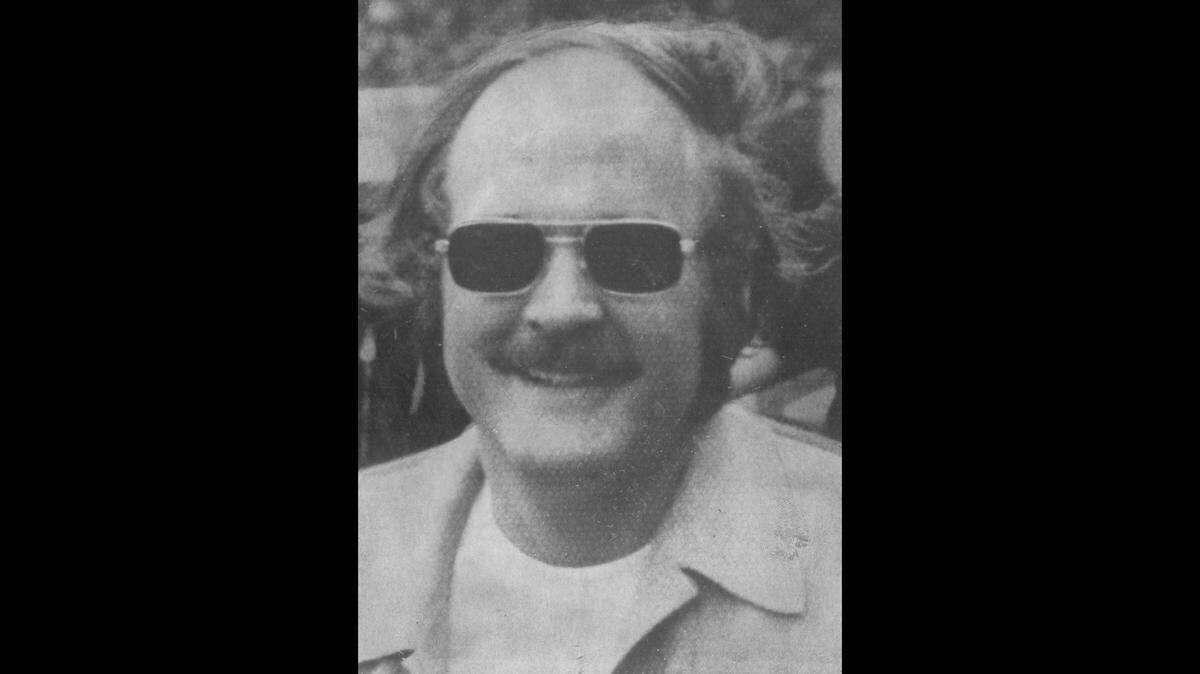
How a Kansas City abortion doctor’s fight for liberalization of laws cost him his life

Kansas woman explains what it was like getting an abortion before Roe v Wade
To this day, Pam Mattox is not entirely sure where she was when the airport bus dropped her off in Washington, D.C. late one night in March 1972.
The other passengers quickly scattered, leaving the 18-year-old college freshman from Kansas City, Kansas, alone and scared, with $200 in her pocket.
The cash was for meals, a hotel and an abortion Mattox would have the next morning. She was about eight weeks pregnant. She’d never set foot in Washington, and was there only because it was one of the few U.S. cities where the procedure was both legal and easily accessible.
Less than 24 hours later she would be on a plane home. Neither her parents, nor hardly anyone else, knew she’d been gone, dealing with the “biggest trauma of my life.”
“I wish it could have been different,” Mattox said. “On the other hand, I’ve never regretted it. I’m an activist because I don’t want anyone to have to go through that, ever.”
She didn’t realize it at the time, but a historic shift was underway. The Supreme Court was preparing to rule that Norma McCorvey, known in pleadings as Jane Roe, was deprived of her constitutional right to privacy by a Texas law barring abortion. Ten months later, the court’s 7-2 decision in Roe v. Wade legalized the procedure nationwide for women in their first trimester.
But in March 1972, Mattox’s options were few, and seeking an abortion in Kansas was not one of them.
Though the state’s laws were moderate then, they still posed significant obstacles. She would need three doctors to agree that the abortion was necessary to protect her mental health. And, because she was under 21 and unmarried, her parents — including her alcoholic and controlling father — would have to consent.
That left three choices, as Mattox saw it: Abandon college and have the baby, find a risky illegal abortion in Kansas or Missouri, or travel to Washington D.C. or New York for a legal procedure.
Fifty years later, much has changed. And much has not.
Mattox, now 68, went on to spend many years in the abortion rights movement. While Roe remains the law of the land, states in the Midwest and South, including Kansas and Missouri, have steadily chipped away at reproductive freedoms. At the same time, access to birth control has expanded and medicine has advanced, with many abortions now possible by pill, even at home.
More change is coming in 2022. Last month the Supreme Court heard oral arguments in Dobbs v. Jackson, a case concerning the constitutionality of a Mississippi law that bans most abortions after 15 weeks of pregnancy, with no exceptions for rape, incest or the life of the mother. It’s widely expected that the court’s conservative majority will weaken or completely overturn Roe, further empowering individual states to set their own laws.
Kansas, where passions over abortion have sparked violence and transformed the state’s politics, will play a pivotal role in shaping the post-Roe map.
Voters will be asked on the August ballot to overturn a 2019 state supreme court ruling that the Kansas constitution contains an inherent right to abortion. The timing will make Kansas the first state to hold a vote on abortion access following the Dobbs decision, which will most likely be issued in late June or early July.
If the measure passes, lawmakers will once again be able to impose any restrictions allowed by federal law. If it is defeated, Kansas will likely become a major point of access for abortion in the Great Plains.
Women will have options in a post-Roe America. But abortion has never been easily accessible. For all that has changed since Pam Mattox was a teenager, many will still face her pre-Roe challenges. The costs of childcare, healthcare and travel, along with the medical risks of pregnancy, all still exist.
“Many women will forgo getting the abortions they want because of the financial burden or worrying about losing a job,” said Karissa Haugeberg, a historian at Tulane University.
“A lot of the dynamics that made it hard to be pregnant and hard to be a parent in the 1960s are still with us.”
‘Pretending to be crazy’
Mattox knew almost nothing about her own reproductive system when she realized she was pregnant. She received almost no sex education in her adolescent and teen years. Birth control had only recently become widely available.
“Cluelessness is the main word here. I didn’t have any clue about sex or birth control and I sure as hell didn’t have any clue about being pregnant,” she said.
The reality began to dawn on her when walking into Baker University’s dining hall for meals made her sick.
“Then I missed and then I’m like ‘Oh we’re up the creek now,’” Mattox said.
After an appointment at the University of Kansas Hospital, she got a call offering congratulations. It was official.
Mattox’s high school boyfriend and fiance, Russ Stephenson, was headed for Vietnam after drawing number six in the draft lottery. The two “said their goodbyes” in January. A few weeks later, she realized she was pregnant.
Stephenson wanted to keep the baby. Even if her parents kicked her out, his large family would have taken her in. But Mattox had never wanted children and knew a baby would mean the end of her career goals — at the time she longed to be a TWA stewardess.
Abortions were legal in Kansas, but the barriers were daunting. The $400 fee was steep — the equivalent of about $2,600 today. The requirement that unmarried women be 21 to forego parental consent forced many women like Mattox into other options. Three physicians were required to agree that terminating was in the best interests of the mother. While a court later reduced the required physician approvals to one, it was still a difficult process.
“It forced women to participate in this charade where they pretended to be crazy,” Haugeberg said.
More than 8,000 women took advantage of the change in law in 1971, its first year on the books, according to The Wichita Beacon.
But that did not eliminate the grave risks of illegal abortions. There is no reliable data on how many women sought them in the years before Roe. According to the Associated Press, Lawrence Memorial Hospital near the KU campus continued to see young women in its emergency room because of complications, even after Kansas increased access.
Had Mattox been unable to find the money to travel to D.C., she might have been one of them.
The suffering compelled many in the medical community to advocate for broader access to legal abortions.
Mattox said she doesn’t remember what she knew about Kansas law when she was 18, but bringing home news of her pregnancy could have meant “bloodshed.”
As an only child growing up Kansas City, Kansas, Mattox lived with an alcoholic father who could become violent. In summers, she wore long sleeves to hide the bruises left when he grabbed her arms too tightly. He hit her once, and she vowed never to let it happen again.
“I was terrified of my father,” Mattox said. “They’d have thrown me out or my dad would have hurt me.”
Around that time a new option, the crisis pregnancy center, was emerging across Kansas and the U.S. The aim was to support women with unwanted pregnancies and provide them the resources to carry their babies to term.
Bernadette Sanders, who founded nearly 20 volunteer-run centers in Kansas, said she began the work after listening to a Notre Dame law professor who predicted abortion would be legal nationwide in a few years.
Working under the model of a Canadian organization, Sanders said she tried to reach one person at a time to reduce what she saw as abortion’s toll on the unborn. Crisis pregnancy centers have long faced criticism for deceiving women into thinking they provide abortions when their mission is to discourage them.
Sanders said women do at times come to her centers looking for an abortion but said she has always been upfront with the clients she’s worked with that her organizations will not provide or help them find an abortion.
“I believe every child has a right to be born,” said Sanders, who considers herself pro-life, not anti-abortion, and avoids engaging in political aspects of the anti-abortion movement.
Mattox considered the idea, visiting a Kansas City-area center that would have given her a place to stay and help put her baby up for adoption. But she was certain that meant dropping out of college and scuttling her plans for the future.
She scheduled a follow up appointment at a free clinic near 75th and Metcalf in Overland Park, where a gynecological exam confirmed the pregnancy.
“The lady said, ‘What do you want to do?’ I said ‘I need an abortion,’” Mattox said.
A counselor at the clinic told her she could travel to New York or Washington, D.C., where it was legal.
“I thought ‘New York sounds really scary’ so she gave me the 800 number for the place in Washington,” Mattox said.
She called from a pay phone at the Indian Springs Mall to make an appointment. Over the next month, she kept the biggest secret of her life.
“It was a month of being totally frightened out of my mind,” Mattox said.
A card, phone number and dime
In the next few weeks Stephenson pulled together the money, about $450 for her flight, hotel, food and the procedure — roughly a full month’s Marine Corps pay, To this day, Mattox doesn’t know how he got it.
Though Stephenson was disappointed with Mattox’s decision, he supported her through it, Mattox said. In early March, 1972, he left for boot camp in San Diego and Mattox went to DC for her abortion.
She’d been at home with her parents the night before. As her father drove her back to Baldwin. she was “just hysterical,” as she put it.
“He had no clue why, of course,” she said.
The only people who did were were Russ and her Baker roommate. A suitemate’s boyfriend drove her to Kansas City Downtown Airport and would pick her up the following evening.
Mattox missed her flight but was told she could catch the next one out, which was headed to Baltimore. Only she had no idea where Baltimore was in relation to DC. Alone and stressed, she boarded anyway.
Dropped off around 1 a.m. in downtown D.C., she banged on the door of a nearby business until a security guard answered and called her a cab to take her to her hotel. The ride took the money she had budgeted for lunch the next day.
At 7:30 the next morning, she was at Preterm, DC’s first abortion clinic, “clueless and desperate.”
“I have no idea what they’re gonna do to me,” Mattox said. “But I didn’t care.”
Preterm was one of four clinics at the time and, according to the Associated Press, performed about 250 abortions a week in a high-rise near 17th and I St NW. It looked like a typical doctor’s office, Mattox said, with other young women seated in a waiting room.
When she arrived she was told she needed to pay the $150 fee with a cashiers check. That meant a trip to the liquor store downstairs, where employees snickered as she handed over her cash.
Later a young woman spent about an hour with a model of the female reproductive system explaining to Mattox, and the other patients, how they’d gotten pregnant and how the abortion would be done. She also covered the available options for birth control and told Mattox they could provide one.
Then it was back to a more private waiting room, where she was given an anti-anxiety medication preparing her, as she said, to get “reacquainted with the stirrups and the speculum,”
Mattox remembers the doctor as middle aged, reassuring and sweet. A woman who brought her into the surgical room stood by, asking if she had any questions.
He started with a cervical dilation and insertion of a cannula, a thin plastic tube attached to a vacuum pump, which removes tissue from the uterus. After the vacuum was finished, the doctor used a currette to remove remaining tissue.
It was about 25 minutes from start to finish. The doctor’s soothing manner not withstanding, Mattox said, it was immensely painful — like the worst menstrual cramps she could imagine.
“Just about the time I was gonna beg them to stop, they stopped,” Mattox said. “I was just laying there thinking thank God, thank God.” She bled badly in a recovery room, where she and other women rested.
Today, Mattox’s procedure would likely have taken just a few minutes, possibly at home with only medication.
Before leaving, a nurse handed her a dime and a card with a phone number. She told her to call if there was any trouble. By the time Mattox landed back in Kansas City, she’d been gone for 24 hours and endured the “biggest trauma of (her) life.”
She woke up two days later with a fever and used the clinic card to call for an antibiotics prescription, which cleared the infection.
Despite all of this, she felt freed.
“My anxiety all went away,” Mattox said. “I thought if I get a pass this time I’ll make sure it never happens again. I’ve never regretted it.”
For the most part, she said, life returned to normal. Her roommate didn’t ask questions and she spoke to no one else. She never told her parents.
“I wanted to forget about it. Of course, I never did,” Mattox said.
A seismic jolt
Russ returned from Vietnam in 1975 a troubled man, with PTSD and an abusive streak. The two stayed together on and off for a couple of years before Mattox left him for good.
Though she rarely discussed her abortion, it changed the arc of her life.
After the Roe decision, Mattox went to work in a Kansas City, Kansas, abortion clinic, sitting with patients and literally holding their hands while the procedure was performed. She later did communications work for Planned Parenthood and is now a member of GRR (Grandmothers for Reproductive Rights.)
Like many women, Mattox believed that Roe had settled the issue, and that the right to an abortion was enshrined in American law. Protesters outside Planned Parenthood and other abortion providers were a part of the soundtrack, but nothing more.
Instead, Roe delivered a seismic jolt to the anti-abortion movement in Kansas and beyond.
“I thought that’s it, forever and always,” Mattox said of Roe. “Here we are 50 years later. Same shit, different day.”
Mary Ann Lickteig, an early member of Wichita Right to Life, was doing paperwork with a colleague, Pat Turner, when word of the decision landed.
“We were so upset and I said to her, ‘What do we do now?’,” Lickteig said. “She said ‘all is not lost’ and she said we just kept plugging away. I guess we’re still plugging away.”
Over the next five decades working for Kansans for Life and Wichita Right to Life, Lickteig took a hard line, believing that there is never a circumstance where abortion is permissible.
She was among the demonstrators during Wichita’s summer of mercy in 1991, when abortion opponents spent six weeks protesting outside George Tiller’s clinic, using non-violent methods to block the entrance. There were more than 2,700 arrests. Over time, Kansas passed new restrictions and regulations.
“Our houses became covered up with letters and literature,” Lickteig said. “It always just seemed like two steps forward and one step back.”
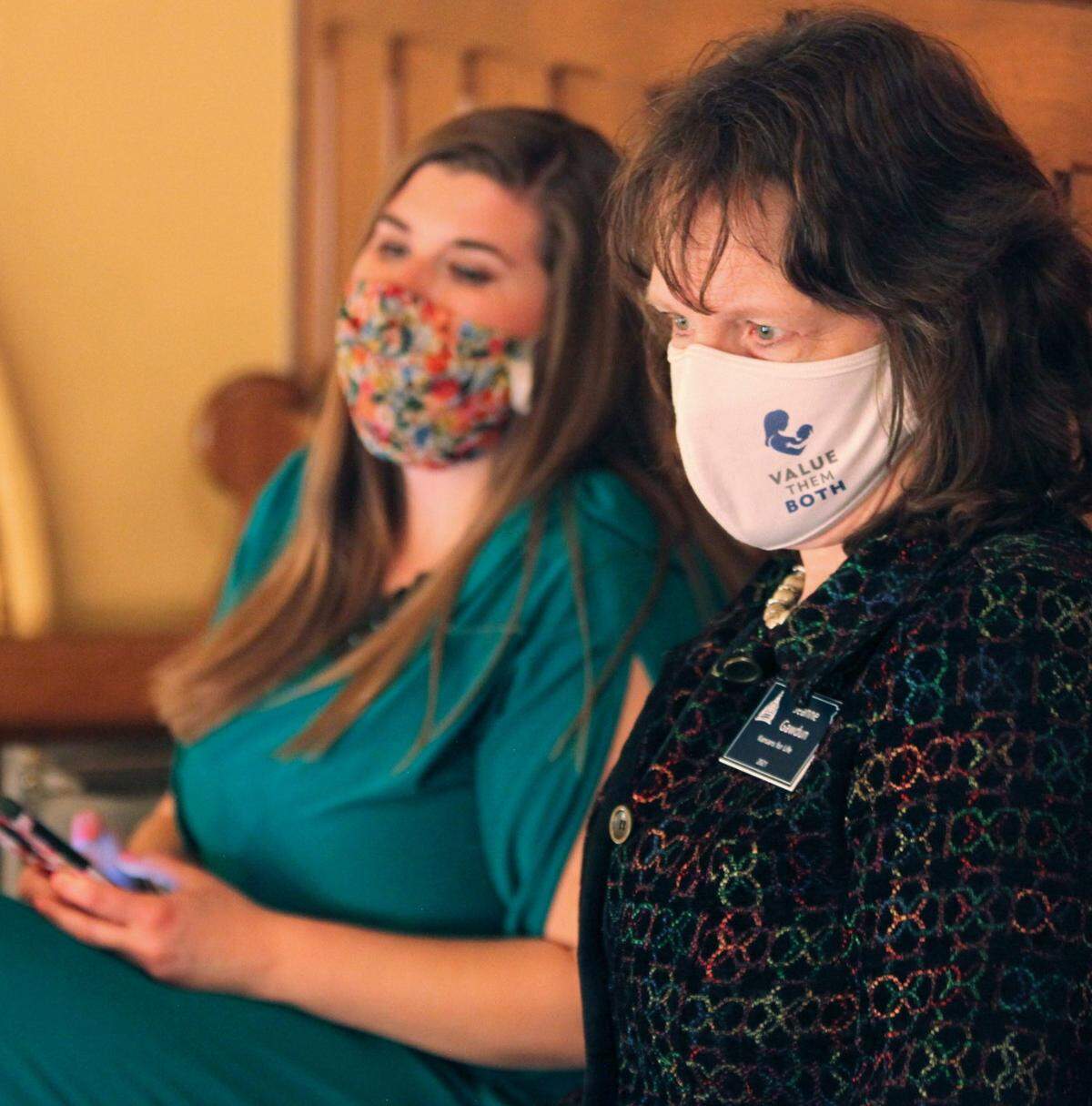
Jeanne Gawdun, a longtime lobbyist for Kansans for Life, said she believes Kansans’ position on abortion has never truly changed, it’s just that they’ve learned more about it.
“As more and more people came to realize what was happening in the abortion industry they elected legislators who would support these reasonable regulations on the industry,” she said.
A clueless generation?
Mattox never became a TWA stewardess. The airline told her she wasn’t small enough for the job — her backside was a single inch too large. She worked in administrative positions around Kansas City before going back to school and earning a journalism degree. After Planned Parenthood, she was a magazine freelancer. She’s been married for 40 years.
Mattox never wanted children of her own and vowed after her abortion to “never let it happen again.” At 25, she underwent a tubal ligation. She’s helped raise her step daughter — making sure she knew everything she’d ever need to know about a woman’s reproductive system.
Whether in a professional or volunteer capacity she remained connected to groups fighting for abortion access.
Speaking to The Star in the summer of 2021 Mattox, she displayed a mix of optimism and fear.
“I’m so afraid that your generation is clueless,” she said, speaking to a 24-year-old reporter. “You don’t know how bad it could be I don’t want you to know how bad it could be.”
Just as Roe catalyzed anti-abortion activists in the 70s, Dobbs could do the same for reproductive rights, said Rachel Sweet, policy director for Planned Parenthood Great Plains.
While medication abortions means women will have easier access than they did in the 60s, Sweet said Dobbs is likely to leave much of the Midwest with limits serious enough that some women will resort to illegal options. Abortion by medication, Sweet said, is likely to exist in a legal gray area in much of the United States.
“I think people are going to be outraged but it’s going to take probably decades to rebuild,” Sweet said. “I don’t think most Americans are going to stand for what the post-Roe future looks like.”
But anti-abortion groups cautioned against concluding that Mattox’s story and those of illegal abortions are predictive what’s to come if Roe is overturned.
“It seemed like at the time years ago it was either you have the abortion or you have that baby you’re stuck, you can’t get a job you can’t do anything,” Gawdun said. “The pro-life movement has really stepped up and said you don’t have to make that decision.”
She views passage of the constitutional amendment as key to keeping a regulatory check on abortion in Kansas. Those on the opposing side caution it could lead lawmakers to eliminate options for women who do want an abortion.
Passage of the six-week abortion ban in Texas has resulted in more women traveling long distances for care. Rebecca Tong, Co-Executive Director at Trust Women in Wichita, an abortion clinic, said that will only increase if Roe is overturned.
“[The August referendum] is obviously a significant vote for our state but it is a nationally significant vote as well,” Tong said. “You look at a map of states that have abortion protections and Kansas is the only one in the center of the country.”
Trust Women, Planned Parenthood and GRR, Mattox’s organization are all part of a coalition campaigning against the amendment.
“That’s gonna be my life’s work,” Mattox said.
This story was originally published January 9, 2022 at 5:00 AM.