Candidates seethe in contentious Overland Park mayor race: Reform vs. status quo?
READ MORE
August 2021 primary election
The candidates and issues for the August 2021 primary election in Johnson and Wyandotte counties.
Expand All
Curt Skoog and Faris Farassati, both Overland Park city councilmen, routinely disagree on city issues. But now that they are both running for Overland Park mayor, their simmering tensions are boiling over into their race as well as into city meetings.
Theirs is the most high profile among the races in the Aug. 3 Johnson County primary. Two newcomers are also challenging them for the mayor’s seat. But the sitting council members’ jabs are drawing much of the attention.
Earlier this month, for example, Skoog interrupted a committee meeting to question Farassati’s absence, criticizing him for missing the discussion of next year’s budget. Farassati instead attended a nearby council candidate forum.
Farassati said he previously scheduled to be absent that day, as his family was set to travel for vacation. But he stayed in town at the last minute after Hurricane Elsa canceled those plans. Skoog argued it was an example of Farassati’s interest in himself and not city business.
Farassati pushed back, saying it was Skoog’s desperate attempt to diminish his character.
Skoog’s comments at the meeting turned into a heated exchange, as he raised his voice to talk over Councilman Scott Hamblin, who, with Farassati, is frequently at odds with the rest of the council. Hamblin accused Skoog of campaigning from the dais.
Joining them in the mayoral race are newcomers Mike Czinege, a retired AMC Theatres executive, and attorney Clay Norkey. The primary will narrow the race to the two top vote-getters for the general election in November.
The result will be a new mayor in Overland Park for the first time in 16 years. Mayor Carl Gerlach, who has held the office since 2005, is not seeking reelection.
And the race comes at a crucial time for the city, which continues to see its population grow, bringing with it new challenges for development, housing and the cost of living.
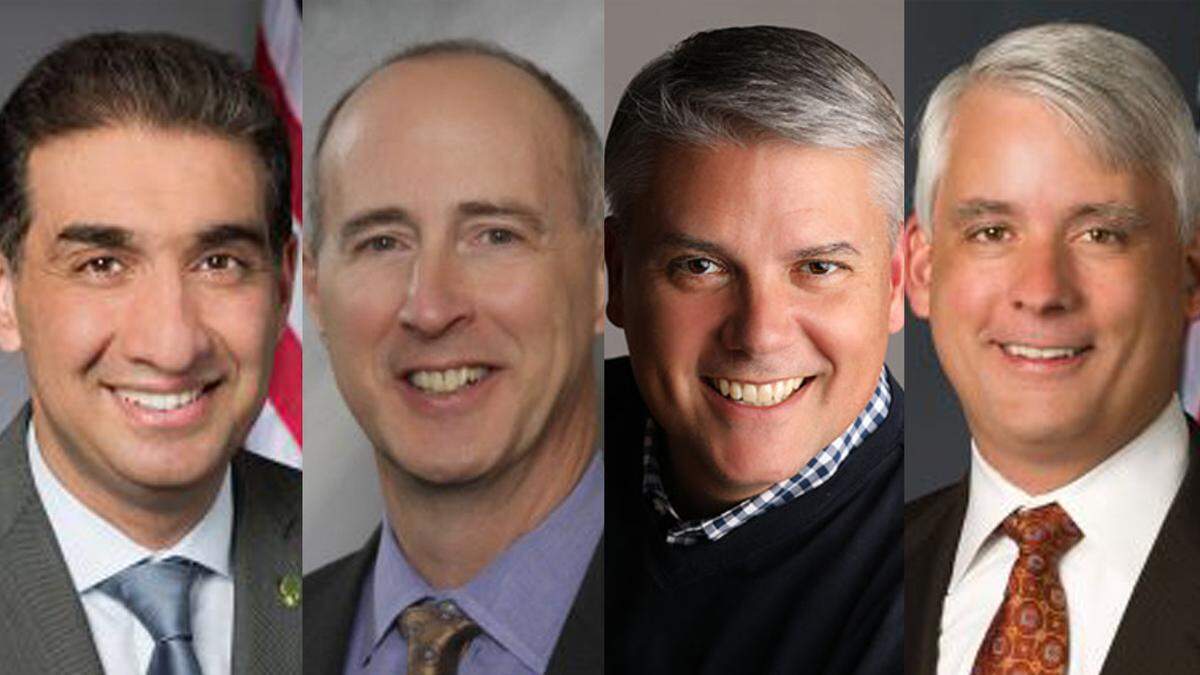
The four candidates
The candidates present drastically different ideas on how to lead Johnson County’s largest city.
Farassati, 52, a cancer scientist at the Kansas City Veterans Affairs Hospital, considers himself a reformer candidate. In his four years on the council, he has often found himself isolated from his fellow members, as he criticizes what he considers an excess of tax incentives going to private developers, including for what he calls a “glut” of luxury apartment complexes.
Council president Skoog, 58, has 16 years of experience on the council and works as the Kansas City branch manager for the Institute for Building Technology and Safety. Skoog argues he is better equipped to be a collaborative mayor, able to work with the council, Chamber of Commerce, developers, businesses and residents to craft a years-long plan for the city. He believes Overland Park should continue investing in projects that bring jobs, amenities and a balance of commercial and residential growth.
Czinege, 67, a retired AMC Theatres executive, is running for office for the first time. He said he’s fighting for Overland Park to maintain its suburban feel, which he believes should be free of a proliferation of high-rise apartment buildings and congestion. He said the City Council agreeing to add express toll lanes to U.S. 69, which he strongly opposed, was the “last straw” before he threw his hat in the ring.
And there is Norkey, 52, an attorney who ran unsuccessfully for the Kansas House of Representatives last year. He said he would be best suited to help guide Overland Park as its population expands, and would work to make it a place where young people want to stay. He said he’d act as a vocal advocate for economic development and job growth, while also pushing for the city to rethink its zoning laws to support development without attracting “big city problems.”
At forums and in interviews in recent weeks, the candidates have made their case for why they are best suited to guide Overland Park over the next four years — and why their opponents are not.
Skoog has criticized Farassati for being unwilling to collaborate and work with the majority of the council, arguing that he is more interested in promoting his personal interests than city policy. And he accused him of routinely grandstanding at meetings.
“I think it’s a challenge to be mayor when you’re not being part of the process of creating policy for the city,” Skoog told The Star.
Farassati, in turn, has called Skoog the “status quo,” accusing him of rubber-stamping requests from developers and being afraid of opposing viewpoints.
Farassati has frequently pushed for policy change at City Hall — as well as hazard pay for first responders during the COVID-19 pandemic and for a program to help renters at risk of eviction — but said his efforts have been stymied by fellow council members who have the power to put those items on a committee agenda.
He has questioned why he has never been appointed as chair of a committee, arguing those positions are too often left to the same people — namely older, white, male council members. Farassati, who is of Persian descent, points out that if elected, he would become Overland Park’s first mayor of color.
Partisan politics also have become apparent in the nonpartisan race. Czinege has openly campaigned as a Republican, including the GOP elephant on his campaign logo and signs. And Farassati, a Democrat, was quick to point out that Norkey recently switched his affiliation from Republican to Democrat. Norkey says that his values no longer align with the GOP and the decision was not made in relation to the mayoral race.
Despite being the newcomers in the race, both Czinege and Norkey feel they are ready to lead the booming city.
Czinege said his decades of experience as a corporate executive make him the best fit for the job of mayor. He said he knows how to bring people together and would push for the city to make smart budgetary decisions that help lower the tax burden on long-time residents.
Norkey said he wants to be a collaborative leader who does not “hide in the backroom,” expecting to be out in the community, addressing the issues of the day. He said he would highlight the city’s successes but also would not be afraid to be held accountable for any failures.
The race heated up more this past week, when Farassati fired shots at the Chamber of Commerce, during a candidate forum hosted by the Chamber. He proposed separating the city’s Economic Development Council — which promotes and recruits businesses — from the Chamber, arguing that the EDC should not be run by a “lobbyist entity” and should move to City Hall to focus on supporting small businesses. That would mean the Chamber would lose out on $500,000 a year it gets from the city to run the EDC.
Skoog sits on the executive committee of the EDC. He said that Overland Park is the state’s “economic powerhouse” and that the Chamber has played an important role in that.
Transparency, tax increase
Overland Park’s new mayor will take the helm of the city at a time when residents continually call for greater transparency and accountability.
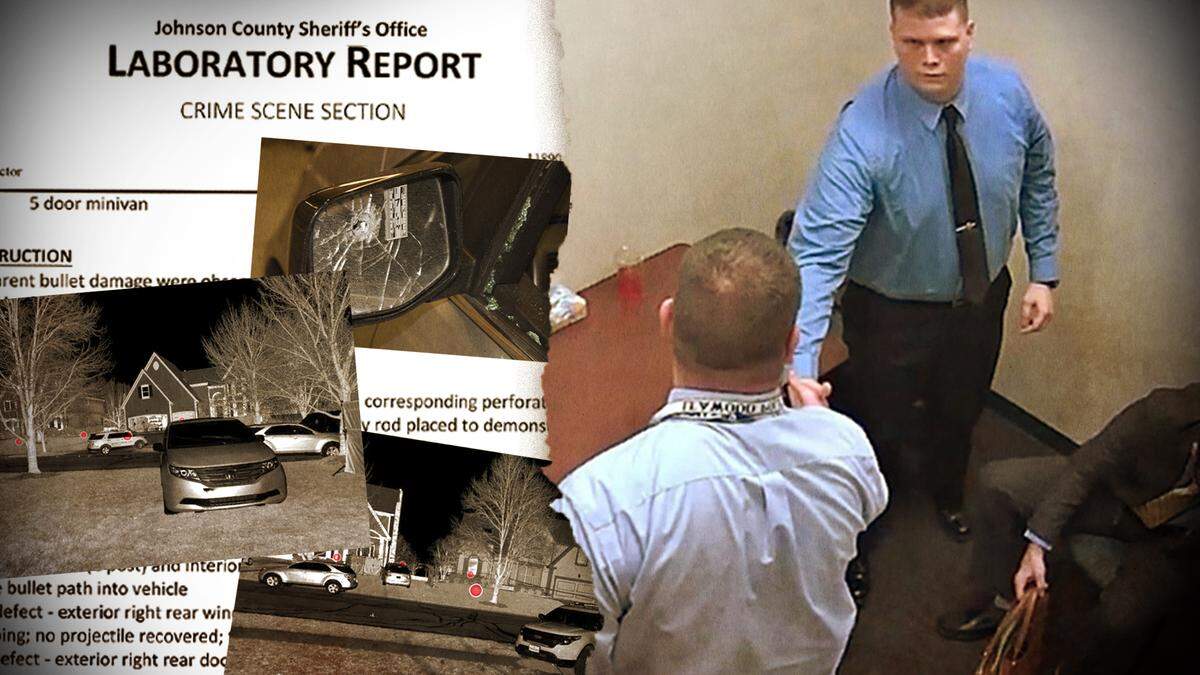
Many have criticized the city’s handling of the 2018 shooting death of 17-year-old John Albers by former Overland Park Police Officer Clayton Jenison. Police had been called for a welfare check on the teen, who was believed to be suicidal.
They argued that Gerlach and city officials were not forthcoming and at times misleading with information about the investigation. Following public pressure, lawsuits — including one from The Star — and an FBI investigation into the shooting, the city eventually released the 500-page report on the investigation earlier this year.
Some residents have said that how the city handled the incident shows there are bigger problems in City Hall.
Norkey said the incident was one of the driving factors in his decision to run for mayor.
“The way that was handled was just unacceptable to me. It should not have taken so long to release the information,” Norkey said. “There was a circling of the wagons instead of saying this is what happened, this is why we did it, and standing up to be held accountable. … I certainly will make sure that we are engaging with the public and getting information out there.”
All of the candidates in the race are pushing for more transparency, and claim they will be more vocal, visible mayors than Gerlach has been. Farassati has long pushed for more accountability, saying the city should have provided the public with the report sooner. Skoog agreed that the city should have released the documents available in the case earlier, but has also previously said the city was listening to legal advice and being as transparent as officials felt possible at the time.
The candidates also are debating what steps the city should take to improve the police department’s response to mental health calls. The City Council is currently reviewing the proposed budget for next year, which includes a property tax increase, aimed at creating a behavioral health unit within the police department, plus adding mental health responders and crisis training for police.
The proposal would raise the city’s property tax rate by one mill. Property taxes would rise about $40 a year for an average homeowner with a house appraised at $350,000, according to city documents.
The mayoral candidates agree that the city should invest in more mental health resources, and that the proposed additions are a good start, but they differ on whether a property tax increase is the right way to fund it.
Czinege said he supports co-responders to help police, but does not want the city to raise taxes.
“Homeowners have already suffered a significant city property tax increase, and with rising valuations the overall tax burden is crippling for many residents, especially seniors,” he said in a candidate survey. “At a time when current city leadership found excess funds for multimillion-dollar overruns for an Arboretum visitor center, we can surely pare waste in the budget to fund co-responders without a property tax increase.”
Both Skoog and Norkey support the plan, saying that the city’s tax rate will still remain lower than in surrounding cities, and that the budget is tighter following the pandemic. Farassati has argued that alternatives to raising the mill levy need to be explored, and further research is needed on how to improve the mental health response before agreeing to the tax increase.
Where is Overland Park headed?
The mayoral candidates likely differ the most on their visions for the future of Overland Park, which continues to attract new residents and businesses, but is largely developed and has little vacant space left for expansion.
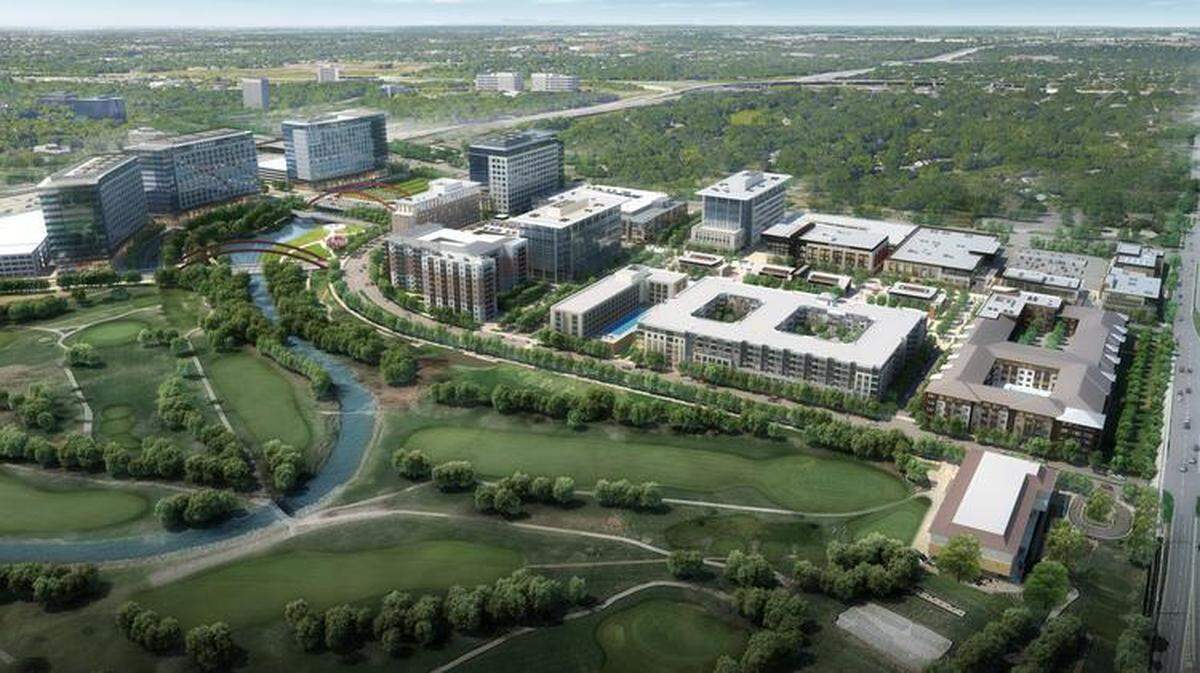
Farassati announced his mayoral campaign after Gerlach cast the deciding vote to approve a $200 million tax incentive package for the redevelopment of the Brookridge Golf Course. He has been the most critical of the city’s use of tax incentives — which in general, are often a temporary exemption or deduction in new taxes owed by a developer after a project is generating revenue.
He argued that the City Council is more focused on supporting wealthy developers than listening to residents’ concerns. And he said incentives should not be used in most circumstances, believing that companies would build in Overland Park regardless of whether they get a tax break — and that all future taxes generated from new development should go fully to the city, county and schools.
Farassati said while he has been criticized for being overly negative, he has a positive vision for the future of Overland Park as a city that is more transparent and critical of proposed development.
“I believe the function of the mayor is to allow the flow of discussions in a free environment, and that’s what we don’t see from the status quo,” Farassati said. “Gerlach and the rest of the status quo have done nothing in terms of attracting businesses, other than attracting developers, and it’s usually unaffordable, gigantic apartment complexes.”
Skoog sees it differently. He pointed out that many projects, including many apartment complexes, do not receive incentives. And he argued that he has only voted in favor of such subsidies when he feels the benefit to the city outweighs the developer, and when the project fits Overland Park’s plans for future growth.
He said that during his tenure on the council, he has helped plan the redevelopment of Metcalf Avenue and the downtown, helping those areas thrive today. He pointed to developments that he feels benefited from city investment, such as at 95th Street and Antioch Road, where a Hy-Vee store moved in.
“That property was blighted and in horrible condition, and we as a council determined that we were willing to make an investment in that project bringing back a grocery store to that corner that used to have three there and then ended up with zero,” Skoog said. “When we do those investments, we do a test showing that project would not be able to be built without city investment, and we look at the return on investment we’re making. I will continue to support investments in projects that deliver on the priorities of the city and its residents.”
Skoog said he wants to engage residents, businesses and others to develop a new comprehensive plan for the city, that will explore how to maintain a mix of commercial and residential, while adding transitions between single-family homes and multi-story apartment buildings. And he believes the city should be investing more in gathering spaces and parks.
While Farassati has labeled him as the “status quo,” Skoog argued that he brings a new personality and vision to Overland Park — that he will be more open with the public and gather more input from residents while making plans for development.
Czinege is more critical of the city’s approval of tax incentives for private development. He pointed to some projects that he argued were not deserving of city of state incentives, such as Prairiefire, which has largely failed to meet expectations or keep up with payments.
He argued that incentives should be used as a last option, such as to remediate blight or attract a highly competitive company that will bring jobs to the city, but that the city needs to use them more judiciously.
He also worries that high-rise apartment complexes are changing the city’s character. He said he would like the city to work on attracting developers to build more condos or townhomes that are affordable for families starting out.
“We need to return to the roots of what we had before. Residential developments with primarily single-family homes that run anywhere from entry-level to mid-level to expensive. We need to manage that and attract those developers willing to do that,” Czinege said. “We need to make sure that there are a variety of price points for homes. I want police officers and firefighters to live in our city if they work in our city.”
Czinege wants to push the city to make informed business decisions that don’t burden taxpayers, especially seniors aging in place. And he wants to implement more public forums for residents to learn about upcoming projects.
Norkey said he would work to be a collaborative mayor, able to join businesses, developers and residents together to guide the city’s growth. He said that the city needs to make plans for aging infrastructure and areas in need of future redevelopment, and that in the right circumstances, tax incentives should be used to help Overland Park remain competitive.
“I’m not willing to wait until an area is blighted before we start thinking about investing in the community,” Norkey said. “We have to make sure the city is getting more benefit than what the corporation or developer is getting. There have to be clawbacks to hold the developer accountable if they don’t meet milestones. And the city should never be on the hook for anything. We’ve got to have good agreements in place.”
He said that he would want to be an advocate for the city, out in the public eye, helping residents understand what is happening at City Hall. And he is pushing for a review of city ordinances and zoning rules to realign with residents’ expectations of the city, with a goal of “expediting and lowering costs for new development and redevelopment.”
In addition to the mayoral race, voters in four wards also will decide which City Council candidates advance to the general election in November. Newcomers will ultimately win two of those seats, as two incumbents are not running for council this year.
Polls will be open from 7 a.m. to 7 p.m. on Aug. 3.
Advance mail-in voting has already begun. And advance voting in person will begin on July 24. For more information, visit jocoelection.org.
This story was originally published July 19, 2021 at 5:00 AM.