Homeowners, schools and Jackson County officials go to court over taxes. What’s next?
As the impacts of the troubled 2023 property assessment cycle in Jackson County continue to reverberate for homeowners, business owners and tax-dependent institutions like school districts, some have responded by taking legal action.
Now, Jackson County is facing a trio of active legal battles as it prepares to elect a new county executive in November.
The lawsuits reflect significant issues reported by Jackson County residents at all stages of the property assessment cycle, from inflated home values to long-term impacts on school budgets. Whoever becomes the next county executive on January 1 will likely inherit at least one active legal case as litigation continues.
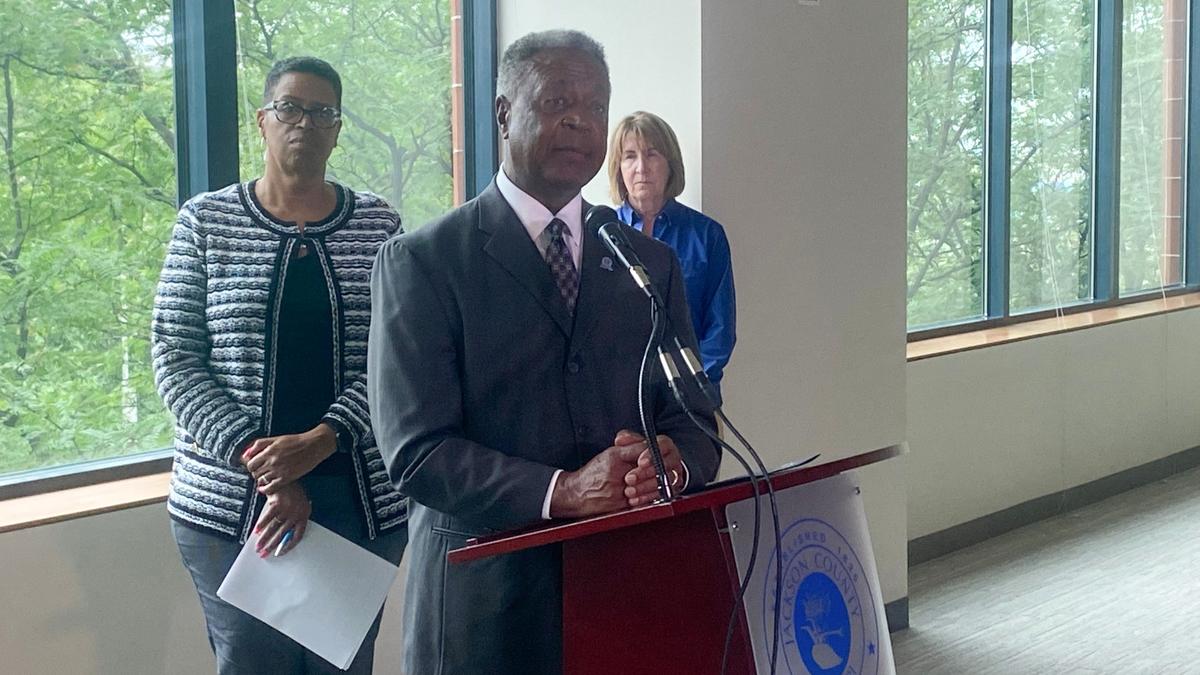
A fourth lawsuit is also pending over the dismissal of former Jackson County Assessor Gail McCann Beatty, after Interim County Executive Phil LeVota publicly issued an ultimatum for her resignation. McCann Beatty filed a wrongful termination lawsuit against the county in December, which is still pending and which LeVota has said the county will not settle out of court.
Here’s why Jackson County has been taken to court over property valuations, and what both residents and taxing jurisdictions hope to gain through the legal process.
Jackson County property taxes
A legal battle between the Jackson County government and the Missouri State Tax Commission over the 2023 and 2024 property tax cycles is still ongoing, with claims filed on both sides.
The State Tax Commission first filed a lawsuit against the county in 2023, alleging that many of its property assessments that year reflected such high value increases that they violated state law. The lawsuit focuses on communication and procedural issues, alleging that Jackson County did not follow the proper legal steps before raising the values by upwards of 15% per parcel.

While that lawsuit was still pending, the Tax Commission instructed the county in 2024 to roll back or cap the assessed values of 2023 and 2024 residential properties such that the values of any given parcel of land did not increase by more than 15% year-to-year, excluding any additional value created by significant construction or updates to a building.
At the time, the first lawsuit was dismissed and former Jackson County Executive Frank White, along with McCann Beatty, counter-sued the State Tax Commission over the order.
Meanwhile, the State Tax Commission tried to sue the county into compliance with the rollback order, but a Jackson County court ruled that they couldn’t sue over the same issue twice given their first filing in 2023.
This decision was then reversed by a court of appeals, reinstating the state’s first lawsuit against the county.
As of June 2026, the county is working to comply with the state’s order to roll back values and to finish hearing all outstanding assessment appeals from 2023. Meanwhile, the state’s original lawsuit, having survived both the countersuit and a turn in appeals court, is set for its next hearing in September.
Homeowners versus county
A class action lawsuit around 2023 residential property values is also underway, with about 200,000 Jackson County residents eligible to join the settlement class. This includes those whose property values increased by more than 15% in 2023, or about two-thirds of residential property owners countywide.
The homeowners are seeking refunds on their property tax payments from that year.
A Jackson County judge certified the suit on April 3, and eligible homeowners started receiving emails last week. Property owners are still eligible even if they appealed their 2023 value, though the firm noted that a lawsuit win could result in a smaller payout for those who already secured a lower tax bill through the appeals process.
The lawsuit class is represented by a team of attorneys from Kansas City firm Humphrey, Farrington and McClain. Eligible residents are represented by plaintiff Nancy Wheeler, a Jackson County resident who first started working with the firm in 2024.
A Jackson County judge shut down the team’s first attempt at a class action lawsuit in 2023, but attorneys filed a similar lawsuit again in light of the previously mentioned legal battle between the state and the county.
Jackson County has unsuccessfully moved to have the class action lawsuit dismissed three times in the years since, before a settlement class was approved.
Eligible residents will be part of the settlement class unless they opt out in writing by July 10 or hire their own representation. If the lawsuit is successful, settlement class members could receive some money, but they will be unable to file a future counterclaim if the settlement team loses.
On the campaign trail, some county executive candidates have expressed alarm about the potential impact of paying out damages to 200,000 residents.
Dan Tarwater III, one of seven candidates for the county’s top seat, said at multiple pre-primary forums that lawsuit payouts could total about $1 billion if successful, potentially bankrupting Jackson County.
School district versus county
While homeowners are suing for direct relief on their 2023 tax payments in the form of refunds, Jackson County school districts have also taken to the courts to prevent their budgets from being drained in the process.
During the first half of his temporary term as interim county executive, LeVota introduced a pair of tax policies intended to create retroactive, artificial 15% caps on the valuation increases of residential properties in the 2023 cycle, and commercial properties in the 2025 cycle. The former would rely on three years’ worth of credits issued on future bills, while the latter involved a manual review of hundreds of commercial properties.
The Independence and Fort Osage School Districts sued LeVota over the policies, along with Jackson County Collector Scott Lakin and Jackson County Clerk Mary Jo Spino, on June 16.
The lawsuit argues that LeVota acted beyond the power of his position in proposing the relevant policies, and that “clawing back” 2023 and 2024 funds requires reopening assessment cases that have already been closed, with property tax disbursements long-spent by the school districts that received them.
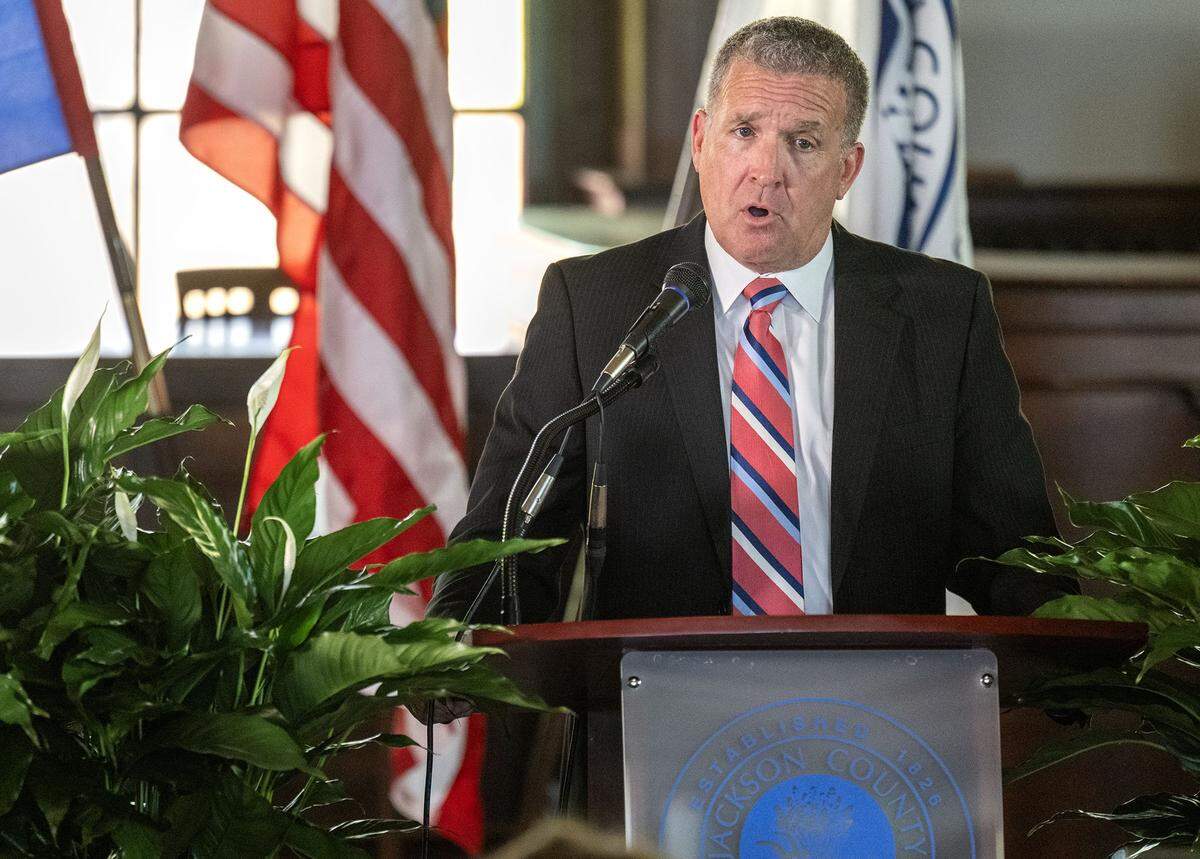
The lawsuit echoes an open letter submitted to LeVota earlier this year by a dozen Jackson County school districts, including ISD and Fort Osage, identifying the same issues with the proposed “clawbacks” and threatening legal action.
ISD has previously spoken out about the Jackson County property tax debacle impacting the district’s bottom line and increasing its potential reliance on commercial revenue from large city development projects like data centers.
The three years of proposed tax credits would rely on the county taking back about $15.6 million from the Independence School District and about $7 million from Fort Osage. Meanwhile, the artificial cap on 2025 commercial property values has already cost ISD and Fort Osage about $1.2 million and $1.3 million, respectively, according to the lawsuit.
LeVota has argued that he is empowered as county executive to intervene in order to correct issues with county assessments, and has characterized the school districts’ lawsuit as an attempt to prevent Jackson County taxpayers from receiving financial relief. He has also claimed that his policies were enacted at the behest of the Missouri State Tax Commission, which the lawsuit directly challenges.
Meanwhile, an ordinance is currently before the Jackson County Legislature which would codify the proposed tax changes into the county code, creating a higher legal and procedural barrier to reversing the programs. The proposed ordinance was introduced by Legislative Vice-Chair Sean Smith in early June, but has been held in committee and has yet to reach a vote by the full body.
As it stands now, the tax policies targeted by the districts’ lawsuit could be immediately reversed by the next county executive, with at least one candidate — Democrat and former legislative candidate Ryan Meyer — having publicly pledged to do so if elected. Jackson County Legislative Chair Manny Abarca has also criticized the ordinance during at least two public forums for county executive candidates, accusing LeVota of “withholding information” from the legislature around property tax backlash.
This story was originally published June 26, 2026 at 5:00 AM.