Jackson County schools say property tax ‘claw backs’ lost them nearly $200 million
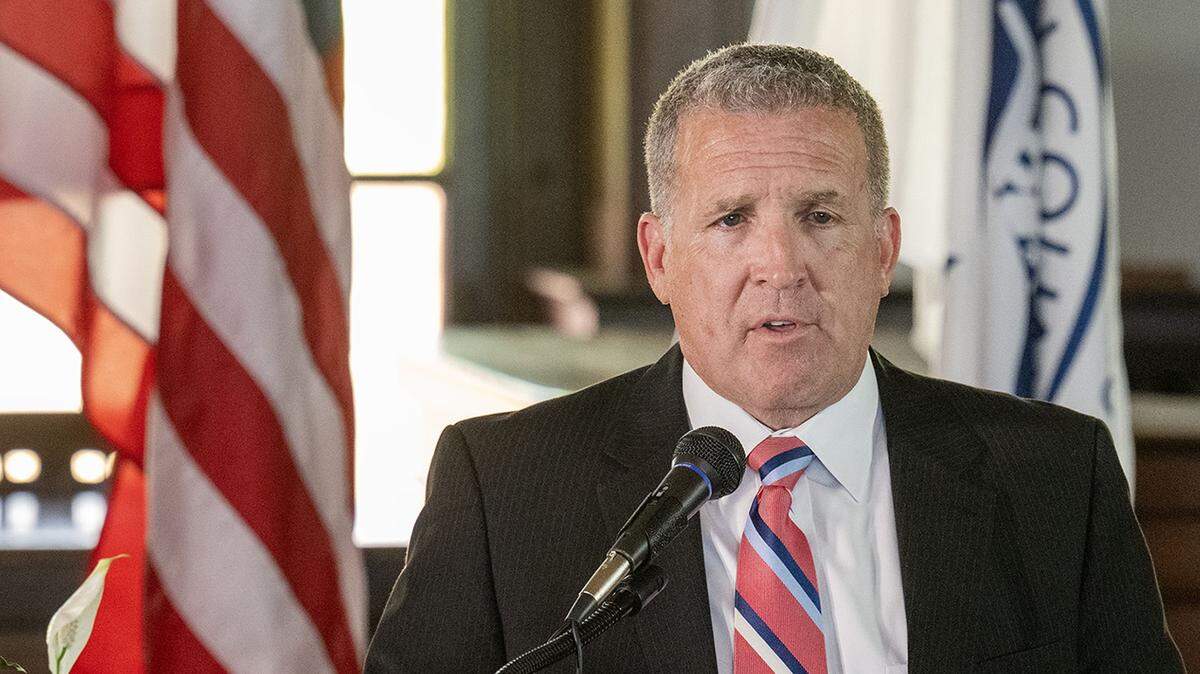
Twelve school superintendents across Jackson County have sent a letter to Interim Jackson County Executive Phil LeVota alleging that his recent property tax policies are illegal and are actively causing hundreds of millions of dollars in deficits for their districts that could potentially lead to staff cuts and larger class sizes, among other issues.
The letter, dated April 8 and obtained by The Star this week, alleges that recent county tax policies promising retroactive caps on property values set as early as 2023 — and refunds on up to three years of tax payments — would rely on “clawing back” money already allocated by Jackson County school districts.
The letter was addressed to LeVota but forwarded to the Jackson County Legislature and the Missouri State Tax Commission. It was signed by the superintendents of the Blue Springs, Center, Fort Osage, Grain Valley, Grandview, Hickman Mills, Independence, Kansas City, Lee’s Summit, Lone Jack, Oak Grove and Raytown school districts, along with the executive director of the Cooperating School Districts of Greater Kansas City.
The letter alleges that the three years of tax credits proposed by LeVota, along with the value caps he has announced for residential and commercial properties, will cost the twelve districts just over $196 million collectively. It also alleges that these policies will cause other taxing jurisdictions across the county to lose about $75 million total.
In many cases, the letter reads, at least some of the funds that LeVota’s policies would reduce have already been spent by the school districts. Additionally, the superintendents point out that they would not be able to retroactively change how much property tax funding they collected from residents and businesses no matter what changes the county tries to make to taxes from previous years.
“What you have proposed in clawing back moneys that have already been disbursed and spent by taxing jurisdictions is not only catastrophic for the citizens of Jackson County but lacks any legal support,” the letter reads.
The letter also alludes to potential legal action if the county upholds the policies in question.
“The taxing jurisdictions of the county have sought support from their communities in the form of levies and bonds and made promises to our citizens on these deliverables,” the letter reads.
“Continuing with your current course of action blatantly ignores the universal impact on Jackson County’s citizens.”
LeVota’s tax policies
When LeVota campaigned for his appointed 14-month term as interim county executive, he said that property tax reform would be one of his first priorities, proposing a rollback of assessed property values across the county to their 2022 values.
This pledge manifested in the form of a plan to issue tax credits over three years to homeowners whose residential property values increased by more than 15% in the 2023 assessment cycle. LeVota also retroactively implemented a cap on commercial property values by instructing county staff to manually adjust the 2025 assessments of more than 6,200 spaces.
However, retroactively adjusting how properties are valued – and in effect how much revenue schools and other taxing jurisdictions can collect in property taxes – creates a situation where schools will receive less money than they built their budgets around or will face significant delays in receiving allocated revenue, the letter argues.
LeVota has since announced his candidacy for a full term as county executive starting in 2027, despite repeated public promises not to run, including signing an “affidavit of non-candidacy.”
LeVota responded to the district’s letter by posting a four-and-a-half-minute video to Facebook. He stated that the tax policies in question were “in response” to guidance from the Missouri State Tax Commission, and that schools and other taxing jurisdictions have long benefited from high property values in the county.
LeVota also said that the letter failed to identify a specific law that his actions had violated, and that school officials were “asking (him) and the county not to move forward with providing relief to taxpayers.”
“Under the charter, as County Executive, I have the authority to make corrections to errors, and that is exactly what I’m doing,” LeVota said.
The Jackson County Legislature released a statement Monday attributing the “challenges” to the “previous administration” and to “an imbalance of power between the Jackson County Executive and the Jackson County Legislature.”
“Currently, the Executive has the sole authority to resolve these matters, and thus, we will continue to find solutions that keep taxpayers in their homes without bankrupting essential services, such as public schools and libraries,” the statement reads.
‘Clawing back’ school funds
The county’s superintendents allege that the money LeVota has promised to issue to taxpayers is no longer available to spend, and has not been “Jackson County’s money” for some time.
“It is money that was collected on behalf of the taxing jurisdictions, and it has been long-since distributed and likely spent,” the letter reads.
According to Missouri law, public bodies like school districts have limits on how much revenue they can collect from property taxes. This means that if property values are high, districts can be forced to lower their levy rates so they aren’t overcollecting.
Since LeVota’s tax policies would go back and change the property values used in this formula for past years, districts that lowered their levy rates to meet state caps would lose out on expected funding. The letter argues that districts would not have lowered their levies if they had known the county would lower assessed property retroactively.
The letter argues that the proposed tax credits would rely on directly withholding promised funding from school districts to send repayments to taxpayers.
LeVota said in his Tuesday video statement that spreading tax credits out over three years, rather than recouping one lump sum from school districts, was the county’s attempt to mitigate the impact of fluctuating property tax values.
But by going back and essentially changing the revenue stream for past years at all, the letter argues, LeVota has made it impossible for schools and other taxing jurisdictions to finalize their annual budgets.
“If Jackson County illegally departs from the established laws and frameworks, taxing jurisdictions have no certainty in setting proposed levy rates,” the letter reads. “They would find it impossible to accurately budget.”
According to the letter, Kansas City Public Schools is facing the greatest loss of revenue caused by LeVota’s policies, with a loss of about $60.5 million in revenue from 2023-2025 taxes. The Lee’s Summit School District is reporting losses of about $32.2 million, while the Blue Springs School District is out about $23.7 million.
Legality under question
Along with pointing out how the new tax policies have hurt districts’ bottom lines, the letter repeatedly questions whether LeVota’s recent mandates are legally enforceable.
The letter alleges that the Missouri State Tax Commission’s recent orders regarding Jackson County assessments do not discuss credits on 2023 and 2024 tax payments, or the 15% cap on commercial property value increases that LeVota has also implemented.
“There is no support in the county charter, and issuing such refunds violates the County’s own internal analyses,” the letter reads.
The letter also questions whether tax payments and assessment values dating back to 2023 are even eligible for adjustment at this point under Missouri law. It references several pending cases in state and county courts, including a recent case against Jackson County in which a judge declared that residents would need to have filed a lawsuit in the same tax year in order to collect a refund.
In one of several references to a potential future lawsuit, the letter cites an internal county memo from the summer of 2025 stating that withholding or reallocating money already promised to taxing districts would likely lead to legal action.
“If the County moves forward with tax credits for 2023 and 2024, in violation of the law… the County would certainly be assuming and inviting the liability described in the Memo above,” the letter reads.
Destabilizing school budgets
The Hickman Mills School District, one of the letter’s twelve participating districts, is currently working to overcome a $14 million budget shortfall. Interim Superintendent Dr. Dennis Carpenter said in January that about $11 million of the deficit can be attributed to financial mismanagement and other factors, but that LeVota’s tax policies actively widened the gap in available funding by an additional $3 million.
In order to avoid shutting down entirely within two years, the Hickman Mills school board opted to approve a series of sweeping cuts, eliminating more than 70 jobs and dozens of district contracts while closing a historic elementary school. Voters also approved a pair of ballot measures this month centered around a $20 million bond.
The Independence School District, meanwhile, has said that the county’s shifting assessment policies destabilized the largest source of funding for its budget, motivating the district to look elsewhere for a more reliable financing source.
As the Independence City Council prepared to vote in early March on a $6 billion incentive package for an incoming $150 billion artificial intelligence data center, the district threw its support behind the tax breaks. Under the proposal, which the city approved in March, Independence would lose out on 90%-98% of property taxes associated with the data center, but taxing jurisdictions around the city, including the Independence and Fort Osage School districts, would collect more than $650 million in fees over 20 years.
“Importantly, the growth in the commercial tax base reduces reliance on residential property taxes,” ISD Interim Superintendent Dr. Cindy Grant said in February. “This project has the potential to lower levies for our patrons while keeping our schools strong.”
The Star’s Kacen Bayless contributed reporting.