New state audit calls out ‘flawed and stacked’ Jackson County tax assessments
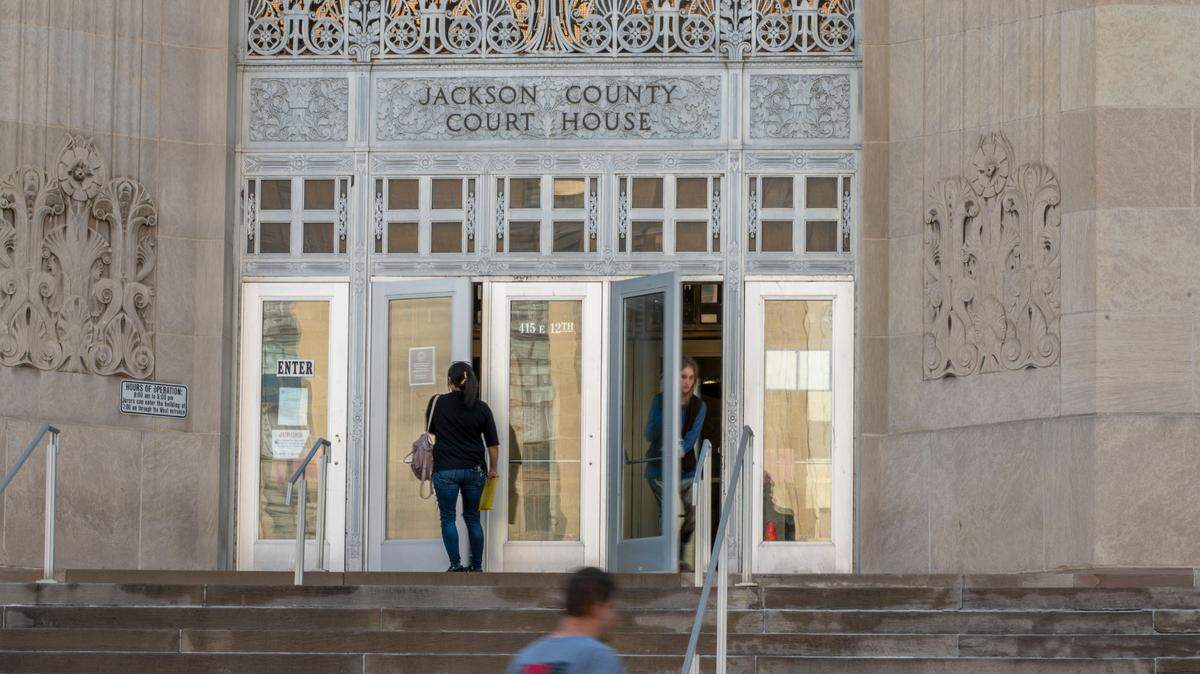
The Missouri State Auditor’s Office released a new report this week highlighting additional issues with Jackson County’s 2023 property valuation cycle, saying that the process for appealing 2023 home values “stacked the deck” against taxpayers.
The state’s latest audit, released Thursday, assigns Jackson County a rating of “poor” for the way the county administered its process for appealing assessed values that year.
“The bottom line is taxpayers in Jackson County got a raw deal and were in effect dealt a losing hand by the Assessment Department and the Board of Equalization,” Missouri State Auditor Scott Fitzpatrick said in a statement released Thursday.
The state audited the appeals process at the request of the Jackson County Legislature, according to Fitzpatrick. His office opened an investigation into the county assessment department in July 2023, according to the report. The Legislature responded in August 2023 by requesting a full audit.
The 2023 assessment cycle has been highly controversial among Jackson County homeowners, factoring into the recall of former Jackson County Executive Frank White Jr. and the abrupt dismissal of former Jackson County Assessor Gail McCann Beatty. Both were removed from office in 2025.
In 2023, the county reviewed about 238,000 parcels, raising their collective assessed value by more than $2.6 billion. This included more than 200,000 properties assigned a value increase of more than 15%, according to the state.
However, the county assessment department resisted participating in the audit, Fitzpatrick said, forcing state auditors to “involve the courts to obtain the documentation [they] needed.”
“Officials limited information and only provided access to necessary AD and BOE records after being served multiple subpoenas,” a Thursday news release from Fitzpatrick’s office reads.
The audit covered county policy and decisionmaking from December 2021 to December 2023, and reviewed Board of Equalization hearings from July 2023 to July 2024. It does not address the 2025 property valuation cycle, which has been separately controversial among some residents.
As of March 19, some appeals from 2023 are still open, according to a letter from Cheri Cole Simpkins, an attorney for the BOE.
Unfair property valuations
Fitzpatrick wrote that the report is intended to give taxpayers some solace in knowing that the county’s assessment process “was as flawed and stacked against them as I’m sure they suspected.”
The report found that the county’s board of equalization relied on computer-generated home values without requiring county assessment staff to appraise homes in person, which is required by state law if values increase by more than 15%.
This means that the state’s standard for proving that a home should be valued at a certain amount was not met, the report found.
When the board did enforce the state’s mandate for county staff to conduct inspections in person, they only required photographs of the outside of properties as proof, according to the report. Moreover, some of the photos submitted as factors for 2023 valuations were taken outside of the state’s required timeframe for that taxing cycle, the report reads.
This put taxpayers in a position where they were responsible for proving that the county had set their home values too high, which undermines state tax law, Fitzpatrick said.
“State law makes it abundantly clear that the burden of proof in the appeals process is on the Assessment Department and not the taxpayer,” Fitzpatrick said. “Despite this, the Board of Equalization set up a system in which county officials held all the cards and homeowners had to fight an uphill battle on an unlevel playing field.”
Flawed appeals process
The report found that the appeals process for 2023 values was flawed and confusing to the point that it became less accessible to residents.
When homeowners showed up to the Board of Equalization to contest their assigned values, they were asked to back up their testimony with documentation of what their homes should be worth, while assessment staff were not required to do the same. Under state law, the department should have gathered data on at least three comparable properties and their corresponding values, the report reads.
Without documented proof from the assessment office, BOE staff did not have enough information to make an informed ruling during each appeal on whether a resident’s property value should be adjusted.
The report also found that Board of Equalization officers were offered a $100 bonus if they could get 30 agreements signed per day with appealing residents. This meant that the county had “an incentive to mediate as many appeals as possible,” according to the Thursday release, which “could have led officers to limit their documentation and rush cases.”
Poor communication with residents
When appeals did start coming in, it often wasn’t clear to staff and residents whether they were supposed to be dealing with the county assessment department or the Board of Equalizations, according to the report.
The report specifically calls out the assessment department’s website as “confusing to navigate” and notes that the process for starting an appeal was unclear to many taxpayers, with limited time and lack of information posing additional barriers.
Assessment staff were repeatedly tasked with sending out communications that should have come from the BOE, the state found, while the BOE violated public records law by holding closed meetings without taking publicly available notes from January 2023 to December 2024.
Residents also have a right to demand an in-person inspection of the interior of their homes before a final value is set, according to the report. The state found that BOE failed to require the assessment department to inform taxpayers of this right, and that the assessment department did not make its own records publicly available to an adequate degree, forcing some homeowners to submit public records requests ahead of appeals.
When residents were notified of their right to request an in-person inspection, they found out without adequate time to do so before the 2023 appeals deadline, which the county was “reluctant” to extend, the report found.
The report also found that 35% of taxpayers were not notified of their appeal hearing dates sufficiently in advance. State law requires seven-day notice for BOE hearings.
Future assessment changes
Fitzpatrick said that Jackson County will need to “make dramatic improvements” to the assessment process in the future “so taxpayers can have a fair process they trust.”
According to Simpkins, the attorney for the BOE, the department will immediately implement several changes in response to the results of the audit — including clarifying the process for an appeal and notifying taxpayers of their rights and deadlines in a timely manner.
After reviewing the audit, the Jackson County Legislature submitted a letter “endorsing” the state’s findings and recommendations and acknowledging that taxpayers have lost trust in county appeals staff.
“The Jackson County Legislature will continue to ensure that the appeals process operates to provide taxpayers with their due process rights and to secure confidence in both the Assessment Department and the Board of Equalization,” the letter reads.
Interim County Executive Phil LeVota issued a similar letter after receiving the audit.
“The County agrees that the process should be easy to understand and user friendly to the taxpayer,” LeVota wrote.
The State Tax Commission issued an order in May 2025 requiring the county to cap any property value increases in the 2025 assessment cycle at 15%.
The state’s audit was mostly finished, according to the report, by October 2025, when Interim County Executive Phil LeVota announced a series of tax credits that would essentially put a retroactive 15% cap on 2023 values. The credits will be issued over the next three years and will refund homeowners whose residential properties were revalued at least 15% higher than in the previous cycle.
The report notes that the impacts of LeVota’s recent tax policies on future revenue and tax rates “is not readily estimable” but “is expected to have a significant effect.” Twelve Jackson County school districts recently issued an open letter asserting that the planned tax credits -- as well as manually adjusted caps on 2025 commercial values -- rely on illegally “clawing back” property tax dollars already distributed to schools and will cost the districts more than nearly $200 million.
The State Auditor’s Department will release a more detailed version of the audit in the coming months, Fitzpatrick said.