Two new data centers are eyeing De Soto. Residents want more protections in place
De Soto resident Melissa Noel said she feels like a lab rat in her small western Johnson County city as local officials eye at least two large data centers planning to move in. That’s on top of an ongoing wave of industrial development that has been transforming the largely rural area in recent years, anchored by the new Panasonic plant.
Noel said during this week’s City Council meeting that she and her family have approached council members on and off over the last five years to push back against warehouses that have continued to pop up within the city — including one directly across from her home.
“The general distaste we have for the fact that we moved here for the small town feel and the vibe, and it is all being destroyed,” she said during public comment.
“Now I stand before you as a lab rat in one of the country’s many experiments pertaining to human health and environmental hazards associated with hyperscale data centers, and especially those that sit so close to homes and schools.”
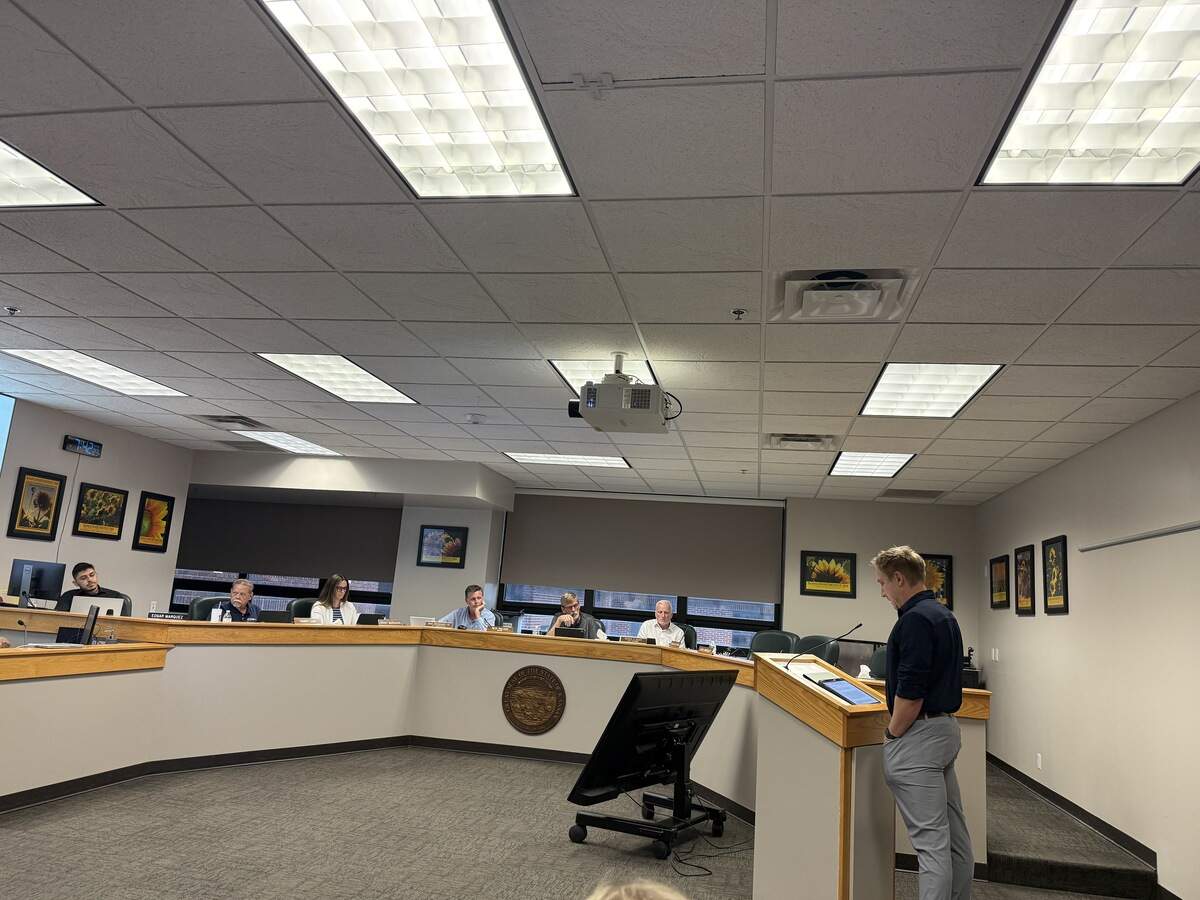
Noel was one of several residents who filled the council chambers on Thursday night as Digital Realty — the world’s largest data center provider — presented its initial plans to build a large data center campus on 1,400 acres of land in the Ad Astra Enterprise Park near the Panasonic Electric Vehicle Battery Plant.
In recent months, Gardner, Edgerton and Spring Hill have received proposals for three separate, massive data center projects. Like De Soto, residents in the small cities organized and showed up en masse to local meetings to oppose data center development.
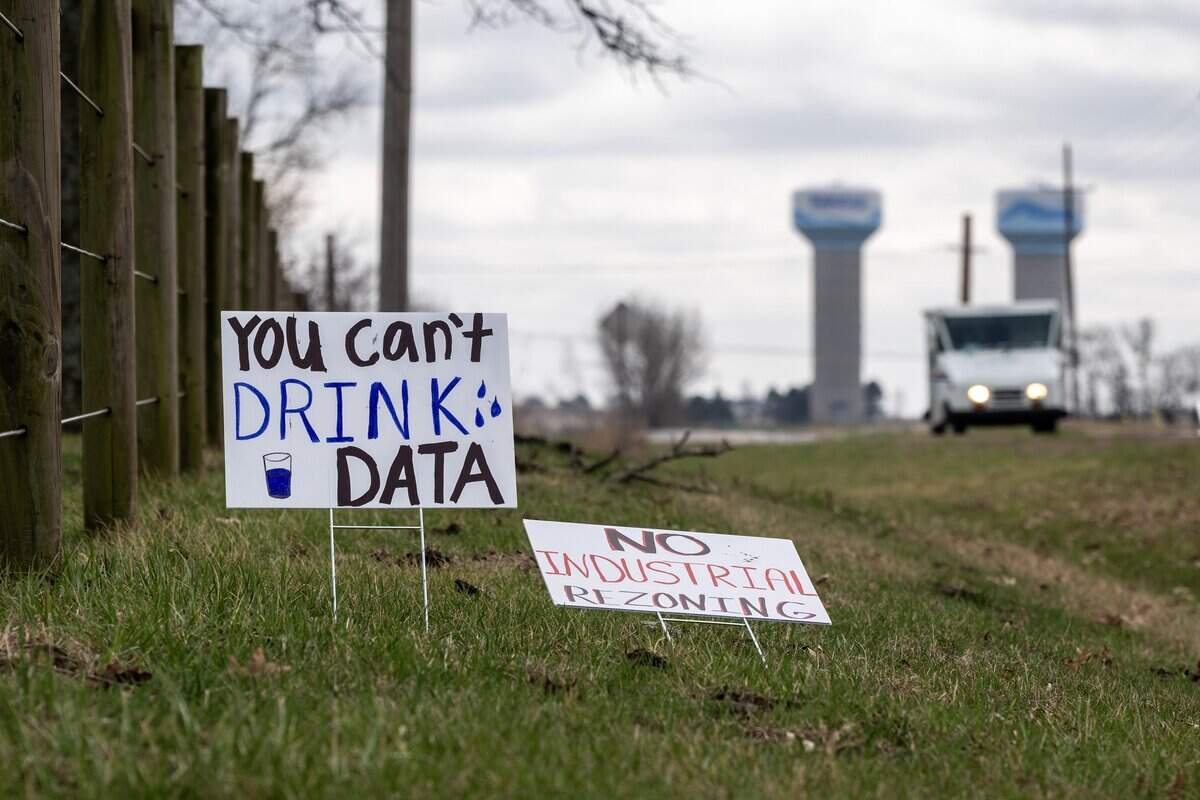
Shortly after the widespread opposition came forward, developers withdrew their proposals in Gardner and Spring Hill, but Edgerton still has a project going through the planning process.
The newly proposed De Soto data center is still in its early stages, and the City Council didn’t approve any plans. Rather, representatives from the company came to De Soto to introduce the project and themselves to the community, said Rafal Rak, Digital Realty’s vice president of portfolio management in the central region.
“We are here to link to the De Soto Community and talk about our recent land acquisition in the Astra Enterprise Industrial Park and our preliminary plans with the goal of being, again, transparent, making sure we’re designing and building a project that meets or exceeds the standards of the city,” Rak said during the meeting.
Digital Realty purchased two parcels of property three weeks ago and plans to develop a nine-building data center and lease it to a global “cloud infrastructure operator.” Representatives didn’t disclose the specific company looking to operate out of the center nor did they say if they would request any tax incentives from the city for development.
“We do believe the site acquired, which is the former Sunflower Army Ammunition Plant, is a good fit for data center use. Not all locations are,” Rak said. “But this site, its industrial history and the fact that it’s … been vacant for 30 years, generating no taxes or economic benefits for the local community, makes sense.”
Demanding local protection
Some neighbors aren’t sold on the idea.
On Thursday, residents wore black and red to protest data centers moving to De Soto and urged council members to put measures in place to protect the city from environmental and human health impacts as at least two massive data center projects move forward within city limits.
Alongside Digital Realty, San Francisco-based data center developer Beale Infrastructure is moving forward with a $3 billion proposal to build a four-building campus, totalling 2 million square feet, just south of Kansas Highway 10, adjacent to the Sunflower Ammunition Plant site.
According to documents from Beale, the project would be Kansas’ first hyperscale data center – which means that the center would use more than 75 megawatts of energy to operate — and plans to break ground this year.
De Soto residents — like their fellow constituents in other southwest Johnson County cities that have opposed data center proposals in their rural communities — are concerned about high water usage, water and land contamination, and human health impacts due to the center’s energy-intensive 24/7 operations.
“We are demanding three immediate actions,” De Soto resident Jennifer Sharp said during public comment. “To pass a hard, townwide cap on combined data center power and water use; ban all property tax incentives for Digital Realty, make them pay 100% of their taxes to our schools; adopt emergency updates enforcing strict low frequency noise limits at property lines.”
Rather than talk about data centers, Cindy O’Connor said she wanted to talk about the “overall vision” of De Soto’s future as its population continues to grow with more development in the area.
Like many residents, O’Connor said she moved to De Soto because she wanted to be a part of a metropolitan area, but away from the lights and noise. She said she wanted to know her neighbors, but didn’t want a lot of traffic.
When she first started coming to meetings, she said it felt like the City Council was adamant on protecting “the small town feel.”
“It seems like so much has happened in such a short amount of time,” she said.
According to the city’s website, at least 12 private development projects are in the works — including Ad Astra Enterprise Park, Merck Animal Health’s 384-acre campus expansion, and several mixed-use developments that will feature housing and retail.
“My question is: how many warehouses, how many industrial, how many factories, how many data centers — do y’all have an idea on how many you want in our area and when do you want it to stop?” she said. “You can’t just look at today, you have to look at the far future.”
‘A responsible operator’
Enrique Bellido, head of due diligence and entitlements at Digital Realty, said that the company is “a responsible operator.”
Digital Realty plans to follow city building codes, federal environmental regulations, and construct buildings that often receive Leadership in Energy and Environmental Design certifications, he said.
The company plans to fund approximately $300 million in infrastructure improvements needed for its operations, and the company will pay industrial electricity rates at the site. Evergy, the energy provider for most of the KC metro, implemented what’s called a Large Load Power Service Tariff, which creates a new plan that requires hyperscale data centers to pay up to 20% more than other large business customers.
The site will feature barriers and infrastructure to mitigate sound impacts and low frequencies coming from the site, he said.
“Water management is also very important,” Bellido said. “We have been allocated a million gallons per day for the north parcel, and although our customer in peak summer cooling times will need more than that, they will not draw more than that.”
To mitigate higher water demand, the company plans to build a water storage facility in the middle of the parcel “to store water during the course of the year when water is not needed for cooling,” he said. Stored water could later be used during hotter months when the center needs more to cool its systems.
Bellido said the company is trying to fund and partner with the city to build an industrial wastewater treatment plant on 25 acres of the site in order to recycle water from the plant that could be reused for cooling or irrigation.
“It cannot be coupled with potable water,” he said. “There are regulations by (Kansas Department of Health and Environment) about that.”
On the city’s side, De Soto City Administrator Mike Brungardt said that staff is looking at incorporating regulations around lower noise levels in its noise ordinance and working with independent consultants to study setbacks needed for data center development.
Digital Realty representatives said they plan to have an open house for residents to learn more about the project soon. They didn’t provide a specific date during the meeting on Thursday.