Panasonic’s long-anticipated $4 billion EV battery plant opens in Johnson County
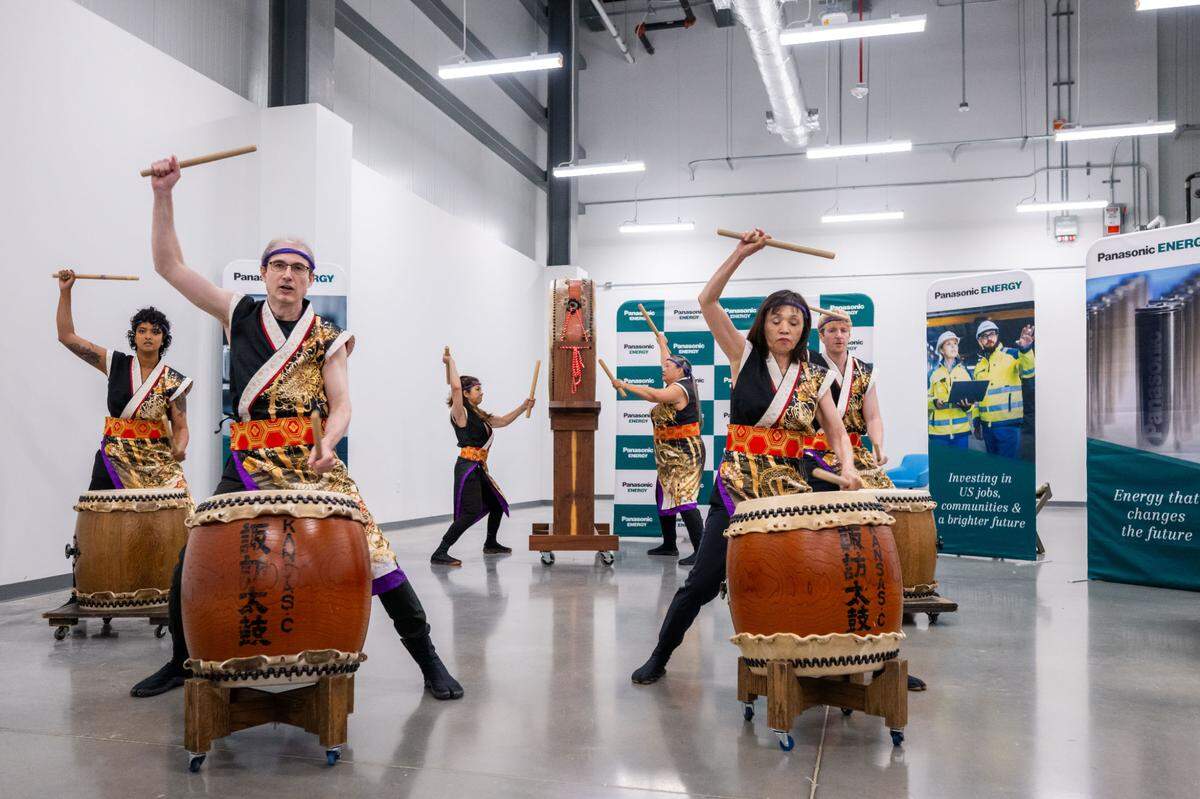
To celebrate the Panasonic electric vehicle battery plant opening its doors in De Soto, Kansas, elected officials joined Panasonic leadership in a Japanese tradition.
Known as Kagami-wari, the traditional ceremony calls for people to break the small round lids of sake barrels. It’s often performed at weddings, anniversaries or other happy events in Japan. Breaking the lid symbolizes harmony and good fortune, metaphorically opening a door to happiness, prosperity and unity.
U.S. Representative Sharice Davids, who represents Johnson County, swung her wooden mallet alongside Panasonic officials with a thunk onto the large barrels of sake to commemorate the culmination of one of the biggest investments in Kansas history.
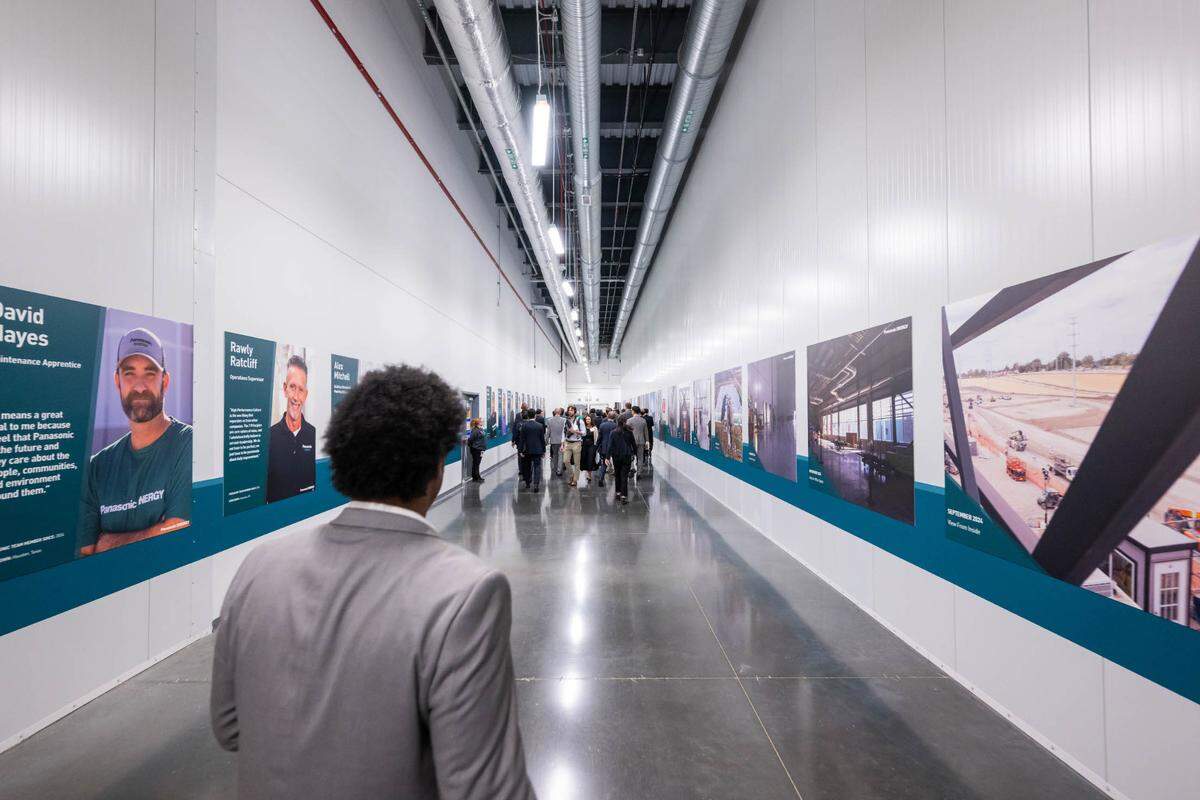
Afterward, the local and state representatives got their first peek at production inside the 4.7 million-square-foot facility.
Guests at Monday’s opening could look through windows to briefly see employees in protective gear walking around the massive facility and see machines whirring as they assembled the bits and pieces to eventually create lithium ion batteries. The facility will produce 66 batteries per second.
Construction on the 300 acres in the western Johnson County city began in 2022. Officials have said the $4 billion project is expected to create 4,000 new jobs in the plant. As of July 14, Panasonic has hired 1,100 employees with 88 open positions on its career page.
A Panasonic spokesperson said that the company anticipates having 2,000 positions filled by next year — about half of the total that officials had touted previously — but hiring numbers beyond that will be determined by customer demand.
“We started mass production at the Kansas facility last week, and it has always been our plan to grow our North American business in a sustainable manner within the market,” a Panasonic spokesperson said. “We’re here for the long term and we are prepared to grow our production capacity in response to demand, with a target headcount of 4,000 employees.”
State incentives and historic investments
Lt. Gov. David Toland told The Star after the tour, that “it’s a day of celebration and it’s a day of promises that were kept.”
Incentives from state, county and local governments to bring the project into De Soto totaled more than $1 billion, including an $829 million incentive package from the state and $200 million in local property tax breaks from De Soto.
The process that led to Kansas granting the historic incentives for the project were largely kept under wraps until last year, as state lawmakers couldn’t disclose any details of the development terms due to nondisclosure agreements.
“I think the fact that you had a coalition that came together that was bipartisan that included federal partners, our state partners, local partners, business people who came together as Kansans and beat out 81 other locations around the country to win what is truly a marquee investment is something that people in the Kansas City region should be proud of,” Toland said.
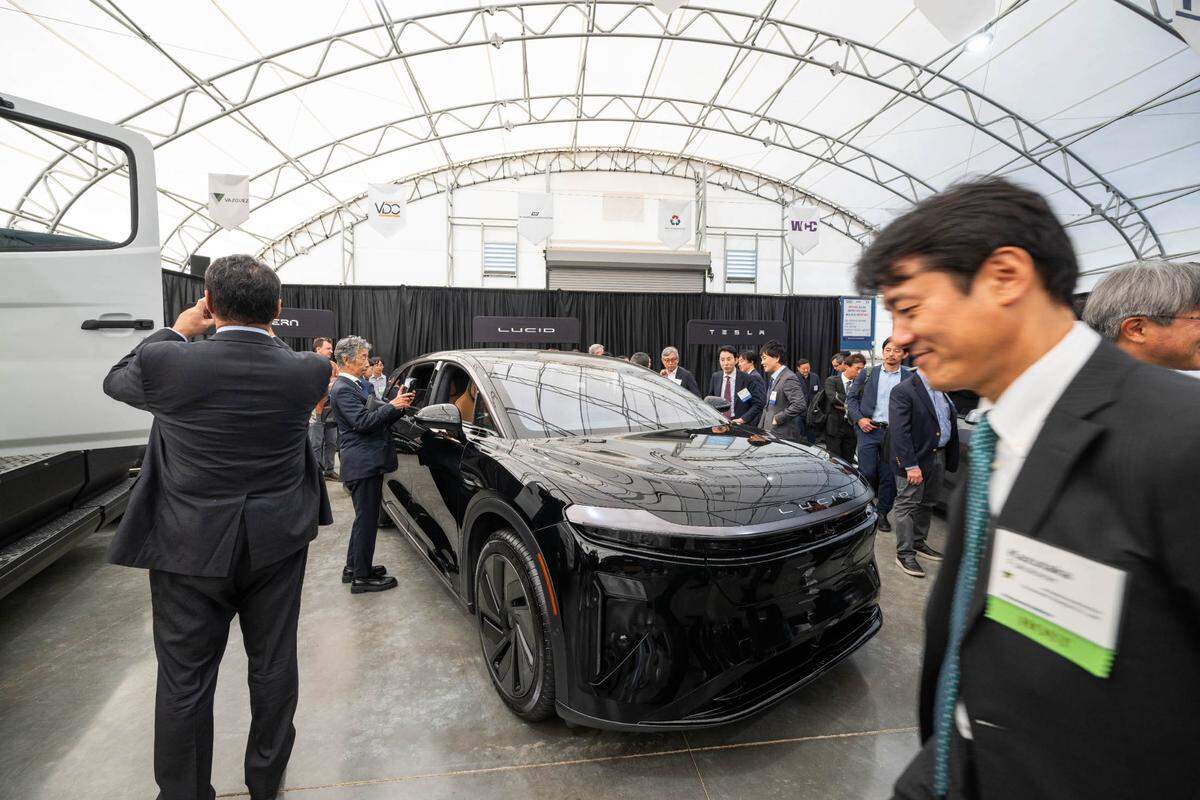
The De Soto plant is the largest economic development project in Panasonic history and Kansas history. Gov. Laura Kelly said in a statement that the plant marks “a bright new era” in Kansas.
“The monumental effort that has gone into every aspect of this project has culminated in this historic day as the plant begins mass production of EV batteries,” Kelly said in the statement. “It’s hard to overstate what Panasonic’s investment means to Kansas and the value of the partnership that made it possible.”
The impact on De Soto
The historic facility’s development ushered the small city of De Soto into the spotlight, too, Mayor Rick Walker said.
“It created a lot of interest in the city. So then vacant land suddenly became a lot more valuable, and there was a lot more interest in developing out here,” Walker said.
Jobs created by Panasonic are expected to have an impact on the housing demand in the small town of 6,500 people.
After the initial excitement of Panasonic’s announcement died down, Walker said he’s seen serious developers come forward with strong projects to support the community.
“We didn’t have a real multifamily element to our housing stock in De Soto, and now we have some apartments that are coming online, we have a lot more townhomes and duplexes available,” Walker said. “Of course, the single-family market’s still strong, so we’re hopeful that… trend is going to continue as Astra and Panasonic become a job center, a job creation hub here in the Kansas City area.”
So far, the city is seeing more than 400 apartment units, about 150 townhomes and about 268 units in duplex buildings under construction across several projects in the city.
On the single-family side, the city will see about 90 new homes and 12 walkout lots across its approved projects.
“As these jobs come back and we create a job center here again, De Soto is going to be a great small town. We’re going to have a great downtown, we’re going to have a great city, and so we have a bright future and look forward to big things,” Walker said.
This story was originally published July 14, 2025 at 3:40 PM.