Jackson County at impasse over whether to issue tax credits, leaving no one happy
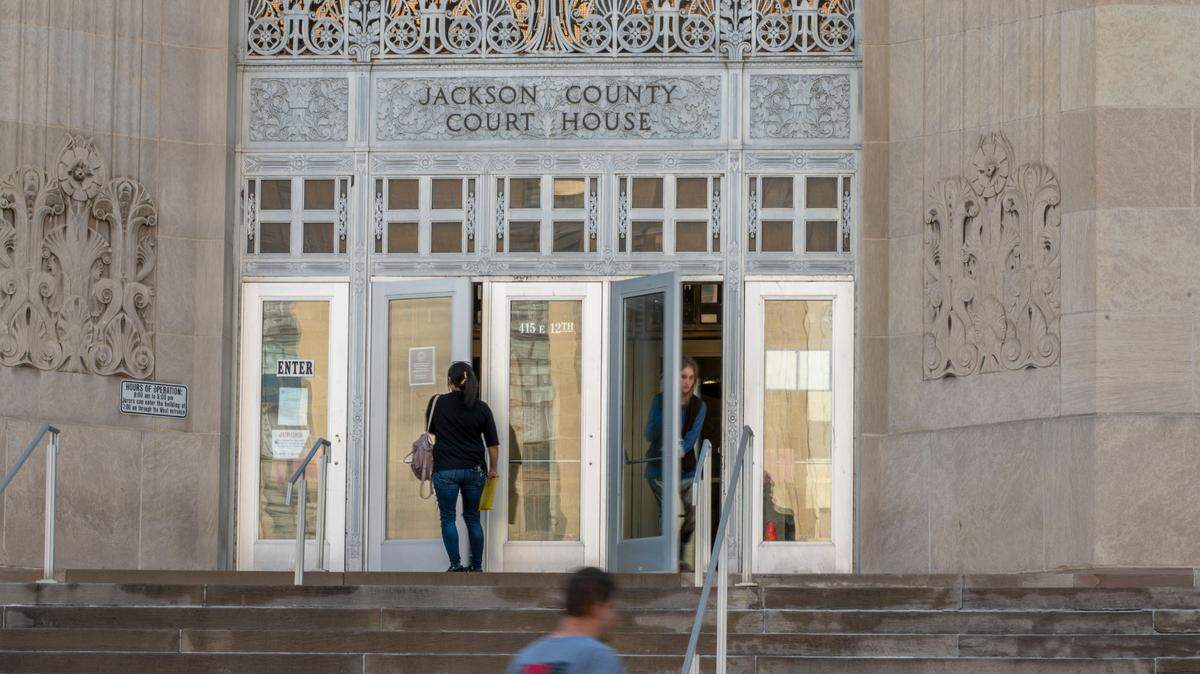
As Jackson County legislators consider whether to implement a tax credit program to homeowners who paid inflated property tax bills in 2023, county homeowners and organizations are split on who should bear the cost.
Interim Jackson County Executive Phil LeVota introduced several proposed tax reform programs last year, including artificial, retroactive 15% caps on both residential property values from the 2023 assessment cycle and commercial property values from the 2025 assessment cycle. His 2023 relief proposal relies on credits issued on Jackson County residents’ next three years of tax bills, which would rely on repossessing tax revenue that had already been dispersed to agencies and school districts.
The legislature is now considering an ordinance that would write the proposed three years of tax credits into the city code, creating a lengthier process for anyone who sought to overturn them in the future. Legislators opted not to vote on the proposed ordinance Monday, stalling the tax credit issue by another week.
If the tax changes are not codified by ordinance, they could theoretically be reversed swiftly by the next county executive after LeVota’s exit on January 1, 2027. At least one candidate, Democrat Ryan Meyer, has already pledged to reverse course if elected.
The situation has left no one happy in the meantime. Taxing jurisdictions like school districts and libraries are imploring the county to not deal such a dramatic blow to their operating budgets, while homeowners want the county to grant them relief from their high bills.
“We are looking for alternative solutions to this particular issue,” Legislative Chair Manny Abarca said Monday. “If your issue or gripe is, ‘I want tax reform,’ we know that. That’s the point.”
Libraries speak up
School districts around Jackson County have been vocal about what they see as detrimental impacts to their bottom lines if the tax credit program is implemented. A dozen wrote an open letter to LeVota earlier this year detailing concerns with the plan, and the Independence and Fort Osage districts filed a lawsuit against the county on June 16.
Other taxing jurisdictions, including libraries, also have concerns about how the plan relies on “clawing back” previously allocated, long-spent dollars from their annual budgets. Some took the opportunity Monday to sound the alarm.
Mid-Continent Public Library Executive Director Aaron Mason said that the tax credits would reduce the library system’s budget by about $2.1 million annually, which is “not a number we can absorb without consequence,” he said. The cuts would lead to a broad reduction in library services at a time when Jackson County libraries are actually seeing higher demand, he said.
“We understand the challenges that homeowners have faced with growing tax bills, and we are broadly supportive of finding ways to assist them,” Mason said. “The proposed solution, however, does not come without tradeoffs.”
At the Kansas City Public Library system, property tax levies account for about 96% of the annual budget, said KCPL Chief Executive Abby Yellman. The proposed credits would cost the KCPL system about $1 million a year.
“Property tax is the foundation for our ability to serve individuals and families across our community,” Yellman said.
‘Nobody really wins’
Representatives from two of Jackson County’s largest cities noted that essential services could be immediately harmed if the tax cut program goes through.
Kansas City Assistant City Manager Tammy Queen spoke on behalf of the city at Monday’s hearing, saying that the city’s budget relies partially on having a consistent revenue stream from Jackson County property taxes.
This process, Queen said, was interrupted by the artificial caps, which she referred to as “unauthorized changes” that interfere with state statute.
“The state levy rate-setting process provides budget certainty for the city,” Queen said. “Anything that deviates from that really causes us to have issues… we think there’s a way that it can be done in conformance with the state laws that we have to follow.”
Property tax levies account for about $209 million within the city budget, Queen said, funding the Kansas City Museum, the city health department, the city debt levy and the general fund.
This year, the commercial caps led to a direct reduction in the budgets for ‘safety net’ health care providers in Kansas City — hospitals and other facilities that see uninsured patients — as the city struggled to balance out about $3 million in missing funding, Queen said. The three years of tax credits would reduce the city budget by another $15 million, Queen said.
Lee’s Summit City Manager Mark Dunning concurred, saying that the credits would create similar dramatic reductions in the ballpark of $5.3 million to the city’s general fund, parks and recreation budget and debt services.
The city of Lee’s Summit has planned for some uncertainty in property tax funding levels going forward as debates over the credits continue, Dunning said. However, in the meantime, the city has implemented a hiring freeze.
“Nobody really wins, right?” Dunning said. “Everybody is impacted by whatever decision gets made.”
Homeowners want priority
Meanwhile, some residents are calling on the county to prioritize homeowners’ financial futures over the needs of taxing jurisdictions, arguing that large organizations have more flexibility and that homeowners deserve immediate relief of financial burdens regardless of the fallout.
Bill Haley, who is currently running for the Sixth District seat on the Jackson County Legislature, said that when complaints began to rise in 2023, schools and other taxing jurisdictions should have actively prepared to absorb the financial impact.
“The 2023 assessment was illegal,” Haley said. “Everybody in the room knows that it was illegal. These taxing jurisdictions have had several years to adjust their budgets and their spending.”
Abarca said that legislators have begun to consider alternate solutions to the three-year tax credits.
Some have called for the county to issue bonds, Abarca said, in order to pay homeowners back in lump sums up front. However, the county is not able to take out a bond on money already distributed to taxing jurisdictions, which accounts for 93% of the proposed refund amount, he said.
LeVota said that the county also has the authority to “claw back” money from taxing jurisdictions immediately, and that the proposed three-year credit structure was intended as a compromise to give impacted organizations some time to prepare.
“If we were giving refunds today, we would come to you and say, ‘Give us the money today,’” LeVota said. “...You didn’t cause the problem, correct? But you’re going to eat it.”