KCK, Olathe to vote on local pieces of Chiefs stadium deal. What if they say no?
Despite rolling out maps of a bond district spanning Wyandotte County and half of Johnson County that show how state sales taxes could help pay for the Kansas City Chiefs’ move to Kansas, state officials are saying those aren’t set in stone.
That’s not stopping local officials from taking action on their potential pieces of the deal for the Chiefs, though.
The state’s official terms for what could be one of the biggest public subsidies for a stadium in U.S. history, including its bond district boundaries, won’t be established until later this year, Patrick Lowry, a spokesperson at the Kansas Department of Commerce told The Star.
That map will determine whether state sales tax revenues generated in parts of both Wyandotte and Johnson counties would be directed toward paying off sales tax and revenue (STAR) bonds used to finance the team’s roughly $4 billion stadium package.
But while state law allows officials to keep the details of their deal under wraps until it’s finalized, two area local governments will soon be unveiling more information about the stadium project to the public — and voting on their potential local financial contributions to it.
Three separate decisions
The Chiefs’ plan, which state, local and team officials announced late last year, includes a $3 billion, domed stadium in far-west Kansas City, Kansas, and a nearly $1 billion team headquarters and training facility in Olathe. Both developments would have entertainment districts built around them, Gov. Laura Kelly said during that announcement in Topeka.
The bulk of the stadium-related projects will be paid for with $2.8 billion worth of state-issued STAR bonds, which will then be paid back with new sales tax revenue.
That’s the part that gets a little tricky.
STAR bonds are typically paid back with both state and local sales taxes collected in a defined district encompassing a new tourist attraction and its immediate vicinity.
But because of the special law that Kansas legislators passed to help fund professional sports stadiums, the Chiefs project works a little differently.
Instead of one district around the attraction collecting both state and local tax money, the stadium bond debt could potentially be paid back from three places:
- A sweeping district across much of Wyandotte and Johnson counties that would redirect state sales tax money,
- A smaller, 236-acre area around the new stadium site that would redirect local sales taxes from Wyandotte County,
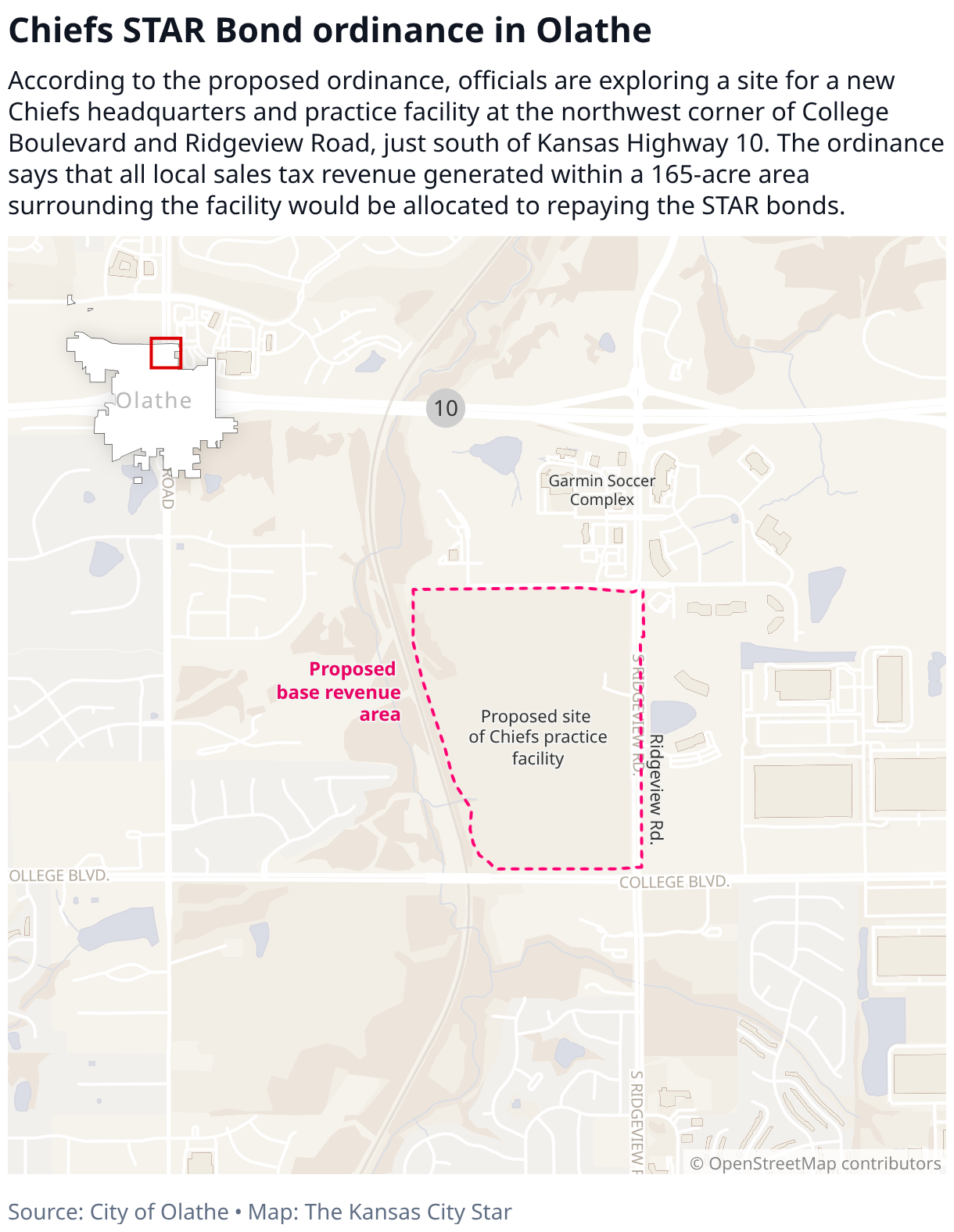
- And an even smaller, 165-acre area around the new practice facility that would redirect local sales taxes from Olathe.
Later this year, state officials will decide the terms of the state district on their own — which will pull state money from both counties.
This month, local officials will vote on the terms for the areas that would put local tax money toward the stadium.
Sales tax revenues generated in each area would go to paying off STAR bond debt for the stadium project instead of other government priorities and services for up to 30 years.
What we know about KCK stadium plan
In Wyandotte County, decision-makers are considering a property in west KCK, just northwest of the Kansas Speedway, for the future stadium. The Unified Government Board of Commissioners will vote Thursday on whether they divert local sales tax revenues generated around the project, and nearby, toward paying off the bond debt used to pay for the stadium project.
According to the Unified Government’s maps, the stadium would be located somewhere north of State Avenue and between 126th and 118th Streets. That land is west of the American Royal and Plaza at the Speedway districts and spans 236 acres.
The state and the Unified Government are in agreement over the Unified Government’s proposed local bond district, which they’re calling the “Base Revenue Area,” Lowry said.
State and team officials are requesting the Unified Government pledge 100% of local sales and use tax revenue generated within that 236-acre area.
“The state is requesting the Unified Government to pledge its sales and transient guest tax from the stadium and mixed-use area,” Lowry wrote.

What we know about Olathe practice facility
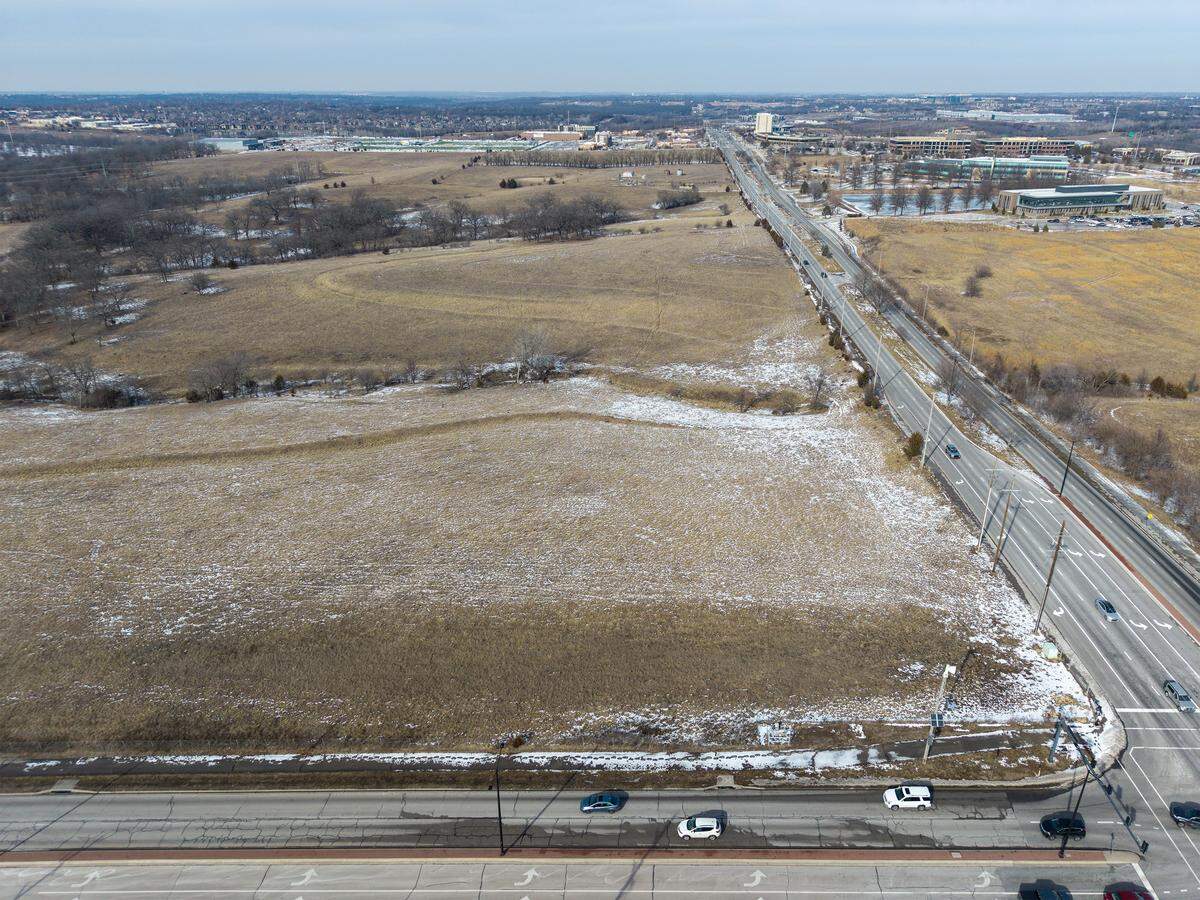
The Olathe City Council is considering a 165-acre property near the northwest corner of College Boulevard and Ridgeview Road, just south of Kansas Highway 10, according to council documents. They’re scheduled to vote on that Tuesday evening.
Similarly to KCK, that 165-acre site is Olathe’s “Base Revenue Area.” If the Olathe City Council approves the ordinance, the city would agree to divert any local sales tax revenue generated on the site not committed to other uses for the next 30 years. The ordinance language exempts voter-approved sales taxes and any future special taxing districts — like community improvement districts or tax increment financing districts.
If the council approves the ordinance Tuesday evening, Olathe would also agree to pledge 7% of its 9% transient guest tax the city charges for hotels, motels and other guest stays located within the “Base Revenue Area.”
While the approval would solidify Olathe’s commitment to the Chiefs, the state has the discretion to request the City Council make changes to the district, which would require another vote.
What if KCK or Olathe says no?
Although Unified Government staff and state officials have reached an agreement on the size and location of the local “Base Revenue Area,” the ultimate decision on whether Wyandotte County puts any local funds into the stadium project falls to the Unified Government Board of Commissioners.
Same goes for Olathe and its City Council.
But if either governing body were to reject investing local sales tax revenues in the stadium project, that would throw a wrench in the Chiefs’ and state’s plans. “Revenue from the local level is a key part of the financing structure,” Lowry said. “If the local taxes are not pledged, it would create a significant funding gap.”
The Chiefs declined to respond to questions about how the local votes could affect the stadium deal on their end.
Wyandotte County commissioners’ decision will happen at a time when the government has said it’s trying to get a hold on its finances after freezing property tax revenues during 2025, a move that pushed officials to cut millions from the Unified Government budget. Those cuts affected public services, like transportation, public works department staffing and overtime for first responders.
People in Wyandotte are also dealing with high property tax and utility bills, and have said during public meetings in recent years that they’re concerned about losing their homes.
Further south, as discussions have ramped up in Olathe, many residents have shared concerns about how the new development could impact existing infrastructure, particularly K-10 highway, and the cost of housing in a county that’s seeing a significant decrease in available homes that cost $300,000 or less — which are often considered attainable or affordable.
While this is the first time residents in both Kansas counties are hearing their representatives talk about the issue, future developments, infrastructure and additional incentive requests would need to go back before local governments for approval.
The Chiefs and the state have until Dec. 31, 2028, to begin developments related to the stadium deal.
This story was originally published February 3, 2026 at 4:11 PM.