Kansas City leaders discuss grassroots efforts to fight gun violence & what comes next
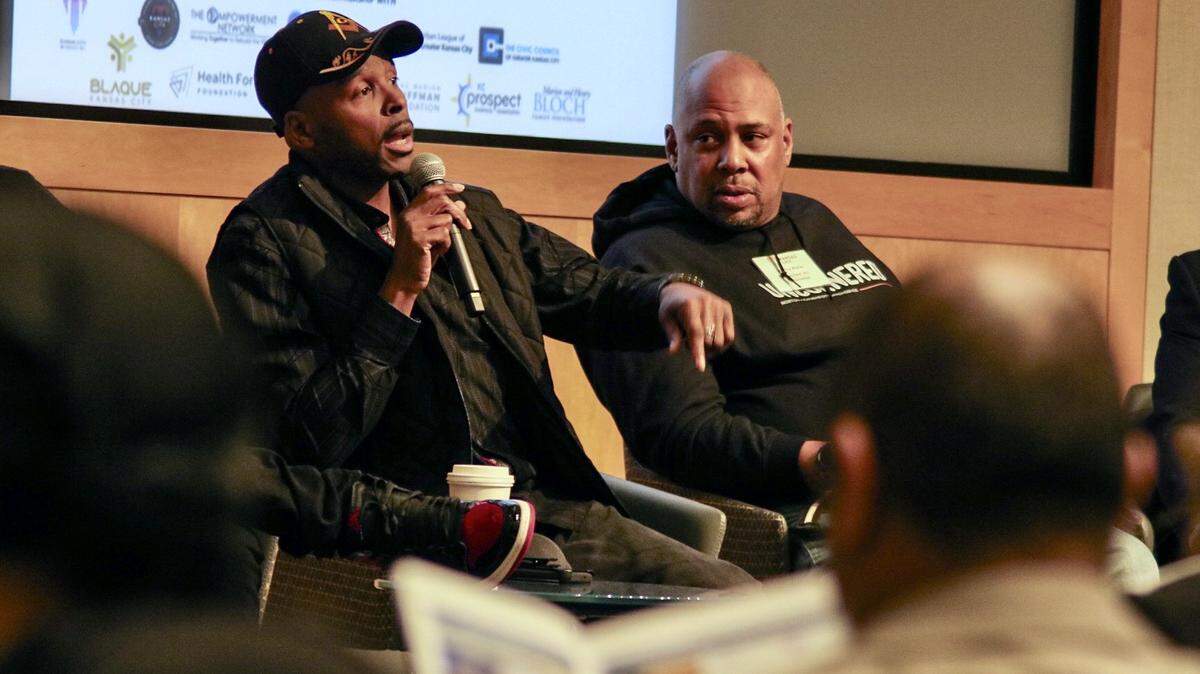
One month after a mass shooting at the Kansas City Chiefs Super Bowl victory rally that left one person dead and two dozen people injured, city leaders met at the Kauffman Foundation Conference Center Friday for a public safety symposium.
While the rally shooting was mentioned throughout the day, the focus was on the city’s pre-existing condition of gun violence.
Kansas City recorded its most deadly year in 2023 with 185 homicides, according to data tracked by The Star, which includes fatal police shootings.
Speakers at the symposium discussed data points tracking back to at least 2010, showing a fluctuation in homicide rates, but an overall increase in the last 13 years. Two days before the symposium, a man was killed in a shooting at a home on Mersington Avenue, marking Kansas City’s 26th homicide of 2024.
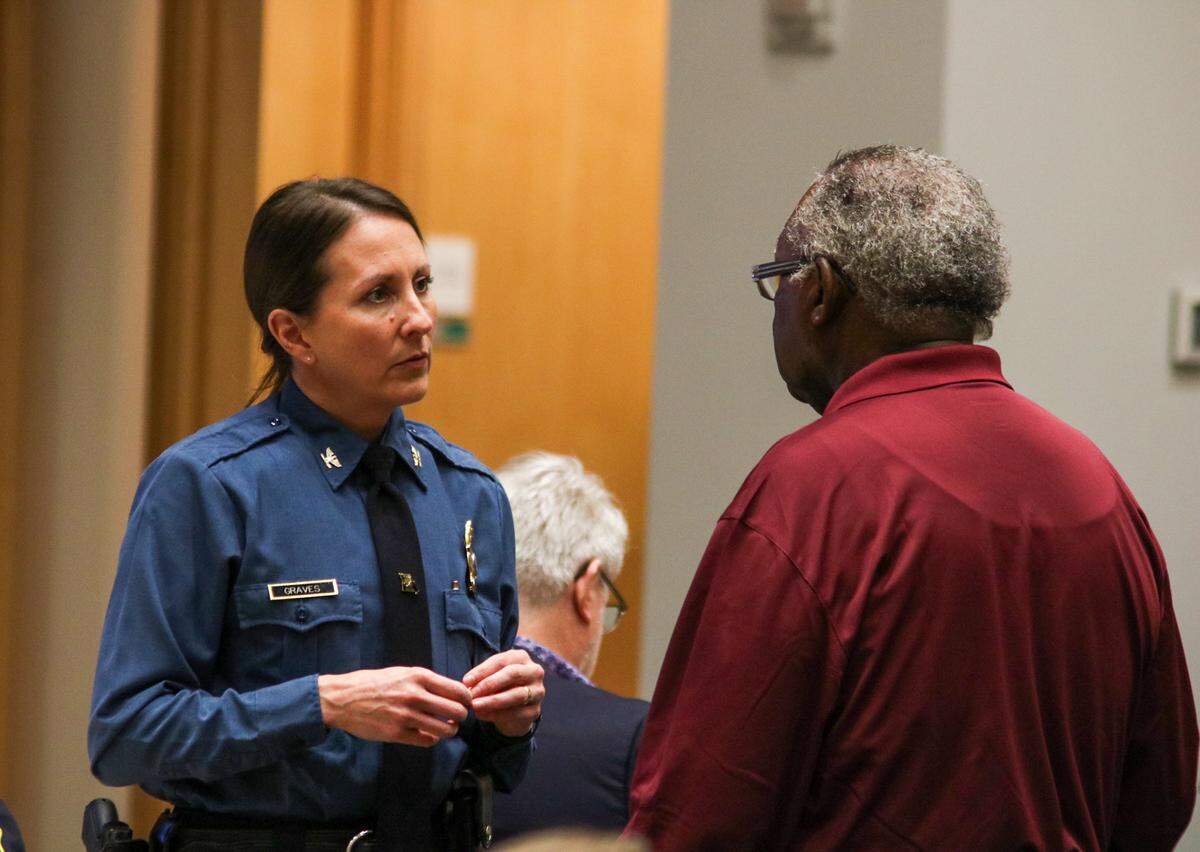
“The key to ending the culture of violence is right here,” said Kansas City Police Chief Stacey Graves. “It’s in all of us, it’s going to take everyone in Kansas City to really make a sustainable impact on violent crime.”
Preventing violence by meeting needs
After presenting the harrowing facts about violence, talk turned toward ongoing efforts and new solutions to stem the bloodshed.
Nonprofit groups like Aim 4 Peace and Uncornered, city officials, faith organizations, the Ad Hoc Group Against Crime and several other organizations throughout Kansas City showed up for the symposium Friday. In total, more than 250 people attended.
Speaking to a room of law enforcement officers, prosecutors, scholars and leaders of local organizations, Kansas City nonprofit leaders shared personal testimonies of overcoming a past consumed with violence. Their stories — about getting shot in the head, about abuse, about seeing parents take illegal drugs, about broken promises, lies and a false sense of security in gangs — spoke to groups of people who never knew those realities.
Their “lived experiences” shed light on the root causes of violence, and pointed toward efforts which nonprofit leaders said can lead to change.
At the core of their message — a call to action.
“When you show up for young people, they’ll show out for you,” said Ossco Bolton, who works with organizations to reduce violence among youth.
The multi-faceted issue of violence prevention has multi-faceted solutions, leaders argued Friday. Real change would come about, they said, through proper funding channels to most impacted communities. It would come, they said, through real people being real mentors to communities seeing real violence.
‘We’re tired of talking’
KC Common Good and KC 360, an effort modeled after Omaha 360, put together a working draft of a 10-point action plan to address violence in the community. Omaha 360 is a nationally recognized violence prevention and intervention model.
In Omaha, officials said the violence prevention strategy achieved a 74% drop in shootings in 15 years. KC 360 aims to curate its plan to fit the Kansas City community and its needs.
The KC 360 program is new, having just started in 2022. While city officials last year cited its efforts as contributing toward lower homicide rates in one Kansas City neighborhood, Santa Fe, some community members say it could take longer to tell if the plan is working.
Klassie Alcine, CEO of KC Common Good, said the collective interest from the community in violence prevention Friday provided a glimpse of hope toward tangible solutions.
“For us to reduce violence together, it has to be a partnership between community, police and strategies in violence prevention and intervention,” Alcine said. “Some can be done by professionals, and some can be done by individuals with lived experience. Both have value.”
“We’re tired of talking,” she said. “We need action. But we also need to understand how much the action costs.”
Breakout sessions ensued, where groups talked specifics on different areas of the action plan and ways that different organizations can work together in preventing violence. They spoke at lengths about working collectively to reach the individual — to meet the needs of people where they are in their communities.
“If we really hyper-focus around the community’s most impacted over time in partnership with police, how much does it cost, what do we need to be doing more of, how can we build capacity?” Alcine said. “That’s what we’re working through together.”
Testimonies from those on the front lines of mitigating violence in Kansas City washed over a crowd of city leaders Friday as they pressed on toward a difficult question.
What can be done to curb violence, and what does the future of public safety look like?
After Kansas City recorded its highest number of homicides in 2023, city leaders told The Star they plan to implement an expanded focused deterrence model, and focus on delivering social services.
At the symposium Friday, Graves shared more information about KCPD’s crime plan, which was made public one day earlier on March 14. The crime plan includes three primary strategies: data-informed community engagement, data-driven deployment and focused deterrence.
Those strategies may be carried out through deploying resources toward root causes of problems, involving the community in problem-solving efforts, making data-driven decisions and maximizing police and community resources.
While a sense of urgency filled the room to get at a direct answer, the symposium took its time getting there, wading through the complexity of the issue, its root causes, and the different angles each facet of the community can take to make progress.
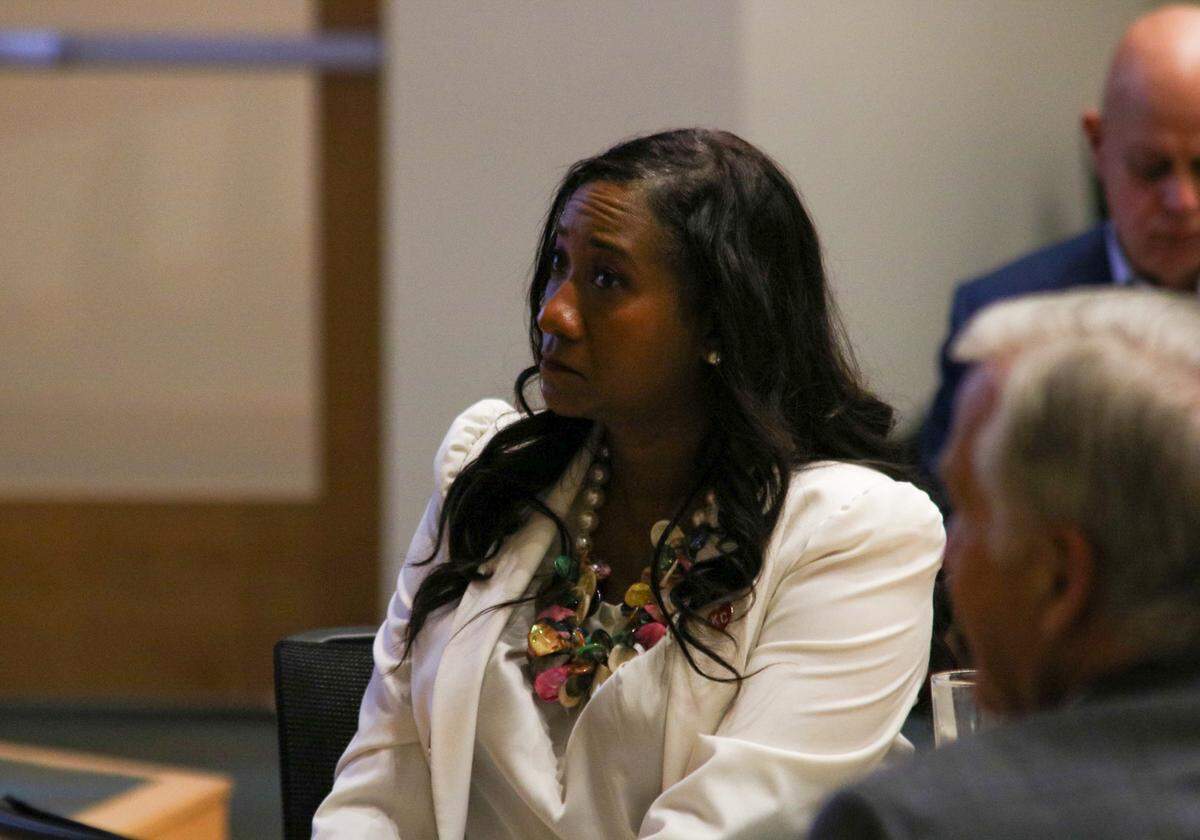
The one definitive answer that came from Friday’s workshop with some of Kansas City’s most prominent leaders was this — that it would take a collective effort, and, of course, time.
“What’s important is us all working together and the collective impact we can make when we all work together,” said Mayor Pro Tem Rayna Parks-Shaw.
A community forum for the public is scheduled from 8:30 a.m. to 3:30 p.m. March 16 at the Kauffman Foundation Conference Center to discuss the same issues of violence prevention and intervention.
This story was originally published March 15, 2024 at 7:28 PM.