A community conversation project with KKFI Community Radio and Kansas City GIFT to elevate the stories of Black Kansas Citians working to build businesses, advocate for change and make life better around KC.
Expand All
Editor’s Note:This interview is part of Voices of Kansas City, a project created in collaboration with KKFI Community Radio and Kansas City GIFT, a nonprofit supporting Black-owned small businesses, to highlight the experiences of Kansas Citians making an impact on the community. Hear the interviews on KKFI 90.1 FM, Fridays at noon, or at KKFI.org. Do you know someone who should be featured in a future “Voices of Kansas City” season? Tell us about them using this form.
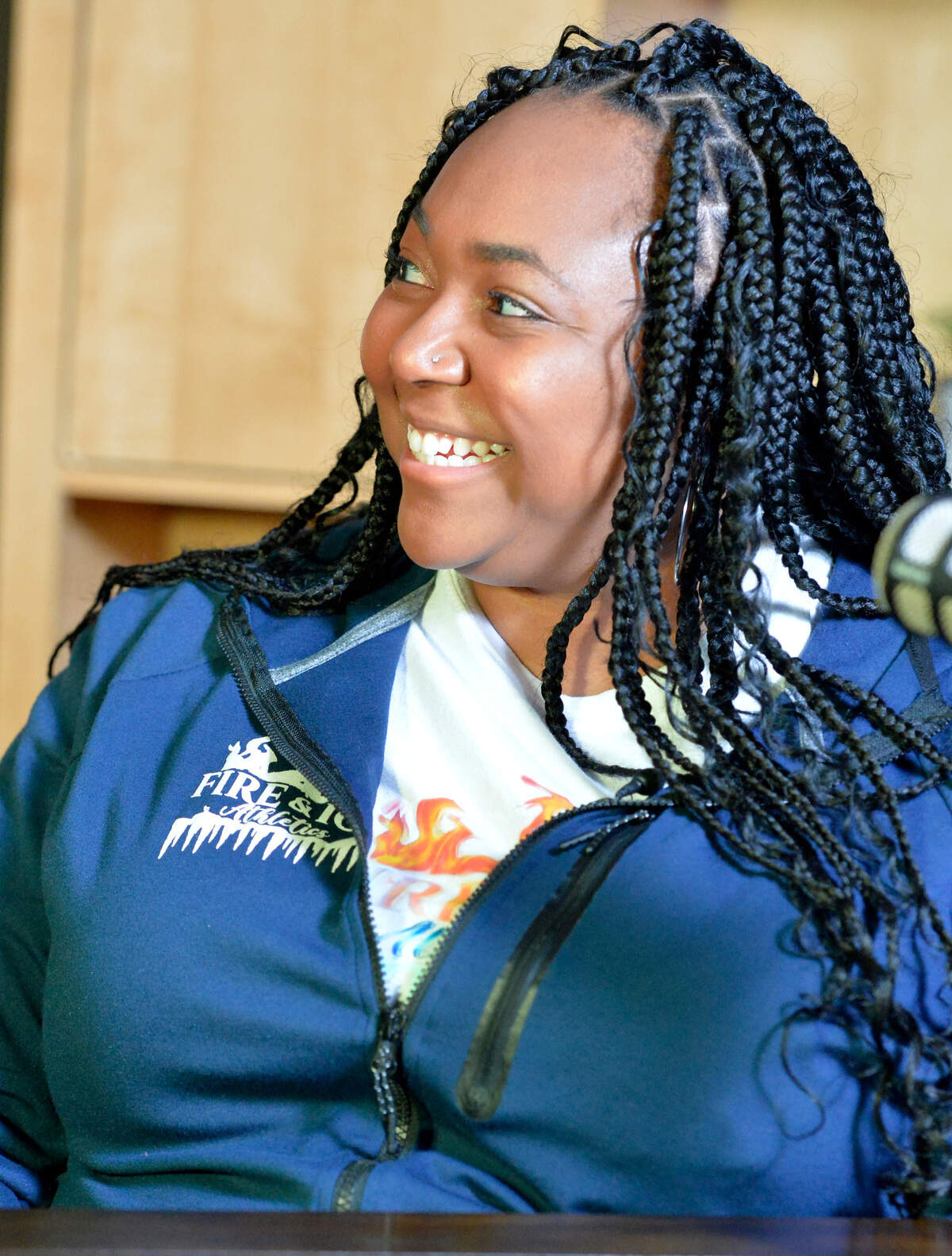
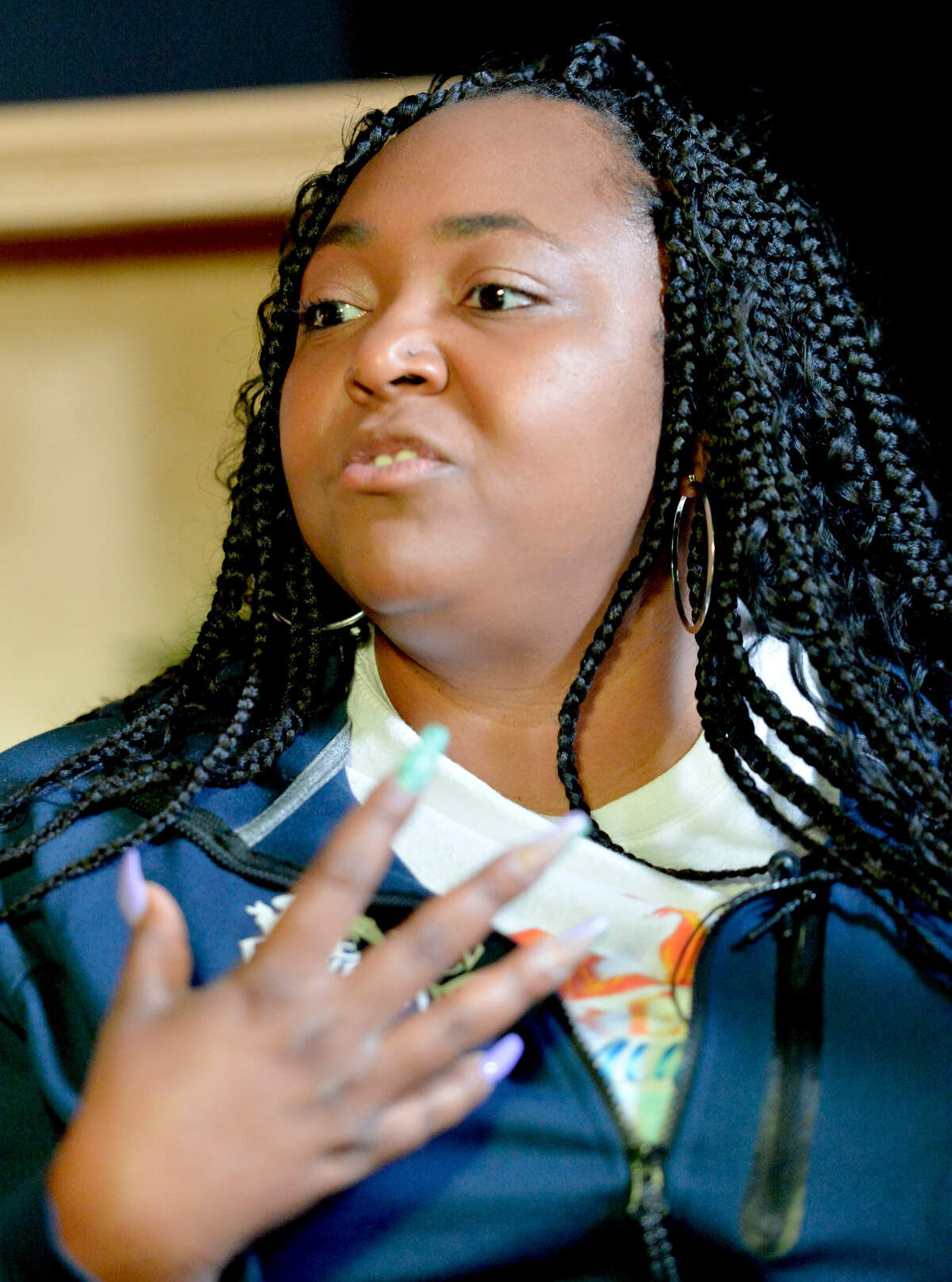
Keshia Shannon pulled up to the Kansas City GIFT studio during nap time. Decked out in a navy blue matching tracksuit and silver hoops, she stole the few free minutes she had during a typically jam-packed day running two small businesses — a day care and a gymnastics studio — to talk with The Star’s assistant enterprise editor Allison Dikanovic.
Icicles dripped from the logo on her jacket that read “Fire & Ice Athletics.” The 2-year-old Raytown gym is the first and only Black-owned gymnastics studio in the entire state of Missouri. Shannon started it for her daughter, who didn’t want to follow in her mother’s footsteps of being a cheerleader.
Shannon’s captivating presence made it easy to picture her getting crowds fired up back in her high school days in Kansas City, Kansas.
The double entrepreneur talked with The Star about how noticing a stark absence of Black judges and coaches at gymnastics meets motivated her to become a local leader in the sport, and how it takes a village to keep her studio thriving.
The conversation, edited for length and clarity, is presented in a question and answer format to share Shannon’s story in her own words.
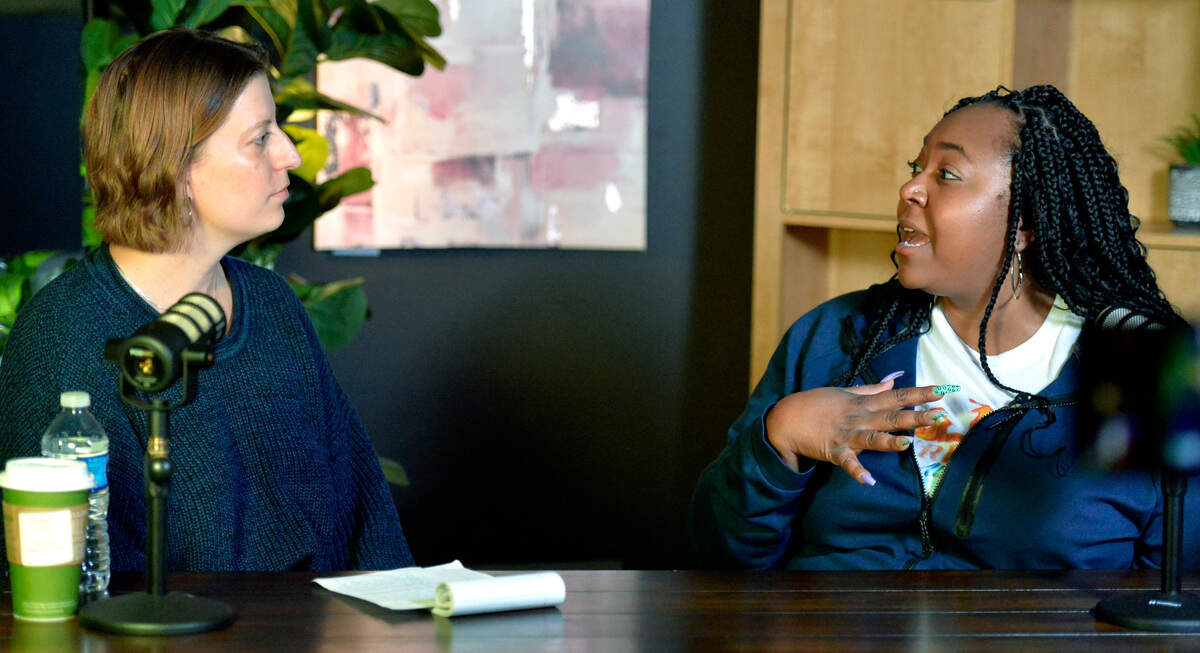
Keshia Shannon is the owner of Fire and Ice Athletic. She has the only Black-owned gymnastics gym in Missouri. She talked with Kansas City Star journalist Allison Dikanovic, about her business. They spoke in the studios of KC GIFT on Prospect Ave. Monty Davis madavis@kcstar.com
Meet Keshia Shannon
The Star: Tell us a little bit about how you got to this point. The gym is almost 2 years old?
Keshia: So it depends on how you determine two years. OK. Saturday was my, I call it my birthday. So it was Saturday, September 9th. We officially hit two years from the business being established, but I didn’t operate in a building until October.
OK, well, happy birthday. We would love to know a little bit about how you personally got to the point of opening up a gym. We know that you used to be a cheerleader growing up. Is that true? And was that here in Kansas City?
Yes, I did. And I grew up in KCK (Kansas City, Kansas). And so I went to Sumner (Academy of Arts and Sciences) and I did cheerleading for high school and I wanted my daughter to do cheerleading. OK? So she was little. She was cute. She was petite, and I wanted her to do cheerleading and she was terrified. She didn’t want to yell. She couldn’t yell. She was scared. And so someone was like, “Well, try gymnastics.” We took her to a class and she loved it. I considered her a traitor because she chose gymnastics over cheer. Broke my heart.
But I am a helicopter parent. I home school my kids. I keep my kids with me everywhere. So it was just easy for me to just jump in and be a part of, you know, whatever activity she was doing. She was doing gymnastics. She was in the gym. I was like, “How can I help out?” And I started out just being a parent helping out.
And then I started asking more questions and starting to learn how this works. And then I was like, “I want to help coach. How do I learn how to do this?” And then I started taking courses and started going to competitions. When I started to go to competitions, I noticed that there was a lack of African American people on the floor other than athletes, in terms of adults.
So there weren’t any coaches out there. There weren’t any judges. There wasn’t any staff. You may have one or two. So I was just like, “What is the deal? This feels like there’s not a lot of gyms. There’s not a lot of Black coaches. Like, we’re here, but it’s just not, you know, it’s not something that people do.”
It’s a very expensive sport. And I was just like, “I’m going to open a gym. I want to open it.” I had no experience. But, I was going to do it. And we were like, let’s go for it.
And that’s how Fire and Ice was born.
So it was your daughter that kind of got you on the path of gymnastics?
Yes.
And you said at first she was a traitor. I’m curious if you found any similarities between gymnastics and cheer, or why did you want her to be a cheerleader at first?
So I wanted her to because I loved it and I enjoyed it. It was fun and, you know, doing games. And it was a sport. I know people don’t consider cheerleading a sport, but I do. But I wanted her to love it like I did. But now my opinion has changed.
Oh, so was there a certain moment that you feel like you could point to, or has it just been kind of over time?
Over time. After learning all of the essential components that go into competitive gymnastics and seeing the difference between competitive gymnastics and competitive cheer it changed my outlook.
They’re both amazing sports, but gymnastics is a lot more particular and it’s more specific and it uses a lot more of the body. There’s a lot more strength and flexibility and balance that goes into it. And so I love cheerleading and I think it’s amazing, but — I hate to say the word I hate — but it’s like I hate when a gymnast comes to me with cheerleading background because I have to undo everything she learned to teach her to tumble like a gymnast, or to flip, or leap or whatever, like a gymnast. It is completely different.
And now that I’ve learned the differences, gymnastics is a lot harder. There’s a lot more that goes into it.
So you’re a gymnastics convert?
I guess so.
Well, it seems like now you’ve become quite the expert. But at first you did this just for your daughter and you, because you saw this need for more Black leaders in the gymnastics space. But you didn’t have a background in gymnastics. Did you have a background in starting a business?
I have a day care and I’ve been doing child care for over eight years, so I’ve learned how to run a business through that. I know what is necessary to have a successful business because I’ve owned my own child care before. I started my own day care and that kind of gave me the precursor that I needed to understand business and how to be successful in business. Everyone feels like business is supposed to go a certain way and it really doesn’t.
What works for you and your business might not work for another. It just kind of varies and you have to be willing to be flexible with the times and things that are changing. The biggest takeaway I got from being a business owner is learning that it’s OK if someone says no.
What do you mean by that? Do you have an example?
Oh yeah. So in child care, for example, and I know this isn’t about my day care, but within my child care, if a parent comes to me and they have decided they want their child to go somewhere else, I’m OK. I used to get offended. I used to cry so bad and I would take it so personally.
Yeah, you pour your heart into something and then ...
Yeah. You love those kids like they are your own. It got to a point where It was like, “It’s OK if I’m not a good fit for you. Let me help you find the fit.” And so within the gym, it’s the same way. There are so many gyms that have gymnastics here in the city. There are so many gymnastics facilities in the metro. And so if you feel like Fire and Ice is not a good fit for you, I’m OK with that. And I think that was one of the biggest takeaways that helps. You don’t take it personal when people are like, I want to go here.
What have you done to set Fire and Ice apart, so that you know who’s a good fit for what you’re trying to do? And was it a smooth transition to try to start a business and something completely new? Were there roadblocks that you weren’t expecting to run into?
I think the hardest roadblock was funding and word of mouth, because gymnastics is ... it’s expensive.
It’s not as cheap as, like soccer or football or basketball. And especially if you want to compete in the sport. Most organizational sports you can pay $100 and your kid can play five or 10 games all season and that’s it.
Well, if you want your daughter to do competitive gymnastics you’re going to be paying about the price of a car note every month, you know. Then finding a space and a building to be able to hold the equipment was definitely hard. The easiest transition was understanding how to balance finances, understanding how taxes work, understanding how to deal with people, even people who are upset and confused. And dealing with children.
Because I have child care experience and I love children, it’s so easy for me to deal with children in this space as well. But I also know how to deal with upset parents. You know I’ve learned that over the course of being in child care because they’re very particular about how their kid is handled, especially if you’re being a caretaker.
So in gymnastics it is the same way. How do I communicate with the kids? How do I get the kids to understand? And so then with my background in teaching children, I have learned to teach gymnastics. I do not consider myself a coach. I consider myself a gymnastics teacher. So that’s why I set myself apart.
I’m not here to run drills and have you running miles and doing, you know, all these different things. I want you to do that. But, I also want you to understand the mechanisms behind what your body is supposed to do, the physics of what’s going on with your body, your angles, you know. Some coaches, and I’ve learned from others, they’ll say, “Oh, you’re likely to be at this height.”
I’m actually like let’s talk about it. Let’s do some geometry. Let’s write it all down. You have to be at a 45 degree angle. Let’s talk about what a 45 degree angle looks like. And then also, from being in education, especially early childhood, I know that no child learns the same.
Some people are auditory, some people have to see it. Some people have to just do it. They’re tangible. So they have to actually do the activity and then they understand what they’re supposed to be doing. Some I have to physically move your arms. Say, this is exactly where I want your arms to be. Some I will say hold them up at this angle and they’re like, got it. So I’m a lot more patient because of, you know, dealing with toddlers all day.
Seems like that personal style of really trying to meet the needs of each of your athletes and learning how everyone learns is a big value in your business of being a really inclusive space. And that seems like it was a big part of why you wanted to start this in the first place, to establish a space for Black gymnasts.
Could you talk a bit about how that has been a value from the start and how that shows up both at the gym and maybe when you guys show up to competitions?
I’ve definitely learned a lot. So one of the things that sets us apart extremely when it comes to being an African American, Black-owned facility is where I am not a drill sergeant. Like I said, I don’t consider myself a coach.
I consider myself an educator. So I’m teaching the sport. And so I like to create this nostalgic environment. I want the girls to feel like they’re at home. Mostly, you know how in your home environment you’re comfortable? You can kind of lounge around. You can have fun. No one is uncomfortable at home, you know. You want to be able to enjoy this space.
So I always try to create an atmosphere of, this is your house. The girls are responsible for keeping it clean. We have fun, we play music, we’re dancing, we are silly. But we’re also like parents. You know you’ve got to be silly with your mom and dad. But they also know how to be mom serious or dad serious, you know, when it’s time.
And so we keep that atmosphere of fun. And I don’t want to say lack of professionalism because you can be professional and still have fun and a good time. I want the girls to enjoy what they’re doing. And I don’t want them to get burned out and not want to do this anymore.
So because of that, we’ve created, I’ve created, a lot of like tradition. Because you think about it, at home you have your home traditions depending on if it’s a holiday or birthday or whatever time something comes around. You have things that you do that are tradition to you, and that’s what makes it home.
I’ve created that space environment. So before every competition we have a send-off. And I have kind of paid homage a little bit to the concept of sorority and fraternity. We circle around the girls that are competing. We have candles lit. We sing a song to them to just kind of encourage them before they’re going off to their competition that weekend. And we, of course family and friends, invite everyone to come and do the send-off.
It doesn’t matter how many times you’re competing this season, every single competition weekend we’re doing a send-off for the girls that are competing. The girls who aren’t competing that weekend circle around. Just kind of give them the boost they need and then when we’re at the competitions, you know, I encourage the girls to cheer and shout and, you know, clap and have fun with their families. In the Kansas City League, because Kansas City has its own league here, we are known for our music.
Yeah? How so?
The girls dance to their floor routines to the music that we listen to, you know? So they’re going to hip-hop, they’re dancing and R&B, you know, different music that we remember. And it’s things that we want to listen to. It’s not a lot of classical and classical jazz or anything. But I allow the girls, hey, what’s your favorite song? Let’s see if we can make this song a floor routine? So this year, in particular, is the 50th year of hip-hop. So this year all of our music is going to be dedicated to the 50 years of hip-hop. So we’re taking music from each era this year. So everyone looks forward to it.
And so I get everybody involved. I am all about the village; all my parents, everyone who helps out. I am the super delegator because I don’t want to burn myself out. I’m already busy enough. I tell people all the time, I believe in the village system. We are family. I treat us as a family.
That’s our kid. That’s not just your child. That’s our child. And I think that one of the things that sets us apart is we are truly a family and we operate as a family. So if you had a child and your child went to my gym and we were at a competition, every parent who belongs to Fire and Ice is watching your baby and making a cheer for her, screaming for her.
Or if you have a kid in the stands. And I told them, especially with my son, because he’s at competitions. He’s there all day, the entire weekend. And I always tell them, like, please have snacks, bring snacks for my son. He is your kid. When I’m coaching, too.
So I’m all about the sense of family and community. And I think that’s what I support because a lot of times they’re like, “Oh, that’s not my kid or that’s not, you know …” I don’t operate like that. And in most African American families, we don’t operate like that. There’s no separation. So I definitely try to keep that.
I was going to ask if there were any experiences from your own family or your own background that you brought to the gym? You mentioned the send-off kind of being like a sorority. So I was curious about if there were just some experiences from the past that you turn to?
Yes. So I am the product of teen pregnancy. So my parents were young when they had me. So they didn’t know what they were doing. And so who had to help? It took grandparents, aunts, uncles, families to kind of help, you know, mold me. And everyone kind of took in a part of that. And so I believe in the village because one person can’t do it alone.
And some people have that mindset like, no one can say anything because it’s my kid. And I’m like the complete opposite. Like, please say anything. I want you to because I want to teach my children. And that’s not just my biological children, my day care children, my gymnastic children. I want them to know that you can take instruction from any adult You can listen to an adult or anyone who’s in a position of leadership and take that and you can, you know, filter what needs to be filtered because not all advice is great advice.
And so those are things that I learned growing up. You know, the village is important. You know, the sense of community having a healthy sense of people you can rely on and depend on.
Right. And to respect them. And to know that they’re there to take care of you and they are looking out for you.
And create a safe space.
I have gymnasts who come from single parents who have seen harsh, you know, crazy things that happen in life. And so this is also their safe space.
Yeah.
And these are the group of people who I am telling you are safe in this safe space. And because of that respect, these people, they care about you just as much as I do. It just kind of works.
That’s awesome. Before you were talking about one of the biggest challenges being the barrier to getting into gymnastics, because maybe people weren’t familiar with it, maybe they were a cheerleader or they were they were intimidated by it.They maybe thought they couldn’t afford it. How have you been able to work through some of those barriers?
I am still working through them. Yeah, it’s not a catch-all solution. One of the hardest things is cost, right? Cost is very big. I tell the parents, talk to me, let me know. Especially, you know, if your kid needs this to keep them from being lazy, sitting on the couch, keep them out of trouble. Talk to me. What can I do to help?
Keshia Shannon, right, owner of Fire and Ice Athletic, talks with Kansas City Star journalist Allison Dikanovic, about her business in the studios of KC Gift. Monty Davis madavis@kcstar.com
If people have no touch point for the world of competitive gymnastics — I’ve never been to a competition — maybe they’ve seen the Olympics, could you give a little intro?
Your local youth competitive gymnastics is not like the Olympics at all. The Olympics is quiet. It’s, you know, different. Those types of gymnasts have a completely different set of training, and different sense. The competitor world is similar though, they still compete. But the point systems are different. The highest you can get is a 10 and then when you go elite, then you can start adding extra skills.
But when you’re thinking of competition, they compete with all four apparatuses. Unless they are... they specialize in a particular apparatus.
Apparatus?
So you have vault, which looks like a table, like a horse or mat, depending on what it is, and they go over it, they flip over it.
You have bars , which are the uneven bars. Then we have the balance beam, which is, you know, long — literally only 4 inches wide — and 16 feet long. Vault, bars, beam and floor; the competitive floor. And that’s where everyone, you know, music and the dance and the flipping.. And so they compete in all four of those. And when you compete you get judged depending on your level.
You’re only competing against people who are the same age as you and who are on the same level. So if all you know how to do is a cartwheel and you’re 8,you’re not going to be competing against a 12-year-old right? So they compete, on those four apparatuses, with people who are the same age, have the same skill set as them. You get individuals competing against each apparatus individually and then you get an all-around score.
So you have an opportunity to walk away with five awards that day, depending on if you’re in USAG or not. USAG has a few other rules.
So locally, there’s a big scene of local gyms and stuff. And you said you guys are known for your music in a lot of ways.
Yes, there’s a lot of gyms here in Kansas City that are part of the Kansas City League. We have competitions all over the city, and we compete against each other. So it’s always really fun. But everyone is always looking forward to Fire and Ice music. And they’re like, “Oh, here they come.” And they’ll get quiet and they listen and, you know, they’re singing and clapping with our girls.
So we have been definitely known for our music because, one, I usually turn it up really loud. I don’t want it too loud to blast everybody away but people are like, “What is that?” You know? All eyes are now on this particular song. I’m trying to think, we did Mariah Carey last year, and we did some Juvenile last year.
And what difference does that make for your athletes, getting to compete with those kinds of songs?
They’re performing. It’s fun. Everyone’s clapping. Everyone’s cheering. They’re smiling. They love it. And when we’re practicing it, they all sit on the side of the floor and they’re clapping for them and screaming and shouting, you know, for them, it’s fun.
And then we try to create the copycat of the collegiate forum, where you see the girl on the sidelines doing the dances with them. So we do that, too. They’re learning the dances. They’re doing the dances. So at the end of the season, everyone knows everybody’s routine. And so I kind of switch it up and I’ll be like ... Let’s say I call you out there and I may play someone else’s music and you’re going to do it because you know it.
And so it’s the two year birthday of Fire and Ice. The official business birthday is September. The building birthday is in October. I’m curious about what has changed about the business in two years, but also what has changed about you in the two years of running this gym?
OK. Well, in two years I still have all my hair.
But look, all the business has grown. When I first started two years ago, I only had 17 girls on my competitive team and we did not have a recreational program at all. So it was just all competitive. That’s all we had because that kind of was my bread and butter and my advertisement. Last year we got up to 25 on the competitive team and we had a rec program.
Wow!
This year I have almost 40 girls competing. I don’t even know how many kids we have. My rec classes have grown tremendously. We’re definitely growing. I hosted a camp this year. I brought in a coach from Springfield and I ran a camp. So that was something different and new.
So much has changed in two years. It is moving so fast. Sometimes I have to sit back and be like, OK, I’m taking it all in. My mind is constantly running.
I have, of course, you know, received a Kansas City GIFT grant. I have gotten so much more equipment. When we first started we didn’t have a competitive floor. We just had a mat, which I still have. The mat that we used for floor, where the girls were just doing their routines and tumbling on, was a very thin, like, 3-inch mat.
Now I have a full competitive floor. I have trampolines. I didn’t have trampolines before. I used to have one bar, one uneven bar, and now I have three. I had one balance beam. I think now I have like six or seven, you know. So, so much has changed. I still need more stuff. I mean, if you were to walk into Fire and Ice and walk into another gym that’s been around for 10, 15, 20 years, we don’t look anything like those gyms. But we are forever evolving and forever changing.
That is something that I commend my girls on. I tell them all the time, “You guys are out here kicking butt at these competitions, you know, traveling and competing all over the U.S., going to nationals, going to state and regionals, and we don’t have all the fancy equipment. You get what I’m saying? So look at what you did.” And I really push them, like, “You are absolutely amazing.” Like, our competitive floor, we got it used. I know it was extremely expensive, but it’s hard. It has springs, but it’s not as bouncy as a newer floor. So I used to feel bad. But now I’ve kind of learned that we have a harder floor to tumble on so when we go to the competition and the floor is like super springy, we do better because we practiced on harder equipment or less so.
And so it’s just kind of one of those things that we are forever changing, forever evolving, but within the scale and the scope of where we are. I’m also letting the girls know — you are still amazing because of how hard you had to work.
It’s a lot. I have more staff. I am still in the same space. I’m in Raytown. Well, when I first started, I was in a smaller space, but I was only there for like three months and I moved. I needed a bigger space.
So now it’s a big enough space.
I’m sure that the girls have grown in their abilities. But how have you changed as a business owner, as a teacher or coach, as a mom?
My knowledge has definitely changed. I’ve learned more. I also judge the sport now and we discovered I was the first Black judge in the state as well.
Wow! I was going to ask because that was one of the first things you said you noticed; there were not enough Black adults on the floor and judging.
There were no judges.
It is easier for me to teach you if I understand it. So because I’ve had to learn so that I could judge it and understand the point system, it changed how I was going to teach it.
So you already are running this gym that’s growing rapidly. You’re running your other business as well at the same time. Why did you choose to then also become a judge?
I wanted to judge first.
Why?
Because I felt like as an African American, we are already being judged by white people all the time. And so I felt like you need to feel someone who looks like you, judging you and giving you a score. And I thought that was important for those girls.
When I went to college, I studied microbiology and biochemistry. And so for me it was like, I’m going to read this and this is going to be easy.
And then I started and I was like, this is not as easy as I thought it was going to be. This is a lot harder than what I really thought, especially because I didn’t do the sport. I do think it would have been easier if I had done the sport. But, because I didn’t do the sport, I had to truly learn it.
And so I’ve had to study and I had to read and study and read a type test. And so the gym was established before I finished.
Because that was such an elaborate process?
It took a lot of time to study, and even now I’m still studying. We have our own shorthand in judging. I am still learning all of the shorthand.
And even this weekend I was studying it, you know, because an email came out that they were looking for judges to judge the state meet this upcoming spring. And I was like, maybe I should do that. So let me study and make sure that I’m ready for that because state is such a huge deal.
Do you talk with your athletes about your choice to be a judge?Do they have thoughts about that or how you said you wanted them to see someone who looked like them?
So I can’t judge my own athletes. So I have talked to my gymnast and my parents and my family. Regardless of their race, background or ethnicity, I’m very vocal about why we’re here, what’s important and what’s necessary. Even when we go to competitions. I’ll tell them, like, “You’re going to walk into a competition and we’re probably going to be the only Black squad out there, you know. And it’s OK. People might look at you like, what?”
“And it’s OK. Keep your head up. You keep focused. Do what you need to do. Don’t worry about anybody else.” And I prepare them for everything. We have dealt with some unfortunate things at competitions where we’ve been scored unfairly or someone has been treated differently. I prepared them. All of my gymnasts, you know. Because I want everyone to know. I want everyone to see. And even in the coaching world, I’ve met other coaches that weren’t aware of it until they saw it happen to us. Does that make sense?
Yeah. I don’t know if you want to, but do you have an example?
We have experienced racism and all kinds of things. We’ve been in a competition where one of my gymnasts has been scored completely unfairly. And see a lot of judges don’t know that I’m a judge, too. So I’m tabulating in my head the deductions and things.
You know all the rules so that skill set helped.
And so when I’m out there and I’m like, “You know, we’re not supposed to necessarily challenge the judge directly.” But a lot of times you can actually say, “Hey, what were your deductions? Just because I just want to know, you know. We’re working on cleaning up our routine. What did you miss?” And she’ll say, “Oh, you know, she didn’t have da, da, da ...” And I’m like, “Well, she does have that.”
And I’ve had one particular judge. She literally said — we were on the balance beam — and I was like, “Why did you give her a 9.0 start value?” And she was like, “She didn’t have her straight jump.” And I’m like, “She did do a straight jump on the beam.” And she was like, “Well, that’s the score I gave her.”
“Well, you can’t just give a score. You have to actually prove where your score was.” And she was like, “Well, that’s my score and I’m sticking to it and I don’t care.”
And my baby is crying. My gymnast is very upset. And I’m like, “Shake it off. We’re moving on to the next event. You kill it over there. Make up for it. We’re not going to stress over it.”
And next thing you know, you have all these other coaches who would have not experienced this or paid attention. They are like, “I’m very sorry that we are in a world where we have to deal with this.” You know we have definitely opened up the eyes that they are unfair in sports. You wouldn’t think that it would be happening. You know, that there would be racism or any type of disparity. But there is.
Especially when you know the process of being a judge. You know exactly what it should look like.
And then I also try not to fight too hard if that makes any sense.
Like I try not to fight too hard. And I tell my parents, like, “Trust me.” We had a parent meeting this weekend and I told them, “Be prepared. We’re going into a competitive season. These are some of the things that I hope we don’t have to deal with. But in case we do, I need you to remain calm in the stands.” You just encourage your child. And I will deal with it as much as I can. Just be prepared. We’re going to be dealing with these types of things. It’s forever, you know. Hopefully it goes away eventually. But right now ... It’s gotten better, but it’s definitely not completely gone.
It adds a whole other layer to the coaching that maybe other gyms don’t have to deal with in the same way. How do you prepare your athletes to face an environment like that and know that they may face racism when they’re competing, but not let that overshadow their experience? How do you let them still experience the joy that you talked about with the send off? How do you equip them to navigate a situation where they may be treated unfairly but have them still be able to enjoy it?
I don’t. I don’t have to because they’ve already been dealing with it their whole lives, right?
So it’s more of a hey, you’ve been dealing with this in school. You’ve been dealing with this when you walk into the store. You’ve seen it happen to your dad or your mom or uncles, whoever. You’ve seen these things. It doesn’t go away in gymnastics.
So the conversation is, how do we handle it? Because I don’t want you to be angry. I’ve had gymnasts be mad and they’ll be seen on the sides and they’re just sassing off the judge, you know?
And I’m like, we’re not going to do that. We’re going to remain poised and we’re going to keep our composure. I will handle it. And if you don’t see me upset, then guess what? You don’t get to be upset. And that is truly the rule. Because I am going to remain calm and I’m going to be very patient.
And I know you’re upset. I know you feel it and I know your heart hurts. But we have a bigger picture. The goal is bigger than this one moment, you know? And we have had it happen at one particular competition.
And I said, we won’t go back because it happened too often. And it was very uncomfortable. My parents were uncomfortable in the stands because of the words and the way they were being treated. And my little money may not make a big difference to this particular competition, but the mental for my babies is more important. It’s more important for me that they feel safe when they’re competing in the sport.
We may talk about it afterward. You know, we’ll talk about what went well. Especially if it’s a new competition. And so I always kind of do a survey like, they greeted you at the door, but how were you treated when you went to concessions? How do you feel you were treated when you were just sitting in the stands? Even me. At competitions they have a room for coaches where the coaches can kind of take a break between different sessions.
I’ve been stopped many times, like, you’re not supposed to be over here. And I’m like, why? I can be over here. And they are like, well parents are down there. I’m not a parent, I’m a coach. And I’ve had people ask me to show proof. You know that you didn’t ask anyone else. I’ve had someone accuse me of trying to get in a competition for free by lying and saying I was a coach so I don’t have to pay, you know?
And it’s just kind of that a lot of my colleagues in the gymnastic world haven’t had to deal with those types of things, right? And then I have some that when they see it happen to me they’re crying. They’re like, “I’m so sorry.” And I’m like, this has been my life.
Keshia Shannon, owner of Fire and Ice Athletic, the first Black-owned gymnastic gym in Missouri, recalled the times some of her young gymnasts were discriminated against at competitions. She fought for them then advised them to shake it off and kill it at the next event. Monty Davis madavis@kcstar.com
But at the same time, I’m sure there have been moments that your athletes have succeeded. I’m sure there are plenty of days that are hard. But are there other moments that help you realize this is why I did this?
Oh my gosh, there are a million of them. I have a lot more positives than negatives, or I wouldn’t be doing this at all.
But when I think about, you know, some of the greatest moments, my nuggets are when someone gets a new skill that I know she’s been battling. A cartwheel on beam, or her roundoff back handspring or whatever it is. But she’s been battling and when she gets it, I will shut down the whole building. I have a megaphone and I’m like, you know, so-and-so just got a new skill. And everyone runs to her and they’ll hug her. And I’m like first you’ve got to do it in front of everybody.
Everyone’s screaming and they run and pick her up and it’s just kind of this thing.
So in the gym, you’re not allowed to say, I can’t. I consider that cussing. So, I’m like, you in here cussing. Don’t be in here cussing in my gym. And so I make them run.
And so I’ll announce that. Like, you guys so and so is in here cussing. And then I’ll make them, you know, run. And then after they get done running I’m like, girls she says she couldn’t do it. Let’s get her encouraged. And everyone’s going to crowd around and they’re going to scream and shout and encourage her until she gets it.
I want that community encouragement.
Yeah, it seems to be such a strong thread throughout
It’s so huge. It’s like it’s because I don’t want people to feel like you’re alone, you know, because there have been times where I felt alone and like there’s no one here.
I want people to know, like, I have support. I have people that love me, people that care for me, people that want me to do well, who want me to be successful. We’re not competing against each other.
As long as we’re all doing great, we’re all giving it 100%. We’re doing our best. Guess what? We’re great, you know.
And then when we go to some of our big competitions, like if they qualify for state or regionals or go to nationals, it does hit me like we did it. You did it. And I think every year I qualify more and more.
So it makes me feel really good.
I qualified 10 girls for state. I’m like, go you. You don’t know what you’re doing, but they’re obviously doing it.
And then this past year, Fisk University, which is a historically Black college, started a gymnastics team. They were the first HBCU to have competitive gymnastics. And so I took the girls to go see them.
We went to go see Fisk compete against Southeast Missouri State down in Cape Girardeau. And when I tell you, it was so emotional to be able to sit in the stands for the first time and look out and see an all-Black competitive gymnastics team that wasn’t mine. I was in tears.
It was very emotional for everybody to see those girls. And then I also relate to them being in a new program, you know, still trying to figure it out. Their coaching is still fresh. They don’t even have their own gym. They’re using another gym right now to practice. I started the same way, you know.
It aligns with our path, right? So this is why I do this. I do this for those moments. And when I took those girls to see Fisk, they got to see them compete. And then after the competition, I had already talked to the coach, she was like, come down on the floor I want to meet you guys. And we got down there and they were TikToking with the college girls.
And then you want to know what happened? Someone was like, “Aren’t you the one coach that has the only Black gym in the state of Missouri? And I was just like, Uh huh, who are you?”
Like someone from the team?
Someone from Cape Girardeau. From a gym in Cape Girardeau.
And she was just like, “Can I take a picture with you?” What can I say? Even the little girl was like, she said, “I’m the only Black girl on my competitive team.” And her mom was like, “I wish we didn’t live so far.”
And then the camp that I ran this summer, I had a family coming from Tennessee to come to my camp because her daughter was the only Black girl on her team, and she wanted her to be in that environment. And so it was just kind of one of those things that was just like, it’s bigger than Kansas City, it’s bigger than the state of Missouri.
I wasn’t quite aware. I honestly was just doing it, you know, for my own daughter.
That’s so powerful and I’m so happy that you got to meet her.
It was just like, this is bigger than what I thought. And so then it changes me in a sense. Not that I do anything crazy because, you know, people are watching me. But it really changes you. And I tell the kids all the time, we don’t walk around with my Fire and Ice uniform on out here doing craziness. Like, you wouldn’t wear your work uniform to rob a bank. You know what I mean? Like, don’t wear nothing that belongs to me and you’re out in school doing, you know, bad.
So you said, this has gotten so much bigger than just you. But it started with your daughter and started with you learning this whole new sport in this whole new world to support her. And it seems like your family has been such a big part of this whole thing. I’m just curious what that’s meant for you and your daughter, what your relationship has been like throughout this and kind of what’s next for her.
She had to learn to share me. That was one of the biggest challenge. It’s one thing to have to share your mom with your sibling. Do you get what I’m saying? But it’s another thing to have to share your mom with other kids.
Gymnasts, who were looking at me like I was another parent to them, you know. And if they had a death in the family, I’m here. I’m at the funeral holding your hand. To support you, you know. And I remember there’d be an issue like, do you have to go be there for them?
And I would talk to her and I would be like, how would you feel? You know? And then making sure she understood. But I also, you know, give her as much of me as I can. Now it’s become second nature that she doesn’t like to be alone. She’s like, where is everybody? Like, we have to go to the gym.
Who’s going to be there? Is it just going to be us? You know, she’s gotten so she calls them all her sisters. And she doesn’t go to public school. So she doesn’t have that classroom setting to make friends in school.
So that is where she makes her friends. Those are the girls that go to her birthday parties and she does theirs. But it’s a good group of people. So I’m okay with that. But she has had to learn to share me
If I could show you a video, you would laugh. Like when she would get on the balance beam she would quiver. Her whole body would shake. She would barely move. And I’m sitting on the stands just, you know, shaking. You know, that mom is like, come on, you can do this. You’re smart, you’re brave, you’re strong, you can do this.
You’re confident. Like, just walk in a straight line. And her coaches were very patient. And so when she first got in the competitive team they put her down as least likely to succeed. They did. They were like, we are going to put her on the team but you know you’re probably not going to go far and don’t expect nothing great. And I would be like, OK, whatever. And so then our first few competitions, I was just like, so proud of you with your little ribbon. And then she was just like, well, I got one medal and four ribbons. Her teammate got all medals.
And I was like, well, you know, you have to place higher to get medals. And she was just like, well, let me get my life together.
How old was she then?
She was four. And then she started sweeping the meets. And she got to the point where they were heavy. She would be like, there’s too many of them. They are hurting my neck.
I was Like well you did it. And she would go and she would get first in everything. And coaches, they were looking at this little bitty thing. I mean, she’s small, a little petite thing, just cute.
And I was just kind of like we can do something with this. And so then I start talking to coaches about her and what she could do and her abilities. And then someone was like, she could do the Olympics. Like, she is young enough. We can start training.
And then she’s on an Olympic track. So she’s training. She has a very rigorous training. I can’t teach it all to her yet. I say yet because I am going to learn more. But when I tell you the community that I have created from other gyms within the area that are like, where is she? Bring her over here to train with our girls and we’ll teach her. And if I don’t understand, they’re like, you can come learn too, you know what I mean?
And so hopefully in 2032 she’ll be in the Olympics in Australia. That is the goal, we’ll see. Right now she still loves the sport. Right now we’re dealing with this brain fog she’s dealing with because she had a bad fall, and she’s just still stuck in her head. But her training, she’s still doing good. And I have created a village of other coaches to help me because they know her goals.
They know my goals for her. They know what her goals are for herself. And they also know that I don’t have all the skills yet to get her there. And so they’re all willing to chip in to help, which I love. That’s important to me too. And I get to take the knowledge I learn from them and not just implement it on my own child. I’m implementing it in the gym with all the girls, you know?
And I’ve taken my girls to see a lot of collegiate gyms. They’ve been to Denver to see DU (University of Denver) compete. Lynnzee Brown has come and done some courses with that. She competed for two years. She’s actually from Kansas City. We have a great relationship with Oklahoma with OU (University of Oklahoma) who has continued to win the national championship every year.
We visit them every year in February. I have created a community. And I am excited.
Some of these gyms have big banners of what schools they send their girls to. I’m like, I cannot wait to put a banner up.
Or if you go to GAGE (Center) in Blue Spring, they have their Olympic banner because they send so many girls to the Olympics. I cannot wait to have an Olympic banner in my gym. And hopefully it’s Kennedy. Because when I watched the Olympics last year and they were walking in with the flame and I listened to the music, I promise you, I saw my daughter walking in and I was just in tears.
And I’m like why don’t you just see it? I see it, I see it. That is the overall goal. And I hope that as a mom, all this time we’re spending together that she appreciates it.
I’m excited to see her on TV in 2032 in Australia.
Is there anything that you wish people asked you more? Something that you wish more people understood about gymnastics or running a business?
A lot of times when people think of gymnasts, in their mind they have a picture of what they think her body looks like. And, I really wish that people would take that image away. Our bodies are not the same. Especially African-American girls. We have hips and butts, our bodies are shaped differently. There are very muscular gymnasts. And I just really wish that people would take this image of being a skinny petite out. So, I pride myself on not being exclusive but inclusive.
I ask can she follow directions? Yeah. Ok. Well, she can compete. I’m going to teach her everything she needs to know how to compete. And so for me and I don’t know how other gyms are, but that is one of the things I do differently. And I am not looking for the next Olympian.
I’m not looking for perfection. I’m just looking for a child that can follow instructions and be safe. And if your daughter can be safe and follow instructions, she can compete in gymnastics and that’s it.
That’s awesome. Thank you so much.
Thank you for having me.
Yeah, I’m so excited to come check out the gym.
Yes, come and see me.
This story was originally published October 5, 2023 at 11:10 AM.
Follow More of Our Reporting on Voices of Kansas City
Mará Rose Williams is The Star’s Senior Opinion Columnist. She previously was assistant managing editor for race & equity issues, a member of the Star’s Editorial Board and an award-winning columnist. She has written on all things education for The Star since 1998, including issues of inequity in education, teen suicide, universal pre-K, college costs and racism on university campuses. She was a writer on The Star’s 2020 “Truth in Black and White” project and the recipient of the 2021 Eleanor McClatchy Award for exemplary leadership skills and transformative journalism.
A community conversation project with KKFI Community Radio and Kansas City GIFT to elevate the stories of Black Kansas Citians working to build businesses, advocate for change and make life better around KC.


.JPG)