This former KC school board member and her non-profit fight for better public schools

This interview is part of the third season of Voices of Kansas City, a project created in collaboration with KKFI Community Radio to highlight the experiences of Kansas Citians making an impact on the community. All the episodes are available at the KKFI.org site https://kkfi.org/program/voices-of-kansas-city/ and listen to KKFI live on 90.1 FM, or at KKFI.org. Do you know someone who should be featured in a future season of Voices of Kansas City? Tell us about them using this form.
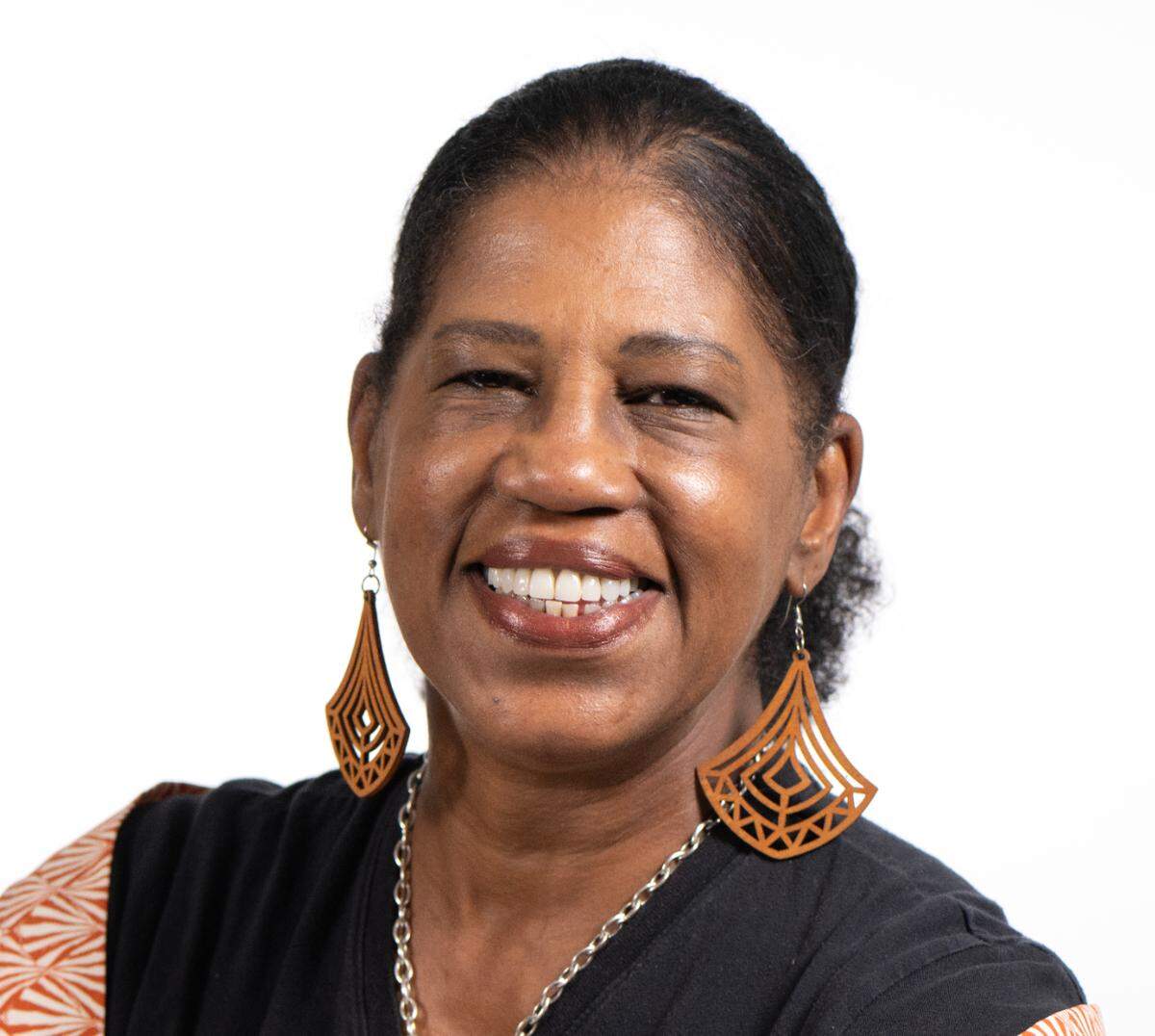
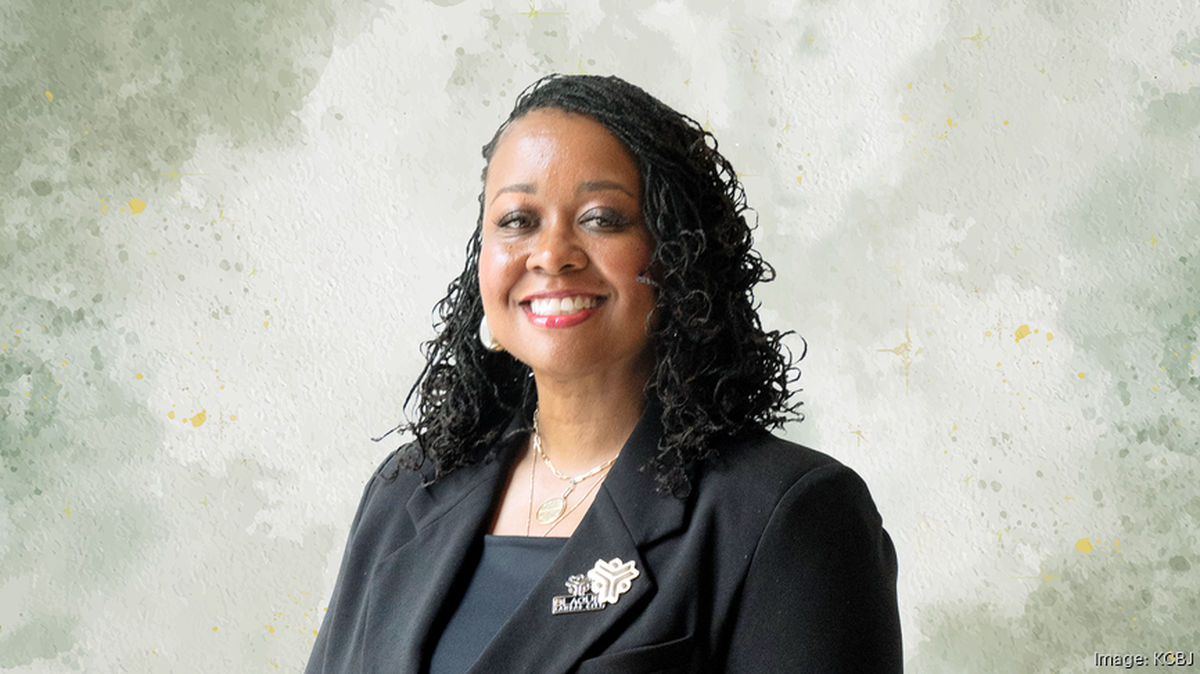
The Star met Coketha Hill, founder and CEO of BLAQUE, for the first time, at her offices in the Shops on Blue Parkway shopping center. A petite woman with a small voice, she sat comfortably at the head of the table in the office boardroom and spoke powerfully about her passion for supporting public education in Kansas City, particularly in the city’s urban core.
BLAQUE, which stands for Black Leaders Advancing Quality Urban Education, was founded in 2020 as a grassroots movement of parents, teachers, young leaders, and advocates, with the goal of improving academic, economic, and social outcomes for children, particularly Black children, as they are the majority student population in the KCPS district.
Hill told The Star that the root of her passion sprang from her own experience attending KCPS during a time when the district sought to desegregate schools through busing efforts. Hill recalled leaving her neighborhood school, where she was surrounded by other children and teachers who looked like her, to attend school on another side of town, where she was in the minority.
Her journey through education mirrors that of many other Black Kansas Citians who, as adults, have chosen to dedicate their careers to improving public education in classrooms and boardrooms in Kansas City in some way. Hill is doing exactly that, and that’s why The Star invited her to join us in the studios of KKFI radio, where she recently spoke to Mará Rose Williams, The Star’s assistant managing editor for race and equity. That interview, with minor editing for space and clarity, is published here in a question-and-answer format to share Hill’s authentic voice.
Meet Cokethea Hill:
The Star - We’re here to talk about education. But before we do that, tell me a little bit about yourself. Are you originally from Kansas City?
Hill - Yes. Born and raised in Kansas City. Grew up on the east side of Kansas City. I love Kansas City. I love everything about being here. The good, the bad, it is all a part of our story. And I love the fact that people in Kansas City are kind. People in Kansas City want Kansas City to win and to be present in it on a world stage, as a world-class city, because that’s what we are.
So where did you go to school?
Well, you know my journey in education actually intersects with the school desegregation case that you hear a lot about, in the 80s. So I grew up on 34th Street and South Benton Boulevard. My neighborhood school was Sanford B. Ladd, which I’m so glad is getting some redevelopment support. And when I went to that school, my brothers walked me to school.
I used to have my bike. And then the desegregation case came along, and I was bussed from Sanford B. Ladd in my neighborhood to Northwest Creek, which is in Independence, which was a part of the Kansas City Public Schools back then. It’s now part of, I think, Independence. So, yeah, North Rock Creek/Korte, North Rock Creek, and then also Van Horn (high school) were part of Kansas City until they annexed out of that.
What was that like, being bussed, I mean? I think people hear a lot about, you know, bussing, but we don’t often get a chance to talk with someone who was a product of that. Do you remember some of the things that you felt when you left your neighborhood school to go to Independence to school?
Yeah, I think as a third grader, the memory that I connect with most was, why can I not just go to the school down the street? I’m the youngest of eight kids, but I have six brothers. My brothers would, like I said, bring my bike and ride my bike back home.
Everyone in my neighborhood went to school together. So it made for, you know, really great weekends and playing with kids who went to school with you. And, everyone at my school at the time looked like me. The only thing I remember feeling when I went to North Rock Creek and Korte (Elementary School in Independence) was feeling othered.
It was the first time that the majority of the kids did not look like me. I felt a sense of, like, maybe not belonging here. Those are words that I can put to it a now, but the earliest memory I have is wanting a black teacher. Miss Singleton. Miss Wesley, Miss Gibbs, Anita Gibbs, were black teachers. And I can remember those. If you ask me who were the teachers that I had, (at Ladd) I cannot recall those, but I remember the teachers that I wanted.
So, before you left the neighborhood school you had black teachers.
Yes.
And then when you went to the school in Independence, you lost that?
Yes.
So, do you think something was lost in that? We have actually heard Kamala Harris talk about this. She too was bussed. I’d like to hear your perspective. What do you think we lost in our communities when we went to bussing and we took children like yourself out of their community with the closeness that you had with those black teachers who became more than teachers for a lot of the kids.
I think sometimes because kids are so resilient that naturally you find a way to make friends, to create communityin spaces that may not be your own. We don’t often think of it as what we lost, right? It was just like a natural transition. So I don’t remember feeling that I lost something. Now certainly as an adult, looking back, I can say, oh, I remember these incidents that happened at my school and I can add a different framework for it.
But what I remember is I just didn’t feel like I belonged and, I didn’t go to school with kids on my block. So I would come back and I would talk to them about what school was like for me and what school was like for them, and I didn’t understand why I had to leave my neighborhood school.
But I also remember how different the facilities were. Much like they are today. When we talk about KCPS (Kansas City Public School) bond, like the facilities were very different there. The playground was different. I remember those things.
And there were black students there. And certainly, I think, it played into more of my love and what I gained from going to Lincoln (College Preparatory Academy).
So, I’m guessing that education was something that was important in your family growing up. Can you tell me about that? What was that like for you?
Yeah, I think like many folks my age, you know, you hear education is the one thing that no one can take from you. If you go to school and work hard, the sky’s the limit. So much will be available to you if you, you know, take education seriously. For me, I think there was an added layer because my parents were born in 1934 and 1938.
So I’m the youngest of eight kids, and there’s ten years between me and my next sibling. So when my mother is talking to me about the importance of education, it’s because she grew up in a segregated school. There were certain roles carved out for her because she was a woman and so she saw an opportunity for me and my sister to do something different that she didn’t have the opportunity to do.
So that kind of seriousness about education, I think she was thinking early about choice, right? This is a different opportunity for you to have more exposure. I think that’s how she might have internalized the switch from, you know, Sanford B. Ladd to North Rock Creek/Korte. And certainly when I got to Lincoln. I was very well aware of the history of Lincoln. I had siblings who went to Lincoln.
So this was the first, you know, and the only African American school. It was excellent. It’s a IB (International Baccalaureate ) program. You’re going to go to college. Like, some of those messages are just wrapped into Lincoln. I didn’t know about taking the test to qualify to get in, and certainly going to Lincoln from sixth to 12th grade, all of the kids look just like me. They had family structures like me, and grew up in neighborhoods like me. So I didn’t see Lincoln as elitist. I saw it as an opportunity to return to my community.
That’s really interesting. Earlier you mentioned the names of certain teachers.
Yes.
Although you were in third grade when you went into the school in Independence, I still want to ask you, were there some teachers either in the school in Independence or, before you went there, or at Lincoln, that particularly inspired you?
Can you recall a situation or circumstance when a teacher either said or did something for you where a light bulb went off about who you are as a young lady, and what you want to do with your life?
God has given me just so many riches in people. Like, when I think about North Rock Creek/Korte and Miss Singleton, who, was a third grade teacher, Miss Lesley, I believe, was fourth grade. Miss Anita Gibbs was in fifth grade. Even though I wasn’t in their classroom, I know that they knew me, that they made time to talk to me, to see me.
That’s why I remember their names. They built relationships. That’s not to say that the teachers I had didn’t invest in me. It just did not resonate. It didn’t stick with me. When I got to Lincoln, I felt a sense of pride. Right? It was like I see teachers that look like me.
When I think about Helen Ragsdale, who I had the privilege to serve on the KCPS (Kansas City Public Schools) school board with. Miss. Bluford; we used to call her “Bluford Bear” because she was so tall and towering. Teresia Gilyard was my vice principal at Lincoln. And later, when I graduated from college and went back, to work at KCPS, she was the principal at EC Meservey. So she gave me my first job in education.
I think about just the circle of life and how there were so many educators along the way.
For me, tragedy showed up. I lost my father. I lost a parent during my journey at Lincoln. And I was just like, I’m not getting ready to go to college. I’ve got to get a job. My father was the breadwinner. Like I said, by the time I got into high school, my parents were in their 60s. Right? So it was like, I’m just going to get a job. And I did. I got a job at AT&T. I had a full-time job during my senior year.
Barbara Ponder was my counselor, and she was like, oh, everyone here takes the ACT Cokethea. Everyone, at least applies to college. You don’t have to go. But I think she knew that if I did those things, I would get excited about going back, or continuing my education. People from our school, faculty showed up at my father’s funeral. It’s hard to express, but for me, Lincoln was an extended family.
Right.
And so, you know, a lot of people talk about Lincoln, but I’ll always stand here and say Lincoln had a really great way of inspiring you to go to college. It was like, if you just show up with the grit, and the tenacity, and the determination, we will help you with everything else. Lincoln just helped supported you to want to continue your dream. So, that’s what Lincoln means to me.
Dr. Hill (PhD), obviously you did go to college. And it is obvious, listening to you, about the passion that you have for education and where your love for it comes from. So take us up to you forming BLAQUE.
One thing I do want to say, because I think sometimes people can look at who we are today and think that we were always a model student. Here I am with a PhD, right? But when I left Lincoln, I went to an HBCU and had a wonderful time there, but was not focused.
Which HBCU did you go to?
I went to Southern University in Baton Rouge, Louisiana. A lot of people who graduated with me, the class of 97 at Lincoln, we experienced a lot of loss. Not only just my deeply personal loss of my father, but we had administrators who passed. We had students, my best friend at the time, Gesina Dewberry, died of ovarian cancer.
So in some ways, I was like, hey, death has played a major role. I’m ready to check out. And I checked out to Louisiana. I went to Southern University and had a great time, but I wasn’t a model student, right? But it was still about that love and the people in my community. They said, hey, just because you made a mistake here, maybe you used to getting the grades that you got in Lincoln, that doesn’t mean your college career is over.
So people still poured into me to help me continue on. So I go on and graduate. And I worked at, Division of Youth Services. I worked at Northwest Regional Youth Center. It is the most secure care facility for boys that are sentenced by a judge to serve time.
Now, at the time, Missouri was a blue ribbon state in terms of their rehabilitative approach to juvenile delinquency. So even though they were sentenced by a judge and there’s bars on the door and they cannot leave, and they are there for a certain amount of time, it still is bunk beds. There are no jail cells. You have counseling.
And as I began to watch the students that were coming in, I’m 22, 23, there are kids who are 15, 16 who cannot read or write, who are not, you know, progressing at the level that I had. I had a beautiful experience. And so that was my first time to say, man, the experience I had at Lincoln, doesn’t everybody have that?
So that was one thing that kind of always, you know, sat with me around people having different experiences with education. But I was certainly understanding that they need a level of support. So, fast forward from there. I am working on the Obama ‘08 campaign, and I am so happy about, you know, working in community and voter registration.
I’m guessing the experience propels you somewhere.
Two seats became available on the Kansas City Public School Board. Two people stepped down, and the people that I had encouraged around voter rights and getting out and selecting a candidate, and being proud of your community, were now looking at me and saying, “Hey, Cokethea, how about this?” And so I say, you know what, why not? This is my school district. I’ll go back and I’ll serve in a different way.
I was appointed to the Kansas City Public School Board. I was on that board for some time. Fast forward, that same thing happened to me with City Council, still working in the community around housing initiatives, around education, building community with people to help them realize the best opportunities that they want for themselves.
I got a chance to be on the city council, right? So I get to see this city that I love and education through so many different lenses.
You get a chance to get a little bit behind things and really see how, as they say, how the sausage is being made.
That’s right. And there were some really great things, and there were some surprising underbelly type of issues that emerged throughout that process. I have always been, like, just blessed to work in an organization that will allow me to learn, that will allow me to find my passion. The one thing I just could not turn my brain off about was all of this investment in education and yet Black kids are still getting the worst outcomes. It’s not commiserate with the level of philanthropy that’s happening in education. Why is that? Why are people not disaggregating race, you know, publicly,to talk about how student groups are faring in education? And I know everybody talks about Kansas City being Kansas City nice. But for me, I felt like until we really understand the root causes, how can we solve it?
How did you come up with the term BLAQUE?
BLAQUE, the logo sat on my phone for about two years. You know, I had graduated, I had a child, I had a house, and I was thinking, there’s like, absolutely no way that I can give up this really great job with a really nice salary that lets me do all the things I love, and just leave that behind to go follow my passion.
You said the logo sat on your phone. Had someone already designed it?
Yes, On Fiverr. We are just really big on like visualizing. I need to see it. That’s my strength, my superpower and my handicap.
If I can’t see it, it’s hard for me to wrap my mind around it. And, as the world would have it, all of us took a pause with Covid, the entire country. And that pause gave me an opportunity to really think about my life, the kind of impact that I wanted to have, the kind of work I wanted to do, the type of legacy, and what I want my son to know me by.
I wanted him to see my love for community, my love for kids. I wanted kids that looked just like him to have the same type of opportunities, and they not be different because Ihave amassed, you know, this education or a great job.
And so what did you create? Tell us what you built. You took this idea, turned it into a dream, and turned the dream into an entity. To do what? What does BLAQUE do?
Yeah, BLAQUE is unapologetic about working with people, with schools and communities to totally transform the educational outcomes of students who are the most marginalized in a system. In a nutshell, that’s what we do. We invest in people. We invest in schools. We invest in communities. At the time, I said, I want to tell the truth about what’s happening to Black kids in this educational system, and not as a way of pointing fingers at who’s to blame.
But this is the challenge. And what are we going to do as a community to save our babies? That was literally what I had on my heart. So much of the name BLAQUE came out of this. I wanted to be, unapologetic about really focusing on Black kids. Not all kids, not the most at risk. I wanted to name it.
I wanted to say in our educational system, we all see this data. We all know the data, not just in Kansas City, but around the country. The way that schools and race intersect provides like these detrimental outcomes for our babies. What can we do about it?
Why was it so important to you to name it? Was there some concern that if you don’t name it, that whatever it was you were trying to do, would end up with people having it spread too thin?
Yeah. No, I was a mom. I had a little Black child. He was born in 2013, I launched BLAQUE in 2020. He was entering into the school system. And as I was going through my doctoral program. In a lot of research that you read about education and outcomes, it meant that kids who look like my son are not doing well in this system. It was deeply personal for me because I’m a single parent, right? I’m a black woman. He is a black boy. And this educational system in the urban core, and what the data says that he will likely produce the predictive analysis of what he will likely become, I knew wasn’t the narrative for my baby. And I knew it wasn’t the narrative for my neighbor across the street. And the only difference between me and my neighbor is that I had a PhD and I had a master network, and I worked at some of the top organizations in Kansas City, so it gave me agency.
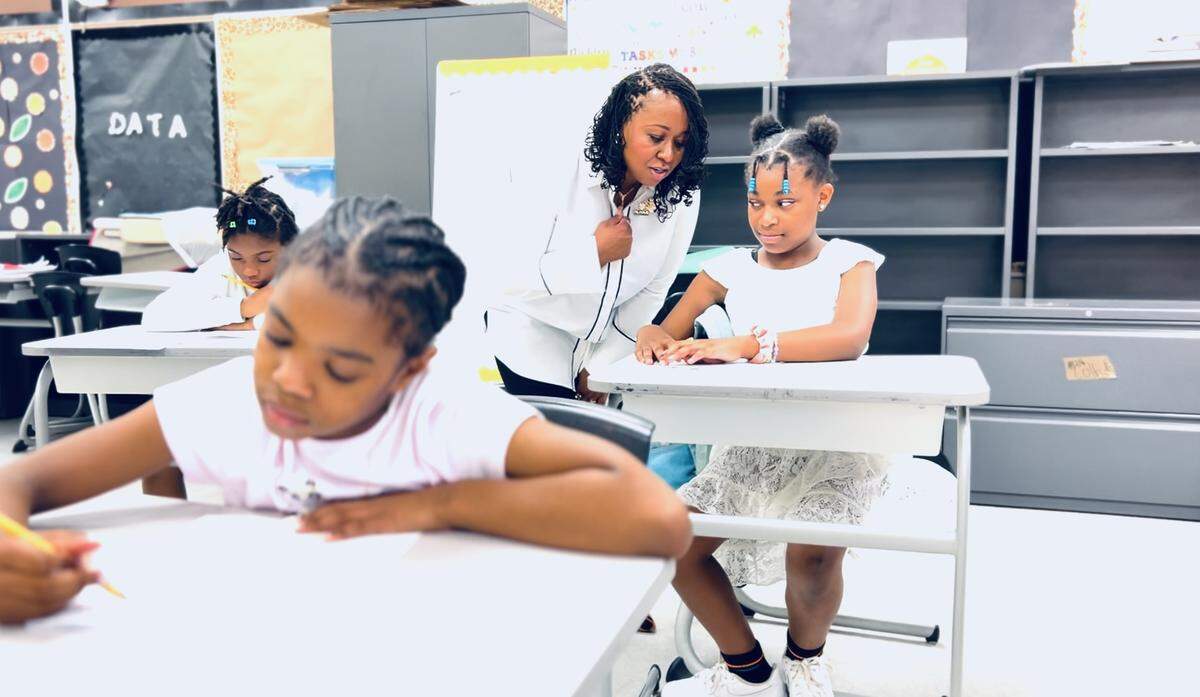
I knew how to navigate the system, but I wanted the same things that my neighbor wanted. And because she did not have an advanced degree, she did not have the social capital or human capital network to build from, to pull from, she didn’t know how to navigate the system the way that I could.
So you might as well do it for her and others like her.
Yeah. We all got to come together to educate each other. We’re going to work together to create the spaces we want our kids to have.
Right. So as you have this on your heart and you have the ability to do it, and you know what you want to do, what is it that you find? Do you find some kind of solution? What did you find out?
Yeah. Having worked on the Obama ‘08 campaign, I learned a lot about organizing and one of the tools of organizing is how do we cut an issue out of a problem? So if you think about, like, world hunger or poverty it’s so big, right? And education is the same way. It’s huge. But I was like, what actual problem is there that I want to address? One that I can get my hands around? And there is this, saying, that’s pretty popular, that if you don’t have a seat at the table, you’ll be on the menu. And if I was looking at the data, I was like, hey, Black kids are on the menu.
And when I start looking at who’s in the seats around the tables of power and policy change, they didn’t often look like me or my son or people from my community. So BLAQUE, the reason why it is a 501-C4 is because we knew, or I knew at the time, that in order to shift policy, we need to have a seat at that table, and that table for the district is an electoral table. That seat of power for charter schools is appointed.
And so it really started out with me saying, I want to tell the truth about what’s happening in schools. I want to talk about the data in a way that we disaggregate it by student groups. We have conversations that will build with people and not tear people down. And then we absolutely need to get into the seat of power to make real change.
So, one of the things that you do is find people who are willing and capable of being leaders, but maybe don’t have the direction to get in the seat, and you help to guide them, to get them ready to do that work.
Yes, that’s part of it. We, have a saying that we’ll never ask you to do something that we aren’t prepared to either walk with you through or coach you up to do it. Nobody wants to feel tokenized, like, nobody wants to be that person on the board that doesn’t have the skills, the competencies, and abilities to actually legislate real change.
When we started talking to people in a community, they didn’t know what the role of the school board is or what are the levers that a school board can pull, you know? How do you run for office? How do you become a school board member? So much of what we wanted to do is say, hey, before we can ask people to step into these roles, what does the training look like, what type of skills and abilities, and then what network of people for support do they need?
BLAQUE is in a pivotal moment. There are some new things on the horizon for us.
What are some of the new things that you’re doing? What about administrative. Do you help guide people into administrative positions because policy is reflected there as well.
Yeah. When we first started at BLAQUE we had three pillars, right? It was organizing and advocacy. How do we educate people on what’s happening in our schools to all kids? But specifically Black kids, that was super important to us. The second was leadership development. If you don’t want to be on a school board, what are the ways that you need to show up and advocate for your child?
So we talked about two A’s. Little A advocacy is my child, my kid’s school. You know, my neighborhood. Big A advocacy is what we try to graduate you to. That’s all kids, all schools, all systems. That’s where we want to help people and find on ramps for them. Most of the time, it is at the school board level, or working in the school, or providing wraparound support for kids.
And then the third was the electorate. And, I had the experience of running for school board and losing horribly, not because I didn’t care, didn’t have the passion, and I had already been in the role for two years.
I wasn’t able to raise the institutional dollars. I didn’t have the network. I didn’t have name recognition. So I knew from my own lived experience that we needed to provide financial support there. And we did really great. In three years, we put 36 different people on 13 different school boards.
We won three of our four school board elections. That happened every two years.
We bring awareness to how people can serve on a school board. We do 3 or 4 months training on that, and then once you get elected or appointed, we provide a new school board member boot camp. We have a seven-month life fellowship to help you walk through understanding budgets, understanding policy, understanding governance, superintendent evaluations, the importance of talking to your constituents in your community.
You are there on behalf of people and so you cannot help navigate the change that people want to see if you’re disconnected. So, so much of that work was there. And we stepped back and said, oh my God, we’ve done great things. Look at us. Black is out there.
People know us. We’ve got people on our school boards, we’ve got people on charter boards. But the needle was not moving for kids in the way we wanted to see. So we took a step back in time to our community and was like, what is the next iteration of our work? And when we talked to superintendents and school leaders, and we looked at the quality of schools in our community, we said we can’t just talk about how bad schools are performing, we’ve got to be solution-oriented.
We’ve got to start raising money so that we can improve quality outcomes or support new schools that want to cater to a particular niche that we don’t have in our school system.
Right. Because it does you know, good if you get people on boards and don’t provide them with the support and they fail down the road, and they’re not able to to function in the position that they’ve acquired. You talked about having a seat at the table. My mom used to say, “if you have a seat at the table and you’re wearing a muzzel, you might as well be outside.”
That’s right. Yeah, I like that.
I’m so glad to hear you say that you’re following the outcomes. What is all of this work that we’re doing. How are children performing. And if they’re not performing better or not at the level that we would like to see, then what can we do to make that happen?
So you’re adding some things.
Yes. That’s the next iteration of our work. And it’s not that we still won’t care about organizing and advocacy, We’ll always double down on leadership development, and we will always be responsive to issues that happen in the community in which we have resources that can help support that work. Right? But for us, we started to say, all right, what type of analysis do we need to do?
What does quality actually mean? So many people talk about this school is high quality. This school is low quality. But what does that mean? And historically in Kansas City, that definition has been created by funders, grass tops. Right? And so we said, yeah. But has anybody ever asked parents what are your hopes and dreams for your kids? What role does the school have in helping partner with you to help you fulfill that for your child?
What does safety look like when you go to choose a school? What things must be present? So we’re investing in a national firm that will start in August. They will be having those type of conversations with community members and educators and teachers and family members and other stakeholder groups so that we can come up with a more robust definition of what a quality school means.
That’s the community route. But we also understand that we are in a system that is very, metric based, based on your annual performance on a standardized test. Right.? And we’re not going to ignore that. And I will say, and I’m not saying this because you don’t know, but just for listeners that may not be aware, schools what shows up at their doorstep are oftentimes a microcosm of what’s happening in our broader community, which is systemic.
It has been orchestrated over time. And sometimes schools get a bad rap because we’re like, you’re not producing these outcomes when many of the kids that come into the school buildings are coming in with a lot of live challenges around housing, around, economic instability, around, just parents being not able to fully participate because they’re working two and three jobs.
Yes, and because those things you’re talking about are also generational. Their parents may have experienced the same things too. So yeah, it just continues to roll over on itself. Right.
Yes.
This keeps happening unless you break that cycle somehow.
That’s right. And I mean, really, when you think about how schools are funded, a large portion of that is local property taxes. So about 75% of the school district’s budget is local property tax. So when you’re driving through the boundaries of Kansas City Public Schools and you see so much blight, you see abandonment of housing, you see infrastructure that’s not put in place. You see the East Side deteriorating. That is the coffers from which a school district can pull from.
Now, if you go drive in Leawood or Overland Park, they are able to tax and provide additional resources because they have the wealth there. They have the home ownership there. And so when we think about that, it’s just inherently disperant because of how schools are funded.
And we can unpack that in the docuseries. But know that we cannot continue to think that just because we fund schools with property taxes, that that is actually going to meet the needs of a growing population of kids who are living in concentrated poverty. So I just want to name that, because we also very much hold schools accountable and say, in spite of that, they are with you eight hours of the day.
And we expect that at the end of a year that a student has growth. That means that you’re teaching, your school environment, culture, and climate has improved the outcomes. And we often don’t see that.
I’ve heard superintendents in urban districts talk about this, often, and argue also with the state educators about this, about the way they’re measured.
Yeah. Growth is not weighted as heavily as it should be. I think that schools also can think through how they evaluate teachers based on the growth. Right? So if I’m a third grade teacher and this kid in my classroom is reading on a kindergarten level, but in one year I was able to get them to the second grade level, that’s two years of growth, even though they would not be on grade level as assessed by the state annual test.
But they should be like, hey, you know what? You are a value added. In fact, I think this was called value added about teacher evaluations. The data and the research tells us there are really two factors that contribute to a kid being able to achieve at a high level, that is the teacher and the principal. If you have a high quality teacher, you’re able to mitigate some of the learning gap. And if you have a really great principal, and that’s because a principal is the instructional leader.
They set the culture and the climate, and they’re making sure that they’re holding their teachers accountable. So I think that there’s a lot that we can do in education, but we are often attacked so much that we are scared to share data about what’s happening. And we talk in education about in spite of all of these things, look at these great things we’re doing.
And I think that, in our ecosystem, we need that. But we can’t be off the hook. And sometimes we situate performance as if it’s something, endemic to the child. Like, well, the kid didn’t know. This is the school’s outcomes for kids who attend. So when BLAQUE talks about outcomes, we don’t say, oh, well black kids…We say this school is producing outcomes that are not commensurate with this vision statement.
Now, what does that mean? Because people will say, does that mean you’re going to close schools?
Yes, they will.
No. We are not in a position. We’ don’t close schools, but what we can do is advocate for those that should close.
We want to make big-level investments in schools that have the right culture, the right leader, the right parent engagement.
You know, it always puzzles me, because Kansas City has some public schools, charter, and district schools that are doing amazing work and getting amazing outcomes. And I have always wondered why that is not been duplicated in school, after school.
Yeah. Programs, staffing, those things can be duplicated. But we’re not making widgets, right? It’s not an assembly line. These are kids. And these kids are entering with their own lived experience, beliefs, knowledge, and abilities. Right? And the goal of a school is to be able to meet every kid where they are and give them what they need.
Equity gets a bad rap, but that is really what equity is about. It is not giving everybody the same, because we don’t need the same. So I think that often times people replicate programs, but the kids are different,
The other thing is, you know, nobody is signing up in droves to become a teacher. I’ve got some thoughts about it. That because it is a female-dominated industry, folks think we should just care and not get paid.
So, many of our schools are in a staffing crisis, and we have teachers and educators who are burnt out and they are leaving this profession that they care deeply about because our community often doesn’t respect it to the level that it needs to be at the state or federal level.
Most teachers I talk to love the interaction they have with their students. That’s what they got into it for. But what is it that we need to be doing to make this job more appreciated and to keep these teachers from leaving? What do they tell you they need? Yeah.
So, what are we hearing? We’re hearing, “I love my job. But I also have student loan debt. I can’t make $45,000, $50,000 stretch. I have dreams of buying a house, of having a family, of, you know, living in a community that’s thriving. I just don’t see a lane for me here.” Or, “In order to advance, I have to go back to school and get a different certification. Another degree. And so that means taking on more debt, but it’s not actually commensurate with the money that I’m going to make.”
So we’ve got to shift the narrative. We also need to think about how we reduce their debt. How do we help them with credit and investments, and home buying, and all those things that also make you feel accomplished when you’re working?
So, you will see BLAQUE be a part of investing in schools, in significant dollar amounts.
It isn’t just about BLAQUE and education. It is how can we support the arts? How can we show up for violence prevention? How can we support things that are happening in our community around housing?
Those aren’t things we invest in, but we understand that schools are not in silos. They are part of a community fabric. So we too have to be part of that fabric.
You said it’s not just about education, but it is. I mean, these schools do not exist in silos, right? And they are only as strong as their community is.
I’ve had the opportunity to travel around the country to look at schools, district schools, private schools, charter schools, some doing amazing work, some not so much. But what I haven’t been able to find. And if anybody out there has an example, please email me. at chill@blaquekc.com and point me in the right direction, but I have not seen a world-class school system that is nestled in a completely impoverished community.
You will find Lincolns and other bright spots of a school doing amazing work. But this idea that we can have a system of world-class quality schools and have it be completely embedded in a community that is disinvested in, that has been abandoned, that has high crime and violence, is not going to happen.