A tale written in stone at new KCI airport entrance might change your view forever
READ MORE
New KCI terminal
Kansas City International Airport’s new terminal will open Tuesday, Feb. 28. Here’s what to know about the opening and flying through the new space.
Expand All
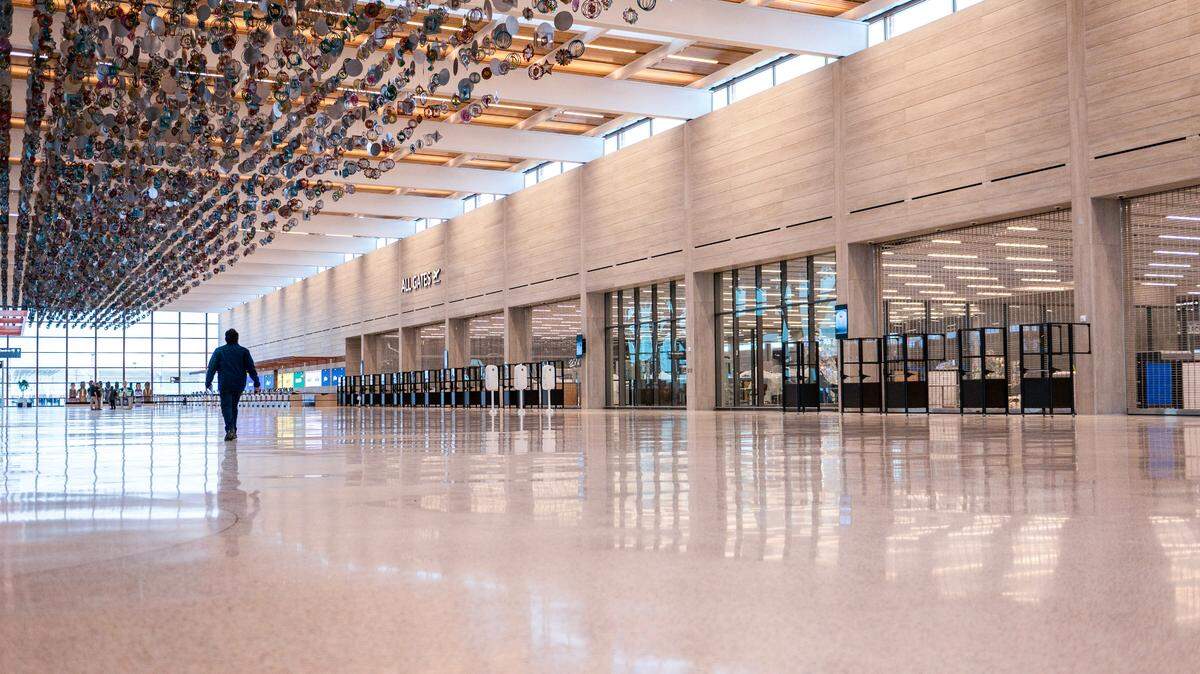
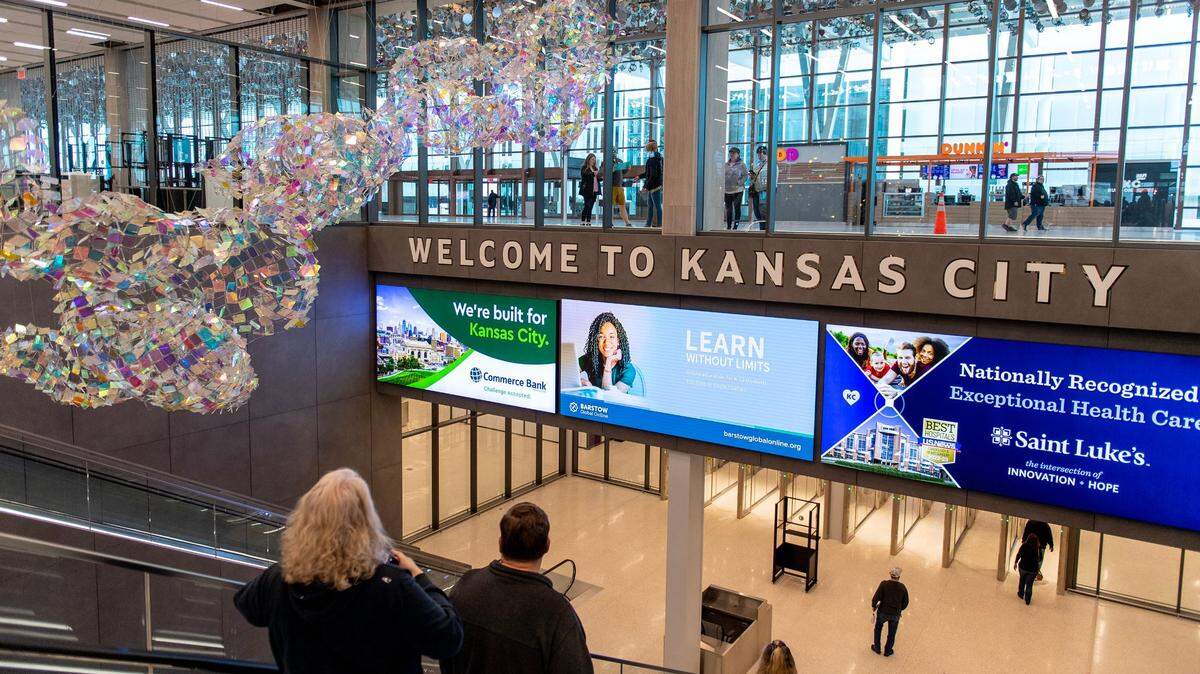
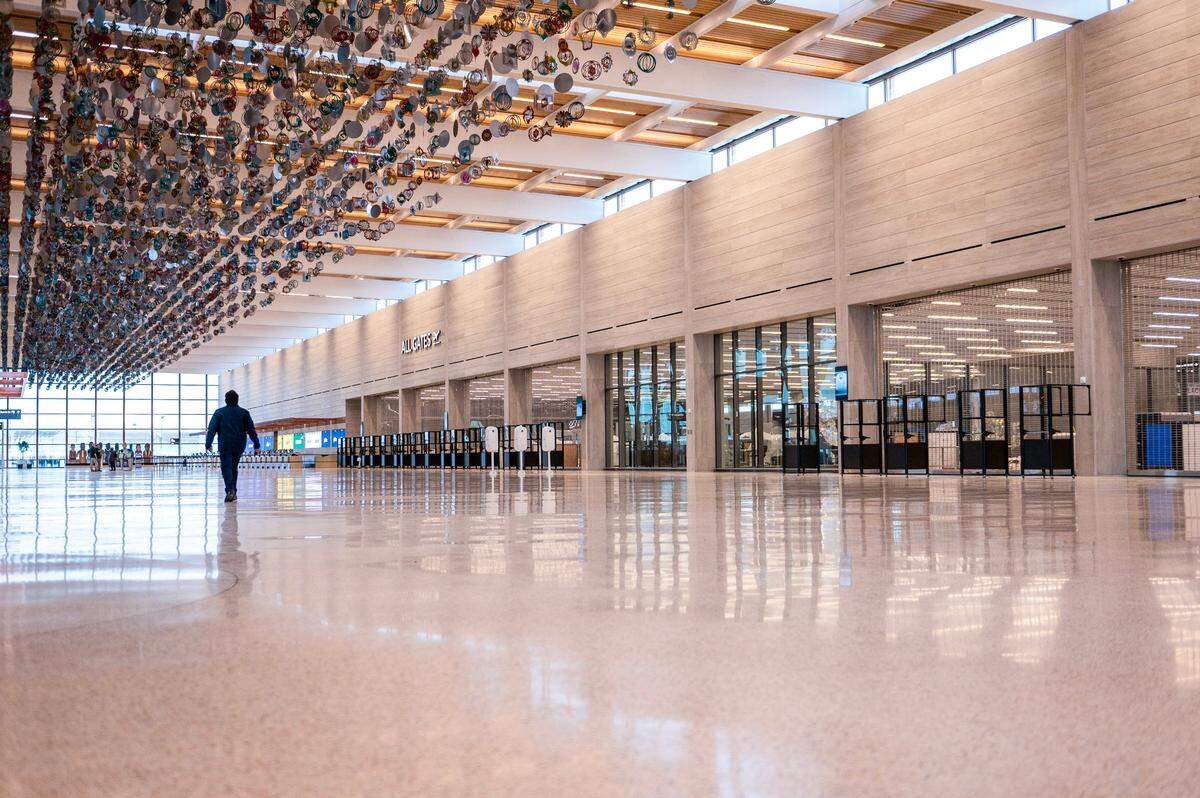
Step into the expansive new terminal at Kansas City International Airport and there is so much for the eye to take in — the light, the glass, the shimmering mobiles and natural wood overhead — that it might be easy to overlook the towering wall of stone in front of you.
Pale gray, looking from a distance perhaps more like wood panels than the honed limestone it is, it stands 30 feet high and extends 732 feet across the full length of the terminal behind the check-in area. As architectural features go, it looks so functional that, if it conjures any thoughts, one might be, “Uhm, where’s my gate to Albuquerque?”
But if you knew the whole story, instead when you enter the $1.5 billion terminal that opens Tuesday, you could just as rightly think of the Napoleon gray marble walls as part of the New York Stock Exchange.
Or the classic columns of San Francisco’s 1924 Palace of the Legion of Honor, or maybe all the steps of the White House rising in a curve to its south portico, or the stone inside and outside of the Missouri Capitol building.
You might even think of the walls at the CIA, the president’s building at Dartmouth College, or of Ma Barker, the ruthless gangland matriarch of the 1930s that FBI director J. Edgar Hoover once described as “the most vicious, dangerous, and resourceful criminal brain of the last decade.”
That’s because all of them arose from the same place in the depths of the Missouri Ozarks, between Ash Grove (birthplace of Ma Barker, population 1,500) and Walnut Grove, where earthly compression some 350 million years ago — eons before any dinosaurs like T. Rex or Gigantosaurus thundered atop the planet — created the limestone installed at the White House, the Stock Exchange, and now the curtain of stone at KCI’s new terminal.
All the stones, quarried in their time, came from the Phenix Marble Co., an enterprise with a singular history of its own. It is one of creation, demise and — as its name, taken from the mythological bird, could not more aptly suggest — one of rebirth after decades of being shut down and shuttered as a “ghost town.”
“I didn’t know what it was at first,” Nadège Ngomsi, 33, of Kansas City said of the wall. A doctoral student in economics at the University of Missouri-Kansas City, Ngomsi visited the terminal on Valentine’s Day as a simulated “passenger” during the terminal’s test run. “But then when you walk in,” she continued, “it makes you think you’re part of something greater than you. I’m blown away. It’s ineffable.”
From the Ozarks to KCI
To understand the uniqueness of the gray stone wall — hung in 10-foot panels, its grain-like waves and lines created over millions of years — it is best to start at the beginning.
In Missouri’s Ozarks, 180 miles south of Kansas City, 54-year-old David Karr stood high on a ledge of the Phenix quarry, a flat basin 10 acres across and cut deep into the rolling landscape just outside Springfield. Limestone walls rose 12 to 40 feet high.
Sounding like a jet engine, the high-pitched whirring of a saw, a diamond-impregnated wire, sliced through stone, piercing the air.
“Over there,” Karr, the president of the company, said of a far corner of the quarry. “The Kansas City block came right out of there.”
He stepped into his Ford pick-up truck, then trundled up, around and down into the quarry and pulled within yards of the stone: 350 million years old, pale gray and cut smooth to the palm.
“This stone, you know, when it’s dry, you can’t see the beauty and character in it,” Karr said. “When you get the water going down, now you start to see the gray color. The beauty of it turns out.”
Water poured over the side, cooling the frictional heat from the wire, whirring at near 100 feet per second.
As Midwesterners well know, limestone is nearly everywhere in the region.
Dave Bridges, a geologist with the Missouri Geological Survey, part of the Missouri Department of Natural Resources, explained it was deposited layer upon layer as sedimentary rock when much of North America, including present-day Missouri, was under water, beneath a shallow sea.
The period, the Mississippian, was hundreds of millions of years prior to the dinosaurs. It was the “Age of the Crinoids,” when the sea teemed with marine creatures related to sea urchins, sea cucumbers and star fish. Phenix workers still find the ghostly images of prehistoric star fish embedded in the rock.
Crinoids (some 650 species still exist) are also known as sea lilies, because they look like flowers, growing from stalks from the sea bottom.
“They’re actually an animal,” Bridges said. Their skeletons are made of calcite, a form of calcium carbonate, the foundation of limestone. “What the limestone is from is from the breakdown of those animals.”
Not all limestones are alike, with much of the limestone in Missouri being blasted out of the ground to create aggregate for roads and ditches, or turned into powered lime.
“Geologically speaking, we would say it’s impure limestone,” Bridges said.
Countless homes in the region and half the buildings at the University of Kansas, Kansas State University and halls at the University of Missouri-Kansas City are made of blocks of such limestone.
“The more impure stuff, if they’re using it for houses or foundations, it’s probably made from the local limestone right there,” Bridges said.
The Missouri stone used for the airport? It’s different.
A stone of superior quality
Rocket forward to the year 1884 where, south of Springfield, workers were exploding dirt and rock into the air to make room for a spur for the Kansas City, Fort Scott and Memphis Railroad. The blasting revealed a ledge of limestone that, later, would be discovered to be special for its purity.
An Irish immigrant, Patrick Mugan, bought the property in 1888 to run a lime kiln. Two kilns, looking like giant pizza ovens, including one with a rusted smoke stack, still stand on the property. By the end of 1888, Mugan sold the business to Kansas City real estate mogul C.R. Hunt, who put his wealthy friend and neighbor, William Chick Scarritt, onto the company’s board. In 1891, Hunt and partner Robert F. Harrison named it the Phenix Stone & Lime Company.
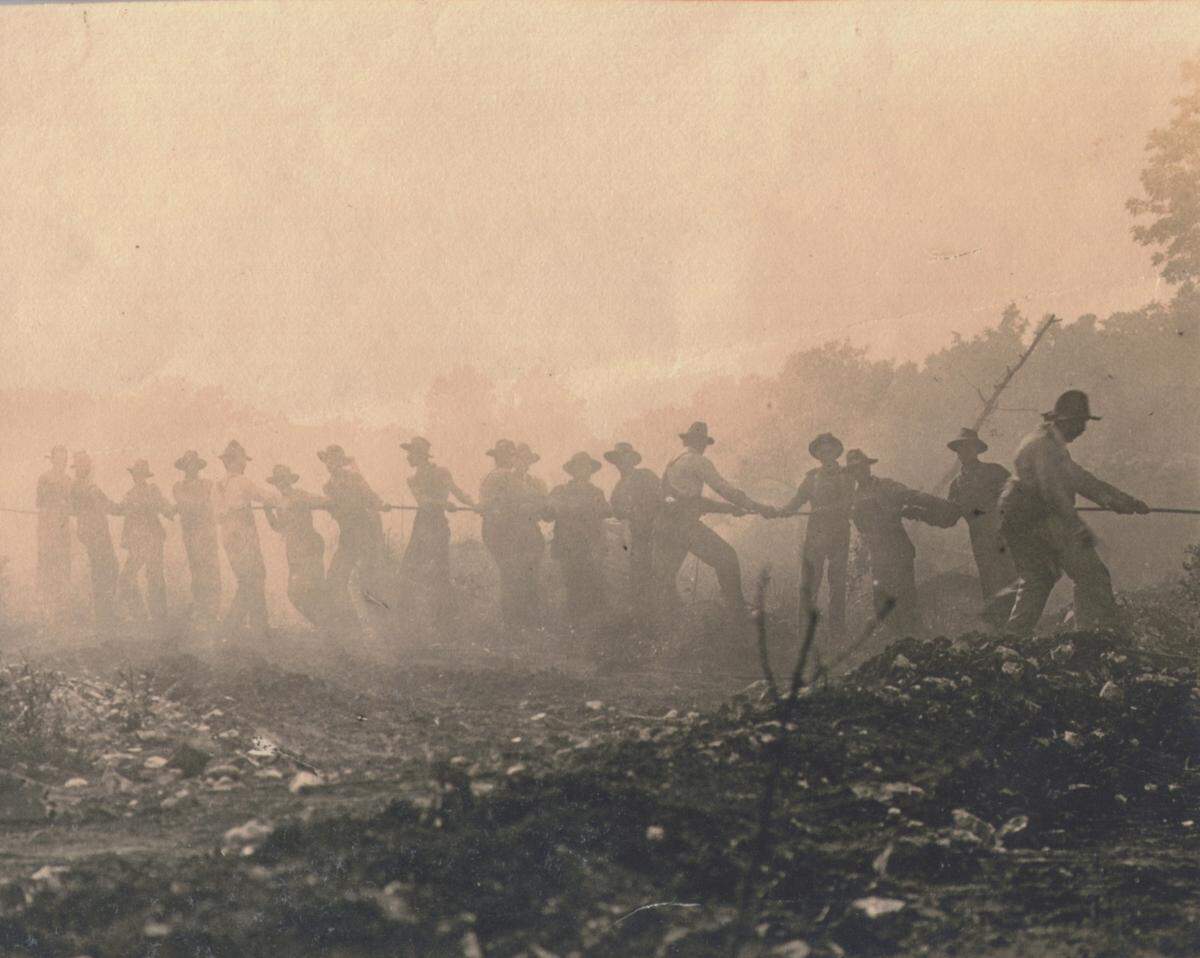
They were already prospering when luck struck the firm. In 1905, a Milwaukee stone finisher, W. J. Grant, discovered that the stone was so pure, held together so tightly in a dense structure, that it could be polished, taking a high “marble” sheen.
The term needs to be in quotes because geologically, by definition, true marble like that quarried in Italy or even in Georgia is a metamorphic limestone. That means it is a limestone that, under intense heat and pressure, has changed (metamorphosed) to take on a dense crystalline structure. Inside the rock, water and minerals have left all manner of waves and lines, known as veining, running through the stone in color.
The Phenix stone is a sedimentary stone that never underwent that heat or pressure. Although it is not technically marble, it is such a pure, homogeneous limestone that it is called marble by the industry definition because it can be cut like marble, it has the waves and lines and veins of marble. Whereas the vast majority of limestone could never be polished like marble, this can be given a dull shine or polished to reflect like glass.
“(W)hen Mr. Grant first polished the stone,” a 1925 story in The Star read, “he noted its resemblance to a French marble developed at the time of Napoleon. So he called it Napoleon marble.”
“Napoleon gray” became a trademark. Cut a slab vertically from top to bottom and the layers present an earthly timeline. The deeper the cut, the further back in time. Slice a block horizontally in a “Fleuri cut” — from the French word “fleur” for flower — and the stone reveals a snapshot in time and, sometimes, the fossils of the life that once was.
Grant bought a stake in the business.
Over the next 25 years, it boomed, with scant sense of a coming cataclysm.
In 1911, Phenix Stone & Lime became The Phenix Marble Company. The owners would change, too, to W.C. Scarritt and Mastin Simpson. In the first 30 years of the 20th century, Phenix would use the rail line running alongside the quarry to ship its building and polished stone to be part of heady projects nationwide:
The New York Stock Exchange, San Francisco’s Palace of Legion of Honor, the Nelson-Atkins Museum of Art, Los Angeles’s famed City Hall, Chicago’s Marshall Field Building and St. Thomas Aquinas Church, The Orpheum Theater in Omaha, the Scottish Rite Cathedral in St. Louis and Philadelphia’s Packard Motor Car building.
That doesn’t include the state capitols of Missouri, Nebraska and Oregon along with a score of courthouses, post offices and banks in states from California to Connecticut. Nor does it include stately homes, such as C.R. Hunt’s own 18-room Phenix stone house built for him at 3616 Gladstone Blvd.
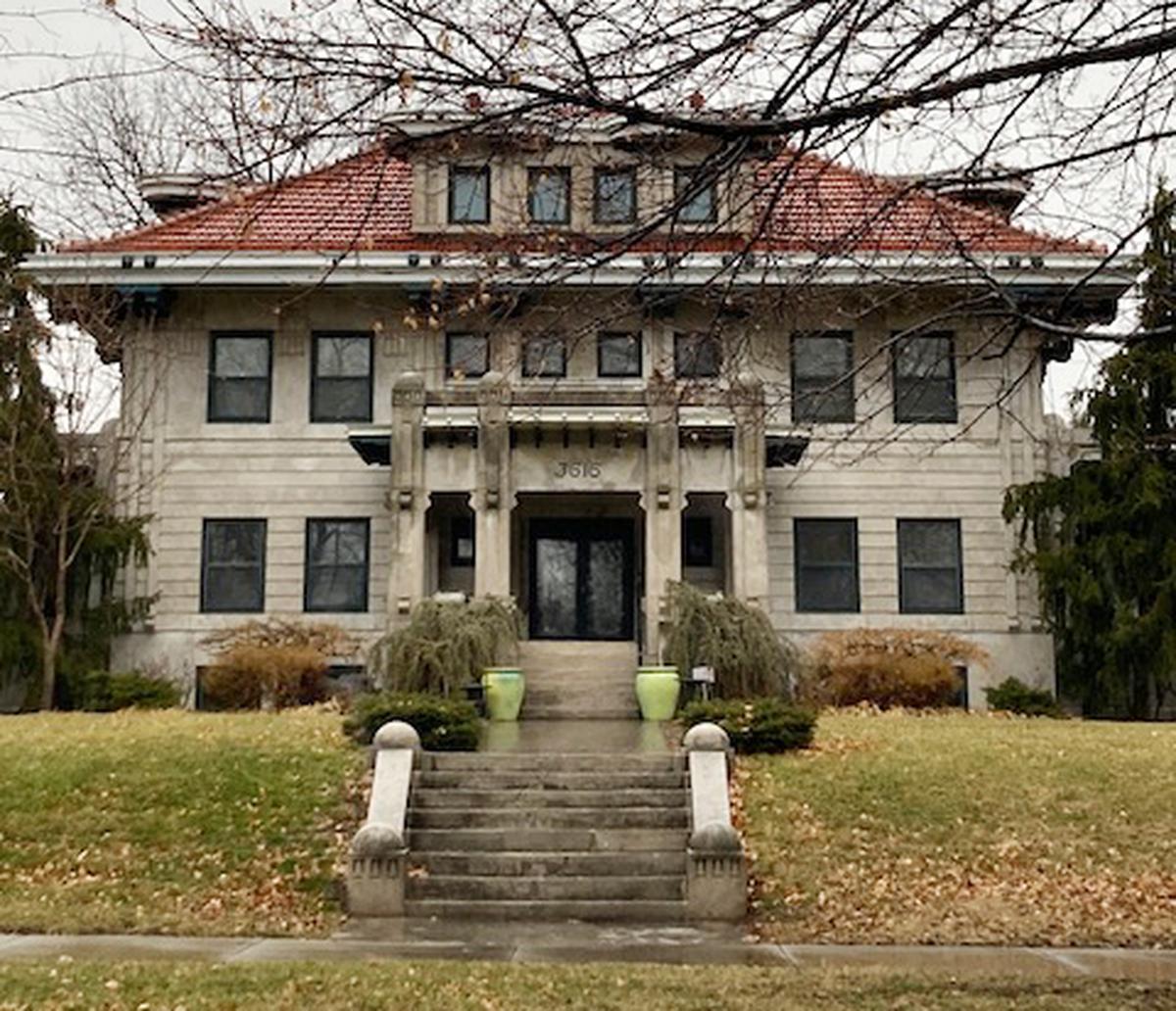
“In the living room a fireplace is constructed of marble,” a 1909 story in The Star said, “that resembles the birds-eye maple finishings of the room. The woodwork in the room is shaped after Egyptian models, the pieces tapering from the bottom to the top. The scheme is carried throughout the house. The library is in oak with another marble fireplace.”
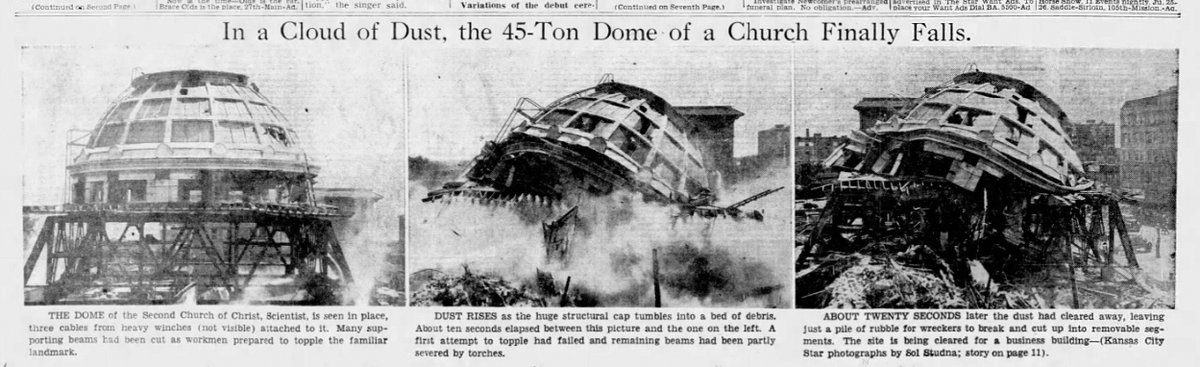
In 1904, the curved dome of the imposing Second Church of Christ, Scientist pointed to the clouds from its perch at 31st Street and Troost Avenue until, 50 years later, the Phenix stone structure came crashing to the dirt to make way for a J.C. Penney.

Phenix was so successful, a company town of some 500 residents rose around the quarry, with homes for the families of workers until ... 1929: The Great Depression.
Slowly, the community became a ghost town.
“All this area back here,” Karr said, pointing to an empty acreage of grasses, cottonwoods and patches of fir trees east of the quarry along N. Farm Road 45. “Back in the day, this was company housing: 150 employees and their families lived in ‘Sears kit’ houses.”
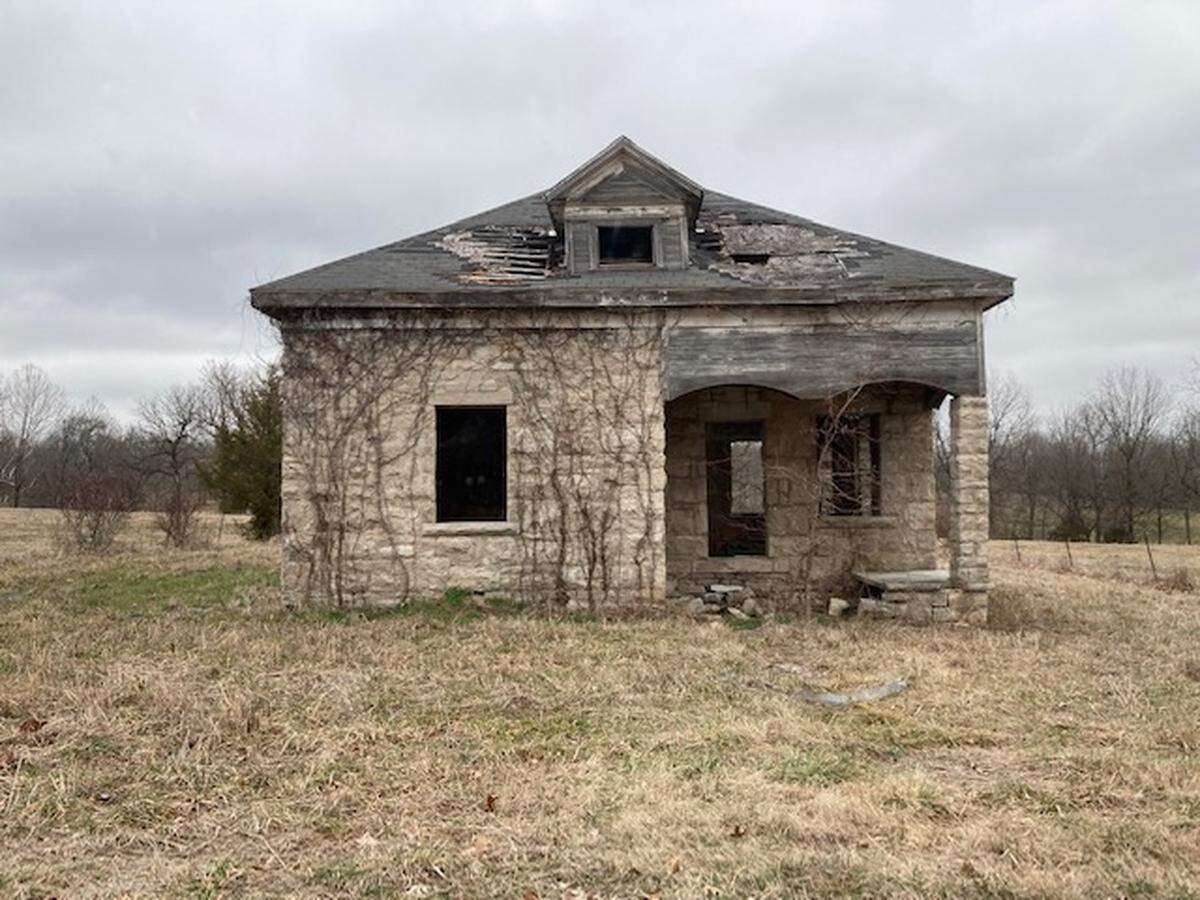
There was a community center, a church, a two-room school house, train depot and general store. Karr rolled his pick-up past a long-empty limestone house, the last remaining, its doorway and windows black and empty, its shingled roof collapsing toward the center.
“We believe this was the parsonage,” he said. A 1920s photograph shows some 80 workers posed for a portrait there. “The quarry went nearly dormant. Nobody was building skyscrapers in New York anymore.”
On top of everything else, the railroad closed the line for a better one, leaving Phenix no real way to ship.
When Word War II erupted, the company’s iron was dismantled for salvage. The Vermont Marble Co. bought the quarry in 1945, then sold it in 1951 to the Carthage Marble Corp. of Jasper County. The company never returned to what it was. By the late 1970s, builders had moved away from natural stone to reinforced concrete. Carthage shut down production in 1977 and nine years later sold the property to a local landowner.
For nearly 40 years, Phenix lay quiet. The old rail line, in 2010, was named a Greene County Historic Site, proof that the place had become a remnant of the past.
“It is a landmark,” Karr said. “Everyone knew about the old Phenix quarry. But it just never operated. Nobody ever thought to produce stone from it again.”
Until someone did.
Rising from the ashes
The year 2015: Freddie Flores, an artist and sculptor who was a friend of the property owner’s, had for years been leasing the property, using standing blocks, pieces and slabs from the abandoned quarry to do projects.
“I was just making all kinds of things,” said Flores, 62. “Tables, sculpture stands, bases, bowls, counter tops. I carved yard ornaments. I built a pyramid for one of the art galleries. ... I was having a great time.”
Years before, he’d done a massive project adding split-faced stone to a new wing for Springfield’s historic First and Calvary Presbyterian Church, a grand 1929 edifice originally built of Phenix stone. In 2015, the church was contacting Flores again. They wanted him for another major project — replacing their steps, more than 20 of them, 30-odd feet long, heavy and requiring lots of stone.
“It was complicated. A lot of engineering involved,” Flores said.
The quarry stone he needed was far too large and heavy for him to move on his own. It would need to be wrenched from the earth and cut.
“It was kind of like Easter Island. I was down to my last block, like Easter Island was down to its last tree.”
Flores called for help, to Springfield, to a friend at Conco Companies, which was then majority owned by Ash Grove Cement, headquartered in Kansas City.
Started in 1947, the company was founded by Thomas Baird Jr., a former World War II destroyer captain who escorted ships across the Atlantic. After Thomas Baird ran the company, his sons Rob and Tom Baird took over. Now it’s run by a grandson, Andrew Baird.
Although Conco had no experience in making building stone or marble, it had three generations of experience with limestone and ready-mix concrete, running quarries to make crushed stone for construction.
The Bairds along with Dave Karr — who was then a Conco vice president, employed there for 30 years — brought their people to the quarry to help Flores move stone to cut for the steps. Flores intrigued them with all he was doing.
“I just wanted to see if they were interested in getting into the dimensional stone business,” he said, meaning stone cut and finished, even polished in different dimensions for different projects. “I explained to them what I was doing, how I was doing split-face stone, I was doing countertops. I showed them how it was a multifaceted business with lots of different products.”
Andrew Baird, with a doctorate in history, found himself fascinated by Phenix’s story.
“I went down the rabbit hole pretty quickly,” he said. “We didn’t know much about the business. But we knew it was unusual to have a stone that could be used as building material and a polished marble.”
With equipment and workers on hand, they jumped in. Word spread.
Phenix was back. So was “Napoleon gray.”
Conco split Phenix off as a separate business. They leased the quarry land at first, then later bought it: 124 acres. Rob Baird was the prime investor, Karr the president. Flores became the head of custom design and fabrication.
Although they were all-in, Karr said, they were unsure and wary about whether the business could actually rise again.
Clients were coming. Phenix steadily quarried, cut and shipped stone to finishers and fabricators elsewhere (they had not built their own plant yet) to be used as building stones for homes, pools, bathrooms, kitchens, tiles, panels, countertops, fireplaces and the like.
“We were just feeling our way,” Karr said, calling the entire endeavor an “experiment” into proof of concept. “Those first few years we were like, ‘If we make any effort in this would anyone really buy the stone?”
Then, in late 2016, came a call that changed everything. The Smithsonian Institution’s Air and Space Museum in Washington, D.C., was planning a massive renovation beginning in 2018. They would need someone to supply stone to re-clad the entire outside of the museum.
A contingent was going to fly to Missouri. They wanted to see the stone. Phenix afterward was asked to send panels to Washington for consideration as finalists for the project. They weren’t chosen.
“Frankly,” Karr said, “I’m grateful we didn’t get the contract, because what did we know then?”
It was too early, he said. But the fact that the Smithsonian chose their product as a finalist reinforced what they believed.
“It told us our stone was of supreme quality,” Karr said. It also sent them into deep research: on the business, testing the strength, capabilities and chemical nature of their stone, talking to renovation architects to be ready for major bids.
In 2017, they landed a giant: The inside renovation of the Missouri Capitol — “That was huge for us,” Karr said — followed by the south steps of the White House.
“I never visited a job site with machine guns before, where I had to have Secret Service clearance before I got there,” Karr said.
More would come, prompting Phenix to build its own 30,000-square-foot finishing and fabrication plant, which was completed in 2021. The company now employs 30 workers, and works with area high school and college students offering internships and apprenticeships. Phenix’s “bread and butter,” Karr said — accounting for more than 50% of its business — is still homes and businesses: stone to build houses, countertops, pools, flagstones, wainscoting, showers and on and on.
Some marquee and specialty projects stand out: the second phase for the outside of the Missouri Capitol, replacement stone for stairs in the president’s building at Dartmouth College, the walls of a CIA training facility in Virginia.
“I can’t get any pictures,” Karr said, “because it’s the CIA.”
As Karr walked through his fabrication facility, he pointed out panels, some polished as shiny as glass, to be used in multi-million dollar homes, others for the renovation of the historic Hotel Cleveland in Ohio, another for the polished floor of a Hermès showroom being planned in Chicago.
Phenix recently began shipping its stone overseas to a motherland of marble, Italy.
Then there is the stone at KCI.
Architect Jordan Pierce, who has been traveling between San Francisco and Kansas City, is a lead designer on the terminal for the firm Skidmore, Owings & Merrill LLC.
“I think what was really important to us in this project,” Pierce said, “was to make the terminal building feel distinct, really feel like Kansas City — it was about having the whole building really feel very welcoming, very inviting and have that kind of Midwestern hospitality to it.”
That sensibility infused everything, he said, from the choice of the natural Western hemlock and Douglas fir set in long horizontal lines across the ceilings to the inclusion of a calming “sensory room” for people on the autism spectrum.
The panels of light Phenix gray fit that mold and more.
“The decision to use the limestone came out of a group process,” Pierce said. “It was important to everyone involved that this building really have a civic character, and that it felt like the new front door to the city.
“This limestone has been used in the statehouse in Missouri; it has been used all throughout Kansas City, and throughout the country. The fact that it was a real, local, natural material from Missouri, just a few hours ride from the terminal, was just spectacular.”
The fact that it is stone, he said, mattered.
“It was important to us that the building felt substantial,” Pierce said, “it felt in some ways permanent. It felt like it was something that would be part of the city for a long time. It’s the same reason banks use stones, state houses use stone. You’re trying to give the sense that it is something important.
“This is something long-lasting.”
This story was originally published February 26, 2023 at 5:30 AM.