Have you seen the “Progress Pride Flag” around this June? Here’s what the colors mean
READ MORE
LGBTQ issues in Kansas City
This June, we’re answering your questions about local LGBTQ topics and resources. Here is some information to check out:
Expand All
In recent weeks, you may have noticed an uptick in the number of rainbow flags flying from porches, businesses and even government buildings for LGBTQ Pride Month. But what do all the colored stripes on these flags mean?
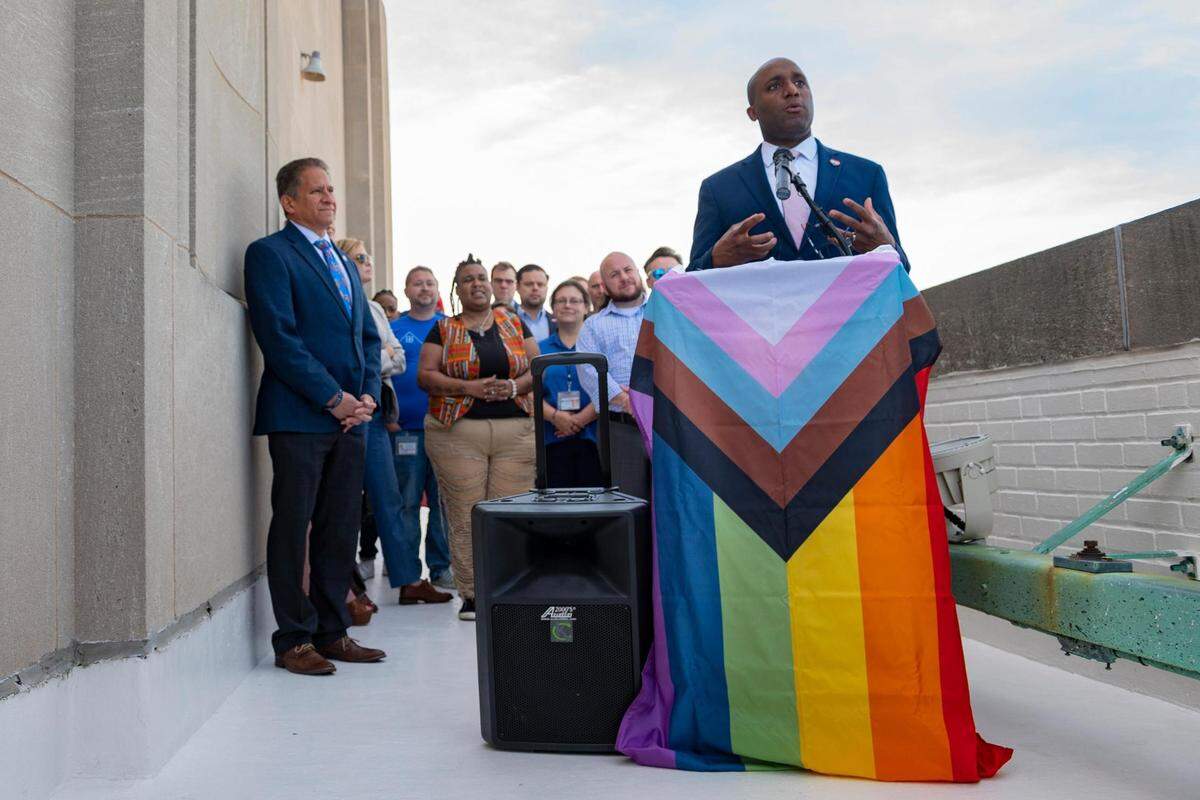
The “Progress Pride Flag” is a recent invention designed to make the rainbow pride flag more inclusive by featuring colors that represent different marginalized groups in the LGBTQ community. By flying it, many institutions and individuals are joining the Pride Month celebration with a nod to diversity.
What do the rainbow stripes on the Progress Pride Flag mean?
The six traditional rainbow stripes on the modern-day rainbow pride flag have the same meaning they always have: a coalition of diverse genders and sexualities making up the LGBTQ community.
The original rainbow flag, created by Kansas native Gilbert Baker, had a different meaning assigned to each of eight colorful stripes. Over time, the rainbow flag has been simplified into a six-stripe design with a unified meaning of representing all LGBTQ people. Some still consider these rainbow stripes to have unique meanings:
- Red: Life
- Orange: Healing
- Yellow: Sunlight
- Green: Nature
- Blue: Harmony and/or serenity
- Purple: Spirit
Baker’s original flag also included pink and turquoise stripes. Pink represented sex, while turquoise represented art and/or magic.
What does the triangle on the Progress Pride Flag mean?
The triangle on the flag’s left side was added more recently by nonbinary artist Daniel Quasar. This chevron design looks like an arrow pointing to the right, symbolizing forward progress. The colored stripes in this design have different meanings.
The light blue, light pink and white section represents transgender and nonbinary people. These colors reference the transgender pride flag created by U.S. Navy veteran Monica Helms.
The brown and black stripes represent marginalized communities of color. These colors reference the Philadelphia pride flag introduced by Amber Hikes.
The black stripe also represents those who have been lost to AIDS and those living with the condition today. This meaning references the Victory Over AIDS flag created by Sgt. Leonard Matlovitch.
Some versions of the Progress Pride flag also include a small yellow triangle containing a purple circle on the far left side of the chevron. This design references the intersex pride flag created by Morgan Carpenter, and represents another marginalized group within the LGBTQ community.
Doesn’t the classic rainbow flag already represent marginalized groups?
Yes. The six-stripe rainbow flag you’re probably used to seeing is meant to represent the entire LGBTQ community, including transgender and nonbinary people, people of color and intersex people. The addition of the chevron design is merely intended to highlight the unique experiences of these sub-groups.
Some LGBTQ community members object to the inclusion of additional stripes and symbols on the classic rainbow flag, arguing that they contribute more to Pride-related marketing and branding than they do to solving challenges faced by the LGBTQ community. But that hasn’t stopped the Progress Pride flag from achieving significant popularity in recent years.
How long has Kansas City been flying pride flags during Pride Month?
According to Moon Glasgow Brown, the chair of the city’s LGBTQ Commission, last year was the first year in history that Kansas City flew pride flags during Pride Month. Brown’s commission had been formed earlier that year, and was instrumental in introducing the concept.
“The city was in full support of the flag, recognizing the need to be inclusive, celebrate diversity, and honor the lives of trans Black and brown LGBTQ people within our community,” Brown told The Star. “It was the first time in history that the LGBTQ+ community could look at the flag on city hall and feel seen.”
The upshot: Both the classic rainbow and the Progress Pride flag represent the full diversity of the LGBTQ community. When you see either of them flying around your neighborhood, now you know the rich history behind every stripe.
This Pride Month, the service journalism team is answering questions from readers about LGBTQ topics in a new series we call KCQueer. Submit your questions here or email them to kcq@kcstar.com.
This story was originally published June 20, 2022 at 5:00 AM.
.jpg)