
Kansas City unveiled a plan to fix potholes last year. So why are fewer filled now?
READ MORE
Why does it take so long to fill a pothole in Kansas City?
Kansas City unveiled a plan to improve how it repairs and repaves roads last year. But data shows the city has filled around one-third fewer potholes in the past year than it did the previous year.
Expand All
Kansas City unveiled a plan to fix potholes last year. So why are fewer filled now?
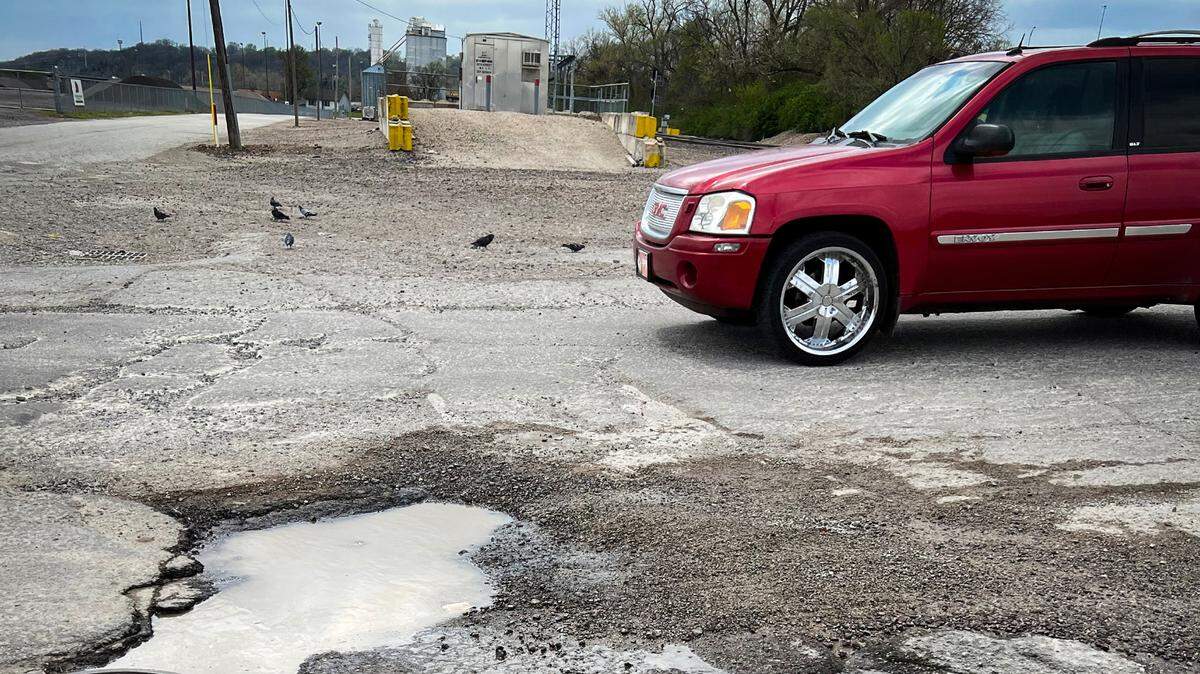
It can be done: How to get a pothole fixed in Kansas City
How long does it take to fill a pothole in your neighborhood? Check your ZIP code here
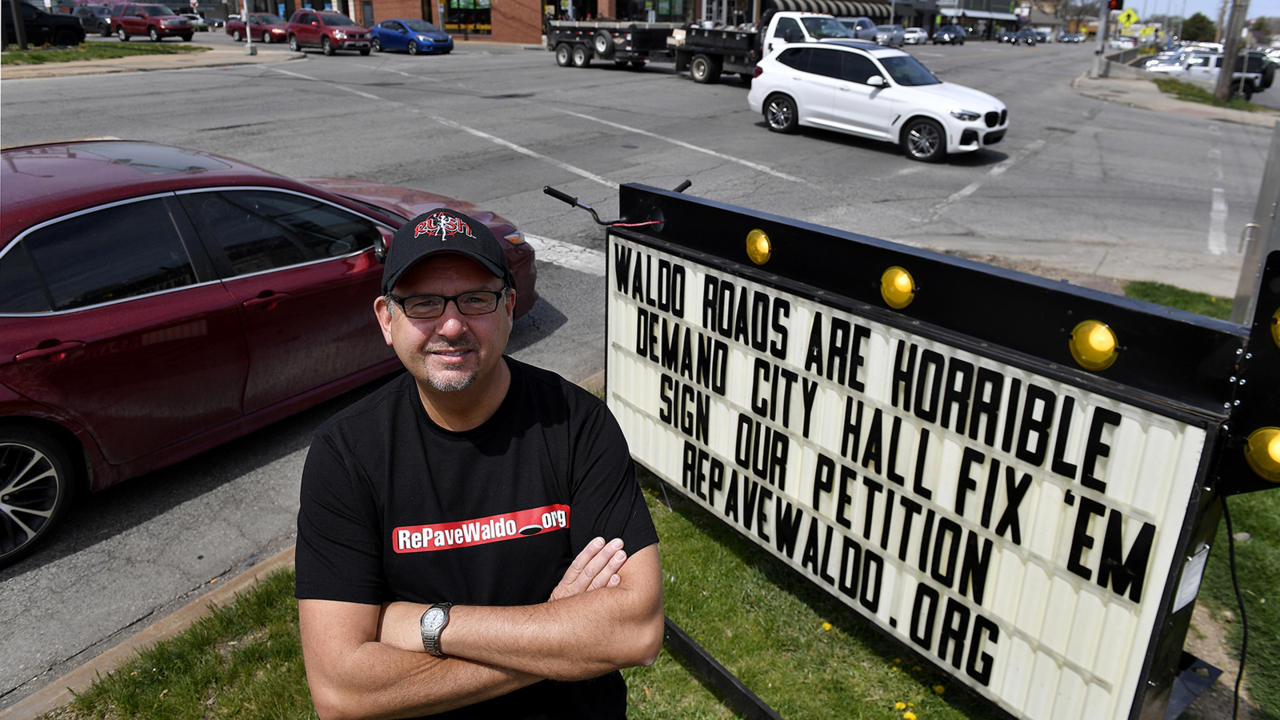
Neighborhood leaders call on Kansas City officials to resurface streets and fix sidewalks
Jayla Johnson was driving home on April 7 when she saw a pothole on Wornall Road.
It wasn’t huge, but looked deep enough to do damage to her car. Johnson, 21, swerved to her left to avoid it, but realized too late that she was now in the path of a different, larger pothole. She hit it head-on, and soon afterward started hearing her front tire slapping against the road. She called her mother in a panic.
“I’m a young driver, so this was extremely frightening for me,” Johnson, a student at Metropolitan Community College - Penn Valley, told The Star. “I’ve never had this happen before… I was freaking out.”
Johnson’s experience is a common one: Kansas City residents have reported nearly 11,000 potholes to city government since 2020 began, and that number represents only a fraction of the total.
In March of 2021, city leaders launched a plan to tackle Kansas City’s pothole epidemic. The effort included gathering updated information about city road conditions, increasing the budget for street resurfacing and improving communication between city departments.
A year later, many residents still find the city’s actions inadequate.
The city is on track to fill fewer potholes in the past fiscal year than it did the previous fiscal year. The city filled nearly 68,000 potholes between May 1, 2020 and April 30, 2021. Data from May 1, 2021 through March 2022 shows the city had filled around 45,000 potholes, on pace to fill about a third fewer by the time the fiscal year ended on April 30. The city attributes this decline to greater resurfacing efforts, but also says staff are in short supply.
“We’ve got more potholes than we’ve got crews to fill them,” said Martin “Marty” Marcille, an area superintendent from the Public Works Department. Public Works has lost nearly half its pothole-focused employees in the past year, leaving remaining crews to struggle with a backlog of patching requests alongside other maintenance work.
Some residents are concerned about inequity in where the city does its road repairs. Downtown streets frequently get their pothole complaints resolved quickly, while ZIP codes farther north and south of the Missouri River take longer to see results. This has led some residents to get creative with attention-grabbing pothole protests, including a birthday party for a pothole and a lit-up sign by the road.
“Since the City rolled out the newly revamped street maintenance strategy last spring, we have made a lot of great progress,” city spokesperson Maggie Green said in response to The Star’s findings. “The City also recognizes we have decades of deferred maintenance to catch up on and have a lot more work to do, so we continue to make improvements and investments in street maintenance and street resurfacing.”
The city has paid out over $160,000 to more than a hundred residents in the past two years for lawsuits and claims related to potholes. But on many city roads, potholes remain unrepaired because the road itself is slated for an eventual reconstruction.
Even driving at a snail’s pace with her mother coaching her through the phone, Johnson barely made it home. Her car wouldn’t pull all the way into her driveway — on closer inspection, she found her front right tire ruptured in three places. While she was able to track down a replacement for only around $80, she told The Star that she fears hitting another pothole and causing even greater damage.
It’s difficult to pinpoint blame for the city’s pothole problem on one specific actor, but residents say that greater transparency and communication from city government could help alleviate their concerns.
“The city, actually, is not doing anything about it,” Johnson said. “I don’t want any money. I just want y’all to fix the pothole.”
“Worse and worse each year”
Public Works superintendent Marcille says his staff is stretched thin.
Crews from Public Works patch potholes year-round based on reports submitted to 311 via phone or mobile app. These general maintenance crews also maintain alleyways, collect litter, mow the grass on public land and help with snow removal in the winter.
Currently, a crew of only four city employees patches potholes from the Missouri River down to 27th Street, from the Kansas state line over to Independence. During a pothole patching stop on Belton Avenue, Marcille said that if it was up to him, he would use a crew of fifteen people to cover the area that just four cover now.
“It just dwindles down,” he said of the staff numbers. “It gets worse and worse each year.”
Marcille has been on the job for 35 years. He attributed staff shortages to low starting pay ($16.57 an hour) and a lack of interest in Public Works among younger generations.
The city says it is actively hiring in many of its departments, including the general maintenance crews that patch potholes.
“We’ve always been neglected”
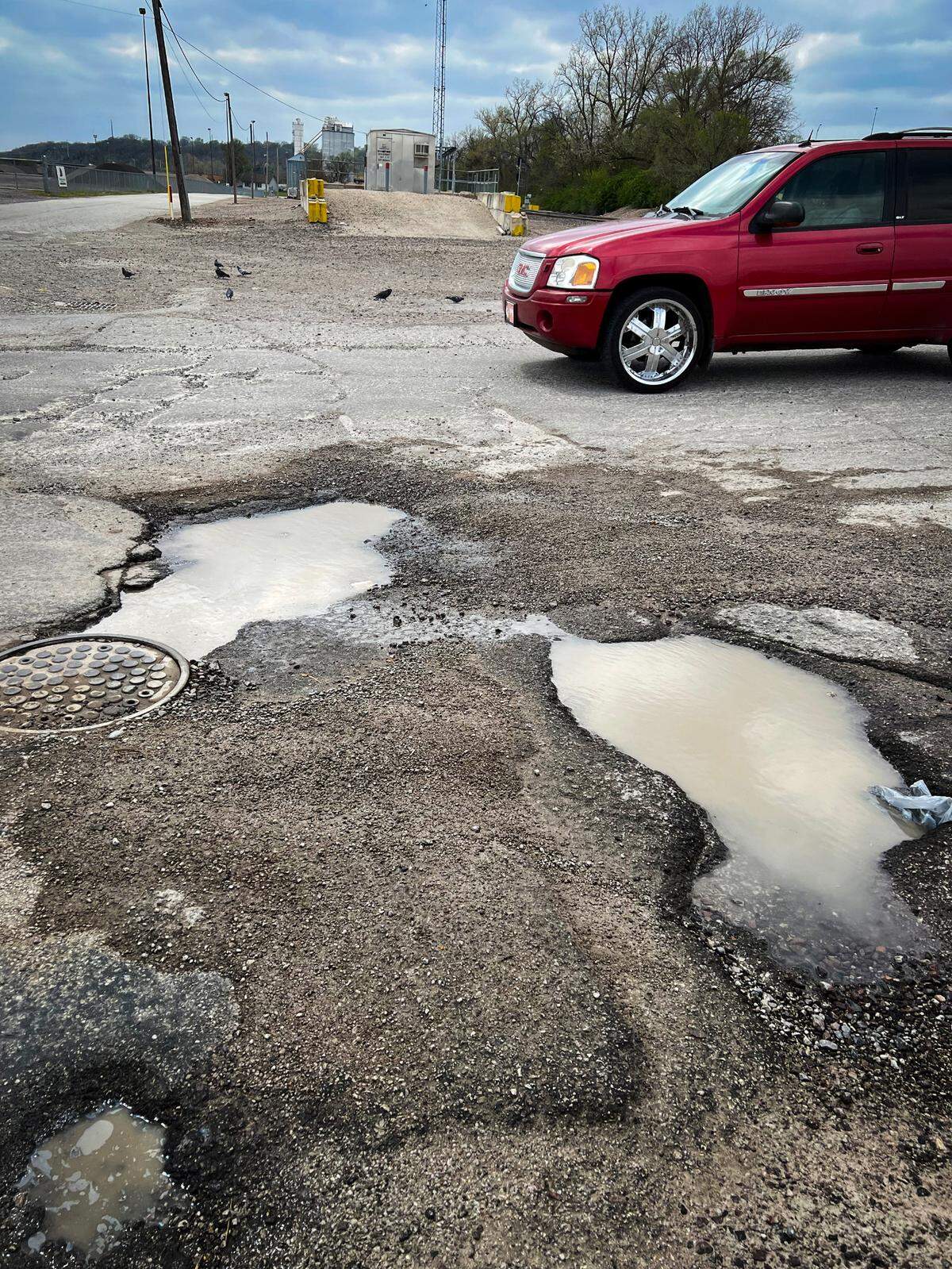
Potholes scar the asphalt around Kansas City native Dexter Murray’s quiet block, while grass and wildflowers grow out of crumbling sidewalks. He has been trying to get the city to do something about it for 15 years.
“I’ve been applying and applying and applying about the same situation, and we’ve always been neglected,” said Murray, who is the vice president of the Boston Heights and Mount Hope Neighborhood Association. He also expressed irritation at seeing nearby more affluent neighborhoods enjoying smooth roads while his own remain unfixed.
“We just got a new city manager. He lives over there in Beacon Hills,” he added. “They don’t have broken up streets and that sort of thing.”
City Manager Brian Platt’s office provided ample information relevant to this story, but did not offer a response specifically regarding Murray’s comment. Platt was involved with the rollout of the city’s pothole plan last year, saying that it would “make dramatic positive changes in the quality of our streets across the city.”
The city’s own data suggests that its crews resolve pothole complaints more quickly in the geographic center of the city, while they are slower to repair potholes in the Northland, farther on the East Side and in neighborhoods in the southern part of the city.
The resolution times range from 9.45 days in the center of the city to 26.12 days on the outskirts.
Public Works Director Michael Shaw told The Star that older infrastructure in the center of the city often needs the most attention, forcing crews to concentrate on roads in and around downtown.
“Absolutely Public Works does its work equitably. But I think what’s more important is that we serve the infrastructure equitably,” he said. “It’s not so much the people, it’s the actual infrastructure itself… people say, ‘Well, you spend more money here,’ but that’s where the problems are.”
Rachel Riley, president of the East 23rd Street PAC, found his explanation insufficient. She receives constant reports from residents about the potholes, unrepaired street cuts and steel plates lining her neighborhood’s roads.
“I don’t know where you would get such a sad answer. Whether it was newer or older… What exactly does that have to do with them fixing what they tore up?” she said. “One has nothing to do with the other.”
What it takes to fix a street
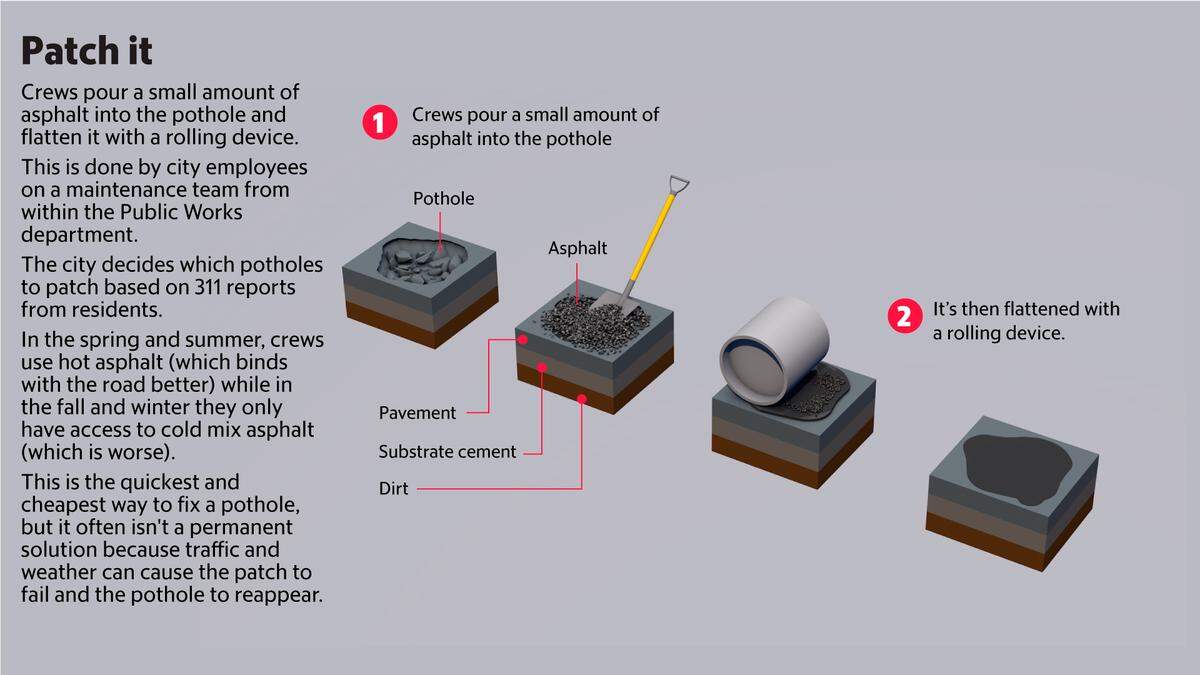
Despite city crews’ efforts, asphalt patches are often temporary, especially in the colder months when winter wear and tear can cause them to fail. Heavy traffic can also reopen patched potholes in a matter of weeks.
That’s why some advocates prefer a more permanent solution: road resurfacing.
Resurfacing is the process by which the top asphalt layer is ground off a street and replaced with fresh asphalt. This work is done by contracted crews rather than Public Works employees, because the city does not own the heavy machinery needed for the job.
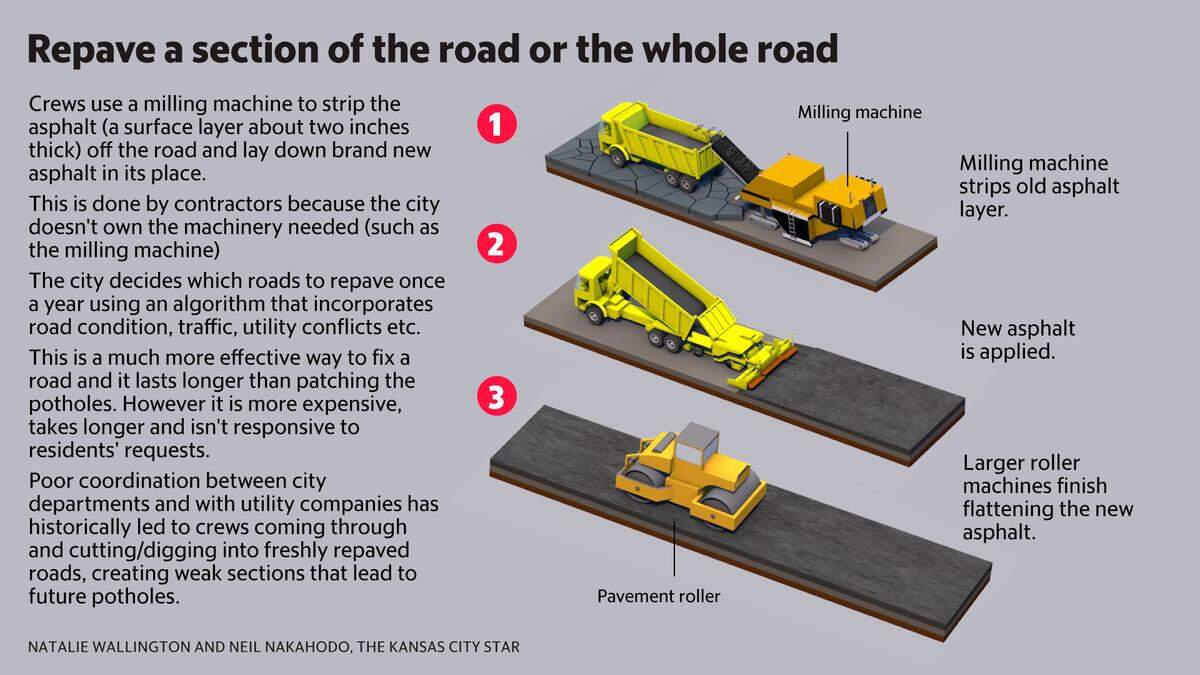
Most of the city’s resurfacing destinations are chosen up to a year in advance by an algorithm that claims to account for street quality, traffic levels and other factors while also avoiding conflicts with utilities companies. Many potholes begin as weak or uneven paving left over from water, sewer and gas line repairs that involve cutting into the street.
While the city says it’s doing better at avoiding these conflicts, a scheduled utility repair can delay or even disqualify a damaged road from being resurfaced in a given year.
Each week’s resurfacing schedule is publicly available on the city’s website. But residents say that these data-driven decisions lack transparency, and can lead to roads in good condition being resurfaced while highly damaged roads get ignored.
In an attempt to address this problem, the city’s resurfacing budget now includes $500,000 set aside for each City Council district to conduct work that its residents want done. This money is enough to repave around 10 lane-miles in each district.
But there is currently no official channel through which residents can submit suggestions for this work.
Even on the rare occasions when residents can speak with city officials directly, Murray noted that results rarely follow. He told The Star that community meetings with city leaders can feel repetitive and pointless.
“They’re constantly having these meetings, and we already presented our case. We’re talking about the same thing over and over and over again,” said Murray. “I’m a taxpayer along with my other residents… For me not to get any services and having to go through this, it’s very frustrating.”
Roads beyond repair
If you have encountered potholes around the city that never seem to get fixed, they may be on a road that’s currently idling on a multi-year waitlist for a total reconstruction. This process involves excavating multiple feet into the ground and rebuilding the cement substrate before paving over the top with asphalt.
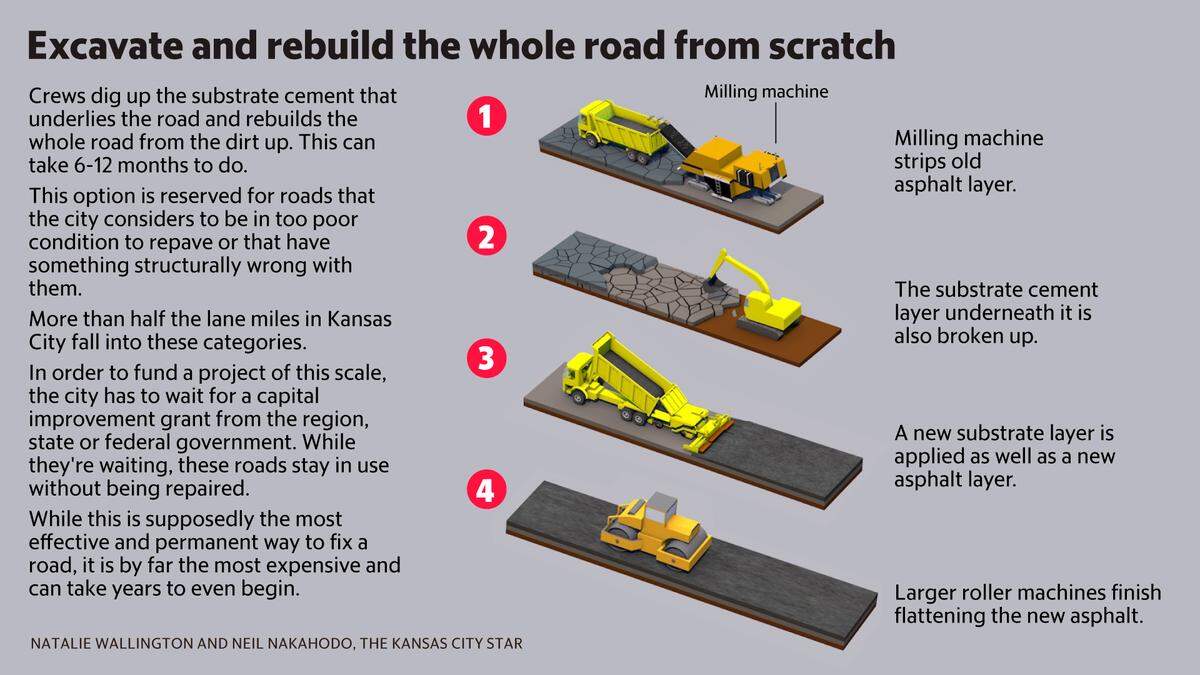
A project of this size is known as a “capital investment,” and can take years to get funded by outside grants from the state or federal government. If it’s finally approved, road reconstruction can take 6-12 months to actually complete, and costs millions of dollars.
City data shows that more than half of Kansas City’s streets are in “Poor,” “Very Poor,” or “Failed” condition. The city’s recommended solution for all these conditions is road reconstruction.
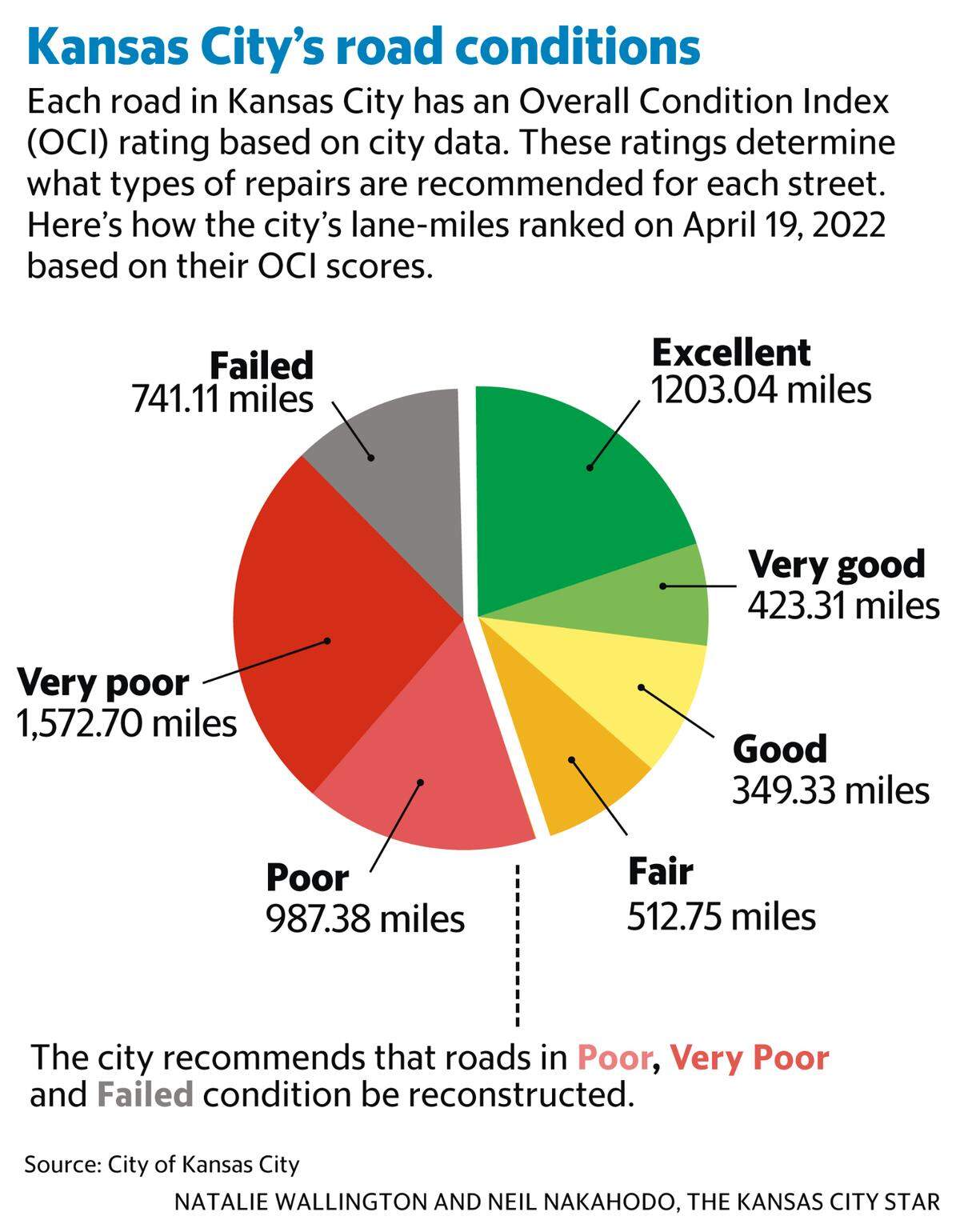
Until money becomes available to rebuild them from the ground up, these roads will remain in use without being resurfaced.
Broken streets and broken bones
One hundred and thirty-seven Kansas Citians have received money from the city for pothole-related damages in the past two years. One cyclist, Barry Samulcek of South Plaza, was thrown from his bike by a pothole in 2019 and sustained what his lawsuit against the city called “severe, progressive and permanent injuries.”
The city eventually settled out of court, paying Samulcek $82,500 for his medical bills and other expenses. The settlement also prevented Samulcek and his lawyer from speaking with The Star about the incident.
One hundred and thirty-six other Kansas City residents have also received payouts, to the tune of $77,554.58 in total.
But these successful claims represent only a fraction of the damage potholes do to Kansas City residents’ cars, bodies and property. Since March of 2020, residents have filed 1,408 claims and five other lawsuits against the city for pothole-related damages.
Two of these lawsuits were dismissed in small claims court, and three are still underway. One plaintiff was thrown from his motorcycle by a large pothole and broke his clavicle bone. Another tripped in a pothole and broke her arm, wrist and hand: she now has metal hardware permanently installed in these joints.
Creative dissent
When traditional avenues don’t work, some activists choose to get the city’s attention in more creative ways. One of them is Frank Sereno of Waldo, who gained national attention when he threw a birthday party for a pothole near his home in June of 2019.
“On the Kansas side… potholes are fixed quickly. They recognize what the responsibilities of the city government are,” he told The Star. “Kansas City, Missouri, however, has other ideas. They have other focuses.”
Sereno has been pressuring the city to take action on potholes since hitting one on his motorcycle three years ago. In that time, he has launched a website and a petition asking the city to repave roads in his neighborhood —including those deemed too failed to fix.
The petition has over 2,000 signatures, and Mayor Quinton Lucas recently agreed to meet with him in early May.
Sereno recently set up a marquee sign on Wornall Road advertising his petition to drivers. When The Star stopped by on Saturday, April 16, passing cars honked their approval every few minutes. Several strangers rolled down their windows to shout thanks to Sereno as he lounged in a camping chair next to his sign.
“To get the city to move, I have to be real creative in what I do,” he said. “This is the reason we have city leaders and Public Works departments. Their obligation is to maintain the streets and keep them safe.”
Sereno has vowed to continue his campaign until the city provides specific dates for repaving the damaged roads in his neighborhood. Other residents we spoke with want similar results: Input on which roads get repaved, greater transparency and communication from city government and timely repairs of the most hazardous roadways.
“It’s sad. These are some real low-hanging fruit issues,” Sereno said. “If you can’t fix potholes, the most simplistic effort of road maintenance, how can you even run a government?”
This story was originally published May 1, 2022 at 5:00 AM.
.jpg)