
It can be done: How to get a pothole fixed in Kansas City
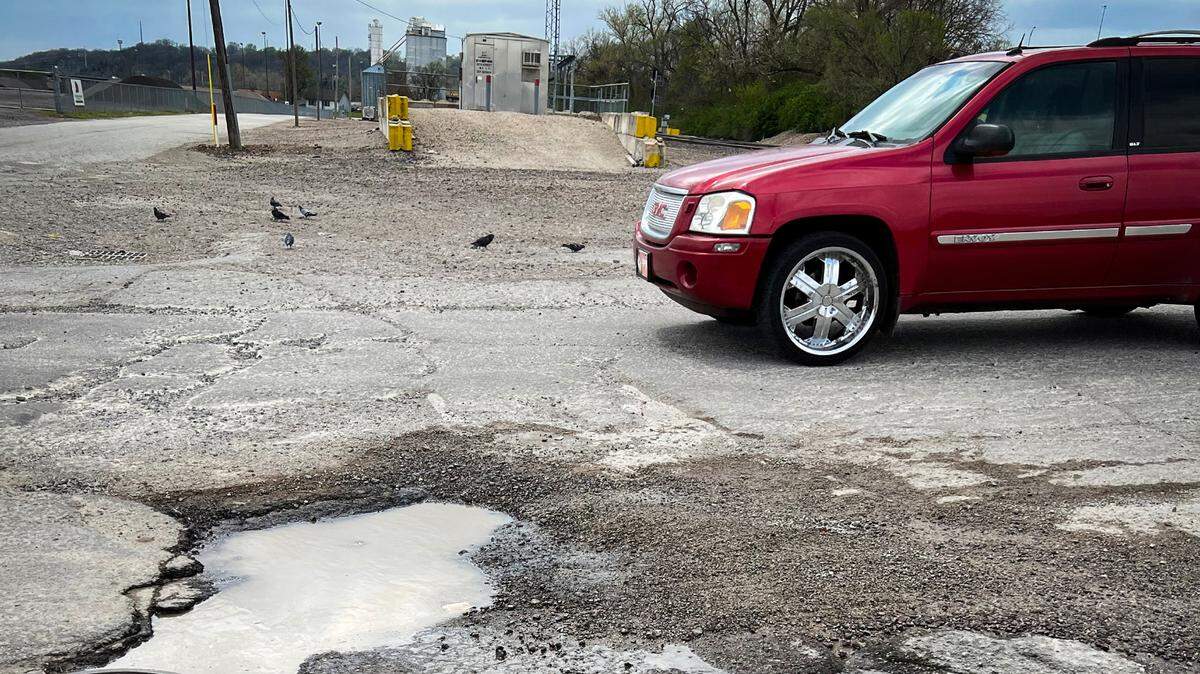
READ MORE
Why does it take so long to fill a pothole in Kansas City?
Kansas City unveiled a plan to improve how it repairs and repaves roads last year. But data shows the city has filled around one-third fewer potholes in the past year than it did the previous year.
Expand All
Kansas City unveiled a plan to fix potholes last year. So why are fewer filled now?
It can be done: How to get a pothole fixed in Kansas City
How long does it take to fill a pothole in your neighborhood? Check your ZIP code here
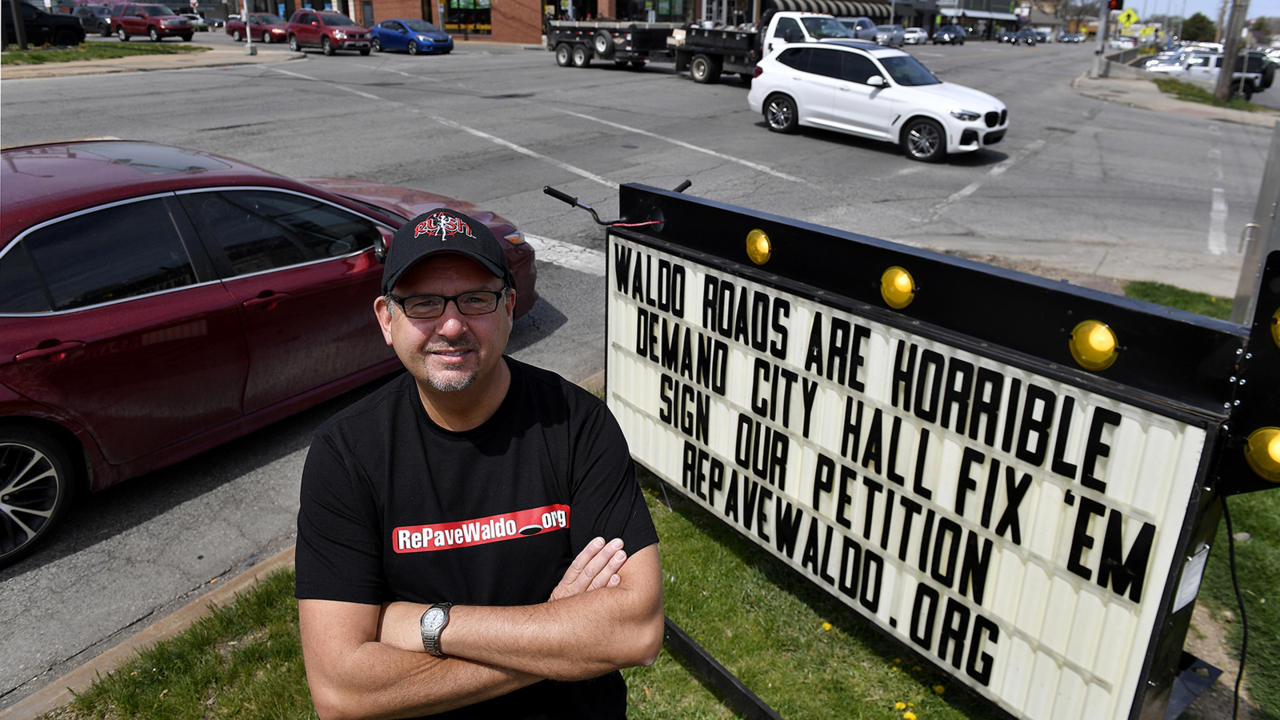
Neighborhood leaders call on Kansas City officials to resurface streets and fix sidewalks
Potholes are ubiquitous on Kansas City’s streets, along with other road damage like cracks and uneven pavement patches.
The city’s Public Works Department says that there are far more damages than it has money to fix immediately, so it needs to figure out which repairs to prioritize. That’s where you come in.
From calling 311 to getting creative with how you highlight a problem in your neighborhood, public input can help determine which potholes and other imperfections get priority.
Here’s how to contact the city about a pothole in your area:
1. Report it to 311
A 311 report is the quickest and easiest way to let the city know about a pothole.
The city’s 311 Action Center is the clearinghouse for pothole repair requests. You can reach it by calling 311 or using the My KCMO mobile app. If you don’t have access to a phone or internet, city spokesperson Maggie Green confirmed that you can also write the Public Works department a letter at 414 E. 12th St.
Service requests through 311 are the main way the city decides which potholes to fill. It groups reported potholes by location, and assigns locations to general maintenance crews’ daily routes. These crews then fill the potholes in question with asphalt and roll them flat to keep the road smooth.
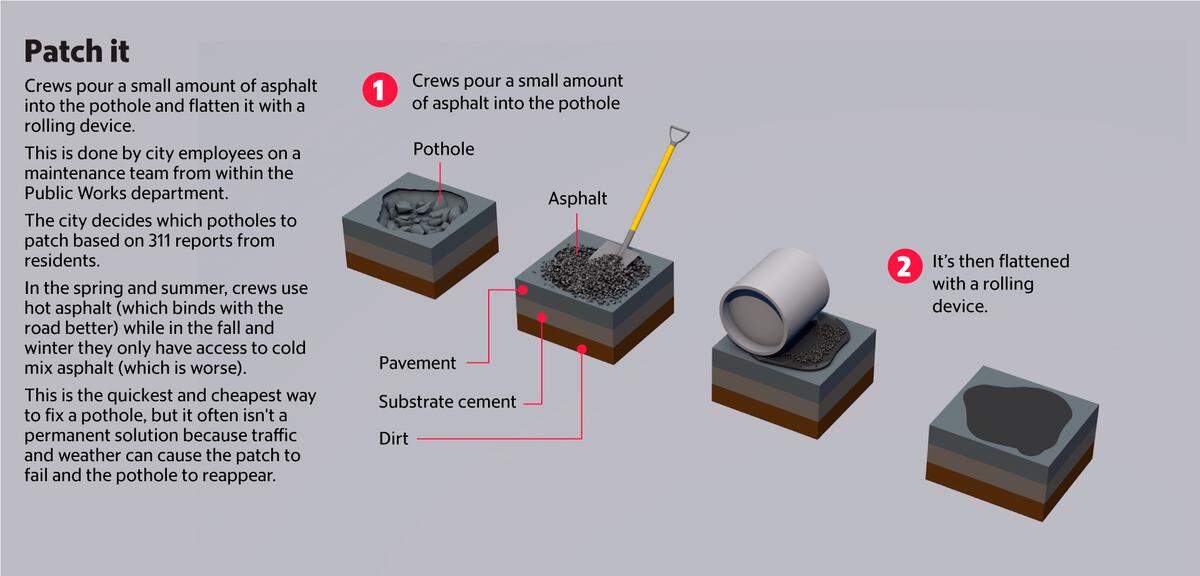
The Public Works Department told The Star that it will also patch up nearby potholes in the area that weren’t reported to 311. Overall, city documents claim that pothole crews “actually fill nearly 5x the number potholes reported to 311.”
2. Contact your City Council member
This approach is best for a damaged road or section of a road, rather than for a single pothole.
The city recently doubled its repaving budget in order to fix potholes and other road damage more effectively.
In this process, crews contracted by the city use huge machines to grind the top asphalt layer off a road and replace it with fresh asphalt.
While repaving projects are usually decided by the city up to a year in advance, each city council district also has $500,000 in funding that it can use for projects that residents ask for.
Contact your councilmember by phone, email or in person to make them aware of the issue in question. It may help to ask your neighbors to reach out about the problem as well.
3. Submit a request to the Public Improvement Advisory Committee (PIAC)
This 13-member group is responsible for gathering public feedback on major construction projects and hearing residents’ maintenance priorities. You can submit a request through the group’s online form: The deadline is August 31.
Your request doesn’t have to just include potholes—it can cover a number of other categories, including sidewalks, curbs, drains, traffic lights and even public parks. Requests submitted this summer will be reviewed over the coming year. If accepted, your proposed project would begin in the summer of 2023.
PIAC includes members from each city council district—you can find your representatives, along with their phone numbers, at the bottom of the committee’s webpage. You can also contact the Capital Improvements Program office by phone at 816-513-1062 or by emailing PIAC@kcmo.org.
4. Get creative
Disgruntled residents around the world have taken it upon themselves to draw attention to potholes in creative ways when traditional avenues don’t work.
Waldo resident Frank Sereno is one of them: His creative protests have included a birthday party for a pothole and a makeshift stunt driving course on a particularly bumpy road in his neighborhood.
Other unusual pothole protests have included lewd graffiti and internet memes in the UK, planting a banana tree in a particularly large pothole in Florida, holding ceremonies to officially name potholes after politicians in India and many more.
While Sereno says he won’t resort to breaking the law with protests like spraying graffiti or obstructing traffic, he plans to continue staging fun, peaceful and legal protests in the future.
“I turned it into something positive,” he said. “We had a graduation party [for a pothole] when they came out and fixed it. I invited all of Waldo to come on down and we bought cake, we had candles, we had balloons. We turned it into a fun neighborhood thing. And my neighbors came out and I got to meet neighbors I never met, and they were grateful that I was trying to get stuff done. And that’s awesome.”
Do you have more questions about public works in Kansas City? Ask the Service Journalism team at kcq@kcstar.com.
This story was originally published May 1, 2022 at 5:00 AM.
.jpg)