Kansas City police use force against Black people more often. Their own data shows it
READ MORE
‘We’re experiencing systemic racism’
Black people exposed to police violence were more likely to wind up in the hospital. More than 100 did.
Expand All
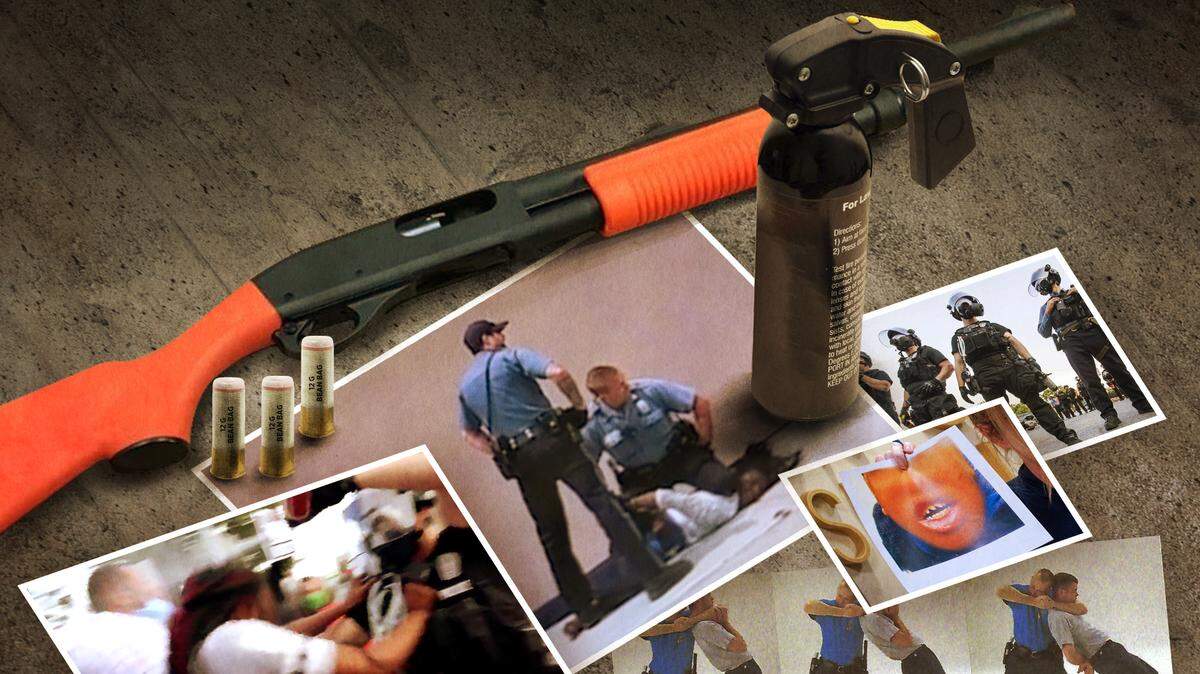
Kansas City police use force against Black people more often. Their own data shows it
Kansas City police used tear gas, other types of force over 130 times at Plaza protests
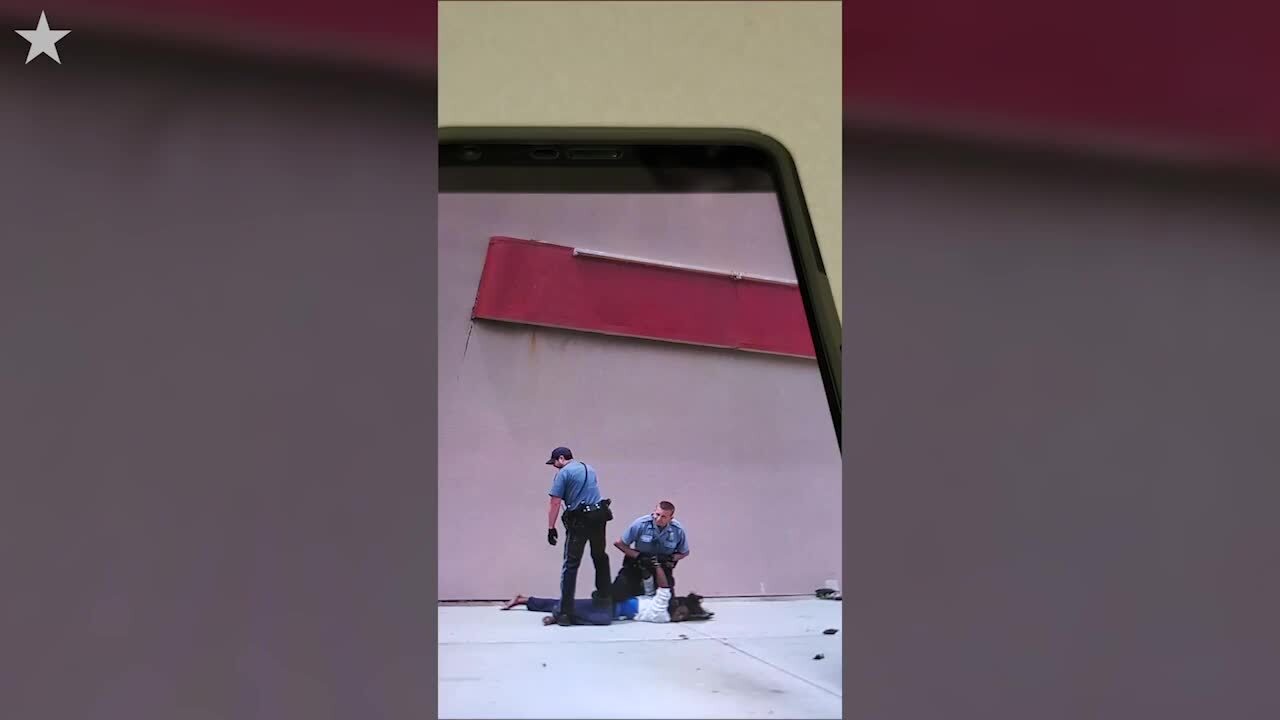
Video of police officers forcibly arresting Breona “BB” Hill on a Kansas City sidewalk
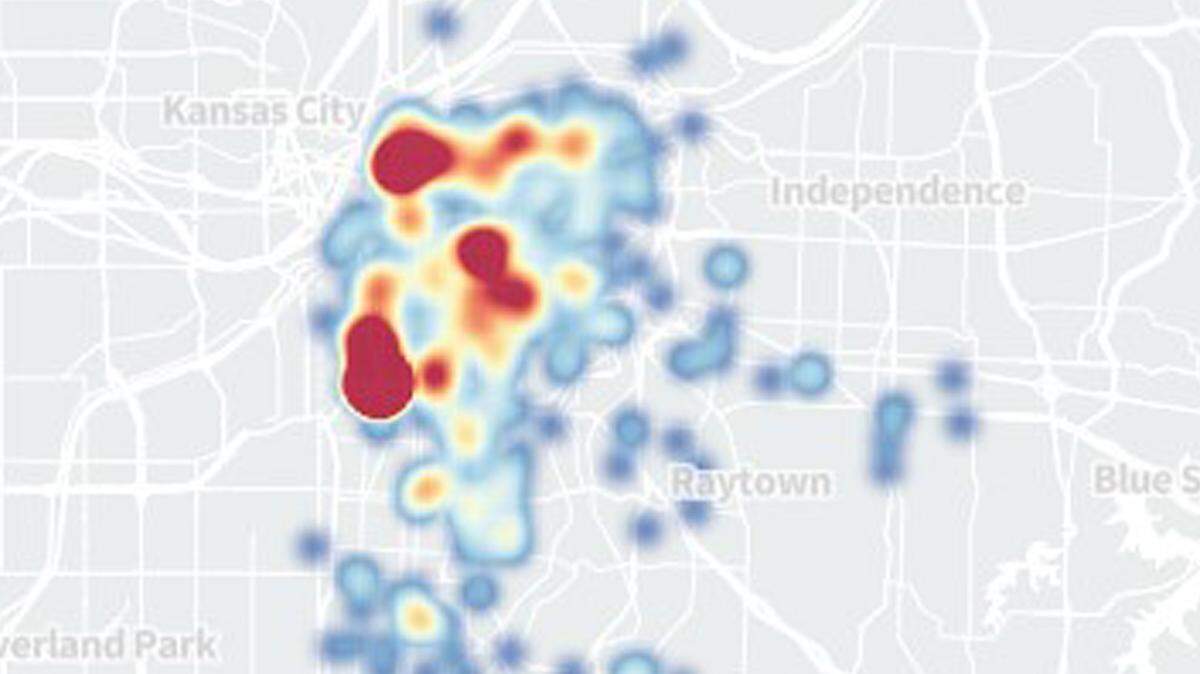
Interactive map: See where police have used force in Kansas City
Did a KCPD officer harm you or someone you know? Here’s how you can file a complaint
They don’t care about Black life.
That’s what Roderick Reed, 54, believes about the Kansas City Police Department after witnessing officers slam a woman’s head into the ground and kneel on her neck as she cried out.
When he drove by the scene outside a beauty store on Brush Creek Boulevard on May 24, 2019, he stopped and filmed on his phone.
“It made me feel like what can I do?” he said during a phone interview earlier this month. “I know this is not right. I started praying to God.”
The video of the encounter became widely known and led to charges against the officers. But it was just one of hundreds of times in the past two and a half years where police have used violence — bullets, bean bag rounds, police dogs, Tasers, pepper spray and their bodies — on a Black person.
In a city that is about 28% Black, more than 57% of the use of force incidents from 2019 to July 2021 were against Black people, according to previously unpublished police data obtained by The Star.
The records contain more than 600 entries reflecting police use of force. More than 330 were against Black people.
They include fatal shootings of unarmed Black men as well as cases that did not result in death and often don’t make the news, but have left people injured and with more distrust — and disdain — for the police department.
However the number of total incidents was likely more as some confrontations, including a deadly 2019 police shooting, were unaccounted for.
The data also showed that Black people exposed to police violence were more likely to wind up in the hospital. More than 100 did in the period captured by the KCPD data.
Lora McDonald, executive director of MORE2, a local social justice organization, said she wished she was surprised by the racial disparity in the department’s use of force data. But she wasn’t.
“We’re experiencing systemic racism in our police department and it’s at a really, really disproportionate level,” McDonald said.
Reached for comment on the findings, Capt. Leslie Foreman, a spokeswoman for the Kansas City Police Department, said that use of force is “based on the actions of another person, not on the race of that person,” and that its officers were focused on relationship building in the community.
Nearly 75% of the incidents occurred during a call for service while about 25% were “self-initiated activity,” said Sgt. Jake Becchina, a spokesman for the department.
“That says to me that officers are overwhelmingly more often called to the situations that lead to resistance by a subject against them and an associated response than they are ‘seeking out’ enforcement situations that lead to a response to resistance,” he said.
Racial disparities of the kind shown in the data are one reason why last year, civil rights organizations called for a Department of Justice investigation into how KCPD polices communities of color. In November, a white detective was convicted in the shooting death of a Black man. Days after the verdict, it was announced that Chief Rick Smith will leave the department this spring.
A total of five officers in four use of force cases have faced criminal charges. All of the officers were white and the victims Black.
Mayor Quinton Lucas said the Board of Police Commissioners, which he sits on, should examine how and why the higher rate of force against Black people might be happening.
“Data like this suggests perhaps that we certainly have more evaluation to do,” Lucas said.
The racial disparity impacts community safety, said Damon Daniel, president of AdHoc Group Against Crime.
That deteriorates the trust, which then has the impact on the solve rate which then has an impact on the homicide rate, Daniel said.
“So we won’t be able to reduce violent crime if we’re not solving violent crimes and people aren’t coming forward because they don’t have trust. It’s like a domino effect.”
Last year became the second deadliest year on record for homicides in Kansas City, following a record 182 killings in 2020.
Kansas City police data
When situations escalate to a certain level, officers are required to complete a “response to resistance” report.
Information contained in that report includes the date and location, what kind of force was used against the officer, against the civilian, their race and the type of treatment required.
Kansas City police used violence throughout 2019, 2020 and the first half of 2021 an average of once every 1.4 days.
The data shows that people of color are over-represented, but that doesn’t necessarily mean racism, said Ken Novak, a criminologist at the University of Missouri - Kansas City.
“What I think we can say is that that is indicative of the perhaps more confrontational nature of police-public encounters with people of color. People of color experience policing differently than majorities ... that speaks to maybe an unequal protection.”
Brandon Davis, a University of Kansas professor who studies policing, said data collection is one of the most important steps departments can take. Data provides objective measures to see what is working, Davis said, and implement better practices in areas that need improvement.
The Star spent nearly a year getting the response to resistance records for this story. The police department denied access to information contained in the reports in August 2020, saying they were closed to the public because they were “internal investigative documents.”
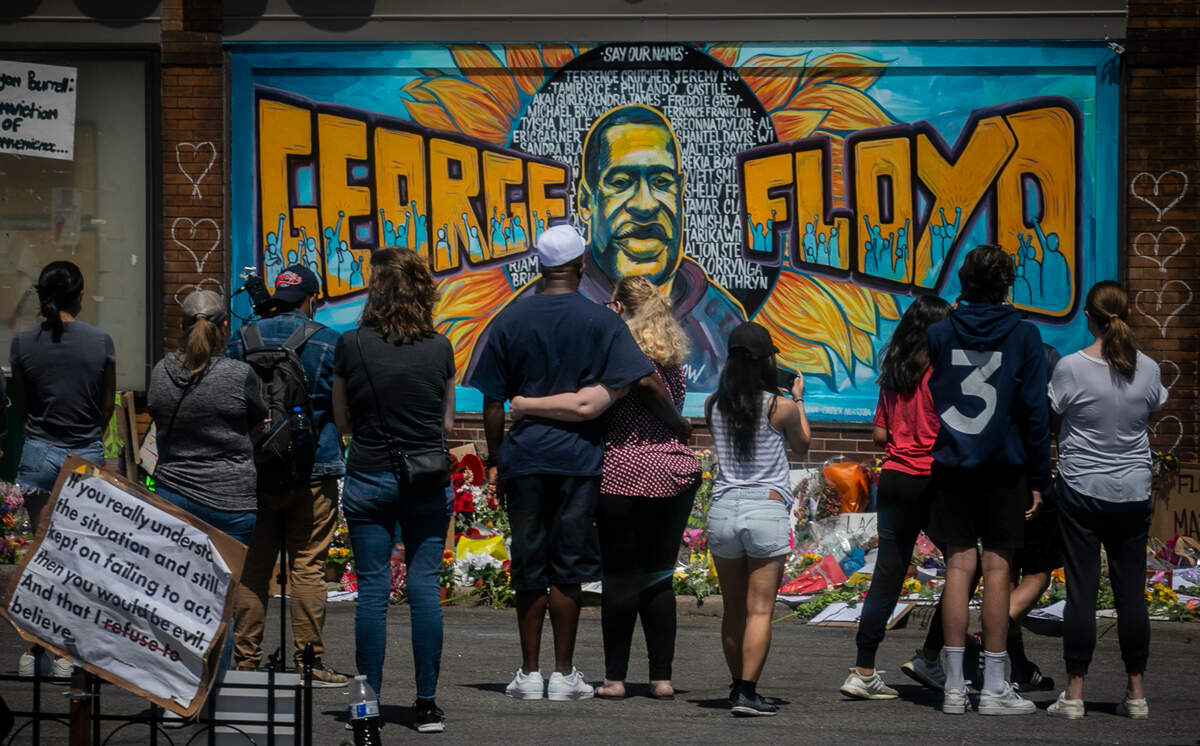
Other cities, like Minneapolis where George Floyd was murdered at the hands of an officer, publish use of force data on a public dashboard.
Two months later, the Kansas City Police Department changed course and said it would cost $4,000 to get the individual reports. Negotiations stalled.
Finally in July 2021, The Star obtained records for $13.75.
The documents contained 638 incidents over 2.5 years. That included an uptick in force during the summer 2020 protests organized in response to Floyd’s death and local police shootings.
Excluding entries from the protests, force was used across the city though areas of concentration included downtown and around 27th and Prospect Avenue on the east side.
Of the total, 170 encounters resulted in someone being taken to the hospital though it was not always a direct result of the use of force. Of those, 60% were Black. Dozens more were injured and treated at the scene or declined treatment.
Officers cited many reasons for using force. In some instances, the person had a weapon or went for an officer’s gun. Others kicked or punched the officer.
But several times, someone who “refused to move” was met with pepper spray, bean bag rounds or tased. And in numerous other instances, the reason listed was “non-compliant” or “other.”
“If they’re not recording exactly why they use the force, then it makes the force always seem justified,” Davis said.
In 41 of the incidents, police used a maneuver called the Lateral Vascular Neck Restraint, or LVNR, which KCPD has said is safer than a chokehold. But critics — including activists who called for banning all neck restraints in the wake of Floyd’s death — say it can become as deadly as an ordinary chokehold if done incorrectly.
In the first six months of 2020 before Floyd was killed, the LVNR was used 14 times by Kansas City police officers. After Floyd was killed, it was used six times. And in the first six months of 2021, it was used twice. Kansas City police said officers are recertified on the technique annually, but there have been no changes when it comes to its use.
Missing data in shootings, arrests
The data provided by the police department does not tell the whole story.
Use of force reports were missing for critical incidents. That includes the arrest of Breona Hill, the woman slammed to the ground by officers outside a beauty store in 2019 as witnessed by Reed, and the fatal shooting of Cameron Lamb later that year.
Officer Donna Drake, a spokeswoman for the department, said the incident involving Hill “did not trigger” the report process.
In the Lamb case, a report was not done even though the department’s policy says use of force reports are to be completed when an officers discharges their weapon.
Investigative staff reviewed the Lamb case file and a report was not located.
“No reason was given,” Drake said in an email.
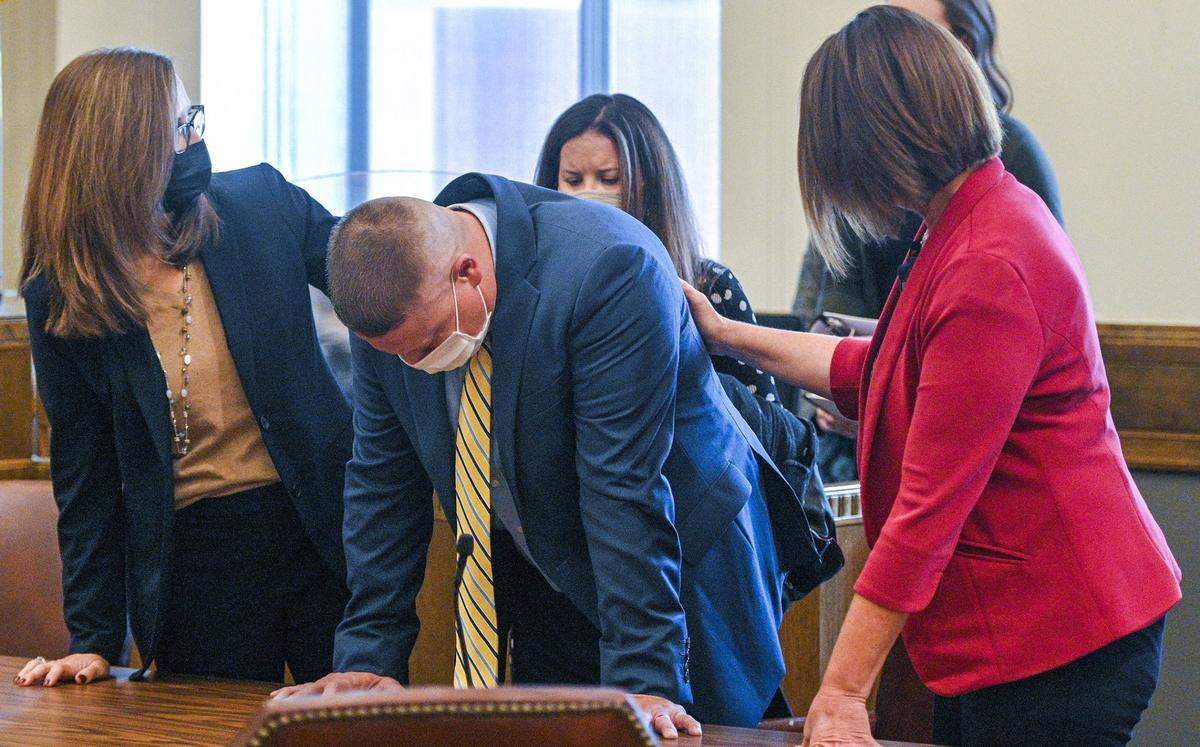
The detective who shot Lamb, Eric DeValkenaere, was convicted of second-degree involuntary manslaughter in November and awaits a March 4 sentencing.
A use of force report on another fatal shooting had the wrong date.
And the two officers who arrested Hill, Officers Matthew Brummett and Charles Prichard, failed to submit a use of force report on a nonfatal shooting they were involved in.
Mayor Lucas said that in general, the department should try to have complete data.
“I would think that to the extent we’re falling short in any way, I will make sure that’s addressed at the leadership level,” he said.
In terms of how the reports are used, Drake said they are “reviewed at every level of the chain of command for any policy issues,” and “reviewed by the academy staff to identify any opportunities to enhance training for new members or current members continuing education.”
A similar but separate review is conducted by the department’s Notable Event Review Panel, which can issue policy and training recommendations after major incidents, mostly shootings. In the past year and a half, the panel has reviewed 11 incidents and made no policy recommendations and two training recommendations.
A Star analysis in July 2020 found that out of a previous 32 incidents, the panel issued zero policy changes and seven training recommendations.
Police complaints, loss of trust
Several local leaders, like McDonald with MORE2, said better mechanisms for accountability need to be put in place.
The Office of Community Complaints has not sustained a bias-based policing complaint in any of its annual reports, which date back to 2009. In nearly every year where data is available, complaints were made at a disproportionately higher rate against white officers and at a disproportionately higher rate by Black community members.
In the past decade, four cases of excessive force were found credible.
Henry Service, a local attorney and activist, said the OCC was a waste of money.
“You might as well skip that step. It’s a joke,” he said.
“People do it as a formality, but not because they expect the police to do anything.”
Service is suing the police department over a 2019 traffic stop where officers pointed guns at him. Unlike some other police departments, Kansas City police do not consider drawing a gun force, so no use of force report was made on his case.
He and many others have condemned the fact that the police department’s internal affairs unit investigates community complaints, saying that favors police and deters people from making complaints in the first place.
Merrell Bennekin, the OCC’s executive director, said the office operates fairly.
“The Internal Affairs Unit has absolutely no input regarding our recommendations concerning violations of policy or procedure; they are only the investigators that collect the information, conduct the interviews and secure the supporting documentation for the OCC’s review,” he said in an email. ”To say otherwise is a mischaracterization of the process.”
The office is moving forward this month with relaunching its Community Advisory Committee, which “aged out” about six years ago, he said. Any resident of Kansas City can apply to be on the committee though the Board of Police Commissioners will make the final selection.
Experts pointed to an array of other solutions.
Training and accountability
Rashawn Ray, a senior fellow at The Brookings Institution, said officers should have to carry liability insurance so taxpayer money isn’t spent on use of force settlements.
Excessive force claims against KCPD have led to more than $9.5 million in legal settlements in the past seven years, according to a Star analysis in October.
Ray also said that in terms of force itself, police need to be better trained in de-escalation.
“Police officers get tons of training,” Ray said. “The problem is that they don’t get the type of training that the public thinks they should be getting like how to properly de-escalate a situation without using force. Simply because a person does not do what you want them to do within two minutes, doesn’t give them the right to body slam them on the concrete.”
Davis, the KU researcher, said officers need to learn when not to shoot, but also when to stop shooting.
“Most people that die from police shootings have been shot more than once,” he said. “Once you get shot more than once, your likelihood of dying just jumps up.”
Another way to address disparities is to reduce the number of times people come into contact with police. That comes by not enforcing minor traffic infractions, Davis said.
“In my own research, you find that police contact can affect how often people feel depressed, how often they feel nervous, sad, calm,” he added.
That was the case for Reed, who said he has sought psychiatric help after watching the two officers slam Hill’s head on the ground, which left her with facial injuries and bruised and in pain for weeks.
“I’ve been going to therapy every week, every Thursday, ever since that happened,” said Reed, who was convicted of parking his car in the road while he filmed Hill’s arrest, but pardoned by Lucas in June 2020. He has since filed a lawsuit.
Reed believes the two officers, Brummett and Prichard, should serve time for their actions against Hill. Charged with third-degree felony assault in Hill’s arrest, the officers are scheduled to go to trial July 25. They have pleaded not guilty. As of December 2021, they were no longer with the police department, though they still have licenses to be officers. A defense attorney listed for Brummett and Prichard did not respond to an emailed request for comment.
Hill, 30, who was raised in Kansas City, will not be there to see the officers face a jury. She was killed in an unrelated homicide five months later. One person was charged with unlawful use of a weapon in her killing, the Jackson County Prosecutor’s Office said.
“She was a very gentle soul, full of kindness,” her aunt Rena Childs said during a phone interview earlier this month.
She recalled feeling devastated after seeing the video captured by Reed. In 2020, Childs filed a federal lawsuit alleging the department violated her niece’s civil rights and continues to allow “practices involving excessive force — specifically against Kansas City’s Black population,” a court filing said.
“It’s dehumanizing thought patterns that lead to dehumanizing force,” her attorney David Smith said.
Of the department’s use of force data, Childs said, “it divides the city.”
“You don’t know who to trust on the force,” she said. “(Officers) have to learn how to deal with different people.”
The Star’s Luke Nozicka contributed to this story.
Correction: An earlier version of this story incorrectly stated no charges had been filed in Hill’s death. An unlawful weapons charge was filed.
This story was originally published January 26, 2022 at 5:00 AM.