In a rapidly changing Midtown, some fear Streetcar expansion will price out neighbors
READ MORE
The hidden cost of a Streetcar
In a rapidly changing Midtown, some fear Streetcar expansion will price out residents.
Expand All
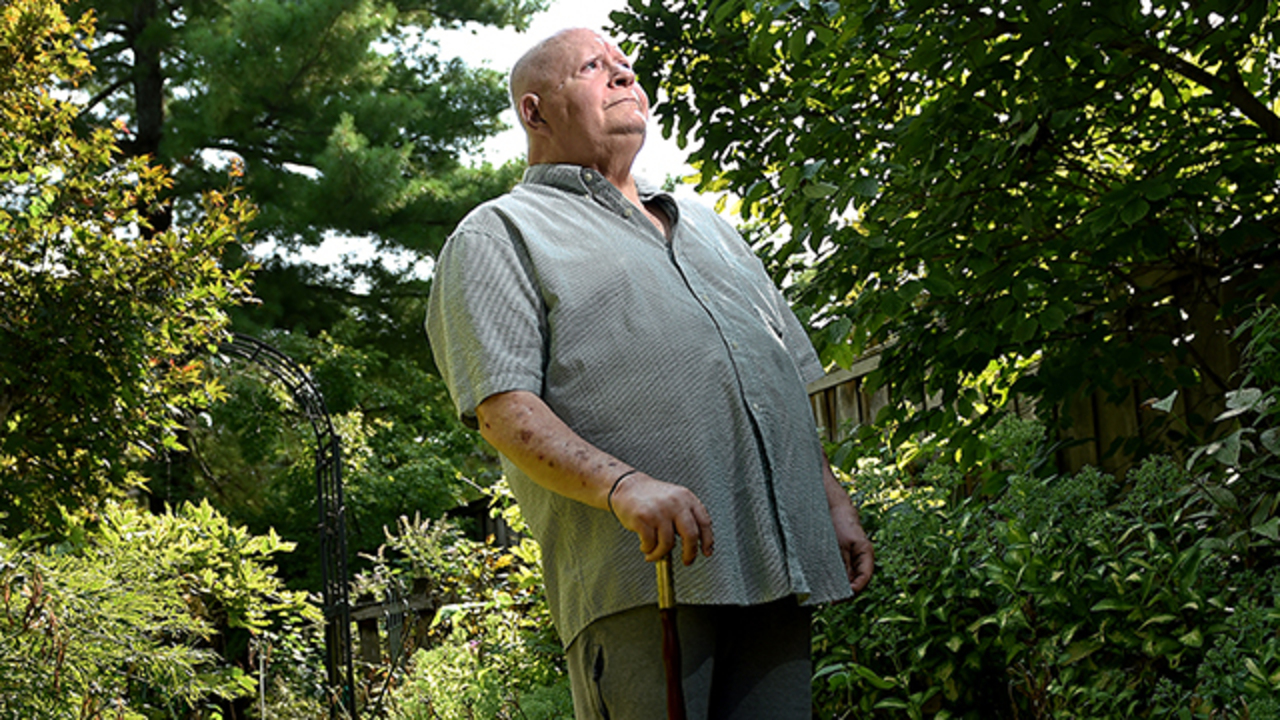
Keith Spare has been a supporter of the Main Street streetcar expansion since its inception.
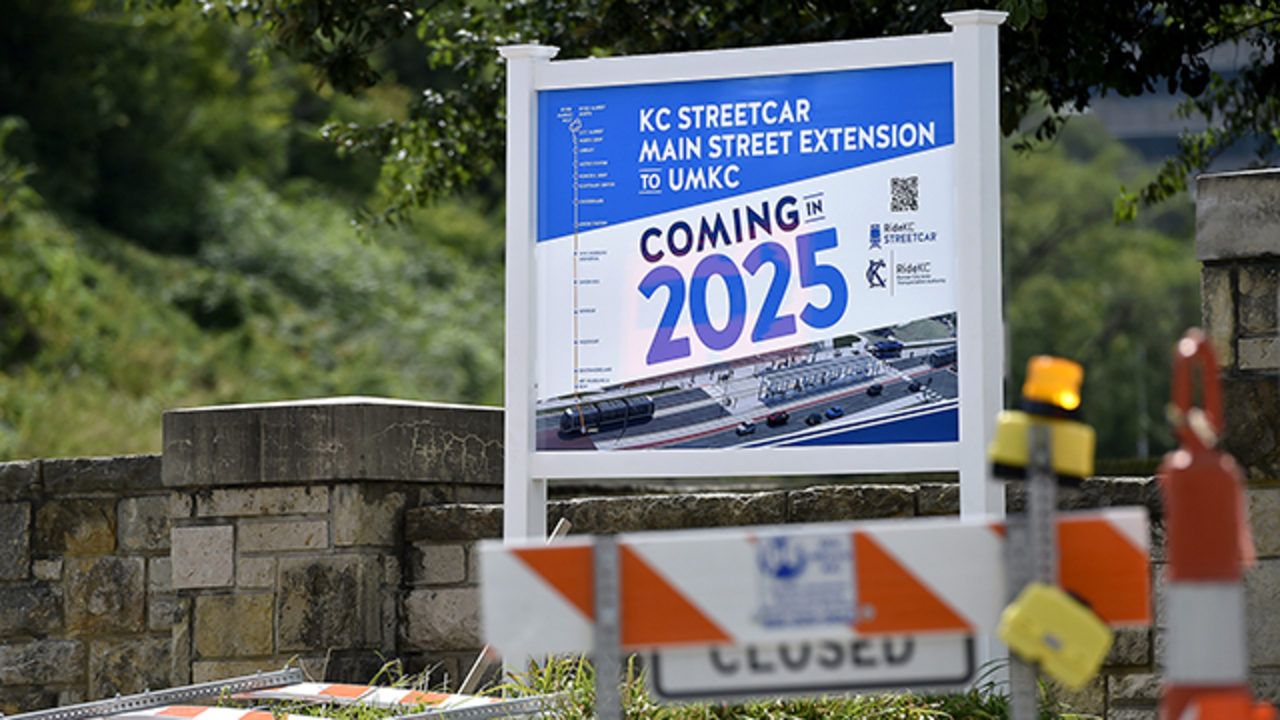
When the new line opens in 2025, it will connect his South Plaza neighbors to Crown Center, downtown Kansas City and the River Market. The extension will bring more traffic to the Country Club Plaza and likely make Midtown more desirable than ever.
But Spare also knows the investment in mass transit will make his neighborhood more expensive, as rents and home prices are poised to surge even more with the additional development and draw.
In the 28 years he’s lived in his single-family home along Brookside Boulevard, Spare has seen his property taxes more than triple from $1,400 to $5,280. He fears the accelerating home values that accompany the streetcar’s desired impact will only drive those costs up.
“We think it’s a wonderful addition,” said Spare, whose home sits just a block from a future streetcar stop. “It’s just a matter of making the homes affordable to live in.”
As construction gets underway to extend the tracks south, Spare shares his worry of some residents being pushed out of their homes and neighborhoods in Midtown, which has offered a more affordable alternative to downtown and the Crossroads Arts District as development ripples through Kansas City.
Those who are all but forced to move will be written off as “collateral damage” in the name of progress, said Erin Royals, a neighborhood outreach and research coordinator at the University of Missouri-Kansas City Center for Neighborhoods.
“People’s lives are being upended and they are having to move farther from work,” she said.
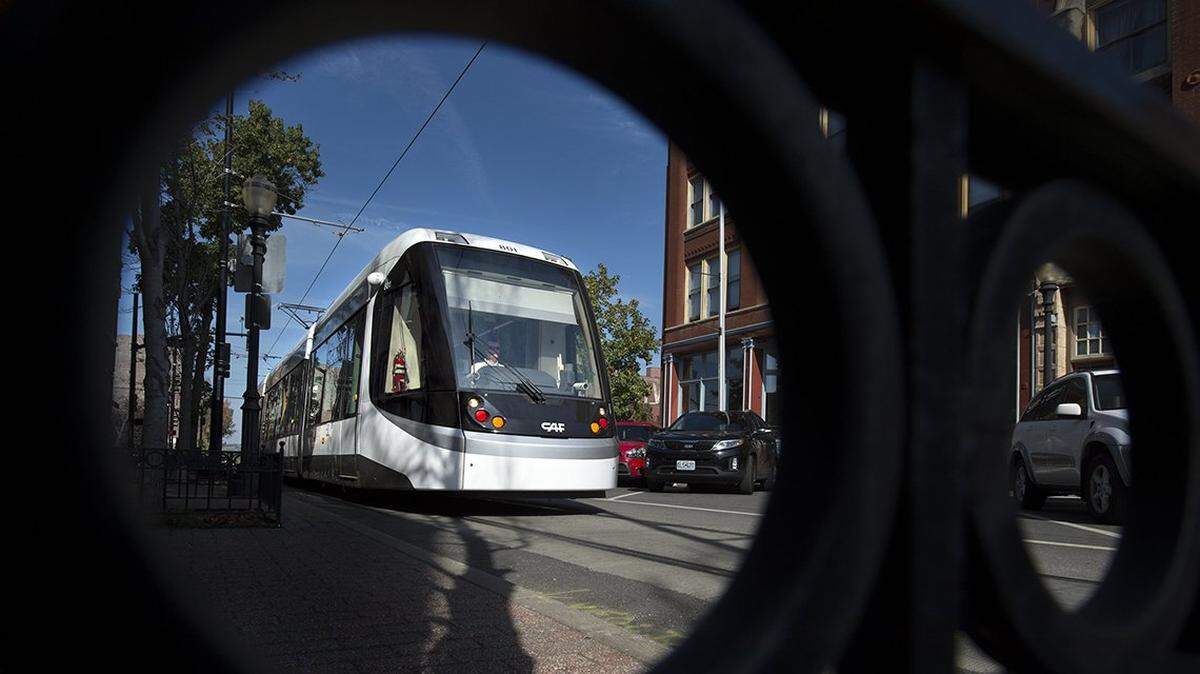
Once the 3.5-mile streetcar extension is up and running, city officials hope it will create a more robust commuter system through the heart of Kansas City and spur the kind of economic development that followed the starter line in downtown and the River Market.
Neighborhood leaders expect the extended line — which will run south on Main Street past the Country Club Plaza and end in front of the University of Missouri-Kansas City — to make the area more walkable, provide an opportunity to transform deteriorating buildings and bring in new business and residents, which they say is already happening.
As conversations grow about extending the streetcar north, east and west, city leaders say they have heard displacement concerns from Midtown residents, but that they are working on legislation and policy changes to assure there is enough affordable housing.
Councilman Eric Bunch, who represents the 4th District and lives in Midtown, foresees more people moving to the center of the city, which he said will be good for businesses and make residents feel safer.
“A city that has a higher population density is more efficient and more lively and safer,” Bunch told The Star. “The big question though is, how do we ensure that that growing population continues to be diverse — diverse racially, ethnically, socioeconomically — and we have to provide a place for that diversity.”
Home values, rents up
Earlier this year, one of the nation’s leading apartment finders reported that Kansas City has experienced the largest increase in rent of the 100 largest cities in the nation for one-bedrooms.
The April report said rates jumped 33.5% since March of last year. It meant that as of March, the average rent for one-bedroom apartments is $1,435 and the average two-bedroom rate is $1,774.
Home values across the metro area have been increasing in recent years. In much of Midtown, data kept by online listing service Zillow also shows home values have spiked.
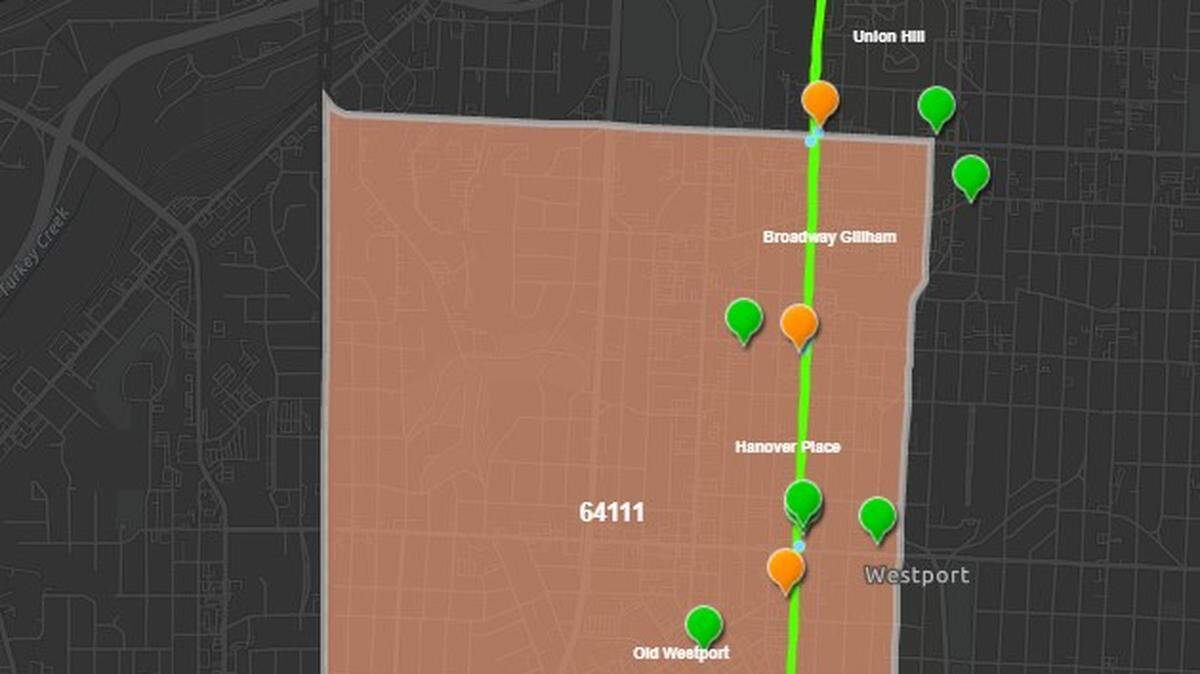
At the end of June 2021, Zillow’s home value index estimated the typical home in the 64111 ZIP code was worth $277,257 — an increase of more than 23% over June 2019’s typical value of $224,987.
That ZIP code includes the 39th Street entertainment corridor near the University of Kansas Health System, Westport and the Volker, Southmoreland and West Plaza neighborhoods. More than 13% of the people who live in that ZIP code, however, live below the poverty line — higher than the metro-wide rate of 10.5%, according to recent Census data.
While some neighborhoods near the expansion route, such as Hyde Park, won’t change visually, the composition of those who live there will, said Royals, who is also a PhD candidate in geography at Rutgers University-New Brunswick.
Statistically speaking, people of color and low-income residents will be among those who can’t afford to participate in “this renaissance” of Midtown, Royals said.
Last year, Stanford University said a new study by one of its sociologists concluded the negative impacts of gentrification “are felt disproportionately by minority communities.”
Kansas City, Royals said, has not responded to concerns of gentrification.
“If it’s development by any means, then obviously there’s going to be winners and losers,” Royals said.
Luxury home construction has boomed just east of Troost in the last seven years, bringing with it fear of displacement. Advocates worry the same will happen as the streetcar seeks to revitalize Midtown.
In the South Plaza, neighborhood association president Cliff Couty said he is trying to make a case for more low-cost housing options, but that it’s tough to get developers to build new complexes for affordable housing because, he has been told, there is not enough “bang for the buck.”
Developers generally want luxury apartments with high rents to bring a return to their shareholders.
But affordable housing remains an option in the neighborhood, Couty said. While newer apartments go for $2,000 for a one bedroom, some duplexes are closer to $800 to $1,200, he said.
Since April, developers receiving incentives to build apartments must include affordable units or pay into Kansas City’s housing trust fund. Though it’s yet to be fully funded, it was established as part of a goal of creating 5,000 affordable units in five years.
Developers who include such units are required to set aside 20% of units in a building to affordable housing — half of those affordable to families earning 70% of the area median income and the other half to those earning 30%.
Late last month, Flatland KC, a news outlet from PBS’s Kansas City affiliate, reported that Mac Properties will propose the first development aimed at meeting that objective. Its project at Main Street and Armour Boulevard, where a streetcar stop will exist, would bring in more than 420 apartments, “many of them intended to serve the workforce and affordable housing market,” Flatland reported.
Earlier this summer, the City Council awarded tax breaks for a project that will refurbish the Katz Drugstore Building at Main Street and Westport Road. The council chose not to require the developer to provide affordable apartments in its 192 proposed units.
Evolving neighborhoods
Midtown has been transforming for decades.
At its peak in the 1950s, Midtown was home to more than 73,000 residents. But like other parts of the city, it saw population decline amid the rise of the American suburb following World War II.
By 2017, the area was home to about 29,000 people, Kevin Klinkenberg, who runs the nonprofit community and economic development agency Midtown KC Now, has said. He hopes that number will increase.
Some neighborhood leaders, who generally support its construction, say the streetcar expansion could shift the way residents along the line live.
Take one of the first new stops heading southbound, at 31st Street in the Union Hill neighborhood, just south of Crown Center. Neighborhood association president Stacy Garrett said the long-term vision will be to have a pedestrian-friendly commercial district that will stretch from that intersection to Troost Avenue, which itself has seen more development and gentrification in recent years.
The walkable corridor would go through the area known as Martini Corner, at East 31st Street and Gillham Road, where new businesses have been opening this year. Garrett believes people could have similar experiences there like they do now in the River Market.
“That would be a destination for the streetcar stop,” Garrett said.
Since residents are paying taxes for the streetcar’s development, though, they want to have a stronger voice in the expansion’s evolution. For example, some Union Hill homeowners have expressed concerns about preserving the Jeserich, a unique building at the corner of their neighborhood’s northbound stop.
“The neighborhood is partnering with Historic KC to figure out what our options might be,” Garrett said, calling the Jeserich a potentially historic building.
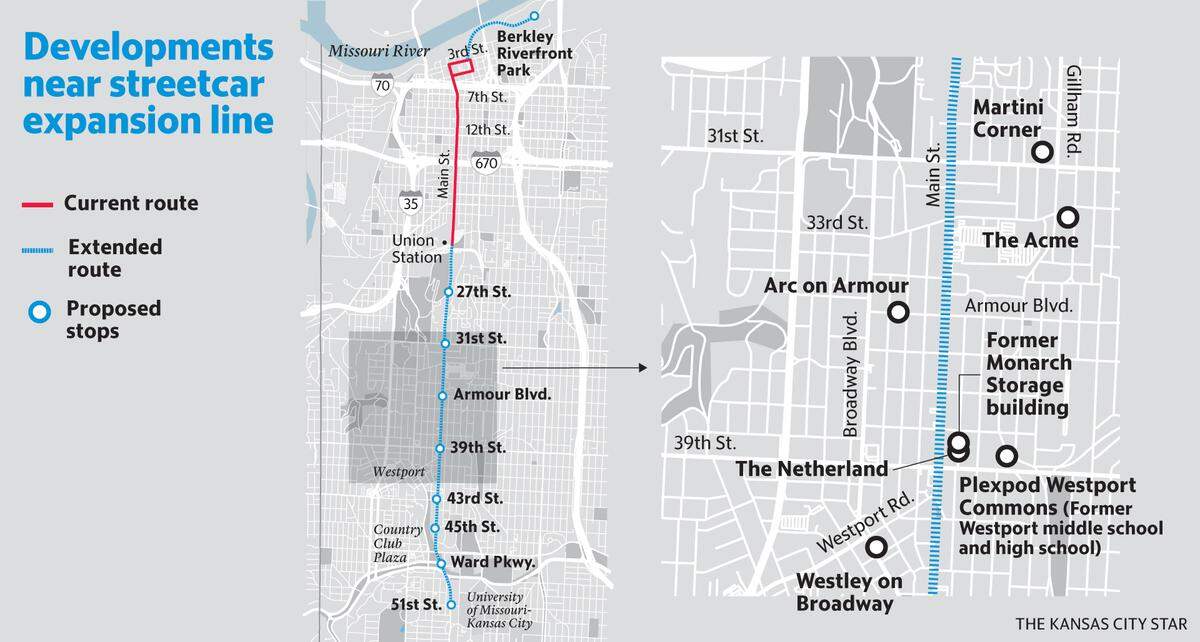
On the way to the first new stop, riders will pass the Liberty Memorial Tower at the National WWI Museum and Memorial, before reaching 27th and Main streets. As the streetcar heads south, the line will also stop at East 31st Street, Armour Boulevard, 39th, 43rd and 45th streets, Ward Parkway and end at 51st Street in the South Plaza Neighborhood.
Along the route, the streetcar will pass a host of businesses, including a Gates Bar-B-Q, as well as the Giralda Tower a block west.
On Main between 48th and 51st streets, developers have plans for a multi-million dollar streetscape upgrade. Once a bank building is vacant, it will be torn down so a six-story office building can go up. A closed fire station that was most recently a Planet Sub will also be leveled to build a boutique hotel. People visiting shops and restaurants will likely see more trees and crosswalks.
Asked what the area will look like in five to 10 years, Couty of the South Plaza Neighborhood Association said that could be answered by walking down where the starter line runs.
In downtown and the Crossroads, some $2 billion in development projects followed the starter line, which runs from near the City Market to Union Station. There are now art galleries, grocery stores, sprawling events like First Friday and tourist destinations up, down and around where the line runs.
The River Market has also had a resurgence. It saw a surge in new residents after the development of a starter line and years of reinvestment. The city has been awarded $14.2 million in federal funds to extend the line north to the Berkley Riverfront park.
“Our desire isn’t to turn us into another Westport,” Couty said of the crowded neighborhood, adding though that the South Plaza does still want to be “a destination” for pedestrians.
South Plaza residents have a similar fear as others along Main Street: fighting with rail riders over what little parking spaces they have. Union Hill residents are likewise concerned that they will soon have to park far from the curbs outside their homes.
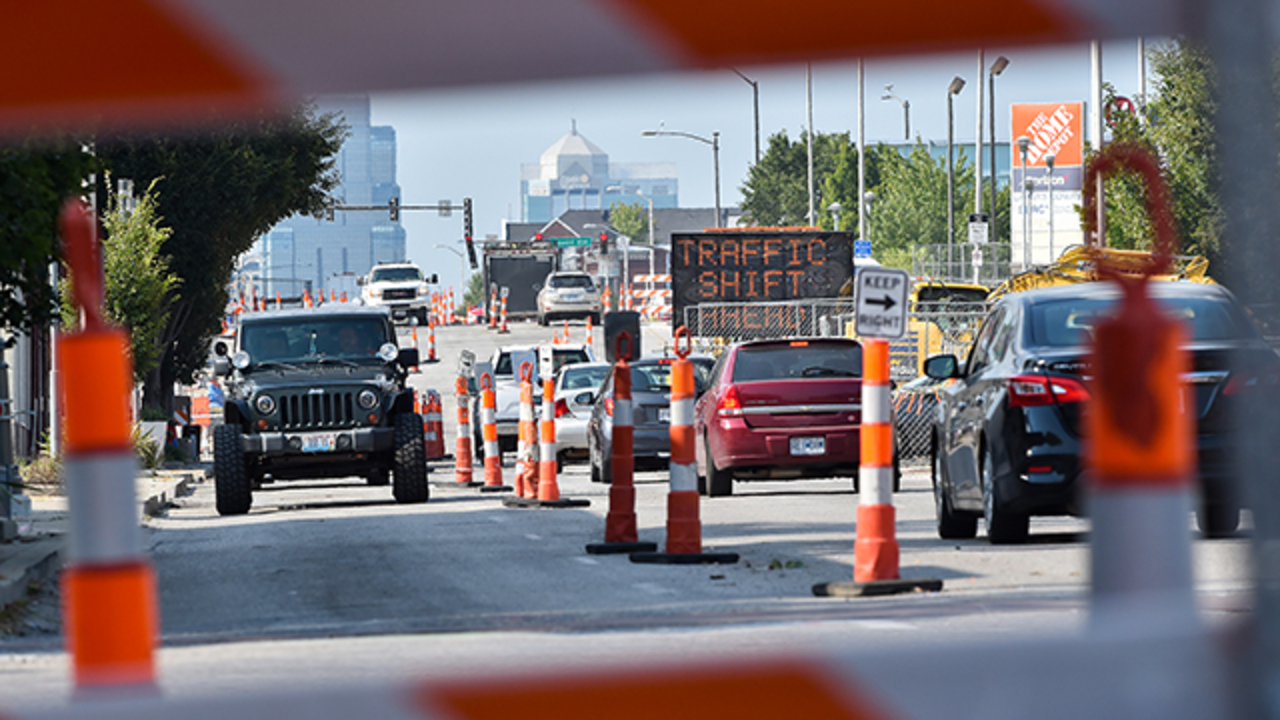
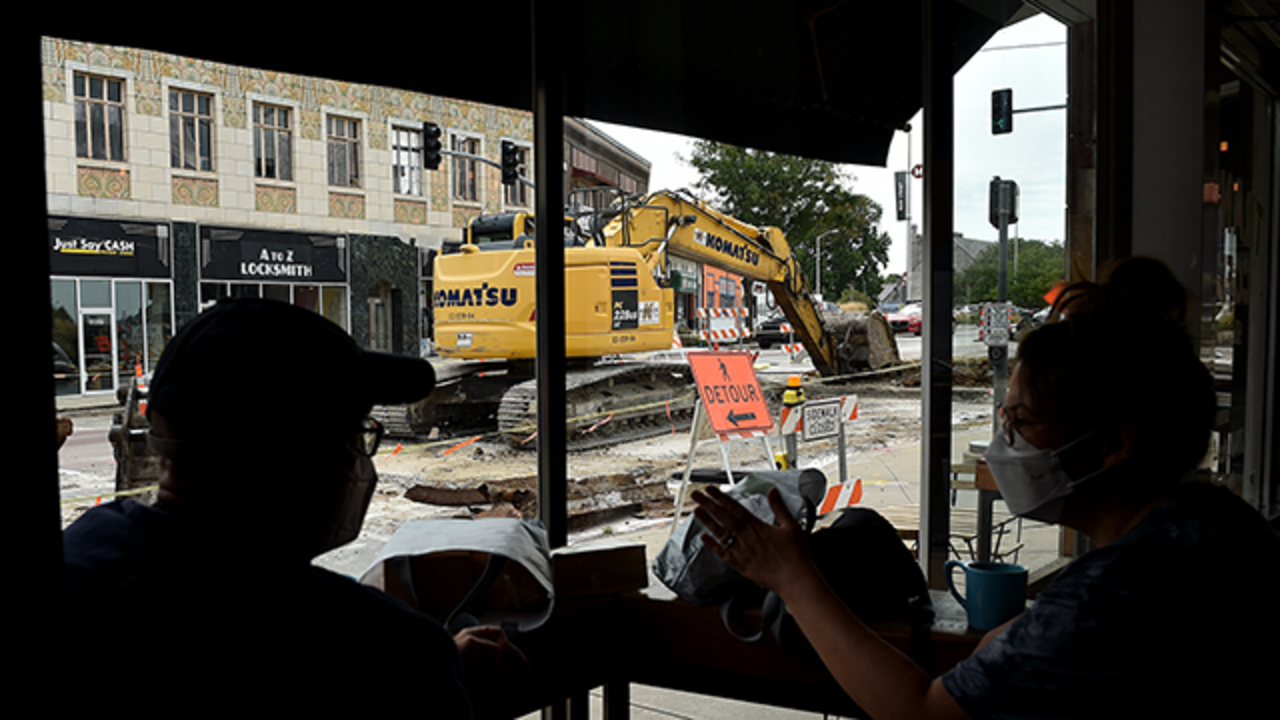
Some have complained about the ongoing construction. Building on the line itself is expected later this year or early next year, but the Water Department and private utilities have to first make upgrades and move utility lines underground to make room for the tracks.
Laura Burkhalter, vice president of the neighborhood association in Southmoreland — which is seeing new home buyers as a result of the streetcar expansion — said her neighbors have been patient about the construction. She tells them, “You have to break a few eggs to make an omelet.”
Burkhalter’s neighbors, some of whom don’t have cars, are thrilled about living a “more urban lifestyle” with additional transit options that allow them to not always rely on vehicles.
While the property tax that is coming is “nominal” for most Southmoreland residents, Burkhalter said, some of her neighbors are anxious about being able to maintain affordability as their neighborhoods become more desirable.
Most people living in Southmoreland are in rental properties. Burkhalter called it “unfortunate” to see some landlords raise prices “without making any improvements,” which stems from a combination of factors — not just the coming streetcar.
‘Like an iceberg’
The streetcar expansion is projected to cost $351 million, about half of which will be paid for with a federal grant. The other half will come from taxes generated by a Transportation Development District, where a special sales and property tax will be levied.
The new property assessment is similar to traditional ones, but it will also include usually tax-exempt institutions like churches, which will pay at a reduced rate. It also means the owner of a home valued at $200,000 will pay $266 more a year, officials have said.
Keith Spare’s house in the South Plaza was $110,000 when he bought it. He said it might sell now for more than $400,000, but that added value is of no use to him unless he sells and moves.
He’d leave behind a garden, what he calls a gift to the neighborhood, where neighbors often drop by to see what’s blooming. As he spoke with The Star, he stopped to talk about individual plants — he has a story for each of them.
A retired mental health counselor and program administrator, Spare said there used to be a tax exemption for seniors and people with disabilities, but that it phased out years ago. He guessed that dozens of his neighbors will have to move out of South Plaza within the next 10 years, and he has already heard similar concerns from his neighbors who live near the Whole Foods Market along Brookside Boulevard.
“My personal opinion is the City Council has continually sold their soul to density being the only way to increase their revenue,” Spare told The Star, saying that more than 100 homes have been torn down in the time he has lived in the neighborhood because of development. “It’s like an iceberg moving through.”
While some Midtown homeowners wonder if it is time to sell before taxes rise, others are thrilled to watch their home values increase.
Garrett, the Union Hill neighborhood association president, has heard from neighbors on both sides of that conversation.
“It cuts both ways,” she said.
Ben White, owner of Transit Coffee, which recently opened at 3940 Main St., said if people are looking to move to the Midtown area, the market and increasing property values are “probably incredibly frustrating.”
“But if you’re looking to get out or sell, I’m sure it’s a great time to sell,” he said.
Mitigating tools
Councilman Bunch has heard from homeowners who fear taxes will go up to the point where they struggle to pay bills; from renters with worries about rising rents; and from others who think Main Street will be dominated by out-of-town restaurants, losing its local flavor.
But there are tools to mitigate those concerns, he said.
For one, the city should look to provide affordable housing for low-income residents and potentially freeze property taxes for certain homeowners.
He’d also like to see the city get into social housing, based on a European model. No U.S. city has ever tried it, he said.
“The biggest impact that we can make as a city in the coming years for affordable housing is for the city to actually get involved as a developer itself and produce municipal social housing,” Bunch said.
Essentially, the city would own the property, which would be mixed-income housing and would likely involve a scale of rent depending on a resident’s income. He said he hopes to introduce legislation on that front this fall.
Mayor Quinton Lucas said affordable housing is a problem in Kansas City generally, and that his office has been working on policies relating to the city’s newly established housing trust fund. He said Midtown is seeing urban renewal, though, and noted he recently went to a newly opened store owned by a Black woman there.
Council members have been “very intentional,” Lucas said, about making sure affordable housing is part of nearly every project in the city. He noted that when the city invested in a new 9-mile bus line along the Prospect Avenue corridor, development in vacant lots followed, adding more housing to that area.
Tom Gerend, executive director of the Kansas City Streetcar Authority, also said while Midtown might be undergoing “growing pains,” the core of the city is, in fact, growing for the first time in decades.
“And that’s not by accident,” Gerend said.
Some sections of Kansas City, however, have not received the same kind of focus as Midtown, Royals said.
While neighborhood leaders east of Troost Avenue and in southern Kansas City, for example, advocate fiercely for their communities, they are frustrated that all they can get in their neighborhoods are Dollar Generals, liquor stores and gas stations.
“To even try to have a conversation around uneven development and what that might mean,” she said, “you’re just so quickly dismissed as a hater.”
Other expansions?
The streetcar could expand to other sections of the city in the future.
The Kansas City Streetcar Authority has been in conversations with the City of North Kansas City about extending the rail lines over the Missouri River, across the Heart of America Bridge and into the Northland.
Through Sept. 20, the city is accepting proposals from “qualified firms” to conduct a study evaluating an extension that would go to about 32nd Avenue in North Kansas City.
In 2014, a feasibility study found that a streetcar line that reached that avenue could cost some $134 million, well above local funding capacity.
Conversations are also “picking up steam” about extending the streetcar east and west. During a Sept. 1 interview, Gerend said his organization hopes to take formal action in the next 60 days to ask for a study effort about that extension.
Lucas said an east to west extension “fundamentally” needs to happen.
“It is essential that we share that vision and share that expansion in development, with a strong east-west route,” said Lucas, who noted that Kansas City used to have 300 miles of streetcar lines.
Asked where he’d like to see the streetcar on the East Side, he named as options East 18th Street, which would lead to the historic 18th & Vine jazz district, but also East 27th, East 31st and East 39th streets.
“There are ample opportunities and reasons to look at any one of them,” Lucas said.
The Star’s Jill Toyoshiba contributed to this report.
This story was originally published September 15, 2021 at 5:00 AM.