Students and staff push KU for more COVID-19 protection. What’s being done?
READ MORE
Mending Broken Dreams
As Kansas and Missouri undergrads return to campus, they’re readjusting their college dreams derailed by the COVID-19 pandemic.
Expand All
Starting over: Dreams derailed by COVID, Kansas and Missouri undergrads return to campus
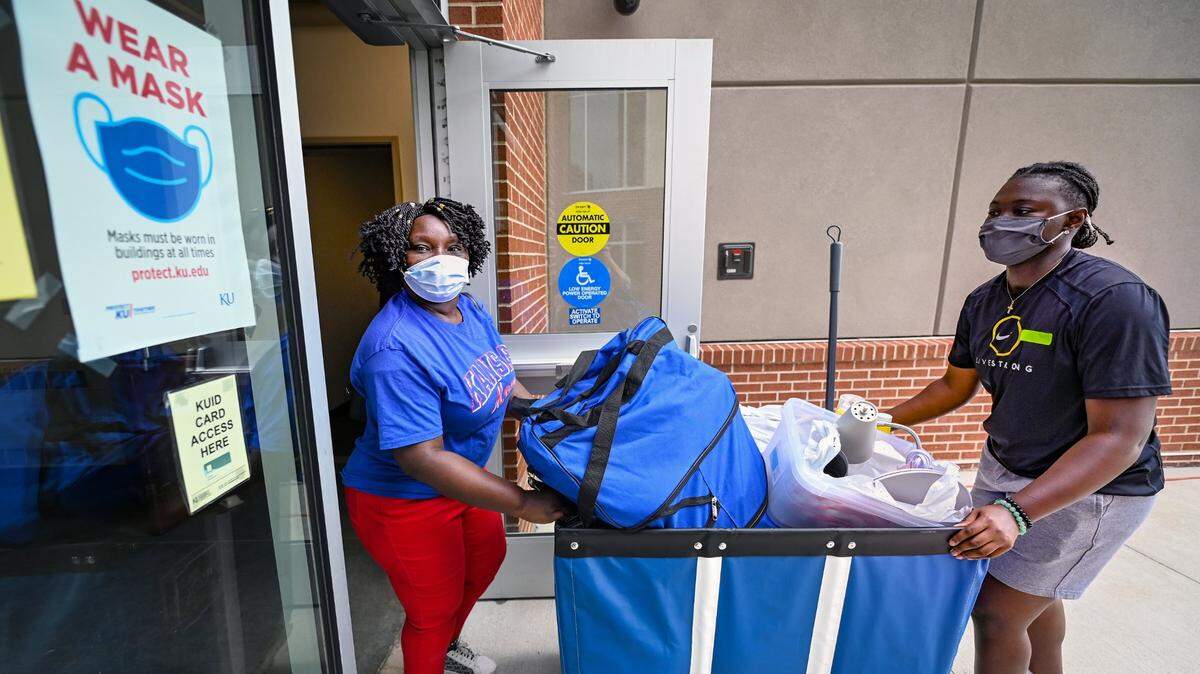
Students and staff push KU for more COVID-19 protection. What’s being done?
What if you’re exposed to COVID at college? Here are rules for Kansas, Missouri schools
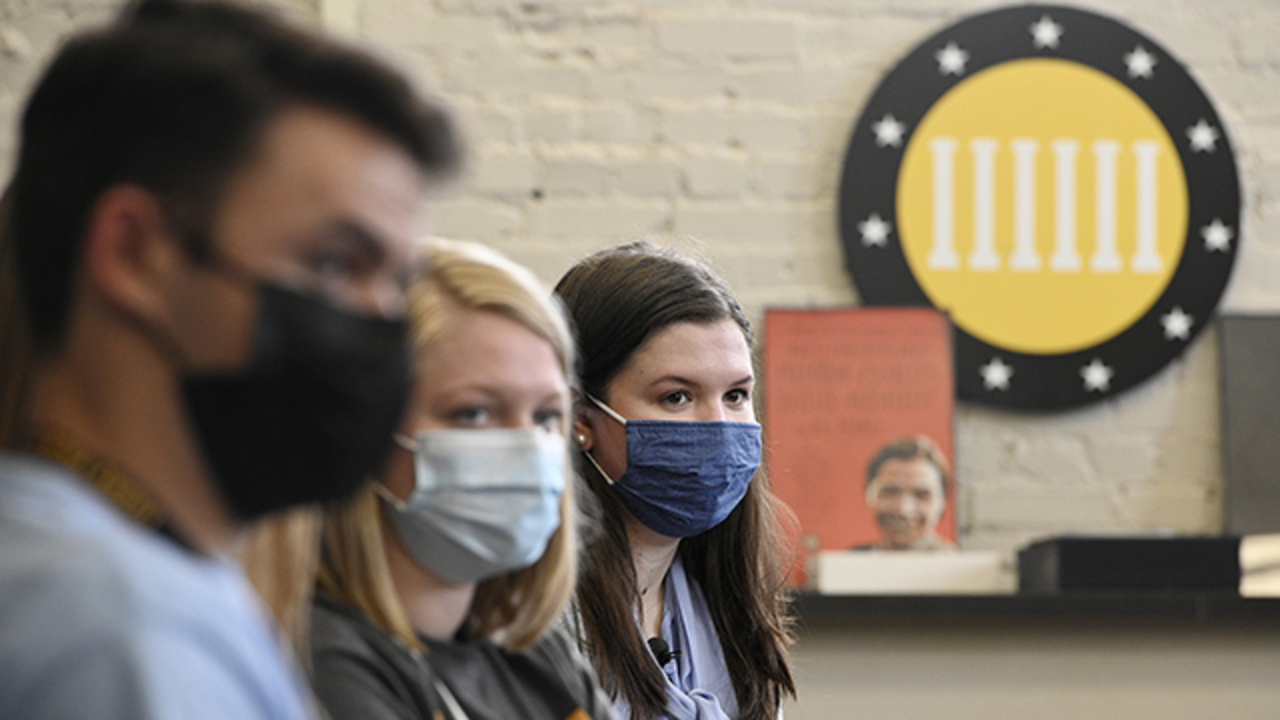
MU senior shares thoughts on her ‘roller coaster’ college experience due to pandemic

For KU student activist Sayan Grover the pandemic turned a normal college experience on its ear.
Plans to start the fall 2021 semester with a return to in-person learning has prompted tension at the University of Kansas.
While there is excitement at the prospect of coming back to classrooms and residence halls after three semesters of distance learning, rising COVID-19 case rates generated by the delta variant are raising concerns that the university isn’t doing enough to keep the community safe.
By the time classes started on Aug. 23, more than 1,000 students and faculty had signed a petition calling for the university to require all students and staff to either provide proof of vaccination or to wear a mask at all times on campus.
The roughly 200-member Graduate Teaching Assistant Coalition wants its workers to be able to choose whether they teach online or in person, a choice they had the year before.
The coalition is the labor union for KU’s GTAs, who often teach small discussion groups and labs for undergraduates as companions to large lectures given by professors.
In a message days before classes started, KU Provost Barbara Bichelmeyer was firm: COVID-19 concerns were not a sufficient excuse for instructors to move in-person classes online.
“It’s been noted that some instructors may be considering independently moving the first few weeks of their courses to an online format in response to their personal COVID concerns,” Bichelmeyer wrote. “Let me be clear: Concern alone is not appropriate justification for an action that has broader, serious implications for students and our institution, and deans must approve any decisions to change course formats.”
Classes advertised as in-person, Bichelmeyer said, can include up to 24% online instruction and no more. In other words, instructors can teach just under one out of every four classes online if they choose to.
To violate that rule, Bichelmeyer said, would be a break with student expectations. Furthermore, she said, it could cause the state legislature to pull funding from the university.
During the 2021 legislative session, lawmakers considered requiring universities to give tuition refunds to students who lost instruction time or were forced online because of the pandemic.
“Earlier this year, our state legislature, spurred by public concern and legal actions filed against Regents universities, including KU, asked for assurances that courses are not moved to an online format solely out of concerns for COVID,” Bichelmeyer wrote. “Failure to adhere to regulations can jeopardize funding that, frankly, allows us to remain open, supports our research, and makes us welcoming to our students.”
Currently, KU is encouraging all fully vaccinated students to enter a lottery for various prizes and is offering gift cards to those who get their first and second doses through campus health services. The university requires all students living in campus housing to either be vaccinated or show proof of a negative COVID-19 test before moving in.
Masks are required indoors across campus.
However, state law prohibits KU from enforcing a vaccine mandate, and the university has opted not to employ mandatory testing during the semester. KU emergency management director Andrew Foster said changes in state law have created a difficult landscape for virus prevention.
“It adds a lot of impediments that have been hard logistically and I think probably politically to overcome,” Foster said. “Nothing is impossible, but the challenges are such that we found other avenues that we thought would be equally as effective if not more effective in some ways.”
Foster said he believed some students would be more open to voluntary programs than those that are mandated.
In lieu of mandates, Foster said, the university would make it “painfully obvious” how easy it is for students to get a COVID-19 test and vaccination on campus.
The Graduate Teaching Assistant Coalition said this will not be enough and that forcing its members to teach in person is a violation of their rights as workers.
“Everything is so opaque,” said Andrew Kustodowicz, president of GTAC. “We don’t even have the basic knowledge to protect our members. Not only are they sending everybody in person, but they’re not giving us clear guidelines. They’re asking people to self-report and giving instructors very little guidance on what they can and can’t do, and they’re taking away the right for us to choose our method of instruction.”
Though many GTAs, Kustodowicz said, are willing and excited to return to class in person, some are immunocompromised or have unvaccinated children. If those workers are assigned to teach an in-person class, he said, they will be permitted to move it online only if they have an Americans with Disabilities Act exemption.
Students and faculty have been asked to self-report to the university if they catch or are exposed to coronavirus, and Kustodowicz said he is expecting under-reporting of cases.
While the mask mandate is a good step, Kustodowicz called it a “lukewarm” measure with little to no enforcement behind it.
“I feel much more vulnerable than I did a year ago because at least I knew I wasn’t going to be in the classroom,” Kustodowicz said. “I’m just very, very afraid, honestly, for the health and well-being of our members and their families.”
This story was originally published September 5, 2021 at 5:00 AM.