Here’s how far Kansas City area students fell behind amid COVID. Can schools recover?
READ MORE
COVID-19 learning loss
Can students and schools recover from years of pandemic-disrupted education? Read our full coverage.
Expand All
Here’s how far Kansas City area students fell behind amid COVID. Can schools recover?
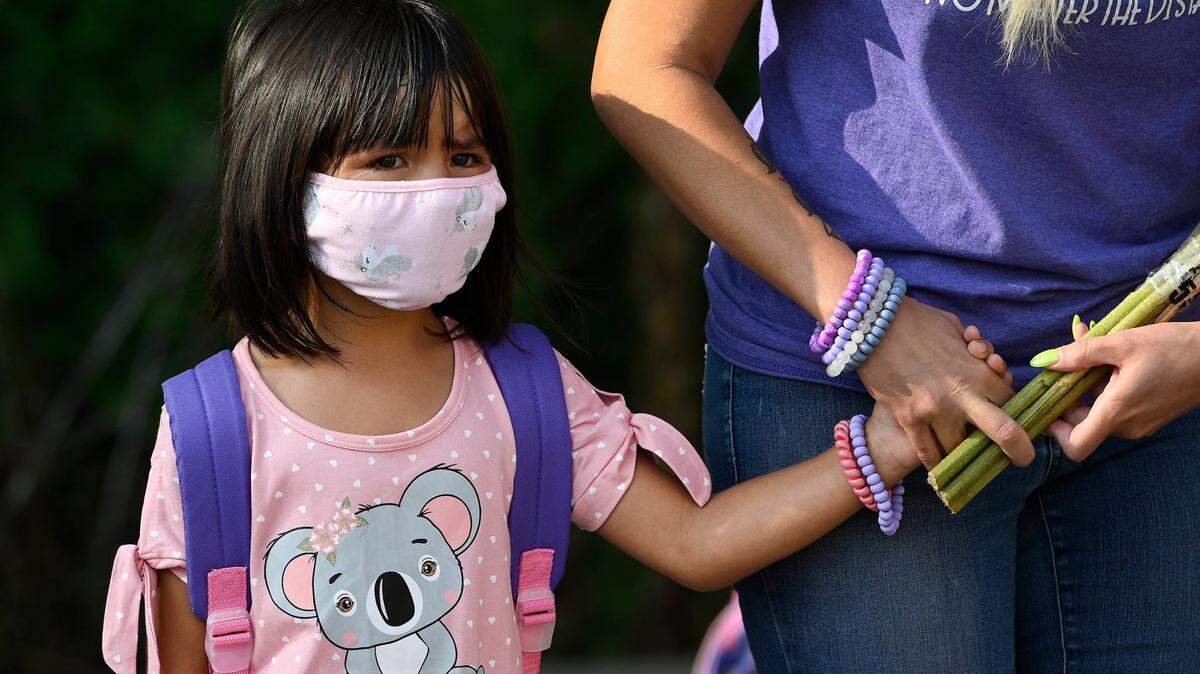
As students begin 3rd school year disrupted by COVID, here’s how KC parents can help
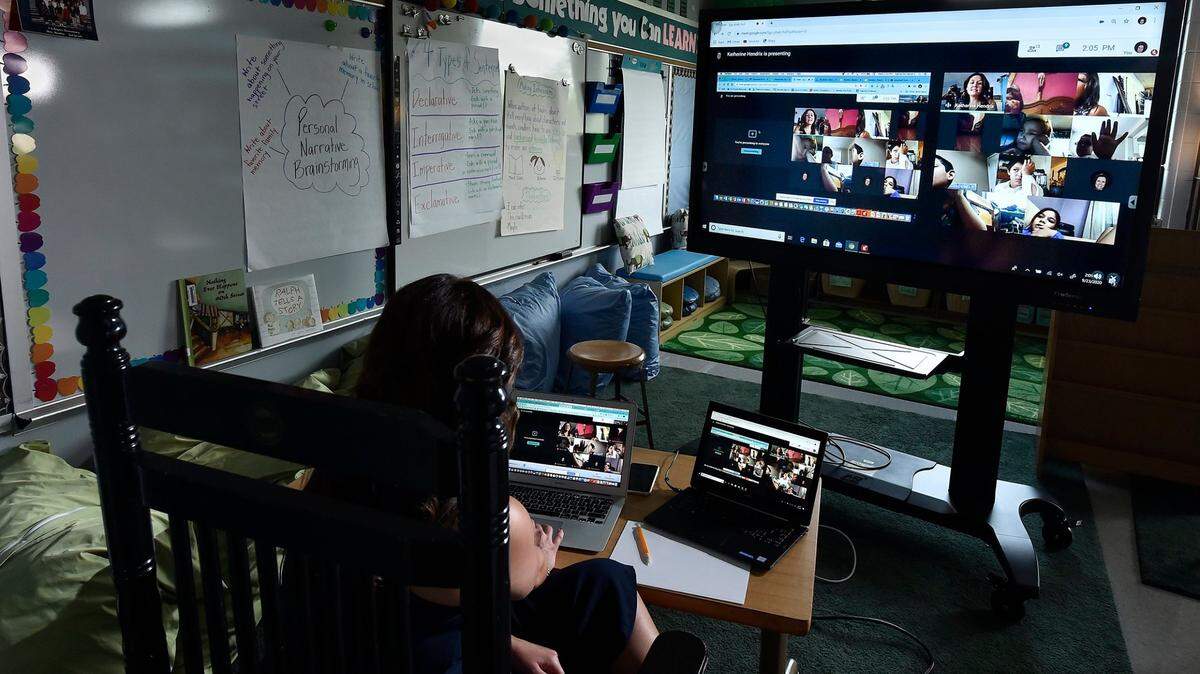
Perseverance, independence, grit: Teachers point to lessons kids learned despite COVID
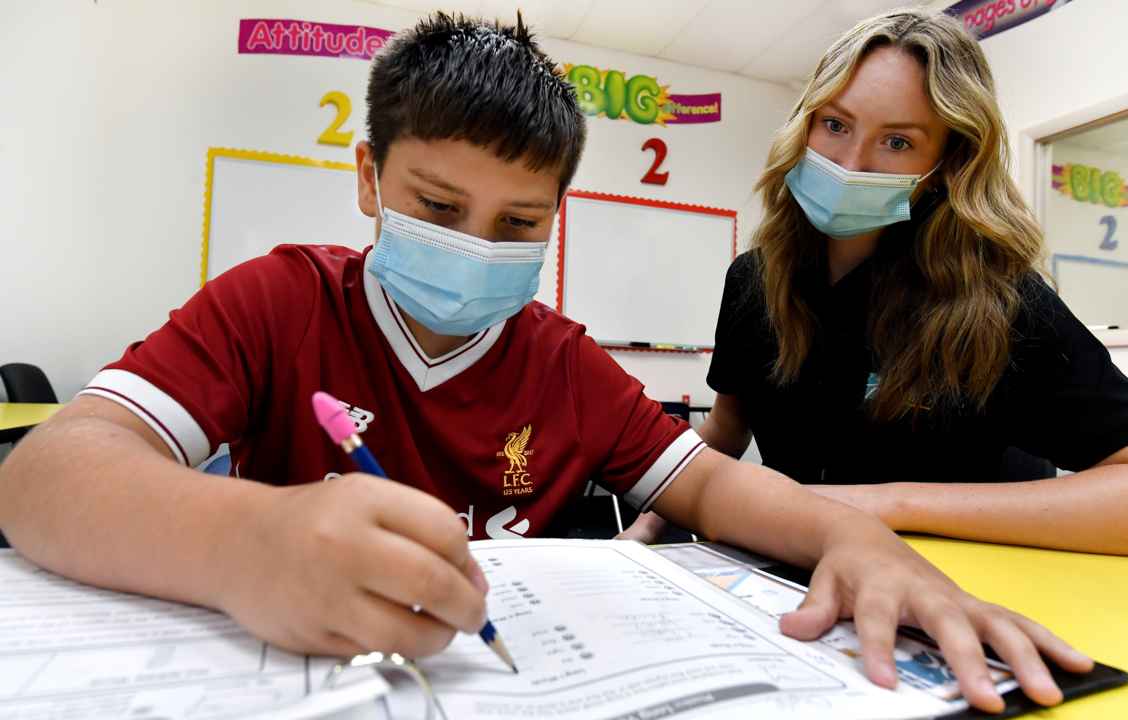
Professional tutor shares tips on what parents can do to help their kids retain what they’ve learned
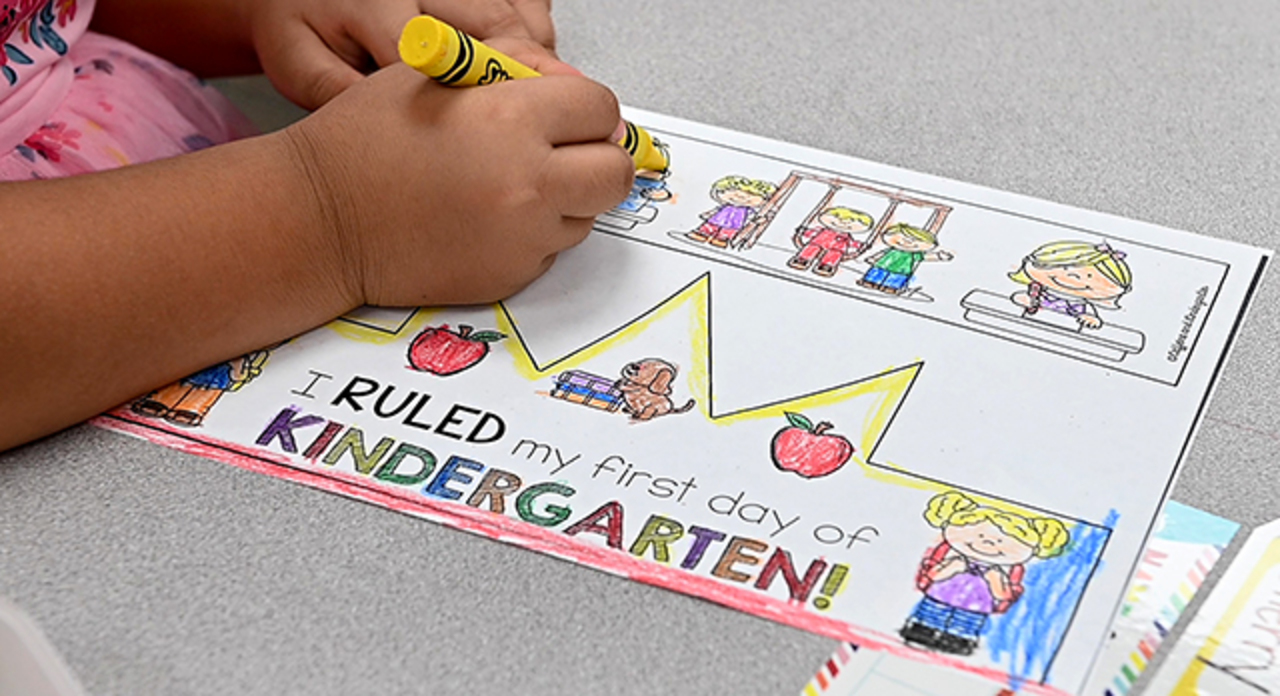
Teacher discusses helping students retain lessons in pandemic
She has learning disabilities, dyslexia and high anxiety, and yet Carin Bockelman’s 13-year-old daughter was doing well in school, finally starting to reach the benchmarks teachers expected at her grade level.
And then COVID-19 hit, and it started to fall apart.
Within one week of Zoom classes, the Blue Valley family knew online learning would be too difficult. And even when she returned to her classroom, she struggled to keep up.
“Every time there was a change, moving back and forth between remote and hybrid and in person, her anxiety and mental health issues made it very challenging for her,” Bockelman said. “It was a really, really rough year.”
“Last year, she was able to attend math at her grade level, social studies and science at her grade level. I’m not sure that’s going to be the case this year.”
New research shows that students across the Kansas City metro and country — including those unhindered by the learning challenges Bockelman’s daughter faces — are struggling as they enter their third school year disrupted by the coronavirus pandemic.
Educators sounded the alarm last year that school closures and online-only classes could leave students months behind, plus widen long-documented achievement gaps.
Now, a sampling of local and national data released over the summer shows the extent of the problem:
▪ On average nationally, students this spring were five months behind in math and four months behind in reading, says a report by McKinsey & Co., a global management consulting firm.
▪ Younger students saw some of the biggest declines in learning, as did low-income and Black and brown children, widening racial and economic disparities, according to new research by the national testing group NWEA.
▪ Locally, in Kansas City Public Schools this spring, only 35% of students met expectations in math, compared with more than 54% in 2019, according to i-Ready assessment tests. First graders struggled the most in math, with only 19% meeting expectations compared with 59% in 2019.
▪ Even in suburban Shawnee Mission, far fewer students in third through ninth grades met reading goals: more than 41% this spring compared to 53.7% in 2019, according to MAP Growth assessments created by NWEA.
Area school districts that haven’t received full testing results yet are bracing for learning loss, especially among their youngest students, according to early numbers.
“It’s no surprise,” said Brian Huff, associate superintendent for curriculum and instruction in the Raytown school district. “It’s very difficult to do virtual instruction with a kid who is just too young. For those families blessed enough to have an adult at home and time to help that kid, they did much better. But unfortunately we don’t have a lot of families who are able to do that.”
Experts say the monthslong losses in learning prove that schools need to act immediately.
“Students who move on to the next grade unprepared are missing key building blocks of knowledge that are necessary for success, while students who repeat a year are much less likely to complete high school and move on to college,” the McKinsey researchers wrote.
“Left unchecked, unfinished learning could have severe consequences for students’ opportunities and prospects. In the long term, it could exact a heavy toll on the economy.”
Kansas City area districts are taking a wide range of steps to help assess where students are and get them the support they need. They expanded summer school options and are now ramping up tutoring and after-school programs. And they are using federal COVID-19 relief dollars to hire extra teachers, counselors and aides to work one-on-one with students.
But at the same time, the start of this school year feels more and more like the start of school in 2020. The highly contagious delta variant is driving up COVID-19 cases, leaving districts to spend much of their time focused on mitigation, rather than recovery.
Health officials are warning that with low vaccination rates and varying mask rules, coronavirus outbreaks could lead to another round of school closures. Hundreds of students will likely be instructed to quarantine throughout the year. And educators fear students will fall even further behind.
“I’m apprehensive because it’s not like everything is over and we can start fixing everything. We’re still in the midst of this,” said Barbara Casey, a fifth grade teacher in the Shawnee Mission district. “Incoming fifth graders have not had a normal school year since second grade. If you’re an incoming second grader, you’ve never gone to school during a typical year. And we’re still in the thick of this.”
Students fell months behind
Teachers and students were left with whiplash last year when classes moved online, to in person, and back and forth again as COVID-19 cases surged and districts struggled to staff classrooms.
Students endured Zoom fatigue, schedule changes, bad internet connections, lost instructional time and a lack of face-to-face interaction. Children were pulled out of school to quarantine after being exposed to the virus. And many suffered from family illness, job loss and housing insecurity.
Educators had to come up with creative ways to keep them safe and learning.
“My No. 1 priority was checking in with the kids and trying to provide them with quality learning experiences,” Casey said. “Whether or not they turned in an assignment that I was going to attach a grade to, at least for me teaching fifth grade, that became less important to me. It was really about making sure that they were engaged and were learning. The grading became secondary.”
Teachers and administrators agree that students learned valuable lessons this past year, as well as resiliency, perseverance and independence. They obtained skills that will benefit them in their careers, as more employers permanently incorporate remote work into jobs. And they also grew academically — in some cases more so than expected.
But despite the best efforts, students did not have the chance to finish all of the learning they should have. And students in urban districts and low-income schools were disproportionately affected, national research shows.
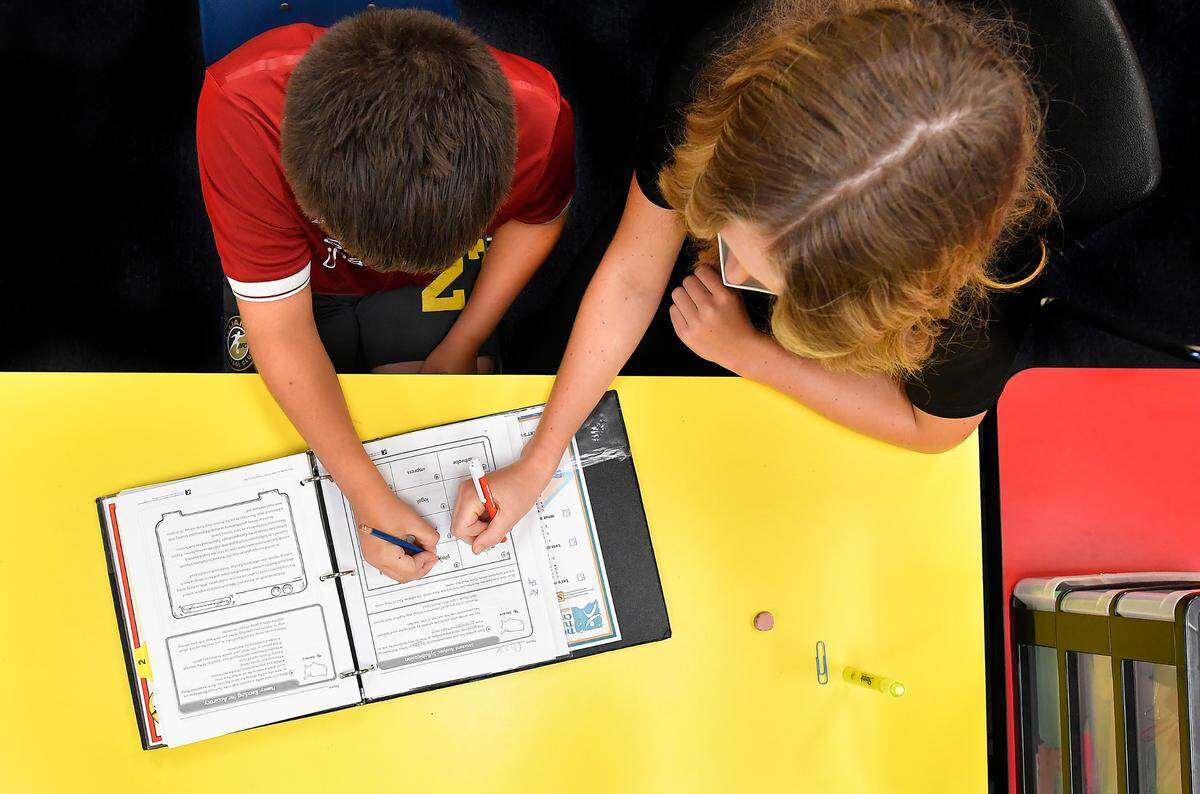
Students in Kansas City Public Schools and the Kansas City, Kansas, district stayed online for the majority of last school year, returning to classrooms in the spring — much later than more affluent suburban districts.
“The concern that has been expressed from the beginning is the pandemic is going to exacerbate those sorts of gaps,” said Mark Tallman, of the Kansas Association of School Boards. “Kansas City, Kansas, has one of the highest percentages of low-income students. They already have some of those academic challenges. And they were one of the districts that didn’t have in-person learning most of the year … which we know raises a lot of issues.”
National research shows that the pandemic has exacerbated historical inequities. McKinsey researchers who studied i-Ready data, for example, found that majority-Black schools ended the year six months behind in both math and reading. That’s compared with students in majority-white schools falling only four months behind in math and three months behind in reading.
But data on such disparities is still sparse locally. Officials in Kansas City Public Schools and Raytown said they had so far not noticed any significant changes to preexisting achievement gaps.
Data from Kansas City Public Schools, which administered i-Ready assessment tests to its elementary and middle schoolers this spring, mirrored national trends, showing steeper declines in younger grades, and deficits across the board in math.
The district reported its largest learning losses among students in first through fifth grades. In reading, for example, more than 33% of second graders met expectations this spring, down from 55.4% in 2019. In math, nearly 28% of second graders met growth goals, down from 57% in 2019.
Some grade levels did not lose ground, or even improved over 2019. More seventh and eighth graders, for example, met expectations in reading this past spring than before the pandemic, according to district data.
“We saw some gains for our students academically, even though they were learning at home, not having that touch point with teachers,” said Lloyd Jackson, the district’s assistant superintendent of school leadership. “Now, did we grow at the same rate as we did in prior years? No.”
But the i-Ready testing only offers a glimpse into student performance. The district administered the assessments for the first time in 2019, so gains that year may have been inflated, said Jerome Williams, district research and accountability manager.
And fewer students took the assessments this year. More than 9,400 students did so in spring 2019, compared to more than 6,600 this past spring.
In KCK, officials said they saw student achievement drop in language arts and even more so in math on the Kansas state assessments, consistent with national trends.
“The slow progression in math may be due to student learning having a larger dependence on direct teacher instruction as compared to reading, which students can do independently to supplement learning when direct instruction is unavailable,” said Yen To, director of the district’s research department.
State assessment results in both Kansas and Missouri will not be available until this fall. Many students struggled to take assessments online, and several opted out.
“It’s really hard to say with any certainty that this is where our kids are at,” Huff of Raytown said.
But he said early data shows that, as in other districts, the youngest students struggled the most. He estimated that younger elementary students lost roughly three months of learning, while upper elementary students lost one or two months’ worth.
Both the Shawnee Mission and Olathe school districts provided data from the MAP Growth assessments created by the nonprofit NWEA.
This spring, Shawnee Mission reported a spike in students who were chronically absent or failed courses, many of whom were students of color. Officials said overall in the first semester, 16% of students had been chronically absent during the pandemic, up from 12% in previous years.
But more concerning, 29% of Black students and 24% of Hispanic students missed a crucial amount of school, compared to 11% of white students.
In Olathe, students seemed to fare well on MAP assessments overall. Bucking national trends, the percentage of students who met expectations in math did not drop for any grade level, and actually increased for some grades.
District leaders agree that with all students back in classrooms, fall assessments will be crucial in helping teachers gauge how well students are learning, so they can plan instruction and offer support if needed.
“We’ve had a large number of students who struggled to get engaged with us at all. Some of them are almost lost kids because they just sat in the background,” Huff said. “So we’ll see when we get to full in person if we’ll get those kids back again. And then we’ll have a better opportunity to use our assessments in person, which is a more reliable method of seeing exactly where we are at.”
Kids suffer COVID trauma
Before teachers can fully dive into reviewing curriculum and assigning homework, several said they first need to create something in the classroom that last year lacked: stability.
“The anxiety that kids felt last year during COVID, I’m sure that played a factor in their ability to learn and focus,” said Linda Sieck, a Shawnee Mission Spanish teacher and local National Education Association president. “And so being back in person will really be about trying to foster a feeling that kids are in a safe place with people who care about them.”
Teachers taught children who lost parents to the virus or who missed school because they had to take up a job to support their family. And they watched as students lost out on school activities, field trips and bonding time with friends.
Parents have openly expressed concerns for their children’s mental and emotional health as they face the trauma of the pandemic, while school traditions and the routines of childhood were stripped away.
National nonprofit YouthTruth this past spring surveyed 200,000 students about their experiences and well-being during the pandemic. Most, 78%, said they faced obstacles to their learning, with 49% saying they felt depressed, stressed or anxious.
McKinsey researchers reported that out of more than 16,000 parents surveyed across the country, 35% said they were very or extremely concerned about their child’s mental health, with a similar number worried about their child’s social and emotional well-being. Roughly 80% had some level of concern about their child’s mental health since the pandemic began.
Assessing students’ emotional and mental state became more difficult last year. For much of the time, teachers couldn’t read students’ body language or pick up on the social cues they typically would in the classroom.
Educators said they will be focused on making up for that.
“Academic learning won’t happen until the child is mentally healthy,” said Kristin Droege, executive director of Turn the Page KC, which works to raise the reading proficiency of third graders. “Schools are going to encounter a lot more children than normal who really have not been in a group of children for a year and a half. And they’ve all experienced a lot of change.”
Some districts are adding school counselors and putting more resources into emotional support services for students. And in the classroom, teachers said they will work on assessing students’ needs and developing trust with them.
“My plan is to start out building relationships and focusing on that social-emotional learning,” Casey said. “I’m not going to have the kids at the beginning of the year sit down and start doing timed math drills. You can get a sense of where your students are at more informally than that, just through observation.
“I think we’re going to have to back off a little bit on some of what we might do at the beginning of a typical year. I think we’re just going to have to ease in a little bit and make sure students are feeling physically and emotionally safe.”
Angie Powers, teacher and NEA director in the Olathe district, said educators should not press students about this past school year’s learning loss, arguing that focusing on deficits will only do more harm.
“My students have learned a lot in the last 18 to 20 months. All of what they learned just won’t necessarily show up on standardized assessments,” she said.
Powers said that because state assessment results come later in the year, daily check-ins with students will be the most helpful tool this fall.
“How can I check in with my students to see where they are socially and emotionally? It’s those day-to-day assessments that teachers have the most control over, and that make the biggest difference,” she said.
Other educators agreed that it’s time to focus on students’ growth and how to help accelerate that.
“I hope that we’re sending messages of opportunity and strengths that were gained,” Droege said. “As we think about the well-being of children, what they don’t need right now is to hear the whole world saying you’re behind and this could be really bad. That’s not going to help.
“Teachers are thinking in the terms of, what are the strengths and benefits, and what are the pieces of last year that taught us something different about how education can work? Children are where they are. We can say it was a year of lost learning. But they are where they are and they’re coming back to school. And schools need to be prepared to meet them there and help them grow.”
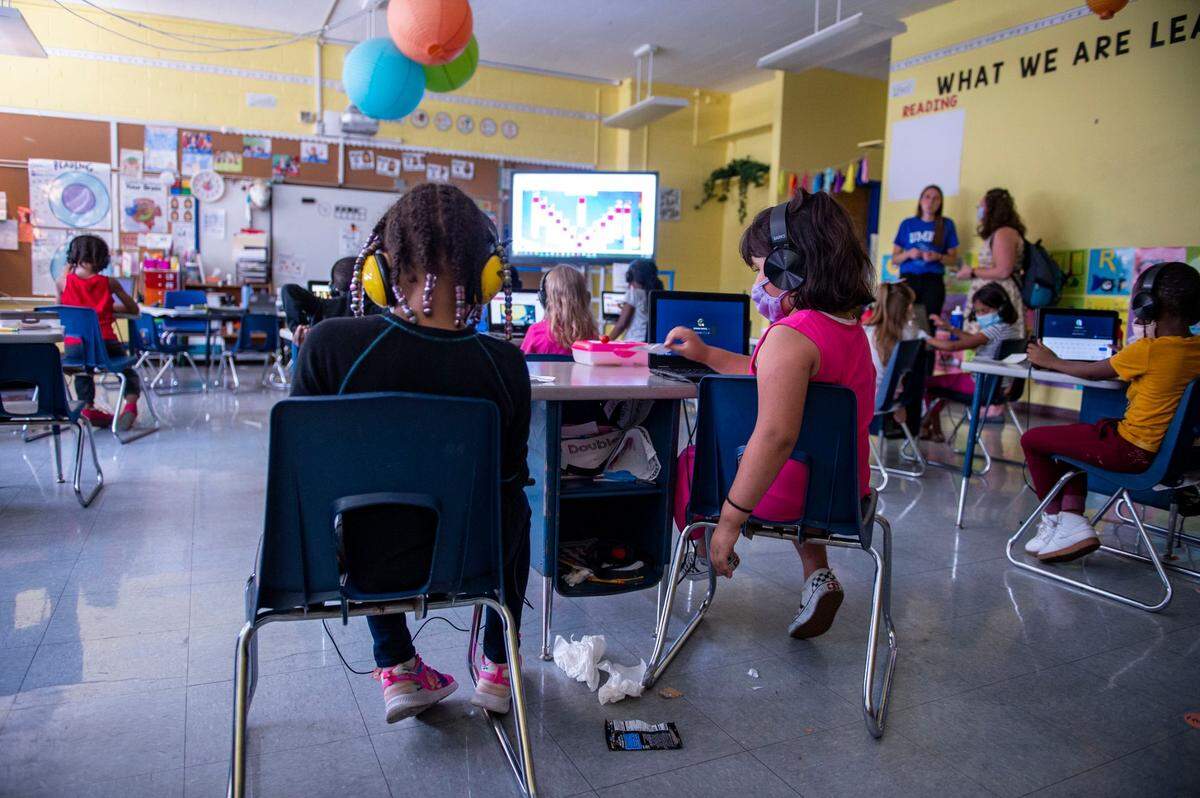
Schools try to remedy losses
Despite all of the challenges of starting yet another pandemic-disrupted school year, educators view this fall as a great opportunity.
For many, they are simply excited to be back in classrooms, where the majority of students are better equipped to learn. And districts have millions of dollars in federal COVID-19 relief funds to help address setbacks in student achievement — learning loss that experts are calling a national crisis.
In the past few months, districts ramped up summer school offerings to help students make up lost time in classes. And many saw record attendance in those programs.
This fall, districts also are using relief funds to hire more employees, who largely will offer additional support for elementary students, English language learners, students who did not meet grade level in math and reading, and others who faced the greatest challenges last year. In many cases, the positions will be temporary, though, only lasting as long as the federal funding does.
In Raytown, Huff said the district is using relief money to hire 20 additional instructional assistants for its reading program, targeting elementary students lagging in meeting literacy goals. The district also is hiring five math teachers, knowing that was an especially difficult subject to keep up with in virtual classes.
The Hickman Mills district also is adding staff, including eight literacy specialists for elementary schools to focus on students reading below grade level. It also is expanding tutoring and other learning opportunities outside of the classroom, said LaTanya Franklin, assistant superintendent of curriculum and instruction.
And in Shawnee Mission, officials previously outlined a plan to hire 18 new elementary teachers, which would help reduce class sizes. It was looking to hire 10 math teachers at the secondary level, as well as seven new elementary social workers, counselors for each of the district’s high schools, plus more than 50 substitute teachers.
Hiring efforts have proven difficult this summer, though, with workforce shortages throughout the industry. And Jackson, an administrator with Kansas City Public Schools, said adding more employees is only a first step.
“What we’re finding is that we can’t human resource our way out of this issue,” Jackson said. “Just like the other workforces are having a hard time hiring people, we’re trying to find the people to hire. So that’s certainly a challenge that we’re trying to address.”
Teachers are greeting a new classroom of students, all of whom are coming out of the past year with different experiences, strengths and challenges. They said it will be important to offer supplemental support to those who need it, such as after-school programs, tutoring, counseling or other interventions.
“We can’t forget this whole crisis has taught us the real impacts of disparities in equality and equity in schools. You have kids who had broadband access, books at home, access to high quality food, who feel safe and have a health care provider. And then there are so many kids who don’t have those things,” said Marcus Baltzell, spokesman for the Kansas NEA. “This time has really been spent looking at the issues exposed by this crisis and determining how we can overcome these underlying issues.”
But still in the midst of the COVID-19 pandemic as cases continue to surge in the metro, educators emphasized that students need to be in classrooms, with as few disruptions as possible, to avoid prolonged learning loss this year. And students cannot learn unless they feel safe.
“We want to be in person. We are ready to do our jobs. This is more than a job for us, it’s our passion. And we need help,” Powers, the Olathe teacher, said. “We need help getting our kids in schools and keeping them there. And for that, we need the help of our community.”
This story was originally published August 25, 2021 at 5:00 AM.