Life shaken: How in just 10 days, the coronavirus upended Kansas City
The world had not yet changed — not in the drastic, historic and jolting way it soon would — when Kansas City Mayor Quinton Lucas made his decision in the face of the spreading coronavirus.
From his offices on the 29th floor of City Hall, he could see the Sprint Center to the south. It gleamed like a crystal bowl on March 11. Thousands of fans for hours had been crowding around the arena prior to the 6 p.m. game, the first of the Big 12 men’s basketball tournament. Oklahoma State would beat Iowa State by a single point with a last-second layup.
Fans squirted liquid hand sanitizer into their palms. Hundreds of portable stations had been set up because, of course, people knew the novel coronavirus, COVID-19, was out there. It had been spreading death in China for months, shutting down Italy. That Friday prior, the worried mayor of Austin, Texas, had canceled the massive SXSW festival.
Somehow, in the Kansas City area, it all still seemed far away. The first confirmed case in the United States hit on Jan. 22. The first death, from a Seattle nursing home, was reported on Leap Day, the last day of February, when there were still fewer than 70 infections logged across the country.
Cases were spreading. But a day prior to the Big 12 tournament, under 1,000 infections had still been reported nationwide. Only one was confirmed in Kansas, in Johnson County. One in Missouri, in St. Louis County. Both were reported on March 7, and both patients had been traveling.
“This is not something anybody needs to panic about or be frightened about,” Mary Beverly, interim director of the Johnson County Department of Health and Environment, told the public then, though she said things could change.
When fans entered the Sprint Center on that Wednesday, many did so with blithe calm.
“I’m not scared,” Iowa State fan Brandon Gregerson, 32, of Anita, Iowa, said, just before he and his boy, 7-year-old Brody, walked in. “I kind of think everyone is overreacting a little bit. It’s a virus. The flu’s a virus. There’s many viruses out there. A lot of people get those types of things. As long as you’re smart, wash your hands, do all of the things that they’re telling you, I think we’ll all be just fine.”
The mayor that day was more concerned. The virus was among us.
To banish any doubt and intensify awareness, the World Health Organization that morning officially declared the rapid spread of the coronavirus to be what health experts knew it to be: not just an epidemic, but a worldwide pandemic.
A day earlier, Lucas’ directors of the city’s health department and emergency medical services didn’t think they needed to cancel the Big 12 tournament.
That Wednesday, the ground started to shift. The virus was spreading. The NCAA said it would hold March Madness, but without fans. By late afternoon, Lucas’ team was discussing an order to prohibit large events.
Near 4:30 p.m., he entered the Sprint Center. People streamed in to fill its 18,500 seats. A thought, he said, flashed through his mind.
”Well how the hell do we call it off now?”
This night would be the last like it. The city attorney worked through the evening. The next morning, at 10:30, Lucas declared “a state of emergency” for all of Kansas City.
Prohibited for 21 days: Events of 1,000 people or more. The Big 12 tournament was done, as its commissioner would affirm just moments later. Canceled, too: every major convention of any significant size, striking a massive blow to the city’s coffers.

Little did Lucas know that three days later on March 15, he would reduce the gathering number from 1,000 to 50 people, per the federal Centers for Disease Control and Prevention.
The next day, Monday, March 16, the restrictions grew more sweeping, and neighboring counties would soon join in. No gatherings of more than 10 people. Restaurants limited to delivery and take-out service only. Schools closed until April 6, at least.
On Tuesday, Kansas Gov. Laura Kelly went a step further and closed all schools in the state until the end of the academic year, keeping nearly a half million children at home.
“I think when we were walking down the streets during the Chiefs parade,” Lucas said, “I’m not sure there was anyone in Kansas City who recognized that one month later we would be in an entirely different state of things.”
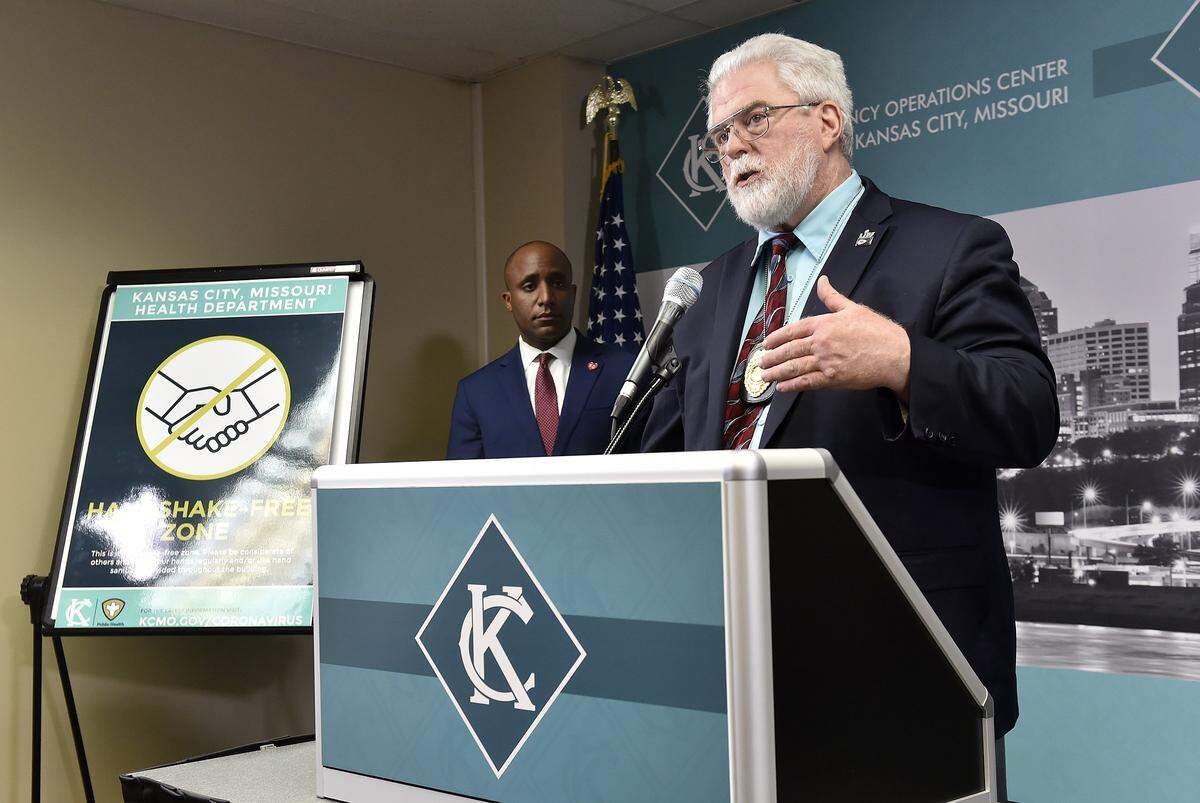
Starting March 12, in just 10 days, the Kansas City area, like much of the rest of the world, has undergone a seismic shift. It has rattled nearly every facet of daily life in a way that has average people and experts all uncertain about the future and debating comparisons to the economic collapse of 2008 and to 9/11.
What is not arguable is that society changed at a speed rivaled only by the spread of the coronavirus itself. In future montages, images of these days will be indelible:
Bars and restaurants all but vacated until the contagion comes under control at some unknown date.
Streets empty. Churches empty; houses of worship try to minister to their faithful through live-streaming. Shops shut tight. Public and private schools closed. Businesses and factories vacated as employees hunker down and work from home, if they can. Musicians, dancers, actors, wait staff — gigs and jobs canceled. Without work, they fret over bills and housing.
Doctors and hospitals find themselves inundated with worried patients, clamoring to be tested. People’s retirement accounts are in free fall, as the stock market craters. The Dow Jones Industrial Average on Monday plunged 3,000 points, its largest drop ever in one day, its recovery weak. Jobless claims have soared 600 percent in Kansas alone.
Moments after the Big 12 tournament was canceled, the NCAA followed suit. March Madness: abandoned. Virtually all major league sports — hockey, baseball, basketball, tennis, the Kentucky Derby — shut down.
Many major attractions and movie houses on March 12 still thought they could make it. The Kauffman Center for the Performing Arts said it would cancel its performances, but only until April 1. A day later, the Nelson-Atkins Museum of Art said it would close for three weeks and then reassess. Leawood-based AMC Theatres declared it would limit ticket sales to 50% capacity to promote social distancing.
But once area officials restricted gatherings to no more than 10 people, all major attractions announced that to protect against the virus’s spread, they were shutting their doors for weeks or longer: the Kansas City Zoo, Arvest Bank Theatre at the Midland, Union Station’s Science City, the National World War I Museum, the American Jazz Museum, Wonderscope Children’s Museum, the Kansas City Ballet, the Kansas City Symphony, the Kemper Museum of Contemporary Art, Powell Gardens, the Overland Park Arboretum & Botanical Gardens, the Sprint Center, the New Theatre & Restaurant, the Nelson, the Kauffman Center, movie theaters. The list goes on.
‘So much bad news’
For 24 years, sisters Sloane and Casey Simmons have run their artists and artisans store, Stuff, in Brookside. As sales dropped 65 percent this month, they’ve laid off their entire staff. The shop is closing its doors three days a week, open four.
“I don’t think anyone could expect this,” Casey Simmons said. “It was certainly unexpected that the landscape would change so rapidly.”
Their plan, once the health crisis passes, whenever that is, is to bring their employees back. They are trying to remain hopeful. Loyal customers have been helping by buying online. They know they are in survival mode.
“Yes, this is one of the worst days in our professional lives. It is heartbreaking. It is devastating. It is demoralizing,” the sisters wrote on their blog. “It is impossible to wrap our heads around what is happening in our greater small business community.”
Juliette Garcia-Rojas, 17, meantime, never expected Kansas Gov. Laura Kelly to cancel all schools for the rest of the academic year, including her parochial school, Bishop Miege in Roeland Park. Her friends and social life were centered there.
“I want to go back,” the senior said. “Knowing we won’t be able to go to prom or have graduation is heartbreaking.”
When Christine Robertson started driving for Uber two years ago, she made $500 her first evening. On Tuesday, she drove for three hours and checked her phone for profits: $22.
“This is probably the deadest I’ve ever seen it,” she said. The gig used to supplement her income, but when a back injury forced her to quit her old job, Uber became her sole source.
“There were weeks I worked 30 hours and made $600. I’ve made $44 in the last two days,” she said.

Overland Park couple Austin MacDonald and Kayla Koester were to be married Saturday. They never anticipated being forced to cut their wedding guest list from 148 to then 50 to then 10. Both cried as they called MacDonald’s grandmother in Omaha to tell her it would probably be safest if she stayed home.
“Any other things that this week can throw at us,” MacDonald, 29, said, “it’s not gonna be anything harder than this.”
Missy McVickers, the sales and events coordinator at the Madrid Theatre, an events space, spoke plainly: “I have been in the wedding and event industry for almost 20 years and have faced many obstacles and challenges, but none quite like this.”
Nor has Jasper Mirabile Jr., the 58-year-old owner of Jasper’s Restaurant. He’s worked at the family Italian restaurant in south Kansas City since he was 8 years old.
“And in 50 years, I never thought I’d be telling my employees they wouldn’t have a job tomorrow,” he said. He laid off three-quarters of his 42 employees after the mayor ordered restaurants to stop offering dine-in service.
“It’s the hardest thing I’ve ever done in my life,” he said.
He quickly adapted like everyone, still offering his whole menu, but running it out to people at curbside. But he wonders how long he can make it on a to-go business.
“It’s not like its survival of the fittest because everybody’s got to do something. The whole world is changed now,” Mirabile said.
Thirty-six years ago he would celebrate every dollar made at his Marco Polo’s Italian Market, which sells soups, sandwiches and salads next door. It’s like time has reversed.
“I sit here every hour and look at the register and see how much money we have in it,” he said. “And call my mom and say, ‘Mom, we just sold four pans of lasagna.’”
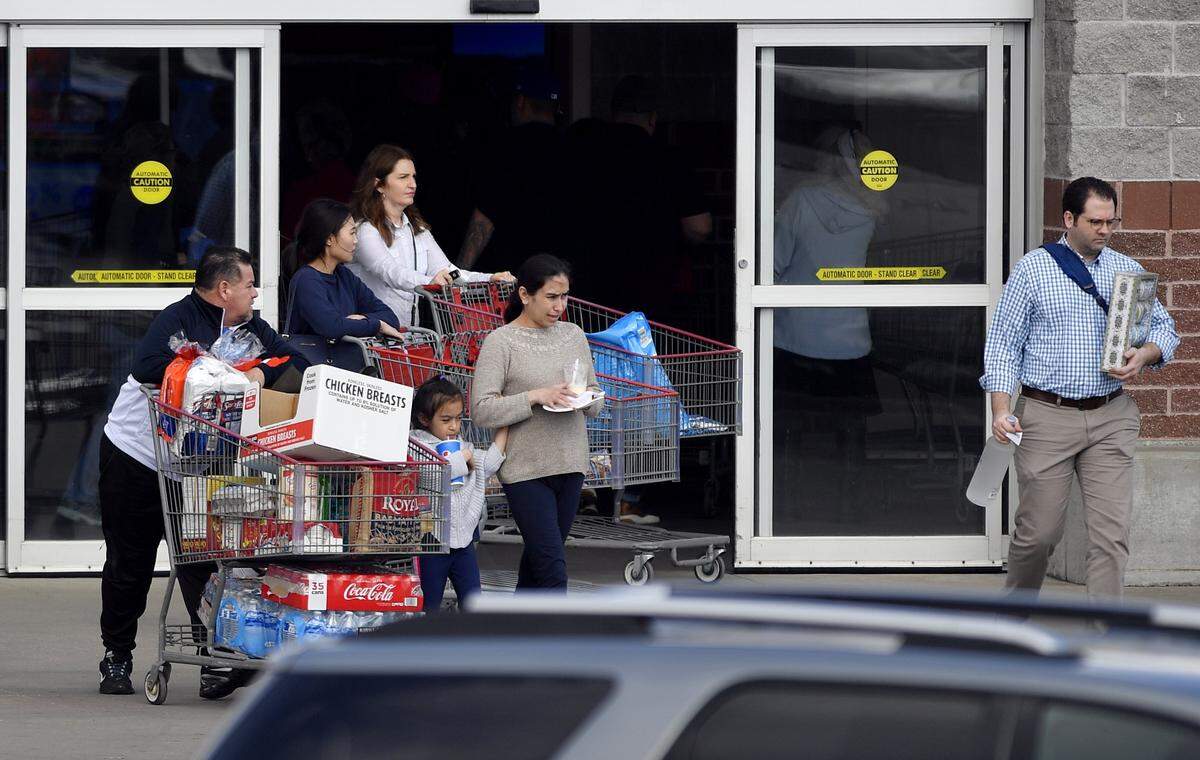
Friday was Tino Scalici’s first day at home after being laid off from the Ford Assembly Plant, where he works on the motor line and has been employed for 20 years. That Claycomo plant, as well as the General Motors plant in Kansas City, Kansas, closed Wednesday.
Scalici, 42, had ironically just come back to work after a stint in self-isolation from having the H1N1 flu.
“This could be a situation where it’s weeks or months,” he said. “I can’t imagine. It seemed like things were going so well for so many people for so long and now it’s been so much bad news.”
There are safety nets available to him as a Ford employee. He worries as much about those around him.
He volunteers for Morning Glory Ministries, which provides food for the homeless downtown. They can’t welcome guests for now; they’re feeding them outdoors. He does programming for the Heartland Labor Forum on KKFI radio. They’re not having guests in the studio. He’s seen his favorite coffee shop close to the public and look for other ways to make money, like delivering coffee or beans, even to other shops.
“What I worry about most is people’s mental and psychological health,” Scalici said.
He said he’s seen people overreact when others cough or sneeze. If the pandemic and its effects linger, he also worries about himself.
“I’m not far away from being completely (expletive),” Scalici said.
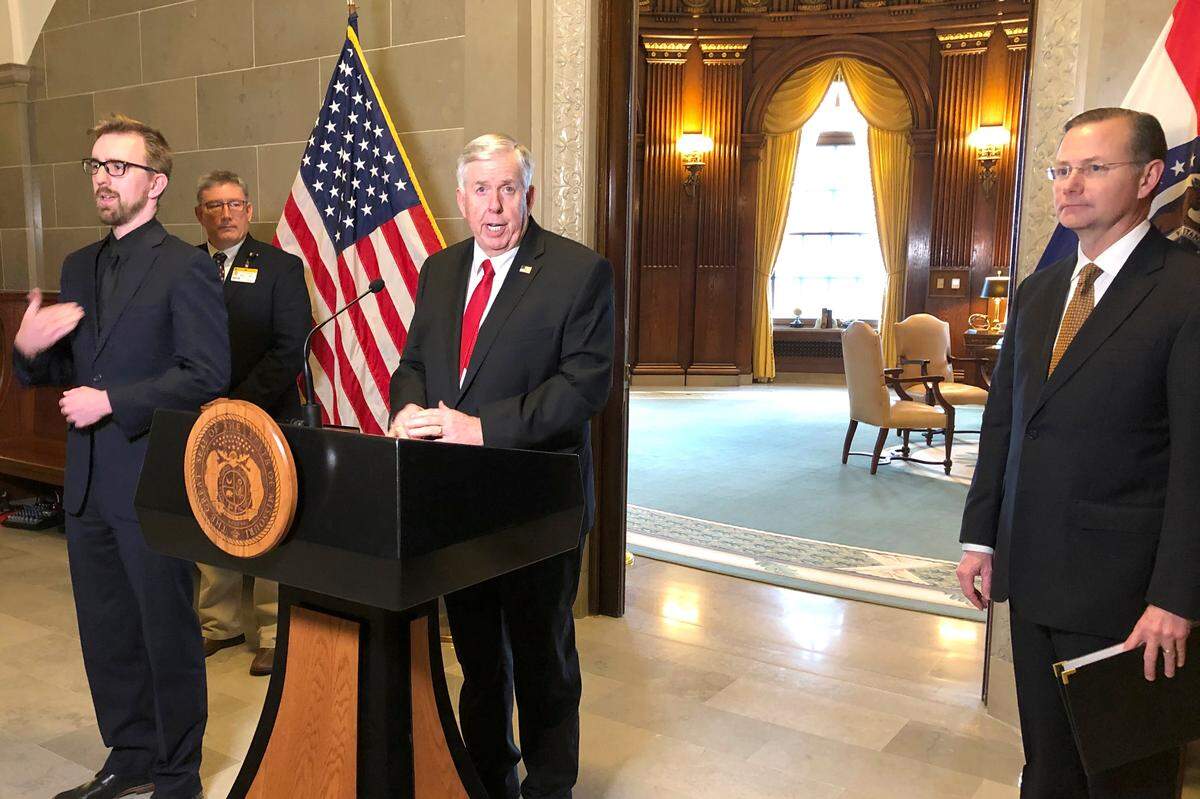
‘This isn’t a maybe. It’s coming’
The major story on March 10 — former Vice President Joe Biden, with 60 percent of the vote, handily defeating Sen. Bernie Sanders to win Missouri’s Democratic primary — already seems like a lifetime ago.
Since then there has been one ceaseless story, a relentless string of headlines The Star posted on KansasCity.com reflecting a city bracing for a natural disaster:
March 12:
“Kansas City mayor declares state of emergency over coronavirus ...” Gatherings of 1,000 people or more were banned.
“Big 12 basketball tournaments are canceled ...”
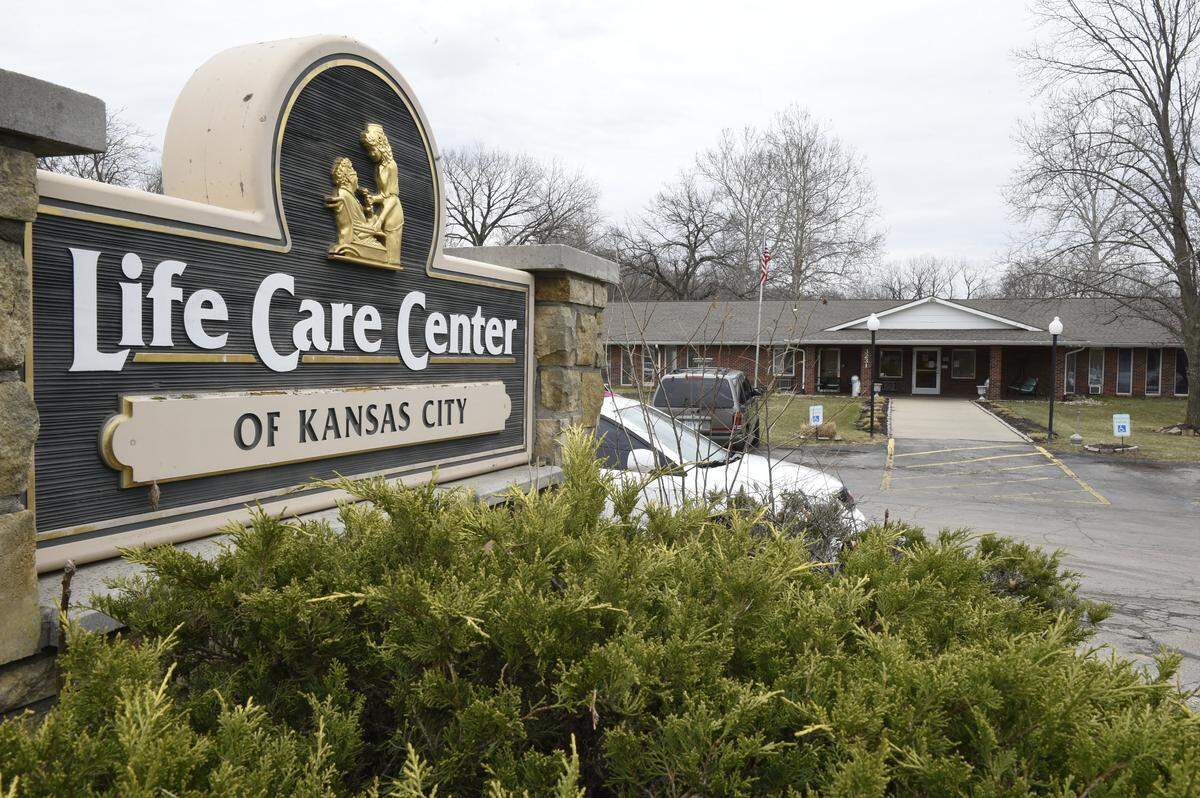
“First death from coronavirus in Kansas City area reported in Wyandotte County.”
“Kansas reports COVID-19 death; governor declares emergency.”
“K-State joins KU, MU: Suspending classes, going online...”
“Some Kansas City area schools closing...”
March 13:
“Gov. Parson declares state of emergency in Missouri.”
March 15:
“To limit coronavirus spread, Kansas City mayor suspends all gatherings of 50 or more.”
March 16:
“Kansas City area enacts sweeping coronavirus ban for restaurants, meetings, schools.” Gatherings were limited to no more than 10.
“36 coronavirus cases found in Kansas, at least 28 in Missouri. Experts expect more.”
March 17:
“Catholic Archdiocese in Kansas City, Kansas, cancels Masses.”
“Jackson County’s first reported case of coronavirus announced Tuesday.”
“Kansas governor closes K-12 schools; workers to stay home.”
March 19:
“Kansas City could see Seattle-like numbers of COVID-19 cases in two weeks, doctors warn.”
“This isn’t a maybe. It is coming,” Dana Hawkinson, medical director of infection prevention and control at the University of Kansas Health System, told reporters. Seattle that day had 1,200 confirmed infections and 66 deaths, with numbers rising.
March 20:
“Missouri adds nearly 20 coronavirus cases overnight, bringing total to 47.”
“Kansas unemployment claims soar 600% as COVID-19 sends economy into tailspin.”
“Jackson County, Missouri, reports its first coronavirus death, a woman in her 80s.”
“Missouri Gov. Parson to ban gatherings over 10 people...”
The nation and world
Kansas City’s experience, to be sure, is playing out nationally and globally with far more turmoil so far.
By Saturday, the Johns Hopkins Coronavirus Resource Center, tallied more than 300,000 infections worldwide and close to 13,000 deaths. Both numbers are rapidly growing.
Italy’s deaths, nearing 5,000 on Saturday, now outnumber China’s, where the pandemic originated and now seems under control.
Sharply criticized for underplaying and lagging in his response to the pandemic, President Donald Trump on Wednesday signed the Defense Production Act, a wartime act to gear up factories to produce vital medical equipment that hospitals continue to warn remains in desperately short supply.
Trump also directed the Department of Housing and Urban Development to suspend all evictions and foreclosures on HUD-backed properties until the end of April. Fannie Mae and Freddie Mac, the companies behind the nation’s $11 trillion mortgage market, was similarly directed to suspend foreclosures and evictions for any single-family mortgages for at least 60 days.
A $1 trillion stimulus package was before Congress on Friday, aimed to bring a modicum of relief, perhaps as much as $1,200 per household, to families in financial stress.
Starting Saturday, the U.S. borders between Mexico and Canada closed to nonessential travel.
Meantime on Friday, the governors of New York, Illinois and Connecticut followed California’s lead and issued stay-at-home orders. New York alone had more than 10,000 infections and more than 50 deaths as of Saturday.
At the Capitol in Topeka, state Rep. Stephanie Clayton, a Democrat from Overland Park, has, like many, been shocked at the speed at which the landscape has shifted.
“We live in our privileged little bubble in the United States,” she said. “There is a sense of unreality about everything.”
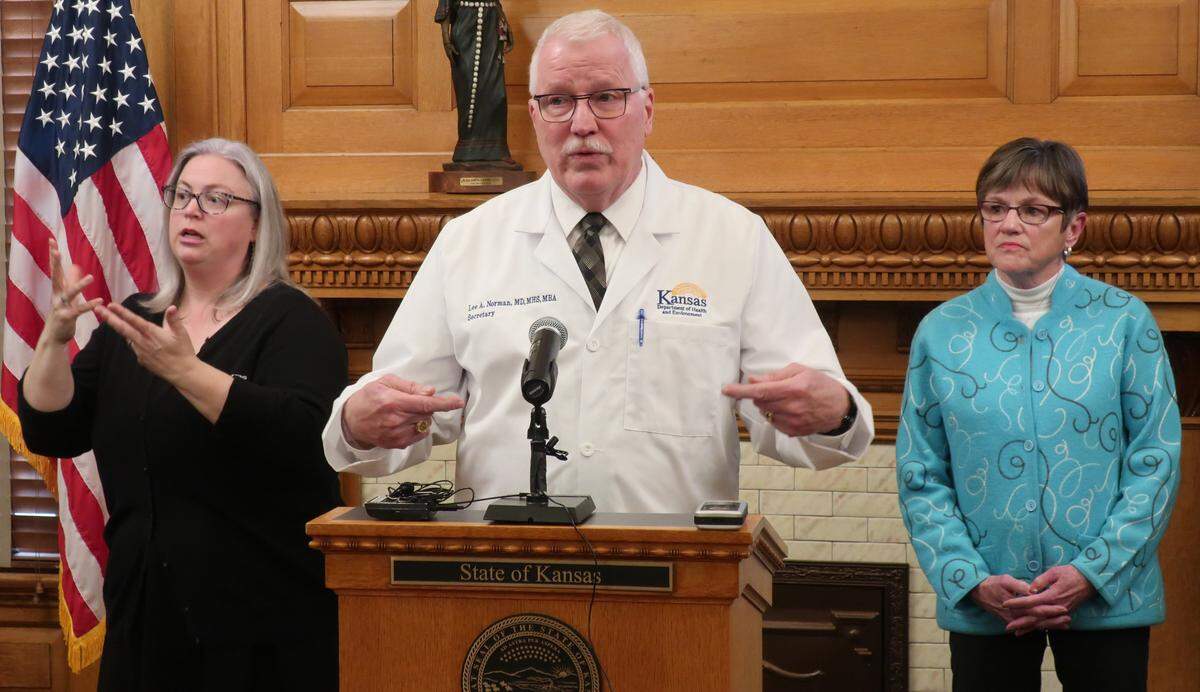
Physician Lee Norman, secretary of the Kansas Department of Health and Environment, suggested at a press conference this past week that the full impact of the coronavirus on this region has yet to be felt.
“I hope the things we’re doing with restaurants and gatherings and meetings and travel restrictions, I hope those things will put a lid on it,” he said.
“I don’t think it’s at all a stretch of the imagination to believe that even in a month from now we’ll be in the hundreds.”
The headlines March 21:
“St. Louis County first in MO to impose stay-at-home order...”
“First novel coronavirus death reported in Johnson County...”
“Kansas City metro under stay-at-home order effective Tuesday...”
Includes reporting by The Star’s Allison Kite, Kevin Hardy, Sam McDowell, Katie Moore, Jesse Newell, Steve Vockrodt, Lisa Gutierrez, Blair Kerkhoff, Katie Bernard, and Sarah Ritter
This story was originally published March 22, 2020 at 5:00 AM.