
‘It feels like doom’: Suddenly, COVID-19 has Kansas Citians keeping their distance
Shawn Crall felt the change soon after entering the grocery store. People used to be chatty there, the atmosphere was lighter.
Not now.
“Everybody’s walking around not talking to each other,” said Crall, 53, who lives in Platte County. “There’s no eye contact. Everybody’s rushing. It’s a very eerie feeling. The tension is just really high. It feels like doom.”
Or self protection.
That is what health officials want Americans to do: Distance yourself from other people.
It’s called social distancing and it’s a public health tactic designed to stop the spread of a contagious disease, in this case the new coronavirus that has infected more than 7,500 people in the United States, with that number climbing by the minute.
The Kansas City area has passed the point at which only travelers were contracting COVID-19. Now, it’s spreading from person to person in our communities.
The message seems to be getting through. At The Legends in Kansas City, Kansas, on Wednesday, vast parking lots were practically empty. Streets downtown and on the Country Club Plaza were mostly deserted.
But not everyone is getting the message.
Outside Crown Center on Wednesday, Vickie Roellchen, 57, of DeSoto, horsed around with one of her daughter’s three foster children as her daughter finished an appointment at Children’s Mercy Hospital.
Roellchen said she’s been driving a school bus for 16 years, packed with 60 to 70 kids a day. As of Tuesday, she said, she was out of a job with the closing of all Kansas public schools.
Though mindful of social distancing, she’s not overly worried, not enough to change her behavior, he said.
“I’m going to Sam’s Club after this,” she said. “I’m not going to be walking six feet away from people. I’m just not.”
On a grand scale, social distancing is limiting the size of groups that gather, closing schools, sending people home to work — measures that mayors and governors here and across the country are taking now at rapid speed.
On a personal level it means staying at least six feet away from and limiting your interactions with other people — keeping your distance in line at the post office, shopping at the grocery store when the crowds are smaller.
It is the message that public health officials have been preaching for days, a message they worry is being ignored.
Dr. Rex Archer, Kansas City’s director of health, made another appeal Wednesday in announcing the city’s first two confirmed cases — a man in his 30s and a woman in her 40s.
“With viruses, there are no borders. Everyone in the Kansas City metro area must be on guard,” Archer said in a statement. “Leave your home only when absolutely necessary.”
‘People have blinders on’
In the Kansas City area, people who are at highest risk for suffering the most severe consequences of COVID-19 have started hunkering down. They’re at home, limiting their contact with the outside world.
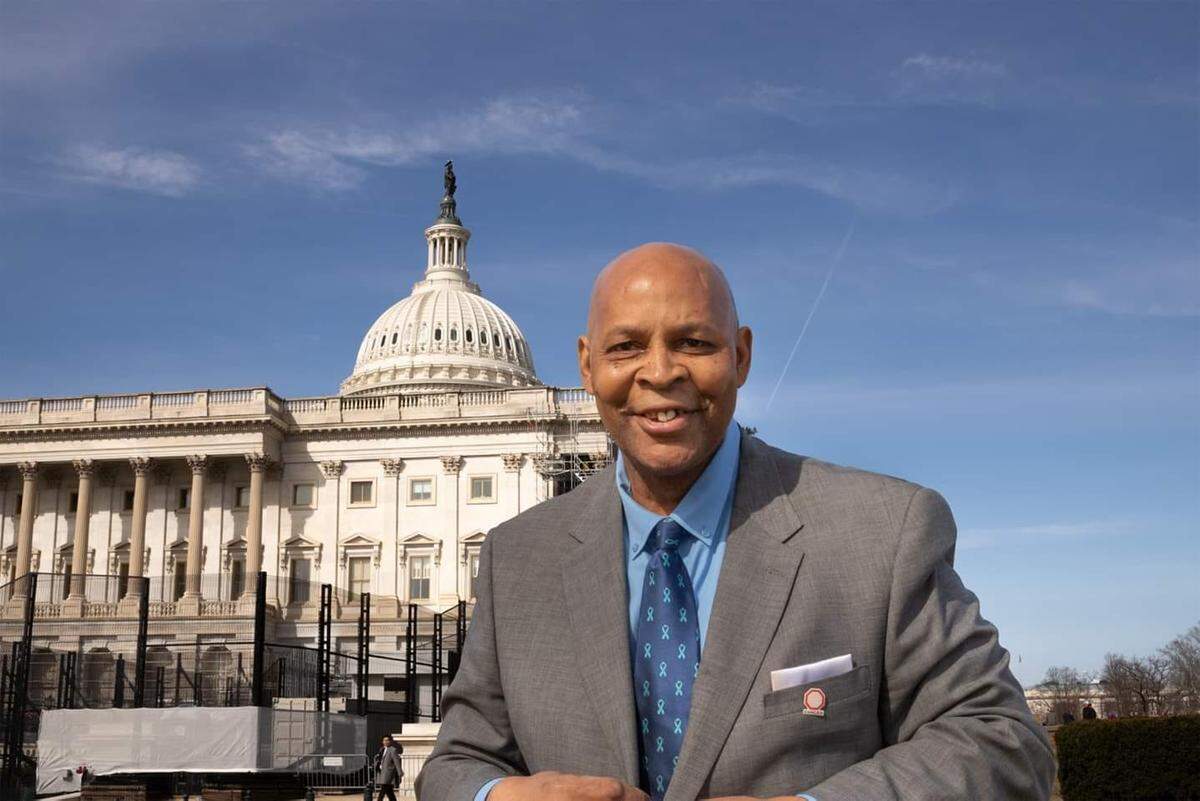
Caesar Blevins is holed up inside his home in Kansas City’s Waldo neighborhood now. No more trips to the barber. No more grocery shopping. No more regular morning workouts at the gym. No more work at UPS.
He’s getting chemotherapy for prostate cancer, and because of his age and his chemo-compromised immune system, he’s at high risk.
Sometimes, he goes and sits in his car and listens to music. Friends have already told him they’ll pull up into the driveway and talk to him from a safe distance.
As he watched spring breakers on TV frolicking on Florida beaches, before they were shut down, he grew frustrated that so many people were ignoring the advice to keep a distance from others.
“We’ve never faced a dilemma like we’re facing now,” said Blevins, who is 62. “Some people have blinders on. They don’t really think about others. It’s selfish thinking.”
Health officials share the same frustration.
“People are not taking this very seriously,” CNN’s Dr. Sanjay Gupta told his colleague, Jake Tapper, on Tuesday.
“These numbers are just going to continue to go up because it is spreading and because the testing is out there. And you look at images of Wuhan (in China, where the virus originated), images of Hong Kong, images where people were truly, actually socially distancing.
“The streets were bare. People were not outside. It wasn’t like that forever. It was like that for a couple of weeks because that was the goal, to break the chain of transmission.
“The individual responsibility ... we’ve been talking about for weeks if not months now ... I’m surprised at this point, still, there’s a lack of seriousness being given to this. And it worries me and it worries a lot of public health officials I’ve been talking to.”
‘A bunch of bull’
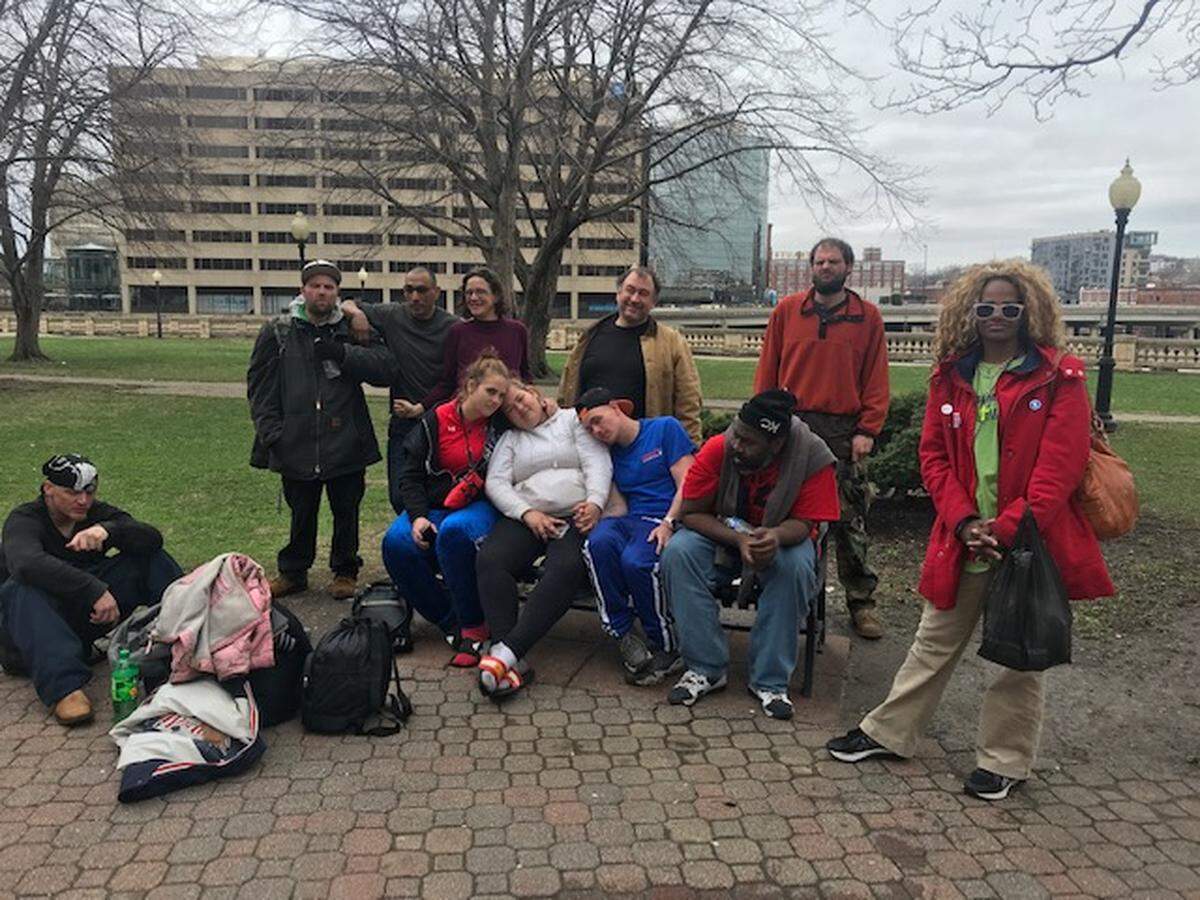
On Wednesday, at Washington Square Park, near Crown Center, 13 homeless friends, sitting hip-to-hip on the lawn, side-by-side on the park bench, knew what everyone’s saying about social distancing.
They get it. They know it’s probably true. They don’t care, or care very little.
“I think it’s a bunch of bull, an overreaction,” Necomu Ling said of the predictions of mass viral infection and deaths. He’s 41 and stood near his wife, Melissa, 39, and daughter, Cheyanne Page, 20, both seated on the park bench, and both pregnant.
Even if everyone is not fine, Melissa said, “It will actually hit the elderly before it hits the younger people.”
Cheyanne chimed in. “That’s not true because Children’s Mercy has a case with a baby,” she said. The hospital on Wednesday confirmed a positive test for a child under age 18.
“But to shut everything down, though,” Melissa said doubtfully.
“Overreaction” someone else chimed in.
They knew the recommendation is to stay some distance from one another.
“But we call stick together. We’re family,” someone shouted.
“I mean, for real,” Melissa said. “What’s the difference if we’re separated or not? If we’re going to get it, we’re going to get it.”
Some, like Paco, 46, and Cowboy, 37, each with one name, floated the idea that the pandemic is, in part, just a way for society to rid itself of the homeless. Though he hopes kids and older people don’t get it, he’s not worried for himself.
“If I can survive an addiction, I can survive this,” Cowboy said.
“I have M.S. epilepsy and I’ve survived kidney cancer, so,” Melissa said. “If I can survive kidney cancer then I think I can survive a little virus.”
‘A crisis’ like no other
Celebrities, sports team, health departments, governors, police departments, even the U.S. Navy are hashtagging the message: #StayHome.
Arnold Schwarzenegger showed up in a public service announcement with his pet donkey and horse.
The police in Lawrence employed humor to spread the message in a Wednesday tweet: “It’s good to stay home during a pandemic. It’s good to socially distance. It’s good to laugh, because we can’t be holed up for weeks and not laugh. Laugh at us if you want. Call us pigs, laugh at our tweets, whatever. But for the love of all that is holy, wash your freakin hands.”
“Separation is so important,” Ohio governor Mike DeWine tweeted Wednesday. “As I talk with people, Ohioans are beginning to understand, but it is also clear that some don’t yet get it.
“This is a crisis you have never seen in real life. We have to get through this. I’m calling on every Ohioan — when you’re going into a situation where you have the potential to obtain or spread this #COVID-19 — it’s very dangerous.
‘Give space’
All of Carol Winner’s friends who are over 60, especially the ones with health conditions or are cancer survivors, “are pretty much in self-isolation” right now, she said Wednesday.
“I have friends with heart conditions, lung conditions. I won’t see them for weeks, if not months.”
The Johnson County woman knows a lot about giving people their space. When her mother was fighting cancer, a doctor told her to stay away form people because her immune system was compromised. But Winner’s mother was a hugger and kept doling out hugs.
After her mom died, Winner, a public health specialist who has done work with the CDC and the Department of Health and Human Services, created a movement called “Give Space.”
The words — signaling that a person needs to keep a safe physical distance from other people — are printed on clothing, pins, stickers and other merchandise, and are the theme of her children’s book, “What Do I Do With My Hugs?”
There’s a timely tip in the book, where the central character, a little girl named Lily, doesn’t understand why she can’t receive hugs anymore from her ill grandmother, Mimi.
“Right now there are a lot of Mimis in homes that are on lockdown,” said Winner, noting that Lily ends up mailing paper hearts to her grandmother instead.
Winner, who lives in Johnson County, was in Los Angeles this week and said the city, hit hard by the virus, was “a ghost town. There’s nobody on the streets. ... They totally get it.”
She thinks people in the Kansas City area are starting to heed the advice from public health officials, but she knows it takes time for people to change their behavior.
“I do think there’s a shift in Kansas City and I’m happy to see it,” said Winner, whose website is Givespacepeach.com. “I think people are thinking, ‘Oh maybe there’s a reason the restaurants are closing, and the schools are closing.
“We can do it, but we don’t have any time. We can’t be hit with 11 messages before we say, ‘Oh, yeah, I’m supposed to do that.’ We have to pay attention now.
“Think of it (like) you are infected and everybody else is, too. Because it’s not just about you. You have to think that the other guy has it too. Because that will help remind you, ‘I need to step back.’
“We all concentrate on ourselves. But this is a community effort. This is a community crisis. And we have to care about it.”